Navigate This Guide
- Why is Aquamarine the March Birthstone?
- More Than Just a Color: The Science and Symbolism
- Buying Guide: How to Choose Your Perfect Aquamarine
- Caring for Your Aquamarine Jewelry
- Aquamarine in Jewelry Design: From Classic to Contemporary
- Aquamarine vs. Other Blue Stones
- Answering Your Burning Questions (FAQ)
Let's talk about the March birthstone aquamarine. You know, that stone that looks like someone captured a piece of the ocean and froze it in time. If you're a March baby, or you're shopping for one, you've probably wondered what makes this gem so special. Is it just a pretty blue rock, or is there more to the story?
I remember the first time I held a quality aquamarine. It wasn't in some fancy jewelry store – it was at a small gem show, tucked away in a dealer's case. The color stopped me cold. Not a harsh blue, not a pale wishy-washy tint, but this serene, calming blue-green that just felt... peaceful. The dealer, an older guy with years of dust under his fingernails, saw me looking and just said, "That's the sea in a stone, kid." He wasn't wrong.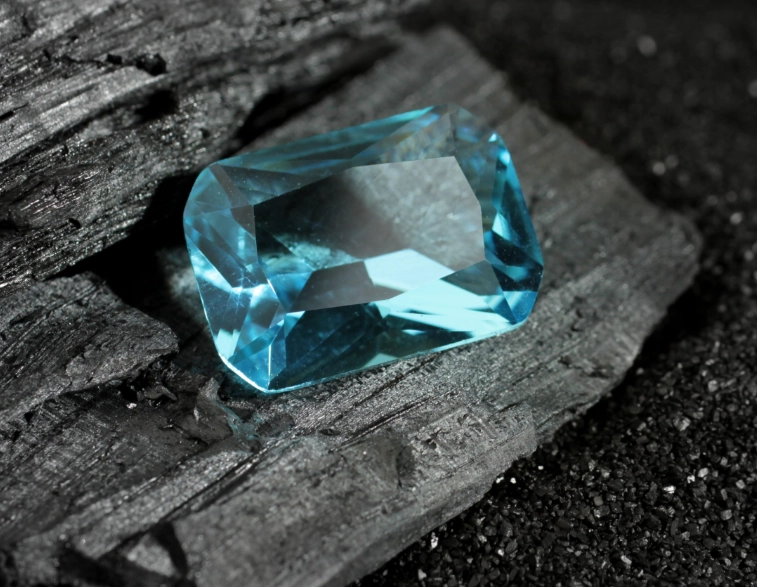
The Core of It: At its simplest, aquamarine is a variety of the mineral beryl, which puts it in the same family as emerald. Its name comes from the Latin "aqua marina," meaning "sea water," which is just about the most perfect description you could ask for. The color comes from trace amounts of iron within the crystal structure. More on that in a bit.
Why is Aquamarine the March Birthstone?
This isn't some random assignment. The tradition of birthstones dates back centuries, linked to the breastplate of Aaron described in the Book of Exodus. The modern list we use was standardized by the Jewelers of America in the early 20th century. But why aquamarine for March?
Think about March. In the Northern Hemisphere, it's this transitional month. Winter is (hopefully) loosening its grip, the days are getting longer, and the first hints of spring are there if you look closely. There's a feeling of anticipation, of calm after a storm, of clarity returning. What color embodies that better than the clear, cool, refreshing blue of aquamarine? It symbolizes the returning light and the thawing world. It's a gem of new beginnings.
The ancient Romans believed it protected sailors and guaranteed a safe voyage across stormy seas. For a month known for its unpredictable weather (in like a lion, out like a lamb, right?), a stone that promised safe passage makes a lot of sense.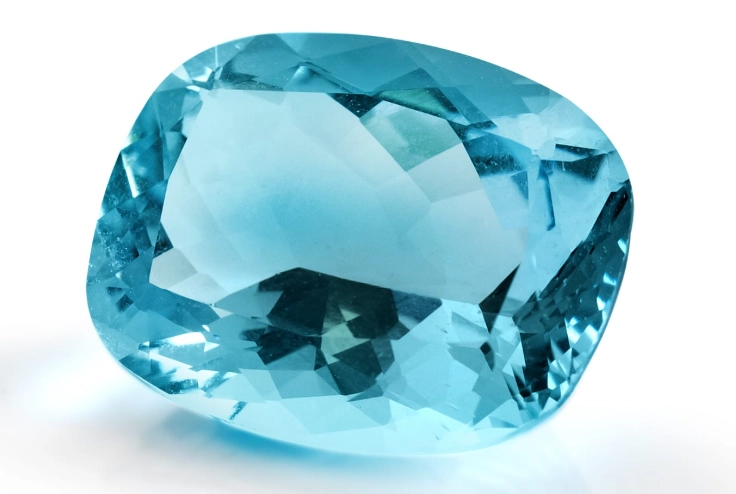
"For me, the March birthstone aquamarine has always represented a quiet kind of strength. It's not flashy like a ruby or mysterious like an opal. It's dependable, clear, and profoundly calming. It's the gemstone equivalent of a deep breath." – A sentiment shared by many jewelers I've spoken to over the years.
More Than Just a Color: The Science and Symbolism
Okay, let's get into the nitty-gritty. What are you actually looking at when you see an aquamarine?
The Color Spectrum: From Sky to Deep Sea
This is where things get interesting. Not all aquamarines are the same blue. The color can range from a very faint, almost colorless blue (sometimes uncharitably called "washed out") to a rich, saturated medium blue or blue-green. The most prized color is a strong, medium-dark blue to slightly greenish-blue. Think of the ocean around a tropical reef on a sunny day – not the dark navy of the deep sea.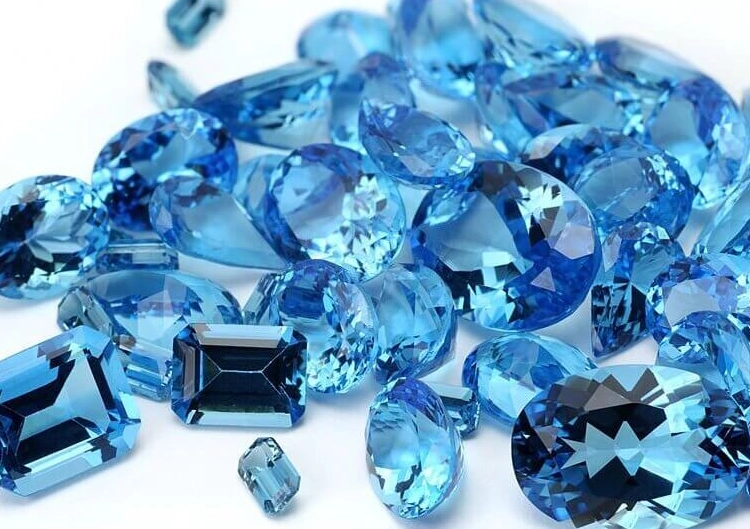
But here's a personal opinion: don't get too hung up on the "ideal" color. I've seen stunning pale aquamarines that look like morning sky, and they have a delicate beauty all their own. The deep, intense ones are rarer and command higher prices, but beauty is subjective. The best color for you is the one that makes you stop and stare.
A quick note on treatment: the vast majority of aquamarines on the market are heat-treated. This isn't a shady practice – it's standard and accepted in the industry. Naturally occurring aquamarines often have a greenish or yellowish tinge. Gentle heat treatment removes these secondary colors, leaving the pure, stable blue we love. This treatment is permanent and doesn't affect the value, as it's expected. If a dealer tries to sell you an aquamarine at a huge premium for being "untreated," be skeptical. It's incredibly rare.
Hardness and Durability: Can You Wear It Every Day?
This is a huge practical concern. You don't want a birthstone that's going to scratch or chip if you look at it wrong. Here's the good news: aquamarine scores a 7.5 to 8 on the Mohs scale of mineral hardness. For reference, diamond is a 10, and your average piece of quartz (like in granite countertops) is a 7.
Practical Fact: A hardness of 7.5-8 means aquamarine is suitable for daily wear in rings, but with some caution. It's harder than most common dust particles (which are often quartz, hardness 7), so it's resistant to scratching from everyday activities. However, it's not indestructible. A hard knock against a granite countertop edge could chip it. For an engagement ring or a ring you'll wear doing heavy work, a protective setting (like a bezel) is a smart idea.
So, for a March birthstone ring you plan to wear daily, aquamarine is a solid choice. It's much more durable than, say, an opal or a pearl. For pendants and earrings, which see less abuse, it's practically worry-free.
Metaphysical Properties and Meaning: Beyond the Physical
Now, I'm not one to blindly believe in crystal healing, but I find the historical and cultural symbolism fascinating. And let's be honest, many people buying a March birthstone aquamarine are drawn to its purported energies. So, let's cover it.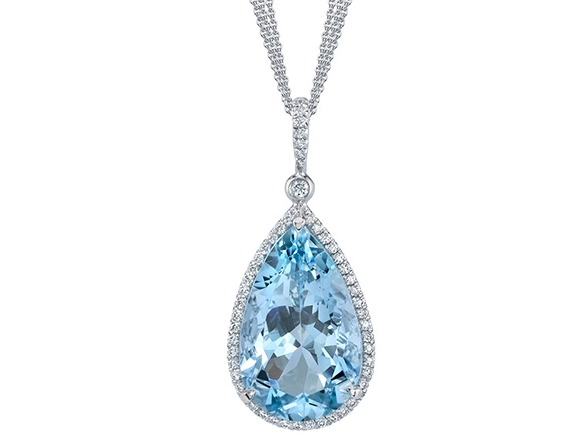
Traditionally, aquamarine is associated with:
- Calm and Serenity: Its ocean-hue is linked to soothing emotions, reducing stress, and promoting mental clarity. It's often called the "stone of courage" because calmness in the face of fear is the truest form of bravery.
- Communication: It's said to help with clear, truthful, and compassionate communication. Think of it as cutting through the murky "sea" of misunderstandings.
- Protection: The ancient association with sailors persists. It's considered a talisman for travelers, protecting against dangers of the sea (literal and metaphorical).
Do I believe a piece of beryl can do all that? I believe in the placebo effect and the power of intention. If wearing your March birthstone aquamarine makes you feel calmer or more articulate, that's a real benefit, regardless of the mechanism.
Buying Guide: How to Choose Your Perfect Aquamarine
This is the part most people come for. You're sold on the idea, now how do you not get ripped off? How do you find a stone that's beautiful, good quality, and right for your budget?
We use the Four Cs (Carat, Color, Clarity, Cut) for diamonds, but they apply here too, just with different emphases.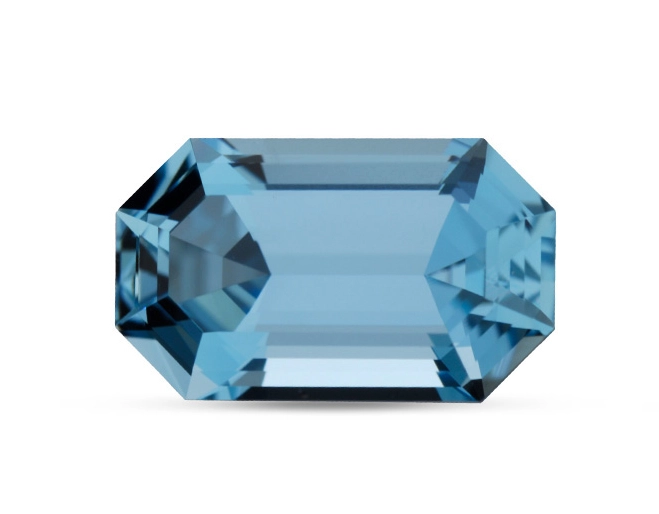
Color is King (But Clarity is the Queen)
For the March birthstone aquamarine, color is the primary driver of value. As discussed, look for a pleasing blue tone that speaks to you. Saturation (intensity) and tone (lightness/darkness) matter more than a specific hue. Avoid stones that look overly gray or milky, as this can dull the beauty.
Here's the great part about aquamarine: it's typically eye-clean. This means you can expect stones with excellent clarity, even in larger sizes. Inclusions are rare compared to its cousin, the emerald. You should be able to see right through the stone without visible flaws. If you see obvious cracks, clouds, or inclusions, you should be paying a lot less, or just move on.
The Cut: Where the Magic Happens
Aquamarine crystals often form in long, hexagonal columns. This means cutters have to decide how to best orient the rough stone to maximize color and yield. A good cut will make the color look rich and even, and will bounce light around brilliantly (that's the "liveliness" or sparkle). A bad cut can make even a great color look dead or washed out.
Aquamarine is often cut in elongated shapes (emerald cuts, ovals, marquise) to follow the natural crystal shape. But you'll find every shape imaginable. The cut style can dramatically change the stone's character.
>The point can be delicate; ensure it's well-protected in a setting.| Cut Style | Best For | Considerations |
|---|---|---|
| Emerald Cut (Step Cut) | Showcasing exceptional clarity and a classic, elegant look. Emphasizes the color in large, clean windows. | Can show more of the "body color" but less fiery sparkle. Requires high clarity. |
| Oval Brilliant | Maximizing sparkle and brilliance. Makes the color appear lively and bright. | A very popular all-rounder. Can make the color look slightly lighter than in a step cut. |
| Cushion Cut | A vintage, romantic feel. Offers a soft blend of brilliance and color display. | Retains more weight from the rough, so can offer good value. |
| Pear Shape | Unique, tear-drop elegance. Great for pendants and statement rings. |
I once helped a friend choose an aquamarine for an engagement ring. She was stuck between a large, pale oval and a smaller, more intense emerald cut. The oval looked bigger on her finger, but the emerald cut had this deep, serene pool of color you could get lost in. She went with the emerald cut. The size-on-finger wasn't as impressive, but the character of the stone was. There's no right answer, only your answer.
Carat Weight and Value
Aquamarine is found in large, clean crystals. This means you can get big stones for a relatively reasonable price compared to, say, ruby or sapphire. The price per carat doesn't jump exponentially at certain sizes like it does with diamonds.
This is fantastic news. It means you can afford a substantial, eye-catching piece of March birthstone jewelry without needing a celebrity budget. A 5-carat, well-colored aquamarine is a realistic goal for many people. A 5-carat sapphire of similar quality? Not so much.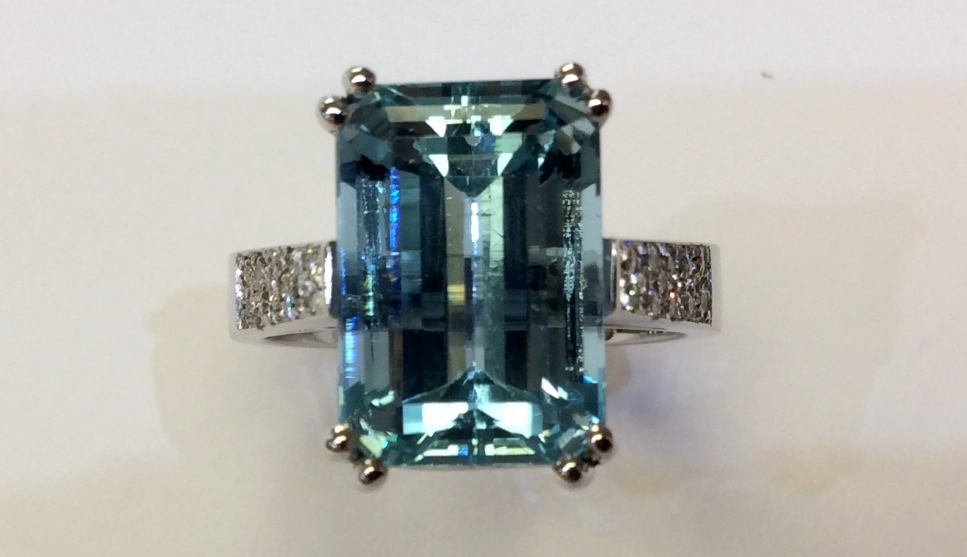
Watch Out: Be wary of stones that are too cheap. Extremely low prices can indicate synthetic stones (lab-created), which are fine if you know that's what you're buying, or pale, low-quality material that's been dyed or coated. A reputable seller will disclose treatments and origins. When in doubt, ask: "Is this natural aquamarine? Has it been treated?"
Caring for Your Aquamarine Jewelry
You've invested in a beautiful piece. Let's keep it that way. Caring for the March birthstone is straightforward, but there are a few key things to avoid.
- Clean It Gently: Warm water, mild dish soap, and a soft toothbrush are your best friends. Soak the piece for a few minutes, gently scrub behind the stone where dirt collects, rinse thoroughly, and pat dry with a soft, lint-free cloth. Ultrasonic cleaners are usually safe for aquamarine unless it has significant inclusions or fractures (which is rare). Steam cleaners are generally safe due to its good thermal stability.
- Store It Thoughtfully: Don't just toss it in a jumbled jewelry box. Keep it separate from harder gems (diamonds, sapphires, rubies) that could scratch it. A soft pouch or a compartment in a lined jewelry box is perfect.
- Know When to Take It Off: This is the big one. Always remove your aquamarine jewelry before:
- Heavy lifting, gardening, or any manual work (risk of impact).
- Using harsh chemicals (household cleaners, bleach, chlorine in pools). These won't damage the stone itself but can attack the metal setting and dull the polish.
- Applying lotions, perfumes, or hairspray. These can leave a filmy residue on the stone, making it look dull.
A common question: Does aquamarine fade in sunlight? This is a persistent myth. High-quality, heat-treated aquamarine is color-stable. Its color comes from iron impurities in the crystal lattice, which are not prone to fading from light exposure. You don't need to hide it in a dark vault. However, prolonged, direct, intense sunlight (think months in a desert display window) might cause very slight fading in some stones, but it's not a concern for normal wear. Your biggest enemy is physical shock, not the sun.
Aquamarine in Jewelry Design: From Classic to Contemporary
The March birthstone aquamarine is a designer's dream. Its color is versatile, working with white, yellow, and rose gold, as well as platinum and silver. It has a timeless quality but can look utterly modern.
Classic Solitaire: A simple solitaire ring or pendant lets the stone speak for itself. The clean lines highlight the color and clarity perfectly.
Vintage & Art Deco: Aquamarine was hugely popular in the Art Deco era (1920s-1930s). Paired with diamonds in geometric, platinum settings, it creates a stunning, period-correct look. You'll see a lot of emerald-cut and baguette-cut aquamarines from this period.
Modern & Organic: Today, designers often use aquamarine in fluid, nature-inspired settings. Think waves, leaves, or freeform designs that complement the watery color. It also looks incredible paired with other blue gems like sapphire or topaz for an ombre effect, or with contrasting stones like warm citrine or pink morganite.
Aquamarine vs. Other Blue Stones
People often get confused. Is it a blue topaz? A sapphire? Here's a quick breakdown to clear things up.
Aquamarine vs. Blue Topaz: This is the most common mix-up. Swiss Blue and London Blue topaz are popular, affordable blue stones. The key differences? Aquamarine's color is usually softer, more pastel, and often has a greenish hint. Blue topaz (especially Swiss Blue) is a more electric, pure, and sometimes harsher blue. Topaz is harder (8 on Mohs scale) and is almost always irradiated to achieve its blue color (another permanent, accepted treatment). Topaz is generally less expensive per carat. Aquamarine has a higher refractive index, so it can have more "fire" or sparkle when well-cut.
Aquamarine vs. Blue Sapphire: No contest in terms of hardness and rarity—sapphire wins. Sapphire is a 9 on the Mohs scale and is one of the "big three" precious gems. Its blue is typically a deeper, more royal blue (though sapphires come in many colors). Aquamarine offers a much larger, cleaner stone for the money and has a distinct, lighter, more aquatic personality.
The choice isn't about which is "better." It's about which blue speaks to you and fits your lifestyle and budget. Want a large, serene, sea-blue stone? Aquamarine. Want a smaller, ultra-durable, classic deep blue stone? Sapphire. Want a very affordable, vivid blue stone? Blue Topaz.
Answering Your Burning Questions (FAQ)
Is aquamarine a precious or semi-precious stone?
The old terms "precious" (diamond, ruby, sapphire, emerald) and "semi-precious" (everything else) are outdated and misleading in the trade. Aquamarine is a fine gemstone, highly valued for its beauty. It's certainly more rare and valuable than, say, amethyst or citrine. Call it a fine colored gemstone and you'll be accurate.
What is the spiritual meaning of aquamarine?
As covered, it's deeply tied to calm, courage, clear communication, and protection—especially for travelers. It's connected to the throat chakra, which governs expression.
Can aquamarine be worn every day?
Yes, with the caveats mentioned earlier. For a ring, a protective setting and mindful wear are advised. For earrings and pendants, it's an excellent choice for daily wear.
How can I tell if my aquamarine is real?
At home, you can check for tell-tale signs of glass (bubbles, mold marks, too perfect). Real aquamarine will have natural inclusions (often tiny, needle-like tubes), feel cool to the touch, and have a hardness that resists a steel point (careful with this test!). The only sure way is to have it examined by a qualified gemologist (Gemmological Institute of America (GIA) offers resources to find one). Reputable sellers provide lab reports for larger stones.
Does aquamarine make a good engagement ring?
It's a beautiful and meaningful choice, especially for a March birthday or a couple who loves the sea. Its durability (7.5-8) is adequate but requires more care than a diamond, sapphire, or moissanite. A bezel or halo setting is highly recommended to protect the girdle. It's for someone who is mindful of their jewelry.
What are the healing properties of aquamarine?
In crystal healing lore, it's used to soothe anxiety, reduce fluid retention, calm allergic reactions, and ease sore throats. Important: This is not medical advice. Gemstones are not a substitute for professional healthcare.
Where is aquamarine mined?
Major sources include Brazil (the historical leader), Nigeria, Madagascar, Mozambique, Pakistan, and Zambia. Brazilian stones are famous for their large size and fine color. The shift towards ethical sourcing is important; ask your jeweler about the origin of their stones. For detailed geological data on beryl, the Mindat mineral database entry for Beryl is an excellent, authoritative scientific resource.
Finding the right aquamarine is a journey. Don't rush it. Look at lots of stones, in different lights. Hold them. See how the color changes. The one that feels like your piece of the sea is the one to bring home.
So, there you have it. The March birthstone aquamarine isn't just a blue gem for people born in a specific month. It's a capsule of ocean calm, a symbol of clarity and safe passage, and a remarkably wearable piece of the natural world. Whether you're drawn to its history, its look, or its symbolism, it's a gem that offers something genuinely special. From its formation deep within the earth to its place in a piece of jewelry you'll treasure for years, the story of aquamarine is one worth knowing.
Now, go find your piece of the sea.