Inside This Pearl Guide
- Why a Pearl? The History and Meaning Behind the June Birthstone
- Not All Pearls Are Created Equal: A Tour of the Different Types
- How to Buy a Pearl: The 7 Value Factors You Need to Know
- Caring for Your June Birthstone Pearl: It's Easier Than You Think (But Crucial)
- Answering Your Pearl Questions (The Stuff You Actually Google)
- Styling Your Pearl: From Timeless to Unexpected
- Final Thoughts: Is a Pearl the Right Choice for You?
So, you're a June baby, or maybe you're shopping for one. That means pearls are on your mind. The June birthstone pearl has this reputation for being classic, maybe even a bit... predictable. A string of white pearls for graduation, right? But let me tell you, there's a whole world beyond that simple strand. I used to think pearls were just for my grandma's fancy dinners until I stumbled into a tiny gem show and saw a baroque Tahitian pearl with colors like an oil slick. It completely changed my perspective.
This guide isn't going to just repeat the same old facts. We're going to dig into what makes the June birthstone pearl fascinating, frustrating, and absolutely worth your attention. We'll talk history, but we'll also get practical. How do you actually buy a good one without getting ripped off? How do you keep it from turning yellow in your jewelry box? Is it even a good choice for everyday wear? I'll share what I've learned, some opinions you might not hear from a jeweler trying to make a sale, and hopefully answer every question you have bubbling up.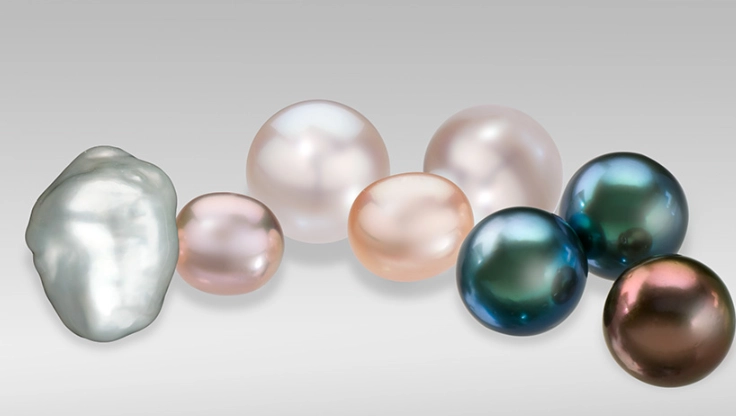
Why a Pearl? The History and Meaning Behind the June Birthstone
Have you ever wondered why pearls got paired with June? It's not random. For centuries, across wildly different cultures, pearls have been wrapped up with ideas of the moon, purity, and water. June, often associated with weddings and new beginnings, found its perfect match in a gem that symbolized innocence and love. The ancient Romans loved them as a status symbol, while in ancient China, they were believed to offer protection from fire and dragons. Quite the resume.
The real kicker is that for most of history, all pearls were natural. Divers risked their lives to find them in the wild. That rarity made them more expensive than diamonds. It wasn't until the early 1900s that Kokichi Mikimoto perfected the technique for culturing pearls, making the June birthstone pearl accessible to more people. Some purists turned their noses up at cultured pearls, calling them "fake." That's a total myth. Cultured pearls are real pearls; humans just give the oyster a little nudge to start the process. The Smithsonian's National Museum of Natural History has a fantastic collection and resources that explain this natural history beautifully, showing how these gems form.
What does it mean today?
Modern interpretations lean into the pearl's organic origin. It's seen as a token of wisdom gained through experience (that grain of sand irritating the oyster is a powerful metaphor). It's about integrity and calm. Honestly, I think the meaning is what you make of it. For some, it's a connection to tradition. For others, it's a symbol of unique, imperfect beauty.
Not All Pearls Are Created Equal: A Tour of the Different Types
This is where things get interesting. If you think "pearl" means a small, white, round bead, you're in for a surprise. The variety is staggering. Choosing your June birthstone pearl is less about picking a gem and more about choosing a personality.
Akoya Pearls: The Classic Performer
When you picture that classic strand, you're probably thinking of Akoya pearls. Cultured primarily in Japan and China, these saltwater pearls are known for their stunning, mirror-like luster and near-perfect roundness. They're usually white or cream with rosé or silver overtones. They're the go-to for formal pearl necklaces and stud earrings. The downside? They tend to be smaller (typically 2-10mm) and can be more expensive for top quality. They also have a thinner nacre (the pearl coating) than some other types, which can affect durability if you're rough with your jewelry.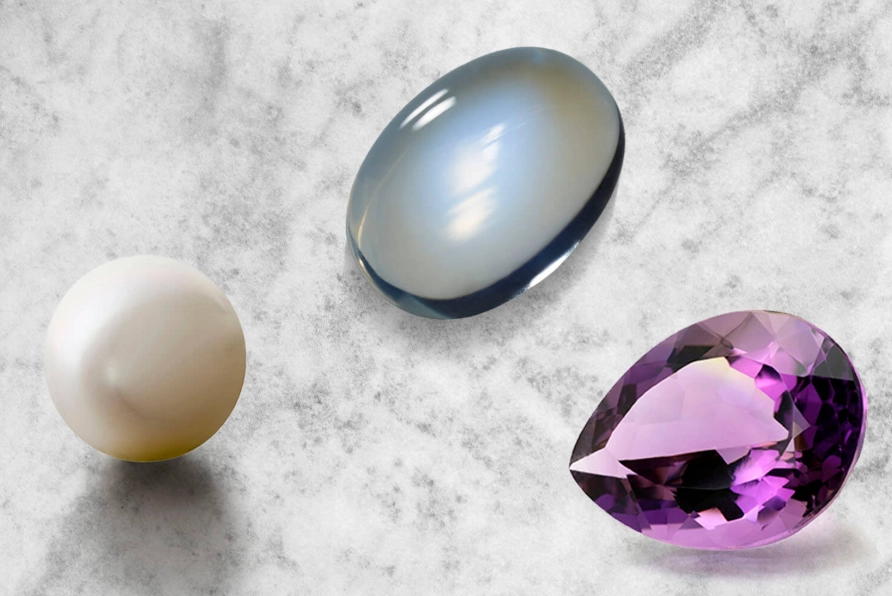
Freshwater Pearls: The Versatile Workhorse
Mostly cultivated in China, these are my personal favorite for everyday wear. They're grown in mussels in lakes and rivers. The best part? A single mussel can produce dozens of pearls at once. This makes them much more affordable. Their shapes are wonderfully varied—perfectly round, off-round, button, drop, and wildly baroque. Their luster is softer and more satiny than the sharp brilliance of an Akoya. You can find them in a rainbow of natural pastel colors: white, peach, pink, lavender. For someone who wants to experiment with the June birthstone pearl without a huge investment, start here.
Tahitian Pearls: The Dark and Mysterious Showstopper
Forget "black pearls." That's a misnomer. Tahitian pearls, cultured in French Polynesia, showcase a breathtaking spectrum of dark colors: peacock green, eggplant purple, gunmetal gray, and deep silver. Their color comes from the black-lipped oyster. They're larger (often 8-16mm) and their luster has a deep, almost metallic glow. They're undeniably bold and make a serious statement. A single Tahitian pearl pendant can be a lifetime piece. They are saltwater pearls, so they command a higher price, but my goodness, they are unique.
South Sea Pearls: The Luxurious Royalty
These are the giants and the queens of the pearl world. Cultured in the warm waters of Australia, Indonesia, and the Philippines in the large white-lipped or gold-lipped oyster. They grow slowly, developing a magnificently thick nacre. Their colors are naturally white, silver, or a deep, warm gold. Their size (10-20mm is common) and their soft, satiny luster scream luxury. They are the most expensive type of cultured pearl. If you're looking for a true heirloom June birthstone pearl, this is the category where you'll find it.
| Pearl Type | Origin (Typical) | Key Characteristics | Best For | Price Point (Relative) |
|---|---|---|---|---|
| Akoya | Japan, China | High, mirror-like luster; very round; white/cream with overtone. | Classic strands, stud earrings, formal wear. | $$$ |
| Freshwater | China | Soft luster; wide shape variety; many natural pastel colors. | Everyday jewelry, fashion pieces, great value. | $ - $$ |
| Tahitian | French Polynesia | Dark body colors (peacock, gray); large size; dramatic look. | Statement jewelry, modern designs. | $$$$ |
| South Sea | Australia, Philippines | Large size; thick nacre; satiny luster; white or golden. | Heirloom investment pieces, luxury jewelry. | $$$$$ |
See what I mean? Your choice of June birthstone pearl type sets the whole tone.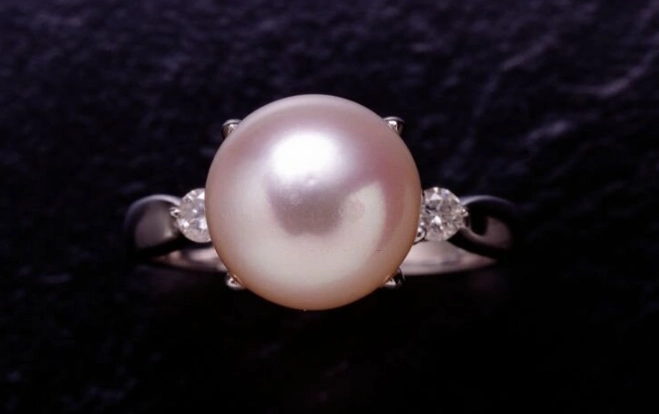
How to Buy a Pearl: The 7 Value Factors You Need to Know
Walking into a store or browsing online can be overwhelming. Jewelers throw around terms like "AAA grade" or "hanadama," which can feel like a secret code. Let's break it down into what actually matters. The Gemological Institute of America (GIA), a top authority, evaluates pearls based on seven factors. Think of this as your cheat sheet.
- Luster: This is the most important factor, period. Luster is the sharpness and intensity of the reflections on the pearl's surface. High luster looks like a bright, clear mirror. Low luster looks hazy or chalky. Don't settle for dull. A pearl's beauty lives in its luster.
- Surface: No pearl is flawless. Look for how clean the surface is. Are there noticeable bumps, spots, or wrinkles? A few minor blemishes are normal and can even add character, but they shouldn't be the first thing you see.
- Shape: Round is the most famous, but not the only valuable shape. Symmetrical shapes (oval, button, drop) are also desirable. Baroque (irregular) shapes are unique and often more affordable. Decide what you like. Personally, I love a perfect baroque shape—it feels more artistic.
- Color: This has three parts: body color (the main color), overtone (a translucent color over the body color), and orient (a shimmering rainbow effect). A white pearl with a rosé overtone is classic. A gray Tahitian with peacock orient is mesmerizing. Color is largely personal preference.
- Nacre Thickness: This is critical for longevity. Nacre is the layers of "pearl substance" the oyster secretes. Thin nacre can wear away, look dull, or even peel. Thick nacre means better luster and durability. This is often why South Sea pearls are so prized.
- Size: Measured in millimeters. Generally, larger pearls of equal quality are rarer and more valuable. But a small, high-luster pearl is better than a large, dull one.
- Matching: For strands or multi-pearl pieces, how well do the pearls match in all the above factors? A perfectly matched strand is a sign of high craftsmanship.
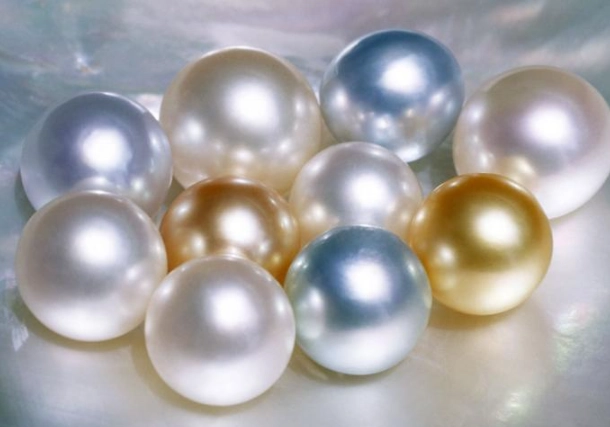
When I bought my first serious pearl necklace, I spent 20 minutes just under different lights looking at the luster. The salesperson probably thought I was nuts. But it's the only way to really see it.
Caring for Your June Birthstone Pearl: It's Easier Than You Think (But Crucial)
Pearls are delicate. They're born in water, but they're not fans of your perfume, sweat, or kitchen chemicals. The biggest mistake people make is treating them like any other piece of jewelry. Here's the simple routine that will keep your pearls glowing for decades.
The golden rule: Pearls are the last thing you put on and the first thing you take off.
Why? Because cosmetics, hairspray, and perfume contain acids and chemicals that can permanently damage the nacre, dulling the surface. Put on your pearls after you've finished your makeup and spritzed your fragrance.
- Cleaning: Wipe them gently with a soft, damp cloth after each wear to remove oils and sweat. For a deeper clean, use a drop of mild, non-detergent soap (like baby shampoo) in water. Dampen the cloth, don't submerge the strand if it's silk-stranded, as water weakens the thread. Never use ultrasonic or steam cleaners.
- Storing: This is huge. Don't toss them in a jumbled jewelry box. Pearls can be scratched by harder gems and metals. Store them separately in a soft pouch or a lined jewelry box. The GIA's care guidelines also stress keeping them in a slightly humid environment (not a super dry safe). Leather cases can dry them out.
- Wearing: It's actually good to wear your pearls regularly! The natural oils from your skin help maintain their moisture. Just remember to wipe them down afterwards. Avoid wearing them during strenuous activity, swimming, or washing dishes.
I learned the hard way about perfume. A tiny spritz on my neck clouded a pearl on my earring back. It never fully recovered its shine. A sad, but valuable lesson.
Answering Your Pearl Questions (The Stuff You Actually Google)
Let's get to the real-world queries. These are the things I wondered about and what I've found from experts and experience.
Absolutely, 100% yes. This is the biggest misconception. A natural pearl forms when an irritant accidentally enters an oyster. A cultured pearl forms when a human gently inserts a small bead (nucleus) and piece of mantle tissue into the oyster. From that point on, the oyster does the exact same work, secreting nacre layer by layer. The result is chemically and structurally identical. The culturing process just makes it more likely to happen. Virtually all pearls on the market today are cultured, and they are every bit as real.
Mother of Pearl (or nacre) is the iridescent lining inside the oyster or mussel shell. It's the same substance that coats a pearl. So, while beautiful and often used for inlay, buttons, or inexpensive jewelry, it is not a pearl. A pearl is a three-dimensional, layered structure formed around a nucleus. Mother of pearl is a flat sheet from the shell.
You can, but with major caveats. A simple stud earring or a solitaire pendant in a protective setting? More likely yes. A delicate pearl ring or bracelet? I'd advise against it for daily manual labor. Freshwater pearls, with their thicker nacre, are generally more durable for frequent wear than Akoya. It comes down to the piece and your lifestyle. I wear small freshwater pearl studs almost daily, but my pearl ring only comes out for special occasions.
This is usually due to one of three things: 1) Dehydration: Storing pearls in a very dry environment for years. 2) Chemical exposure: Perfume, sweat, and household cleaners breaking down the nacre. 3) Thin nacre: If the nacre coating is too thin to begin with, it can wear away or become transparent, showing the dull nucleus underneath. Proper care prevents most yellowing.
These are usually glass, plastic, or shell beads coated with a pearlescent paint or coating (often called "majorica pearls"). They can look pretty at first glance. The easy test? The tooth test. Gently rub a real pearl (cultured or natural) against the edge of your front tooth. A real pearl will feel slightly gritty or sandy because of the crystalline structure of the nacre. A fake pearl will feel perfectly smooth. Also, under magnification, a real pearl's surface looks like a topographical map, while a fake looks... painted.
The beauty of the June birthstone pearl isn't in its perfection, but in its unique, living origin. Choosing one is less about finding a flawless gem and more about finding a character that resonates with you.
Styling Your Pearl: From Timeless to Unexpected
Gone are the days when pearls only meant a single strand with a suit. Today's style is all about mixing and personalizing your June birthstone pearl.
The Modern Classic: A single, larger pearl pendant on a simple chain. A baroque pearl works incredibly well here. It's understated but interesting.
The Layered Look: Mix a shorter pearl strand (maybe with irregular shapes) with other metal chains. The contrast between the organic pearl and sleek gold or silver is fantastic.
Earring Statement: Don't just think studs. Drop earrings with pearls, or pearls mixed with diamonds or colored gemstones, can be stunning for evening wear.
The Casual Twist: A leather cord with a single, un-drilled pearl held in a cage setting. Or pearl accents on a stack ring. It's a subtle nod to the birthstone without being formal.
I have a friend who wears a simple Tahitian pearl on a black leather cord with her band t-shirts and jeans. It looks incredible—tough and elegant at the same time. That's the magic of playing with the context.
Final Thoughts: Is a Pearl the Right Choice for You?
Let's be honest. A June birthstone pearl isn't for everyone. If you want a gem you can absolutely forget about, toss around, and clean with anything, get a sapphire. Pearls require a bit of mindfulness. They ask you to slow down when putting them on and taking them off. They ask for a soft cloth and a separate pouch.
But in return, they give you something no mined gemstone can: a direct connection to the living world. Each one is a record of an oyster's life, layer by layer. They're warm to the touch. Their luster is soft and deep, not a hard sparkle.
If you're a June baby looking for a meaningful birthstone, or someone looking for a gift with depth and history, the pearl is a profound choice. Start small, maybe with a pair of freshwater studs. See how you like caring for them. Feel their weight. Watch how the light plays on the surface. You might just find yourself, like I did, falling for their quiet, unique magic.
And remember, the best June birthstone pearl isn't necessarily the most expensive or perfect one. It's the one whose story you want to be a part of for years to come.