Quick Guide
- What Exactly *Is* an Opal? The Science Behind the Magic
- Not All Opals Are Created Equal: A Tour of the Family
- More Than Just Pretty: The Meaning and History of Your October Birthstone
- The Crucial Part: How to Care for Your October Birthstone Opal
- Buying Your October Birthstone Opal: How Not to Get Burned
- Answering Your Burning Questions About the October Birthstone Opal
- Wrapping It Up: Is the October Birthstone Opal Right for You?
Let's be honest, when people think of birthstones, they often picture a single, solid color. A ruby is red. An emerald is green. But the October birthstone opal? It laughs in the face of that simplicity. If you were born in October, your birthstone isn't just a gem; it's a captured piece of the northern lights, a kaleidoscope frozen in time, and honestly, it's one of the most misunderstood gems out there.
I remember the first time I held a high-quality black opal. I was in a tiny gem show, not some fancy jewelry store. The dealer placed it in my palm, a seemingly dark, unassuming lump. Then he tilted it under the lamp. Suddenly, flashes of electric green, fiery red, and deep blue erupted from its depths. It was like holding a galaxy. That's the magic no photo can ever do justice. That experience completely changed how I saw the October birthstone opal. It's not an accessory; it's a conversation piece with a soul.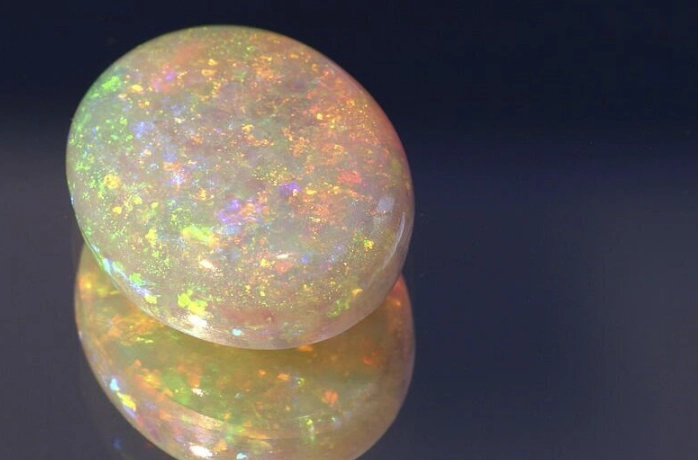
What Exactly *Is* an Opal? The Science Behind the Magic
So, what's the secret behind that incredible light show? It all comes down to structure, not chemistry. Unlike most gems which are crystals, opal is a non-crystalline form of silica (think tiny spheres of a material similar to glass or quartz). It forms when water rich in dissolved silica seeps into cracks and cavities in the earth, often in ancient geothermal hot springs or within sedimentary rock.
As the water slowly evaporates over millions of years, it leaves behind a deposit of these microscopic silica spheres. The magic happens in the empty spaces between these spheres. They act like a natural diffraction grating. When white light enters this grid-like structure, it gets split up into the colors of the spectrum—just like light passing through a prism. The size and arrangement of the spheres determine which colors you see. Larger spheres give reds and oranges (the rarest and most prized), while smaller ones give blues and greens. This phenomenon is called play-of-color, and it's the heart and soul of any precious October birthstone opal.
This also explains why no two opals are ever alike. The geological conditions needed to create that perfect stack of spheres are incredibly finicky. It's a miracle any of them form at all. Most silica deposits just form common potch—a dull, non-iridescent opal with no play-of-color. Finding the precious stuff is a real treasure hunt.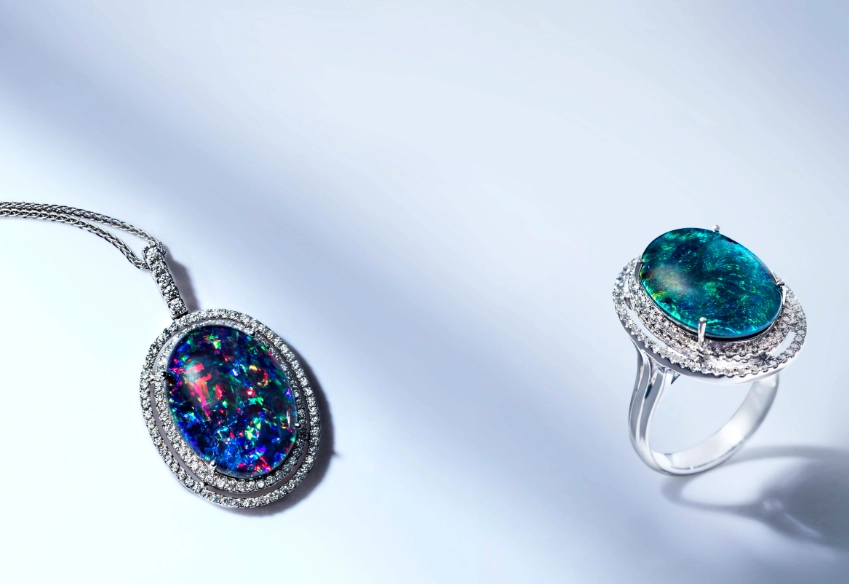
Not All Opals Are Created Equal: A Tour of the Family
If you just search "October birthstone opal," you might think it's one thing. Big mistake. The opal family is diverse, with members that look completely different from one another. Your preference might change once you see the full range.
| Type of Opal | Key Characteristics | Typical Background Color | What Makes It Special / Price Point |
|---|---|---|---|
| Black Opal | The most famous and valuable. Has a dark body tone (dark gray to jet black) that makes the play-of-color incredibly vivid. | Dark gray, blue-black, black. | The supreme champion. The dark backdrop makes colors pop like neon. Mined primarily in Lightning Ridge, Australia. Commands the highest prices per carat. |
| White or Light Opal | Has a light, milky white or pale gray body tone. Play-of-color is softer and more pastel. | White, cream, very light gray. | The classic October birthstone opal look. More abundant and affordable than black opal, making it perfect for entry into opal jewelry. Often has a delicate, ethereal beauty. |
| Boulder Opal | Forms within ironstone rock. The opal is cut with the host rock left as a backing. | Opal veins are often blue/green, backed by brown ironstone. | Incredibly durable due to the natural ironstone backing. Offers wild, organic patterns. The contrast between the raw rock and vibrant color is stunning. A personal favorite for rustic jewelry. |
| Crystal Opal | Any opal (black or white) that is transparent or semi-transparent. You can see through the stone to the play-of-color inside. | Transparent to semi-transparent. | Looks like a jelly bean filled with fire. The transparency adds depth, making the color play feel three-dimensional. Highly sought after by collectors. |
| Fire Opal | Often transparent to translucent, with body colors of yellow, orange, or red. May or may not have play-of-color. | Warm yellow, orange, red. | The warm, fiery body color is its main attraction. If it *also* has play-of-color, it's exceptionally rare and valuable. Primarily from Mexico. |
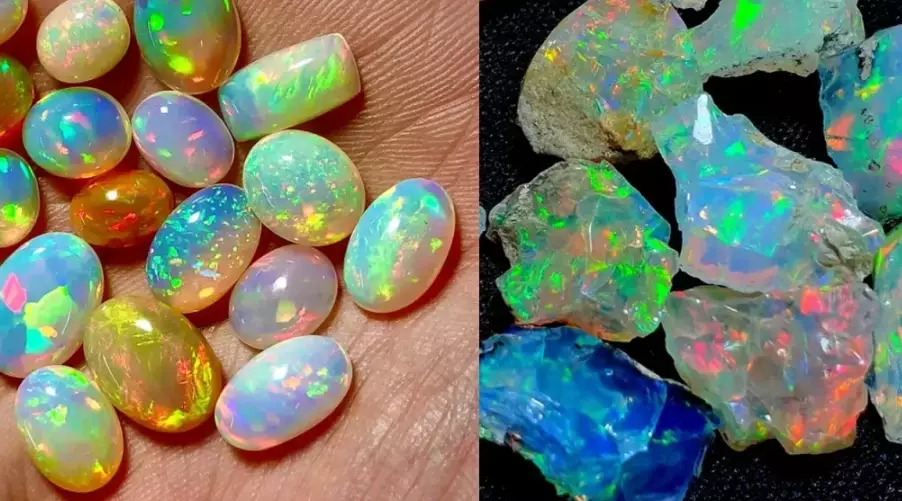
| Ethiopian Opal | A newer find (1990s). Often has a honey-like or smoky body color and can be hydrophane (absorbs water). | Often honey-brown, white, or orange. Can be quite transparent. | Known for incredible brightness and large patterns of color. The hydrophane nature requires special care (more on that later). Offers amazing value for the visual impact. |
See what I mean? Choosing your October birthstone opal is less about picking "an opal" and more about choosing which personality speaks to you. Do you want the dramatic, high-contrast punch of a black opal, or the gentle, dreamy wash of color in a white opal? The decision is deeply personal.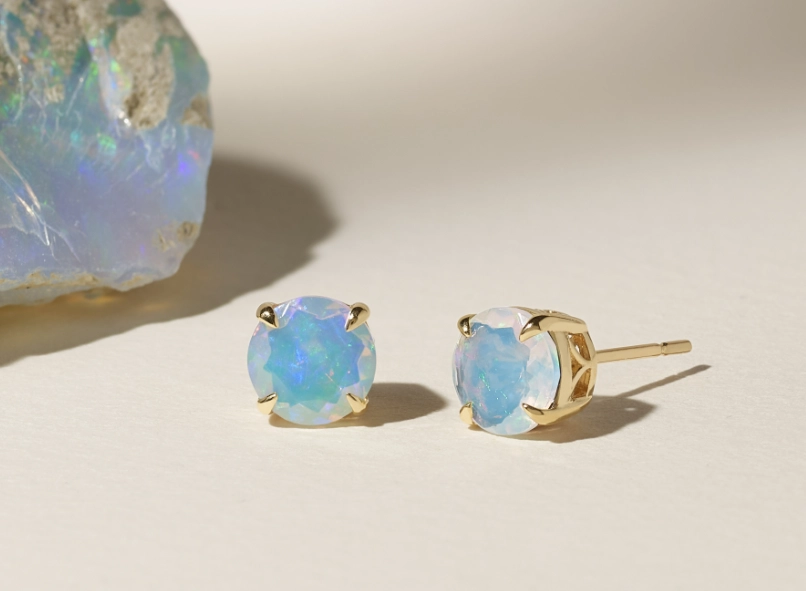
More Than Just Pretty: The Meaning and History of Your October Birthstone
Opals have been wrapped in lore for centuries. The ancient Romans considered it the most precious of all gems, a symbol of hope and purity. They believed it contained the virtues of all other stones because it displayed all their colors. Arab legends said opals fell from the heavens in flashes of lightning. In the Middle Ages, it was called the "eye stone" and believed to grant the wearer the power of foresight and protect their eyesight.
But let's address the elephant in the room: the so-called "opal curse." The notion that opals are bad luck for those not born in October is one of the most persistent and frustrating myths in gemology. Where did it come from? Most historians trace it back to Sir Walter Scott's 1829 novel, *Anne of Geierstein*, where a princess meets a tragic end, and her enchanted opal appears to be linked to her downfall. The book was a bestseller, and the idea stuck, fueled later by jealous diamond merchants who saw the Australian opal rush of the late 1800s as a threat to their market. Seriously, it's mostly 19th-century marketing and fiction.
In reality, for most of history, the October birthstone opal was seen as profoundly lucky. It was believed to amplify the traits of the wearer—both good and bad—encouraging faithfulness and loyalty, while also boosting creativity and spontaneity. Today, it's commonly associated with love, passion, and creativity. It's the gem for artists, dreamers, and anyone who embraces change and complexity.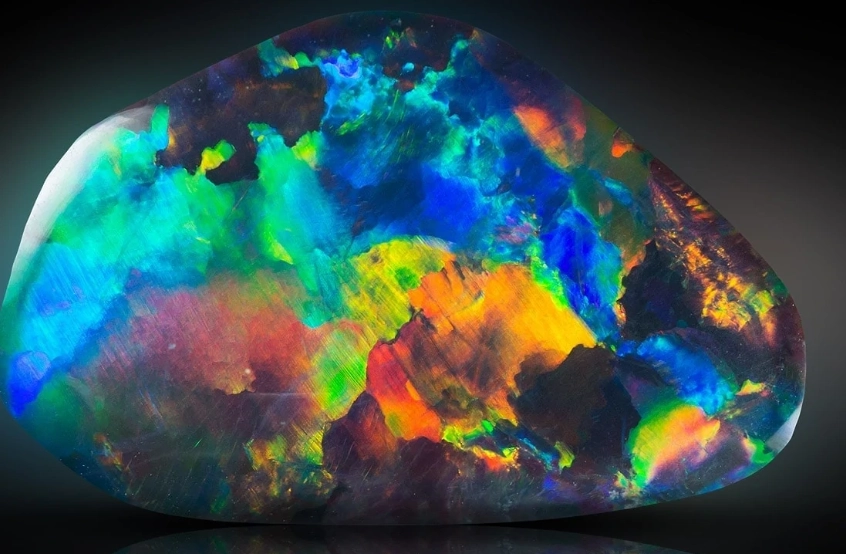
The Crucial Part: How to Care for Your October Birthstone Opal
This is the most important section in this entire guide. Opals are delicate. They contain water—typically between 3% and 10%. If you dry them out or whack them hard, they can crack, lose their play-of-color, or develop a network of tiny cracks called "crazing." But don't panic! With a little know-how, your opal can last generations. I learned this the hard way with a lovely pendant I left on a sunny windowsill. It never looked the same again.
- Avoid Extreme Heat & Dryness: Never leave your opal in a hot car, on a heater, or in direct, scorching sunlight for prolonged periods. This can cause it to dry out and crack. This is the #1 killer of opals.
- Skip the Ultrasonic & Steam Cleaners: These jewelry cleaning methods use heat and vibrations that can shatter an opal or damage its structure. Just don't do it.
- Gentle Cleaning Only: Use a soft, damp cloth (not wet) to wipe it clean. Mild soapy water is okay, but dry it immediately and thoroughly with a soft cloth. Never soak it.
- Last On, First Off: Put your opal jewelry on after applying makeup, hairspray, and perfume. Take it off before household chores, gardening, or swimming. Chemicals and abrasives are its enemies.
- Smart Storage: Store opals in a soft cloth pouch, not loose in a jewelry box where they can be scratched by harder gems. Some people even keep them with a damp cotton ball in a sealed bag to maintain humidity, but that's for very dry climates.
- Special Note on Ethiopian Opals: Many (not all) are "hydrophane." They can absorb liquids like water or oil, which can temporarily change their appearance (making them look clearer or duller). They usually revert when dry, but it's a reason to be extra cautious with liquids.
Buying Your October Birthstone Opal: How Not to Get Burned
The opal market can be a wild west. Synthetic opals, treated stones, and misleading descriptions are common. Here’s what to focus on when evaluating a precious October birthstone opal.
The Big Three: Color, Pattern, and Brightness
1. Color: Which colors flash, and how many? Red is the rarest and most valuable, followed by orange, green, and blue. A stone that shows a full spectrum is more valuable than one showing only blue-green. The saturation of the color matters too—vivid, electric hues beat dull, washed-out ones.
2. Pattern: How is the color arranged? Large, sweeping flashes or broad patches (called "harlequin" or "flag" patterns) are very desirable. Small, pinfire patterns are more common. Some people prefer the confetti-like look, others want a solid block of color. There's no right answer, but rarity affects price.
3. Brightness: How vivid and "loud" is the play-of-color from across a room? A dull opal with great color isn't as impressive as a bright one with slightly less rare colors. Brightness is often the first thing you notice.
Body Tone and Clarity
For black and white opals, the body tone (the background color) is critical. A darker body makes colors pop, hence the premium for black opal. For crystal opals, transparency and lack of cloudiness are key. Any cracks, pits, or sand inclusions will lower the value significantly.
Cut and Setting
A good cutter will shape the opal to maximize the play-of-color from the top. It should be symmetrical and well-polished. The setting should protect the stone. Thin, exposed opal doublets or triplets (composite stones) are much more fragile than solid opals.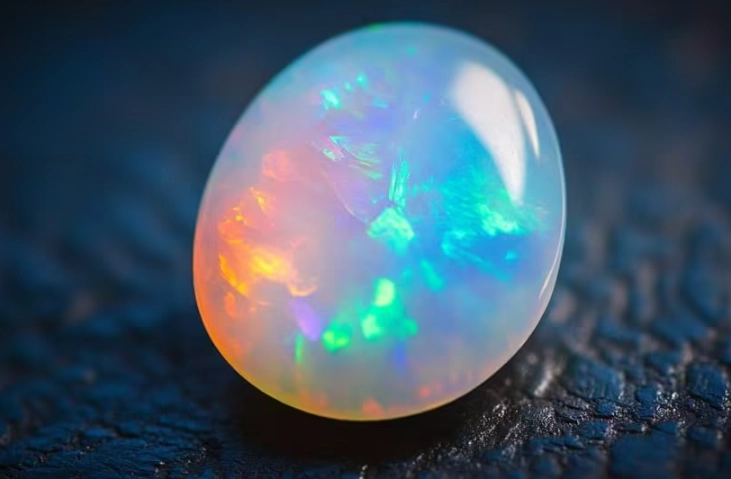
Ask questions. A lot of them.
Where is it from? (Australian, Ethiopian, etc.). Is it a solid opal, doublet, or triplet? (Doublets have a thin opal layer glued to a black backing; triplets have a clear quartz cap on top. Both are legitimate but are much less valuable than solid stones). Has it been treated? (Some are smoked or sugar-treated to darken the body tone). A reputable seller, like those providing educational resources through the Gemological Institute of America (GIA), will be transparent about this. The GIA website is an incredible, non-commercial resource for understanding gem basics before you buy.
Answering Your Burning Questions About the October Birthstone Opal
Is opal too soft for an engagement ring?
It depends on your lifestyle. On the Mohs scale, opal is 5.5-6.5, which is significantly softer than a diamond (10) or sapphire (9). If you are hard on your hands, work with them, or want a "wear it and forget it" ring, an opal is a risky choice. It will scratch and can chip. However, if you love the stone, understand the care required, and are willing to be cautious, it can be done. Choose a protective bezel setting, insure it, and be prepared for it to need more TLC than a harder stone. Consider a white or black October birthstone opal for a dramatic, non-traditional engagement ring that's full of meaning.
Why is my opal sometimes cloudy or less colorful?
This is usually due to moisture. If water or oils get into surface-reaching cracks or pores (especially in hydrophane Ethiopian opals), they can reduce the contrast needed for the play-of-color, making the stone look milky or dull. As it dries out naturally over hours or days, it should return to normal. Persistent cloudiness could indicate damage or crazing. Extreme dryness can also cause permanent cracking, which kills the color.
What's the difference between an Australian and an Ethiopian opal?
Beyond geography, they have different personalities. Classic Australian opals (from Lightning Ridge, Coober Pedy) are generally non-hydrophane and more stable. They've been mined for over a century and have a established market. Ethiopian opals (from Welo) are newer, often brighter with larger color patterns, but many are hydrophane, meaning they absorb water and require more careful handling. Both can be spectacular. Australian opals often command a traditional premium, while Ethiopian stones can offer incredible visual bang for your buck.
Can opals get wet?
Brief, accidental exposure to water (like washing your hands) is generally fine for solid, non-hydrophane opals. Just dry it promptly. However, you should never soak an opal, shower or swim with it, or expose it to harsh chemicals in water. For hydrophane Ethiopian opals, even brief water exposure can cause temporary clouding. The safe rule for all opals is: keep them as dry as possible.
Wrapping It Up: Is the October Birthstone Opal Right for You?
Choosing an October birthstone opal is a commitment to beauty that requires awareness. It's not the gem for someone who wants to toss their jewelry in a drawer and forget about it. But if you're the type who appreciates uniqueness, loves a piece with a story and a soul, and doesn't mind a little extra care, there's nothing else like it.
It's a gem that demands to be noticed, to be engaged with. The play-of-color changes with the light and the angle, so you're never looking at the same stone twice. It reflects complexity, change, and a certain fearless individuality. For those born in October, or anyone drawn to its magic, it's more than a birthstone—it's a tiny, wearable piece of natural wonder.
Do your homework, buy from someone knowledgeable, learn its quirks, and your October birthstone opal will reward you with a lifetime of captivating fire. Just maybe don't leave it on the windowsill.