Your Quick Guide to Opal
So, your birthday is in October? Or maybe you're shopping for someone who is. Either way, you've landed on the right page. When we talk about the opal birthstone month, we're diving into one of the most fascinating and misunderstood gems out there. It's not just a stone; it's a show. A kaleidoscope trapped in mineral form. But what exactly makes opal so special, and why does it get the honor of representing October?
Let's be real. Most people know diamonds are hard and rubies are red. But ask someone about opal, and you might get a mix of "ooh, pretty colors" and "isn't that bad luck?" There's a lot of myth and mystery wrapped up in this gem. I remember the first time I held a fine black opal. The play-of-color wasn't just shimmering; it seemed to move, like oil on water under a sunset. It was breathtaking, but the seller immediately launched into a list of things I shouldn't do with it—don't get it wet, don't expose it to heat, handle with care. Honestly, it felt like adopting a very fragile, very expensive pet.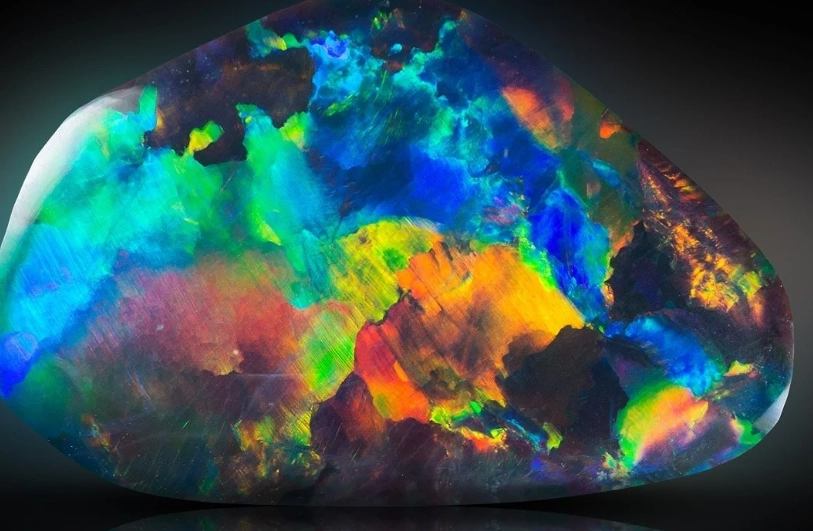
That experience got me digging. I wanted to cut through the noise and the old wives' tales. This guide is the result. We're going to look at the opal birthstone month from every angle: its wild history, the science behind its fire, how to buy a good one without getting scammed, and yes, how to keep it from cracking on you (a very real concern). Whether you're a October baby claiming your birthright or a gem lover drawn to its unique beauty, there's something here for you.
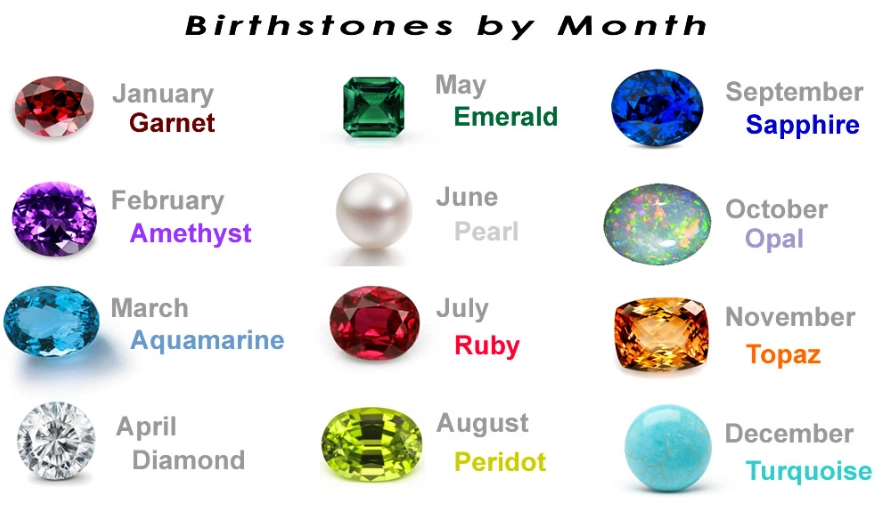
Key Takeaway Right Up Front: The opal birthstone month is October. Opal shares this honor with tourmaline, but opal is the traditional choice, steeped in far more legend and lore. Its value lies almost entirely in its "play-of-color"—that magical rainbow flash—which no other gemstone replicates quite the same way.
Why is Opal the Birthstone for October?
The connection between opal and October isn't some random modern marketing ploy. It's old. Really old. The tradition of birthstones itself is thought to have biblical origins, but the modern list we use was standardized in 1912 by the National Association of Jewelers in the USA. And right there, opal was cemented as the primary birthstone for October.
But its association with this time of year goes back centuries. October is a month of transition—summer's warmth fading into autumn's crispness. Opal, with its shifting colors, mirrors that change perfectly. Ancient cultures saw it as a stone that contained the virtues of all other gems because it displayed all their colors. The Romans considered it a symbol of hope and purity. In Arabic folklore, they believed opals fell from the sky in flashes of lightning. That idea of celestial fire stuck.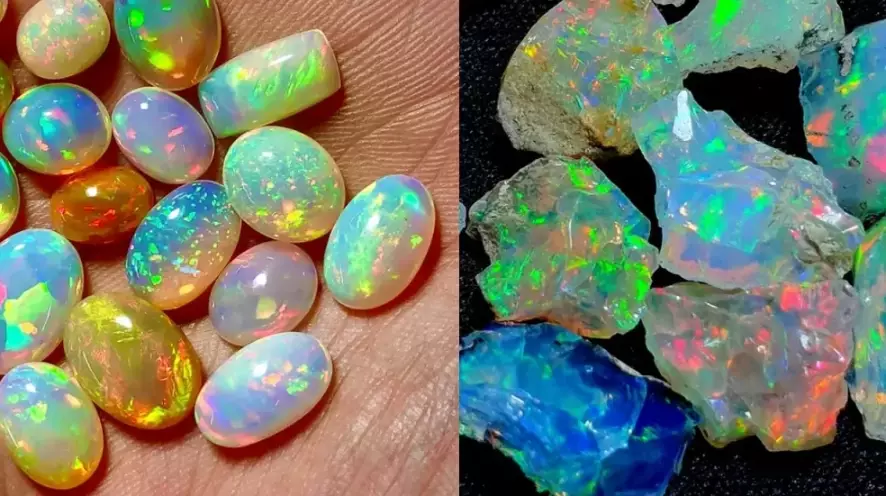
There's a practical side too, I think. October lacks the flashy, singularly colored gems like July's ruby or April's diamond. It gets something more complex, more nuanced. Maybe that's fitting for an autumn month. It demands a closer look, a bit more attention. You don't just glance at an opal; you get lost in it.
Let's tackle the elephant in the room: the "bad luck" myth. This is largely traced back to Sir Walter Scott's 1829 novel *Anne of Geierstein*, where an opal-bearing heroine meets a tragic end. Before that, opal was largely seen as supremely lucky. The diamond cartels of the 19th and 20th centuries might have also... encouraged this superstition to sell more diamonds. Just a theory. But honestly, I've known people who've worn opals daily for decades with nothing but good fortune. Don't let an old novel dictate your jewelry choices.
The Rainbow in a Stone: Understanding Opal's Colors and Types
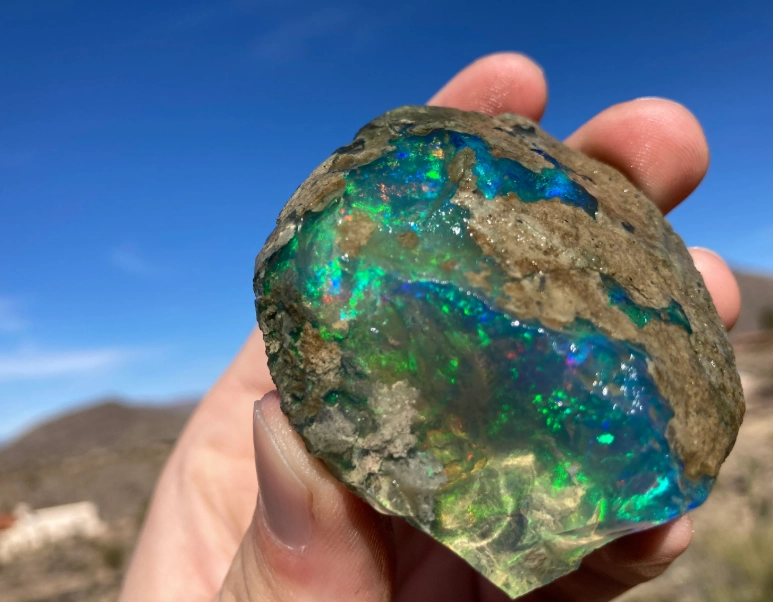
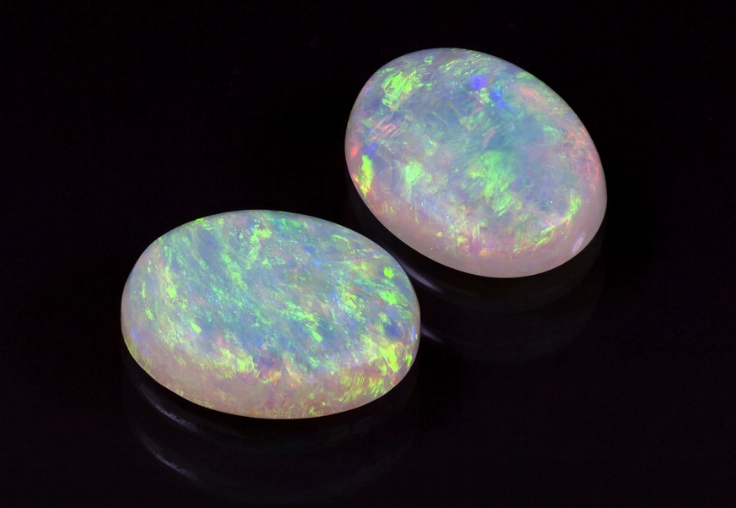
This is where opal leaves every other gemstone in the dust. That play-of-color isn't a stain or an inclusion; it's physics. Opal is made of tiny silica spheres arranged in a grid. When light hits this grid, it diffracts, breaking into the full spectrum of colors—like a prism. The size and arrangement of the spheres determine which colors you see. It's nature's own diffraction grating.
Not all opals have this play-of-color, though. Those that do are called "precious opal." The ones that don't are "common opal" or "potch." When you're buying an opal birthstone for the October birthstone month, you're almost certainly looking for precious opal.
Now, the world of precious opal is vast. They're mainly categorized by their background color, or "body tone." This is where it gets fun.
The Major Opal Types You'll Encounter
- White Opal: This is the classic. It has a light, milky white or pale gray body tone with play-of-color on top. It's the most common and generally the most affordable type of precious opal. It's luminous and feminine, a fantastic entry point into opal ownership.
- Black Opal: The rockstar. Don't let the name fool you—the body tone is dark, ranging from deep gray to jet black. This dark backdrop makes the play-of-color explode with incredible intensity. Black opals from Lightning Ridge, Australia, are the most famous and command the highest prices per carat. A top-quality black opal can rival a diamond in value. If you see one, you'll understand.
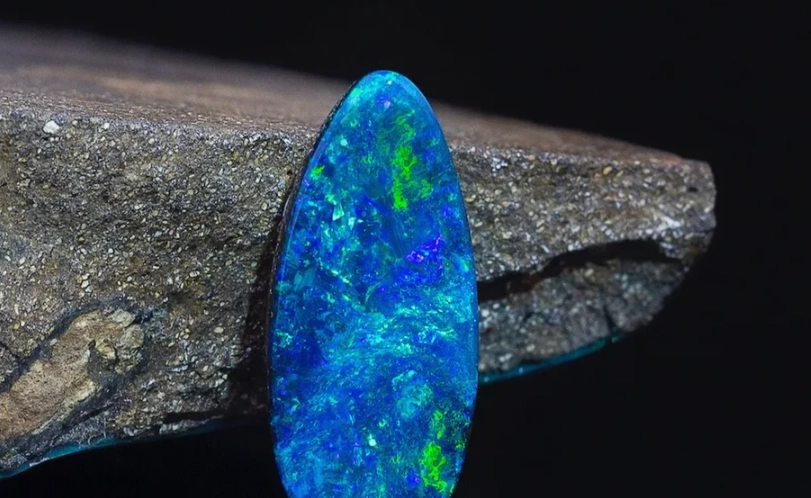
- Boulder Opal: My personal favorite for its rugged beauty. This opal forms in thin veins within ironstone boulders. The jeweler leaves the natural ironstone backing attached as part of the finished gem. The result is a stunning contrast between the vibrant color flashes and the dark, rustic host rock. It's organic and artistic.
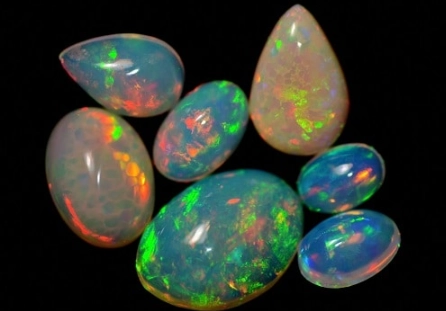
- Crystal Opal: This refers to any opal with a transparent to semi-transparent body. You can see through it! The play-of-color seems to glow from within, like a stained-glass window. It can be on a light or dark body tone. The clarity and depth are mesmerizing.
- Fire Opal: Often a point of confusion. This is a translucent to transparent opal that's usually yellow, orange, or red. It *may* have play-of-color, but its primary value is its fiery body color, like a凝固的 sunset. Major sources are Mexico. It's vibrant and warm, perfect for someone who loves bold color.
So, which is the "best" for an October birthstone piece? There's no right answer. It's like asking which ice cream flavor is best. White opal is timeless and accessible. Black opal is the ultimate luxury statement. Boulder opal has unique character. It depends on your style and budget.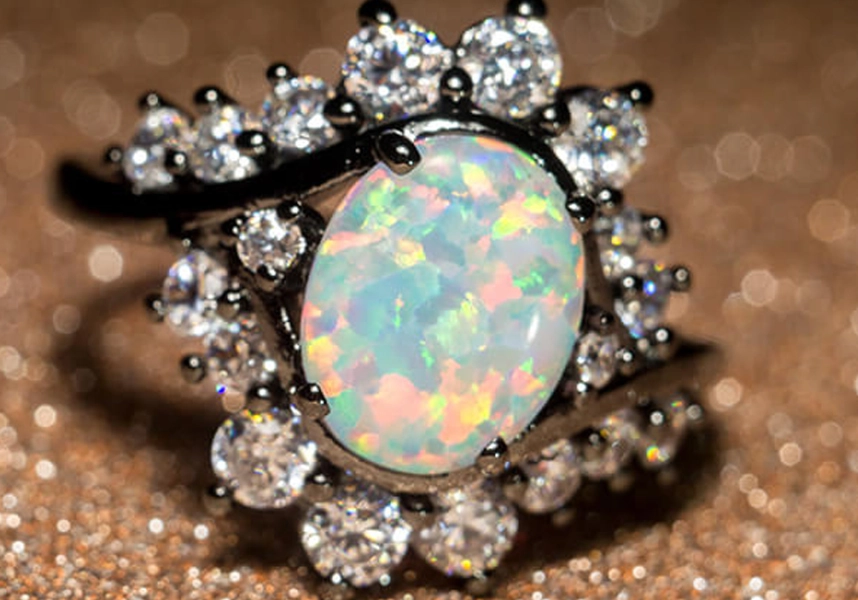
Your Practical Guide to Buying an Opal Birthstone
Alright, let's say you're sold. You want an opal to celebrate the opal birthstone month. Walking into a jewelry store or browsing online can be overwhelming. Here’s a down-to-earth checklist to keep you from getting overwhelmed or, worse, ripped off.
What to Look For: The Big Five Factors
Gemologists evaluate opal on five key criteria. Forget the "Four Cs" of diamonds; opal has its own rules.
- Play-of-Color (The Most Important): This is everything. Look for brightness, the range of colors (red is rarest, then orange, green, blue), and the pattern. Do the colors flash and shift as you move the stone? Broad flashes are lovely, but small, dense pinfire patterns can be incredibly bright.
- Body Tone: As we discussed, darker is generally more valuable, all else being equal. A brilliant play-of-color on a black body is the holy grail.
- Clarity & Transparency: For crystal opals, the clearer, the better. For white or black opals, you want a clean, smooth surface without distracting sand pits or cracks. A few minor imperfections are normal, especially in boulder opal, but they shouldn't dominate the stone.
- Cut & Shape: Opal is often cut in freeform shapes (called "cabochons") to maximize the color play. A good cut should be symmetrical, with a nice, smooth dome. A flat dome won't reflect light as well; one that's too high can make setting difficult.
- Carat Weight: Size matters, but not like with diamonds. A smaller stone with phenomenal color is worth far more than a large, dull one. Opal is sold by the piece or by carat, but the price per carat skyrockets with quality.
Here’s a quick reference table to summarize the opal types and their key traits. This should help you visualize what you're looking for.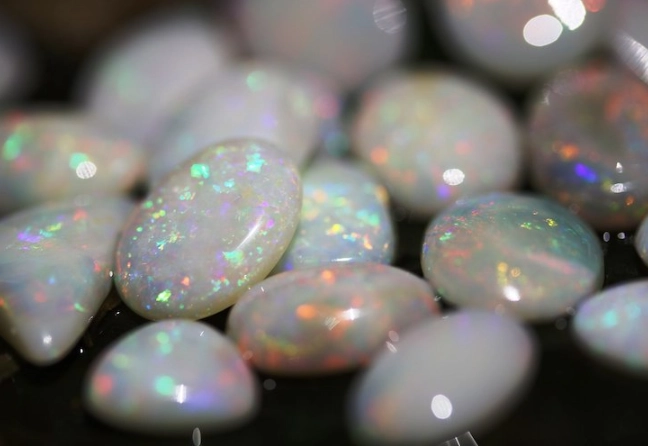
| Opal Type | Body Tone | Key Characteristic | Typical Price Range (Relative) | Best For |
|---|---|---|---|---|
| White Opal | Light, milky white | Classic, soft play-of-color | $$ (Most Affordable Precious Opal) | First opal, earrings, delicate pendants |
| Black Opal | Dark gray to jet black | Vivid, high-contrast color flashes | $$$$ (Most Expensive) | Statement rings, heirloom pieces |
| Boulder Opal | Dark (ironstone backing) | Natural, organic look with color veins | $$$ | Men's jewelry, bold pendants, unique rings |
| Crystal Opal | Transparent to semi-transparent | Play-of-color that glows from within | $$$ | Elegant rings, pieces where light can pass through |
| Fire Opal | Yellow, orange, red | Fiery body color, may or may not have play-of-color | $$ | Warm, sunny jewelry, alternative October birthstone look |
Synthetic and Treated Opals: Know What You're Buying
This is crucial. The market is full of "opal" that isn't natural.
- Lab-Created/Synthetic Opal: Scientists have replicated the silica sphere structure. It has real play-of-color but is man-made. It's much cheaper and more durable. It should be clearly labeled as synthetic, created, or lab-grown. There's nothing wrong with it if you like the look and price, but you shouldn't pay natural stone prices for it.
- Doublets & Triplets: These are like opal sandwiches. A doublet is a thin slice of precious opal glued onto a dark backing (like black potch or glass). A triplet adds a clear quartz or glass cap on top to protect the thin opal slice. They are real opal, just in a composite form. They are affordable ways to get the black opal look, but they can't be soaked in water (the layers can separate).
- Treated Opals: Some white opals are "smoke treated" or sugar-acid treated to darken the body tone and mimic black opal. Reputable sellers will disclose this. Ask directly: "Has this opal been treated in any way?"
My advice? If you're buying a significant piece for the October birthstone month, ask for a gemological report from a reputable lab like the Gemological Institute of America (GIA). For peace of mind, it's worth the small fee.
Living with Opal: The Essential Care and Cleaning Guide
Here's the part most blogs gloss over, but it's the most important for long-term enjoyment. Opal is delicate. It has a water content (between 3-20%), which makes it susceptible to cracking if it dries out too quickly or experiences sudden temperature changes. It's also relatively soft (5.5-6.5 on the Mohs scale), meaning it scratches easily.
Your Opal Care Checklist
- Wear It Often: Seriously. The natural oils from your skin and the ambient moisture in the air help keep it hydrated. An opal locked in a dry safe for years can become brittle.
- Clean Gently: Use only a soft, damp cloth. Maybe a tiny bit of mild soap. Never use ultrasonic cleaners, steam cleaners, or harsh chemicals. They will destroy your opal.
- Storage is Key: Store opal jewelry separately in a soft pouch. Don't let it bang against harder gems. Some people even store them with a damp cotton ball in a sealed baggie if they live in a very dry climate (like desert heating in winter).
- Know When to Take It Off: Gardening, dishes, gym, swimming pool (chlorine is terrible), applying hairspray or perfume—take your opal off. It's not an "every activity" stone like a diamond. Think of it as a special occasion gem that you can also wear for office days or dinners out.
I learned this the hard way. A friend had a beautiful white opal ring. She wore it in the shower every day for a year. The constant wet-dry cycles and exposure to soaps caused the opal to become cloudy and eventually develop a hairline crack. It was heartbreaking. A little knowledge would have saved that stone.
Answering Your Opal Birthstone Month Questions (FAQs)
I get a lot of the same questions from people curious about the October birthstone. Let's tackle them head-on.
Wrapping Up: Is Opal Right for You?
Celebrating the opal birthstone month is about embracing uniqueness. Opal isn't the gem for someone who wants a low-maintenance, indestructible rock. It's for the person who values artistry in nature, who sees beauty in change and complexity. It's for the October soul who reflects the deepening, multifaceted beauty of autumn.
If you're willing to care for it, an opal becomes more than jewelry. It's a little piece of captured rainbow, a conversation starter, a connection to ancient earth and sky. When you look at its shifting colors, you're seeing a geological process that took millions of years. That's pretty incredible.
Start with something small—a pair of white opal studs, a boulder opal pendant. See how it fits into your life. Learn its quirks. You might just find yourself, like I did, falling down the rabbit hole, saving up for that one perfect black opal that speaks to you. And when someone asks, "Is that your birthstone?" you'll have a whole story to tell about the magic of the October birthstone month.
Just remember to take it off before doing the dishes.