Quick Navigation
- The Big Four: Demystifying the 4Cs of Diamond Quality
- The Modern Dilemma: Lab-Grown Diamond vs. Natural Diamond
- Your Action Plan: How to Actually Buy a Diamond
- Beyond the Purchase: Care, Insurance, and the Long Term
- The Investment Myth: Are Diamonds a Good Investment?
- Diamond Questions You Were Too Afraid to Ask (FAQs)
Let's be honest. The world of diamonds can feel overwhelming. You walk into a store, or browse online, and you're hit with a barrage of terms: carat, cut, clarity, color, certification, lab-grown, natural... it's enough to make your head spin. I remember the first time I went shopping for an engagement ring. I had a budget in mind, but zero clue about what I was actually paying for. Was a bigger diamond always better? What did "VS1" even mean? I felt completely at the mercy of the salesperson.
That's why I spent months digging into this. Talking to gemologists, comparing prices, and even making a couple of mistakes along the way (more on that later). This guide is what I wish I had. It's not a dry textbook. It's a conversation. We'll break down the jargon, separate the marketing hype from the real value, and give you the confidence to make a smart decision, whether it's for an engagement, an anniversary, or just because you love beautiful things.
The Big Four: Demystifying the 4Cs of Diamond Quality
Every diamond conversation starts here. The 4Cs—Cut, Color, Clarity, and Carat—were established by the Gemological Institute of America (GIA) to create a universal language for grading diamonds. But here's the thing they don't always tell you upfront: they are NOT equally important. Getting the priority right can save you thousands without sacrificing an ounce of sparkle.
Cut: The Make-or-Break Factor
If you remember only one thing from this guide, let it be this: Cut is king. It's the single most important factor in how a diamond looks. A poorly cut diamond, even if it's huge and flawless, can look dull and lifeless. A superbly cut diamond, even with minor imperfections, will fire with brilliance.
Cut doesn't mean shape (round, princess, oval). It refers to the quality of the diamond's proportions, symmetry, and polish. How well has the craftsman sculpted the raw crystal to maximize light performance?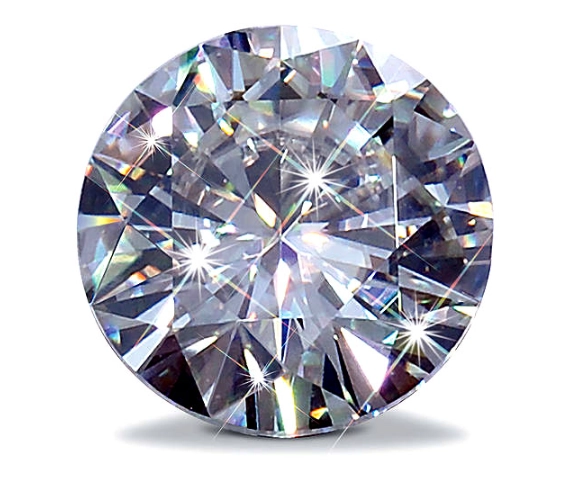
The GIA cut grade scale for round brilliant diamonds is the industry standard: Excellent, Very Good, Good, Fair, Poor. For the best light return and that iconic fiery sparkle, stick to Excellent or Very Good. Good can be acceptable for some fancy shapes where official cut grades aren't always given, but do your homework.
Why does cut matter so much? It's all about light. A well-cut diamond acts like a complex mirror and prism system. Light enters through the top (the table), bounces around inside the stone through total internal reflection, and then shoots back out to your eyes as that mesmerizing blaze of white light (brilliance) and colorful flashes (fire). Get the angles wrong, and light leaks out the bottom or sides, making the stone look dark.
Color: The Spectrum from D to Z
Diamond color is graded on a scale from D (completely colorless) to Z (light yellow or brown). The difference between each grade is subtle and often requires a trained eye under controlled lighting to see.
Here’s the practical truth: once set in jewelry, especially in yellow or rose gold, the difference between a D color diamond and a G or H color diamond is virtually invisible to most people. The metal's color masks the faint body tone of the stone. You're paying a massive premium for those top-tier colorless grades.
The Sweet Spot: For white gold or platinum settings, G, H, and I colors offer fantastic value. They appear white to the naked eye for nearly everyone. For yellow gold, you can comfortably go to J or even K color, and the stone will still look white in the setting. Spending extra to get a D color for a yellow gold ring is, in my opinion, one of the easiest ways to waste money in the diamond game.
Clarity: Finding the Flaws (That Don't Matter)
Clarity measures the internal (inclusions) and external (blemishes) imperfections of a diamond. These are nature's fingerprints. The scale runs from Flawless (FL) to Included (I3).
Most inclusions are microscopic and invisible without 10x magnification. The key is to find a diamond where the inclusions are not visible to your naked eye and are not positioned in a way that impacts durability or brilliance.
Another practical table might help visualize the value zones:
| Clarity Grade | What It Means | Visibility & Value Advice |
|---|---|---|
| FL, IF | Flawless / Internally Flawless. Extremely rare. | For collectors and unlimited budgets. Overkill for most. |
| VVS1, VVS2 | Very, Very Slightly Included. Hard for experts to see. | Excellent quality, but premium priced. Still arguably overkill. |
| VS1, VS2 | Very Slightly Included. Invisible to the naked eye. | The sweet spot. Great balance of quality and value. Highly recommended. |
| SI1, SI2 | Slightly Included. May be visible to sharp naked eye. | Best value zone. SI1 is often eye-clean. Must review the diamond plot/certificate. |
| I1 and below | Included. Visible inclusions. | Can affect brilliance and durability. Generally not recommended for center stones. |
I bought an SI1 diamond once. I scrutinized the certificate from the Gemological Institute of America (GIA), which showed a tiny pinpoint inclusion near the edge. In the actual stone? Couldn't see it to save my life. Saved a bundle.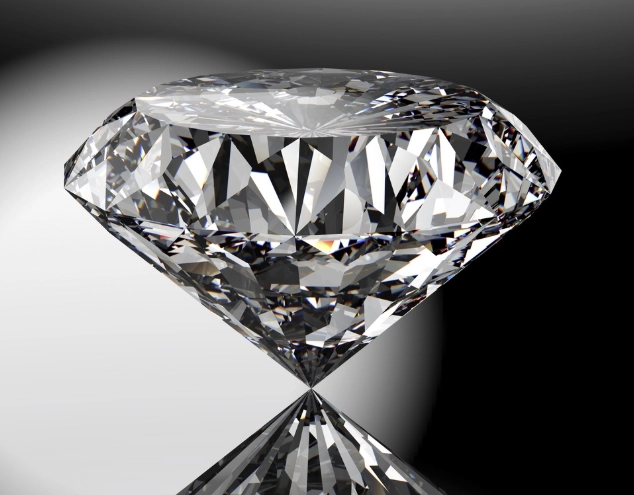
Carat Weight: The Size (and Budget) Question
Carat is simply the weight of the diamond (1 carat = 0.2 grams). It's the most objective C, but it has a non-linear relationship with size and price.
A 2-carat diamond costs significantly more than twice a 1-carat diamond of similar quality. Why? Larger rough crystals are rarer. Also, price jumps happen at "magic sizes" like 0.50ct, 1.00ct, 1.50ct, etc., due to consumer demand.
So, how do you balance the 4Cs? Let's say you have a budget for a 1-carat diamond. You could get a 1.00ct, I color, SI2, Good cut. Or you could get a 0.90ct, G color, VS2, Excellent cut. The second diamond will be more beautiful, sparkly, and appear whiter. The first will just be heavier. I know which one I'd choose.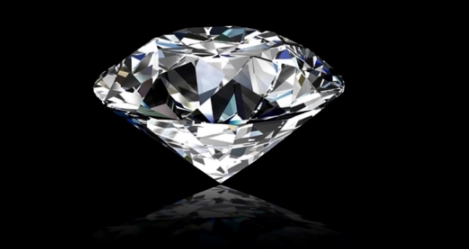
The Modern Dilemma: Lab-Grown Diamond vs. Natural Diamond
This is the biggest shift in the diamond industry in decades. It's also where emotions and opinions run high. Let's lay out the facts without the hype from either side.
Lab-Grown Diamonds (LGDs): These are real diamonds. They are not simulants like cubic zirconia. They have the same chemical composition (carbon), crystal structure, and physical/optical properties as mined diamonds. They are created in a machine using High Pressure High Temperature (HPHT) or Chemical Vapor Deposition (CVD) technology over several weeks.
Natural/Mined Diamonds: Formed deep in the Earth's mantle under extreme heat and pressure over billions of years, then brought to the surface by volcanic eruptions.
Side-by-Side: Key Differences
- Origin: Machine vs. Earth.
- Price: This is the major difference. Lab-grown diamonds typically cost 70-90% less than comparable natural diamonds. You can get a much larger or higher-spec stone for the same money.
- Environmental & Ethical Claims: This is complex. LGD marketing emphasizes a reduced environmental footprint (no mining). The natural diamond industry points to its environmental rehabilitation efforts and the economic benefits for mining communities. Do your own research from neutral sources. The journal Nature has published studies on the environmental impact of both industries.
- Perception & Value Retention: Natural diamonds have a long history as symbols of rarity and enduring value. Lab-grown diamonds are a new consumer technology, and like most tech (e.g., TVs, computers), their production cost and retail price have dropped dramatically and may continue to do so. They have little to no resale value currently.
So, which one is right for you?
It's a personal value judgment. If your primary goal is maximum size and visual quality for your budget, and the story of a natural stone isn't crucial, a lab-grown diamond is a fantastic, logical choice. If the geological history, tradition, and potential for long-term value retention (though never guaranteed) are important parts of the purchase for you, then a natural diamond is the path.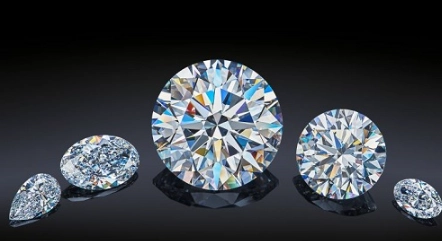
Your Action Plan: How to Actually Buy a Diamond
Okay, you understand the theory. Now, how do you navigate the actual purchase without getting ripped off? Here's a step-by-step, battle-tested approach.
Step 1: Set a Realistic Budget (And Stick to It)
The old "two months' salary" rule is marketing nonsense. Set a budget that makes sense for your financial situation. Remember to budget for the setting (the ring band) separately, which can range from a few hundred to several thousand dollars.
Step 2: Prioritize the 4Cs for YOUR Budget
Based on what we've discussed, here's a typical priority list for best value: 1. Cut (Excellent/Very Good), 2. Color (G-J, depending on setting), 3. Clarity (VS2-SI1, eye-clean), 4. Carat (as big as the first three allow). Adjust based on what you personally care about most.
Step 3: Get a Reputable Certificate (The Paper Trail)
This is non-negotiable. A diamond certificate or grading report is its blueprint. It should come from a major, independent gemological lab. The top two are:
- Gemological Institute of America (GIA): The most respected and consistent standard, especially for natural diamonds. Considered the gold standard.
- International Gemological Institute (IGI): Very common and reputable, especially for lab-grown diamonds and fancy shapes.
Be very cautious with "in-house" certificates from jewelers or from lesser-known labs. Grading standards can be inflated to make the diamond seem better than it is.
Step 4: Choose Your Retailer Carefully
You have three main avenues:
- Local Brick-and-Mortar Jewelers: Great for personalized service, seeing stones in person, and building a relationship. Prices may be higher. Get quotes and compare.
- Online Retailers (Blue Nile, James Allen, etc.): Often have lower prices due to lower overhead. They provide high-resolution videos and 360° views of each individual diamond. Their search tools let you filter by every imaginable spec. This is where you can do deep research.
- Hybrid Approach: This is what I often recommend. Use online tools to educate yourself, find specific diamonds you like (with certificates), and get a price baseline. Then, visit a local jeweller. You can show them what you found online and see if they can source something comparable. It makes you an informed buyer.
Ask about return policies, warranties, and resizing services. A reputable seller will offer a reasonable inspection period (e.g., 30 days).
Beyond the Purchase: Care, Insurance, and the Long Term
You've bought it. Now what? A diamond is durable, but not indestructible.
Cleaning: Simple is best. Soak in a mild solution of warm water and a few drops of mild dish soap. Use a soft toothbrush to gently clean behind the setting. Rinse and pat dry with a lint-free cloth. Avoid harsh chemicals and ultrasonic cleaners unless you're sure the setting is secure and the stone has no significant inclusions that could be exacerbated by vibration.
Insurance: This is critical. Your homeowner's or renter's insurance may not fully cover a valuable piece of jewelry. Get a specialized jewelry insurance policy or a scheduled personal property rider. You'll need a copy of the receipt and the appraisal/certificate. The Jewelers Mutual Insurance Group is a well-known provider in this niche.
Appraisals: Get a professional appraisal from a certified gemologist appraiser (not the selling jeweler) for insurance purposes. Update it every 3-5 years.
The Investment Myth: Are Diamonds a Good Investment?
I need to be blunt here. For the vast majority of people buying a single diamond for personal use, no, it is not a financial investment. It's a purchase of beauty and sentiment.
The retail markup on diamonds is significant. If you tried to sell your diamond the day after you bought it, you'd be lucky to get 30-50% of what you paid, unless it's an exceptionally rare, high-quality stone. The secondary market for individual diamonds is not like the stock market. Lab-grown diamonds have almost zero resale value currently.
Buy a diamond because you love it and it means something to you. Don't buy it expecting it to fund your retirement.
Diamond Questions You Were Too Afraid to Ask (FAQs)
Final thought.
Buying a diamond should be exciting, not stressful. Arm yourself with knowledge, focus on what truly affects beauty, and don't get swept up in marketing or pressure. Whether it's a natural stone with a billion-year history or a brilliant lab-grown creation, choose the one that makes your heart skip a beat when you see it sparkle. That's the real value no certificate can grade.