I remember the first time I held a piece of rough, unpolished turquoise. It was from an old collection, dusty and wrapped in tissue paper. It wasn't the bright blue you see in cheap souvenir shops. It was this deep, almost greenish-blue with a spiderweb of dark matrix running through it, and it felt... heavy. Substantial. Not like plastic. That's the thing about real turquoise – it has a presence. A weight to it, both physically and, well, culturally. For thousands of years, from ancient Egyptian pharaohs to Navajo silversmiths, people have been drawn to this stone. But today, the market is flooded with fakes, treated stones, and confusing information. So let's cut through the noise.
Quick Guide
- The Many Faces of Turquoise: Color is King (and Queen)
- What Actually Makes a Turquoise Stone Valuable?
- A Practical Guide to Buying Turquoise (Without Getting Scammed)
- Caring for Your Turquoise: Keeping That Color Alive
- Turquoise Meaning & Cultural Roots: More Than a Pretty Stone
- Your Turquoise Questions, Answered (The Real Stuff People Ask)
- Wrapping It Up: A Stone with Soul
What is turquoise, really? At its core, it's a hydrated phosphate of copper and aluminum. That's the sciencey bit. The copper gives it that iconic blue, and the aluminum can nudge it towards green. It forms in dry, arid places where acidic water trickles through rock containing these minerals, and over a very long time, deposits form. It's relatively soft (around 5-6 on the Mohs scale according to GIA), which is why it's often stabilized for use in jewelry. But that's where the rabbit hole starts.
The Many Faces of Turquoise: Color is King (and Queen)
Ask anyone about turquoise, and they'll say "blue." But that's like saying wine is "red." The range is staggering, and color is the single biggest factor driving value and desire. It's not just about preference; the color tells a story about where it's from and what's in it.
Let's break down the major players. You'll hear these names thrown around a lot, especially by dealers.
Persian Turquoise: The Legend
This is the classic. The standard bearer. For centuries, the finest robin's egg blue stones came from modern-day Iran (historically Persia). This turquoise is famous for its intense, medium sky-blue color with little to no matrix. It's often called "robin's egg blue" or "sky blue." The color is so consistent and beloved that now "Persian turquoise" is often used as a color grade rather than a strict geographic indicator. Good luck finding genuine, untreated old Persian material today at an affordable price—it's mostly in museums and top-tier collections.
Sleeping Beauty Turquoise: The Modern Icon
Mined in Globe, Arizona, the Sleeping Beauty mine produced some of the most consistent, clean, light blue turquoise in the world until it closed in 2012. No matrix, just a solid, even porcelain-like blue. Because of its uniformity, it became incredibly popular for mass-produced jewelry and inlay work. Its closure is why genuine Sleeping Beauty turquoise has shot up in price. A lot of what's sold as "Sleeping Beauty" now is other material or even reconstituted stone, so provenance is key.
The Southwestern U.S. Spectrum
This is where turquoise gets wild and beautiful. Mines across Nevada, Arizona, New Mexico, and Colorado produce stones with wildly different personalities. Some famous ones include:
- Lander Blue (Nevada): Often called the "king" of American turquoise. It's a small-producing mine with a dark, striking blue color and a fine, intricate black spiderweb matrix. It's one of the most expensive turquoises in the world. Think thousands per carat.
- Bisbee (Arizona): Known for its deep, chocolate-brown matrix, often forming bold patterns against a rich blue background. The mine is closed, making it highly collectible.
- Number 8 (Nevada): Recognizable by its smoky, grey-black matrix that looks like splattered paint on a blue canvas.
- Kingman (Arizona): One of the oldest producing mines, offering a wide range of blues, often with a web matrix.
And then there's the green side. Stones from places like Carico Lake in Nevada can be a stunning lime green, often with a dark webbing. Some people adore this; others only want blue. It's a personal call.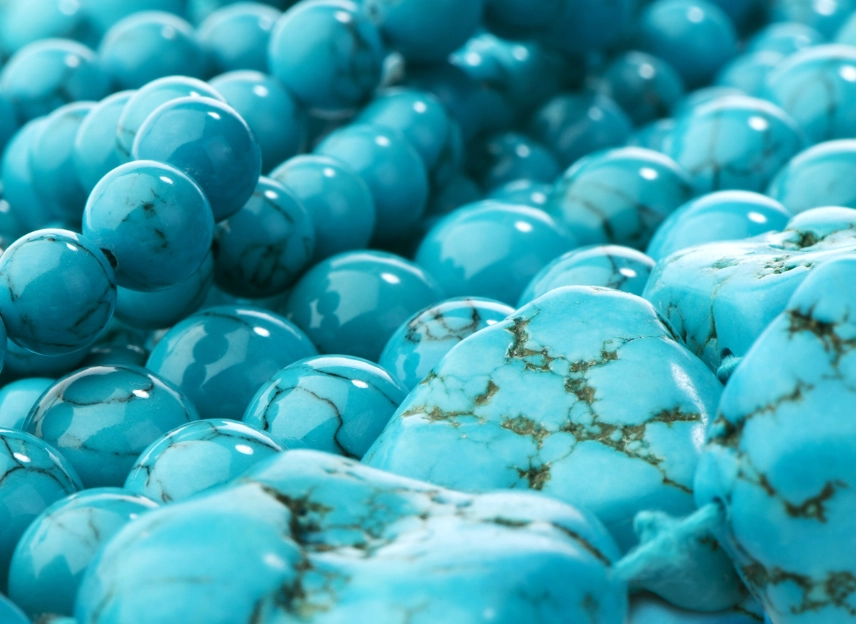
| Turquoise Type / Mine | Classic Color | Key Characteristic | Current Status & Note |
|---|---|---|---|
| Persian (Iranian) | Intense, even robin's egg blue | Little to no matrix (veining) | Historic benchmark; "Persian" often used as a color grade now. |
| Sleeping Beauty (Arizona, USA) | Uniform light sky blue | Very clean, no matrix | Mine closed (2012). Prices rising. Beware of imitations. |
| Lander Blue (Nevada, USA) | Dark blue | Fine, black spiderweb matrix | Extremely rare & valuable. A top collector's stone. |
| Bisbee (Arizona, USA) | Rich blue | Distinctive chocolate-brown matrix | Mine closed. Highly sought after by collectors. |
| Carico Lake (Nevada, USA) | Lime green to blue-green | Often has a dark webbing | Prized for its unique green hues. |
See? It's not just blue. The matrix—the host rock that gets trapped in the stone—isn't a flaw to everyone. In high-quality pieces, the matrix creates art. A unique fingerprint. I personally find stones with bold, artistic matrix patterns more interesting than a flat, uniform color. But that's just me.
What Actually Makes a Turquoise Stone Valuable?
So you're looking at two stones. One is $100, the other is $1000. What's the difference? It's not magic; it's a combination of factors. Let's demystify it.
Color is the headline act.
A strong, even, desirable color (traditionally the robin's egg blue) commands the highest prices. But remember, beauty is subjective. A fantastic green Carico Lake stone can be just as valuable to the right buyer. Saturation matters—a pale, washed-out color is less desirable than a vivid, deep one.
Matrix: Flaw or Feature?
This is where art meets geology. A fine, even spiderweb matrix can increase value, especially if it's aesthetically pleasing. A thick, blotchy matrix that looks messy or weakens the stone can lower it. It's all about the pattern and contrast.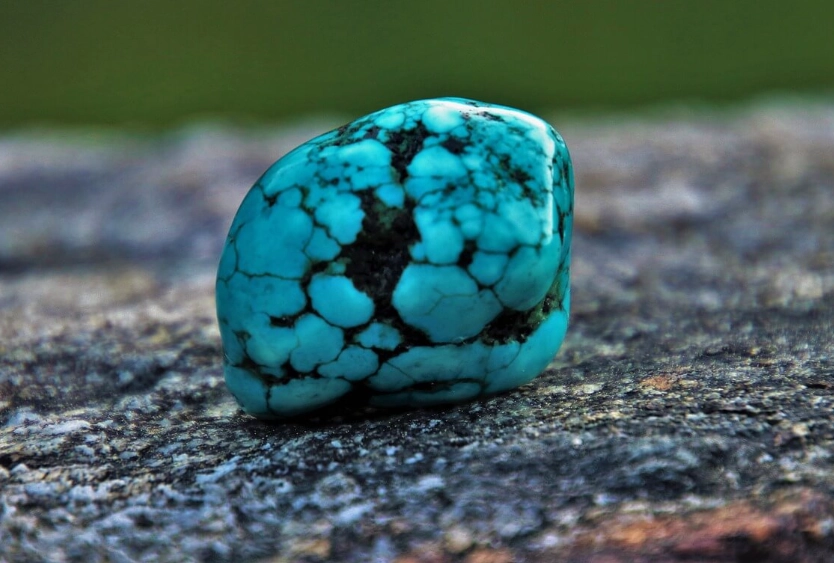
Hardness & Durability.
Turquoise is naturally porous and soft. Some deposits are harder than others right out of the ground—this is called "high-grade" or "natural" turquoise. It's rare and expensive. Most turquoise needs help to be durable enough for a ring you'll wear every day.
Then there are treatments that cross the line:
- Dyeing: Enhancing or completely changing the color. A pale stone dyed a bright blue.
- Reconstitution: Taking turquoise dust/powder, mixing it with resin, and pressing it into a block ("block turquoise"). This is a manufactured product, not a natural stone.
- Waxing/Oiling: A temporary surface treatment to deepen color. It will wear off.
The source (the mine) is a huge value driver. A small, closed mine like Lander Blue or Bisbee means finite supply, which equals higher collector value. A currently producing mine like Kingman will have more available material at a range of prices.
Finally, the cut and craftsmanship. A well-cut cabochon (the smooth, domed shape you typically see) with good symmetry and polish showcases the stone. A poorly cut, lumpy stone detracts from it. And the setting—a piece set in fine handmade Navajo sterling silver will carry a different value than a mass-produced silver-plated setting.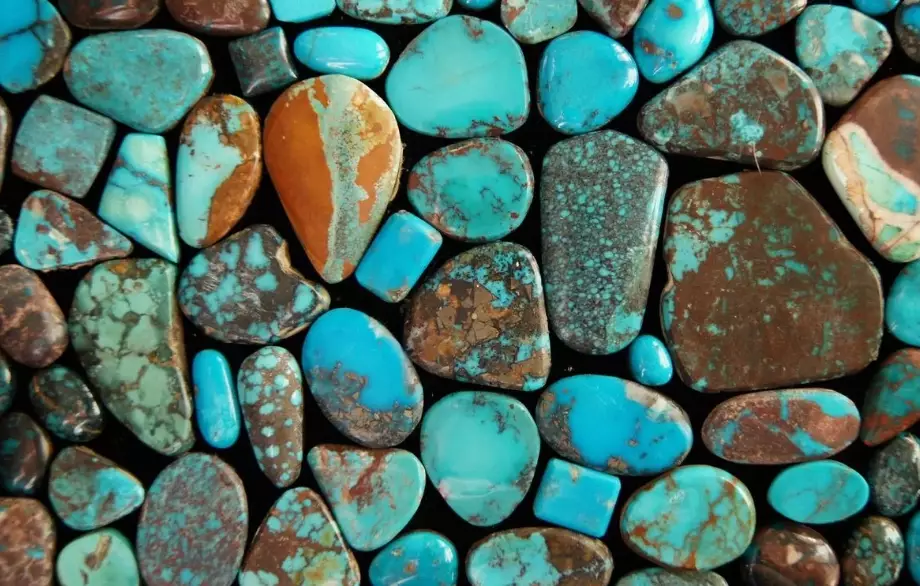
A Practical Guide to Buying Turquoise (Without Getting Scammed)
Okay, theory is great. But you're probably thinking, "How do I use this when I'm actually looking to buy something?" Let's get tactical.
First, know your own goal. Are you buying a fun, fashionable piece for $80? Or are you looking for a serious investment-grade stone or heirloom piece? Your approach will be different.
Spotting Fakes & Imitations:
How to tell real turquoise? This is the big one.
- Howlite & Magnesite: These are white minerals often dyed blue to imitate turquoise. The giveaway? They usually have a grayish or white matrix that looks painted on, not integrated. Look closely at the veins—if they look like a web on the surface rather than inside the stone, be suspicious.
- Plastic/Resin: It will feel light and warm to the touch. Genuine stone feels cooler and denser. You can also do a hot pin test in an inconspicuous spot (carefully!)—plastic will melt and smell acrid, stone won't. (Get permission first!).
- Reconstituted "Block": The color is often too uniform and perfect. Under high magnification, you might see a granular texture or flecks of color that look mixed in, rather than a natural, flowing pattern.
- Glass: Glass has a different luster (often glassier) and may contain bubbles you can see with a loupe.
My personal rule? If a deal seems too good to be true for a large, vividly blue "natural" stone, it almost always is. A reputable local jeweler who specializes in gemstones or a well-established dealer at a gem show (with a physical booth and a reputation) is a safer bet than a random online marketplace seller with stock photos.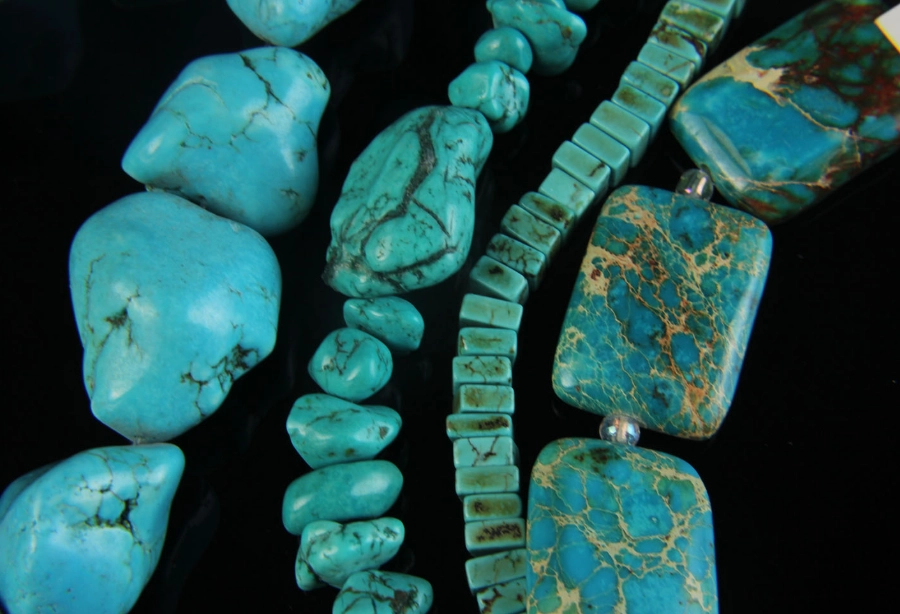
Questions to Ask Yourself Before You Buy:
- What is my budget? (Be realistic. Nice turquoise isn't dirt cheap).
- What color and style do I genuinely love? (Don't buy a green stone just because it's rare if you only wear blue).
- How will I wear it? (A soft stone in a ring will need more protection than in a pendant).
- Am I buying for beauty or investment? (Most people should buy for beauty first).
Caring for Your Turquoise: Keeping That Color Alive
You've bought a piece you love. Now how do you keep it from turning into a dull, greenish blotch? Turquoise is delicate, but not impossible to care for.
The enemies of turquoise are: Chemicals, Heat, and Hard Knocks.
Chemicals: This is the big one. Perfume, hairspray, lotion, sunscreen, and household cleaners can permanently discolor and damage the stone. They can seep into its porous surface. The rule is simple: Last on, first off. Put your turquoise jewelry on after you've applied all your products and taken your shower. Take it off before you wash your hands, apply lotion, or clean the house.
Heat & Sunlight: Prolonged exposure to direct sunlight or high heat (like leaving it on a car dashboard) can dry out the stone and fade its color over time. Store it somewhere cool and dark.
Hard Knocks: Remember, it's a 5-6 on the Mohs scale. A diamond or even quartz can scratch it. Store pieces separately in a soft cloth pouch or a jewelry box with compartments. Don't toss it loosely into a bag with keys and coins.
Cleaning: Never use ultrasonic or steam cleaners. The vibrations and heat can shatter or damage it. Use a soft, dry cloth for regular polishing. For a deeper clean, use only mild, lukewarm soapy water, rinse quickly, and pat dry immediately with a soft cloth. Don't let it soak.
I learned this the hard way with a vintage ring. I wore it while cooking with lemon, and a tiny splash caused a faint, permanent dull spot on the side. Now, it's a house rule: no turquoise in the kitchen.
Turquoise Meaning & Cultural Roots: More Than a Pretty Stone
You can't talk about turquoise without acknowledging its deep spiritual and cultural significance. This isn't just New Age fluff; it's a thread running through human history.
For many Native American cultures, particularly in the Southwest, turquoise is sacred. It's considered a piece of the sky that fell to earth. The Navajo (Diné), Zuni, and Hopi peoples are master silversmiths who have used turquoise in ceremony and adornment for centuries. Specific patterns and settings have meanings. Buying a piece of contemporary Native-made turquoise jewelry isn't just buying a gem; it's supporting a living artistic tradition. If you're interested in this, seek out reputable galleries or artists directly. The Arizona Office of Tourism has resources on cultural heritage and events where you can find authentic work.
In other traditions, turquoise is a stone of protection, healing, and communication. It's said to promote wisdom, balance, and friendship. Whether you subscribe to these metaphysical properties or not, there's no denying the stone's powerful presence. Wearing it often feels like carrying a little piece of ancient earth and sky with you.
Your Turquoise Questions, Answered (The Real Stuff People Ask)
Wrapping It Up: A Stone with Soul
At the end of the day, turquoise connects us to the earth and to history in a way few other stones do. It's not the hardest, not the flashiest, but it has a soulful quality. Its value isn't just in its price tag, but in its story—the arid desert where it formed, the hands that mined and shaped it, the artist who set it.
The best advice I can give is this: Buy what you love from someone you trust. Don't get paralyzed by the fear of buying a treated stone. Just know what you're buying. A well-stabilized, honestly sold piece of American turquoise in a beautiful setting can be a treasure you'll wear for a lifetime. And if you're lucky enough to hold a piece of high-grade natural turquoise, you'll feel that weight, that history. You'll understand.
Start by looking, learning, and asking questions. Visit a natural history museum to see pristine specimens. Go to a reputable gem and jewelry show. Hold different stones. See how the light plays off the matrix. Your eye will train itself. And you'll find the piece of turquoise that truly speaks to you.