Quick Journey Through Amber
- So, What Exactly Is Amber?
- Where in the World Does Amber Come From?
- From Raw Lump to Jewelry: How Amber Gets Its Shine
- How to Tell If Your Amber Is Real (And What It's Worth)
- Wearing and Caring for Your Amber Jewelry
- The Amber Healing Properties Debate
- Your Amber Questions, Answered
- The Final Word on This Golden Gem
Let's talk about amber. You've probably seen it – those warm, honey-colored beads in a necklace, or maybe a ring with a golden stone that seems to glow from within. It's everywhere in jewelry stores and online markets. But here's the thing: most people don't really know what they're looking at. Is it a gemstone? Is it a mineral? Is it just fossilized tree sap (which sounds way less glamorous)?
I got curious about amber a few years back after buying a pendant from a street market. The seller swore it was "real Baltic amber" with all these healing powers. It was pretty, sure, but it felt light, almost like plastic. That got me digging. What I found was a world way more fascinating than I expected, full of ancient forests, prehistoric bugs, and honestly, a lot of misinformation floating around.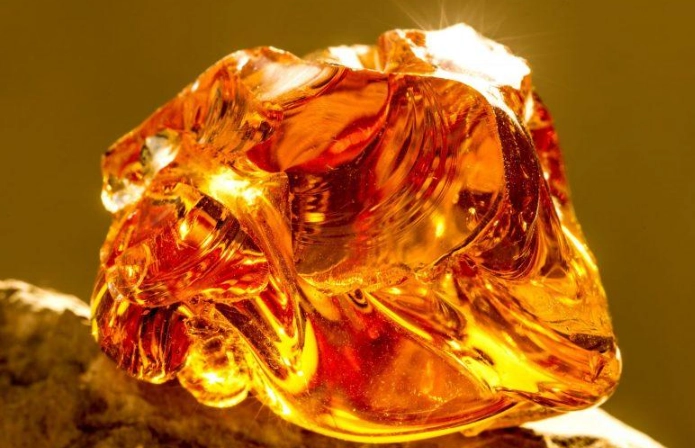
This guide is what I wish I had before I bought that pendant. We're going to strip away the myths and marketing hype and look at what amber actually is. Where does it come from? Why does it cost so much sometimes? And what's the real deal with all those health claims? We'll cover everything from its geological birth to how you should care for that amber necklace your grandma gave you.
So, What Exactly Is Amber?
First, let's clear up the biggest confusion. Amber is not a mineral. Minerals have a crystalline structure, like diamonds or quartz. Amber is organic. It started life as resin – the sticky, gooey defense system of ancient trees, mostly conifers, that oozed out to seal wounds or trap insects. Think of it like nature's band-aid and bug trap, all in one.
Then, over millions of years, a slow magic happened. The resin got buried under layers of sediment. Heat and pressure from the earth worked on it, slowly polymerizing the organic molecules. The volatile components evaporated, and what was left hardened into the solid, stable substance we call amber. This process took a long time. We're talking 30 to 90 million years, placing most amber squarely in the Tertiary period. That means it was forming while dinosaurs were having their final act (for the most part).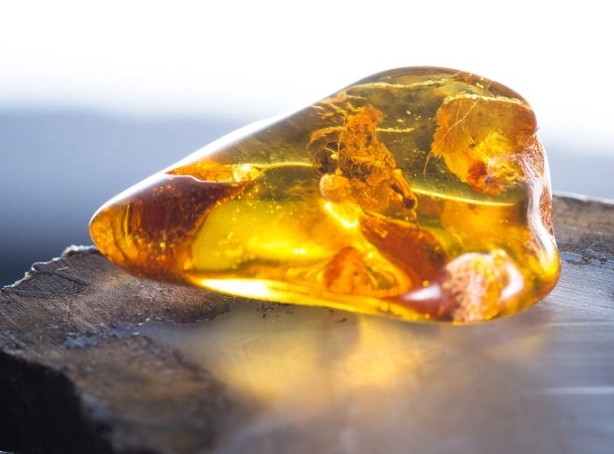
The Key Takeaway: Amber is fossilized tree resin. It's organic, like pearl or coral, not crystalline like most gemstones. Its value comes from its beauty, age, and the incredible snapshots of prehistoric life it can contain.
That last point is the coolest part, for me. Because the resin was so sticky, it often trapped things. Insects, plant fragments, even feathers and small lizards. These inclusions are like tiny time capsules. Scientists can study them to learn about ancient ecosystems in incredible detail. A piece of amber with a perfect, intact mosquito is far more valuable to a collector or museum than a plain piece. It's a direct window into a world long gone.
Where in the World Does Amber Come From?
Amber isn't found just anywhere. You need the perfect combo: ancient forests with resin-producing trees, and the right geological conditions to preserve that resin for eons. A few places on Earth became famous amber hotspots.
The big one, the name you'll hear most often, is the Baltic region. Countries like Poland, Lithuania, Latvia, and Russia (around the Kaliningrad area) sit on the world's largest known deposit of amber. This Baltic amber, also called succinite, is about 44 million years old. It often has a beautiful warm yellow to orange color, and it's the source of probably 80% of the world's amber used in jewelry. The sea washes it up on beaches after storms, which is just a romantic thought – finding million-year-old treasure on the shore.
Then there's Dominican amber. This is my personal favorite. It's younger than Baltic amber, only about 15-20 million years old, but it has two spectacular traits. First, it's much more likely to be transparent. Second, a significant portion of it is fluorescent blue or green under UV light! It comes from the resin of a leguminous tree (Hymenaea protera), not a pine. Dominican amber is famous for its incredible biological inclusions – some of the most detailed fossils ever found.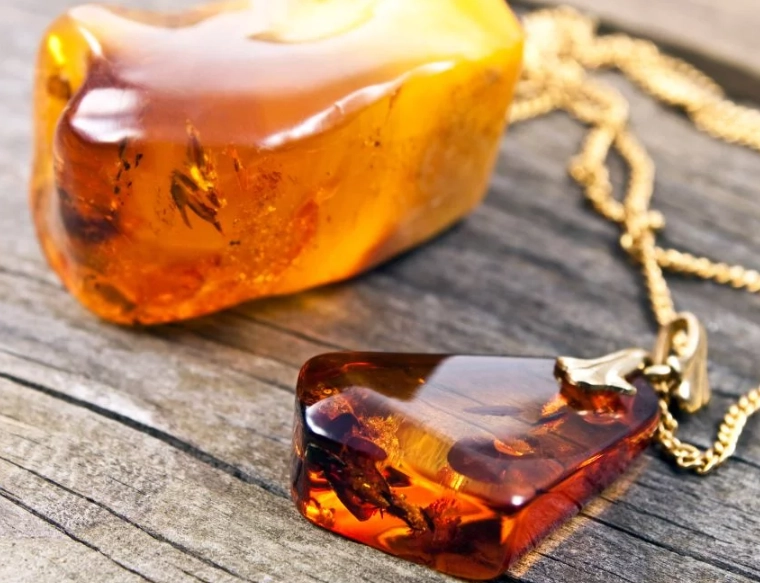
Other sources include Myanmar (Burmese amber, which is older, often redder), Mexico (Chiapas amber), and even some places in Canada and the USA. But for the jewelry market, Baltic and Dominican are the stars.
| Type / Source | Approximate Age | Key Characteristics | Common Colors |
|---|---|---|---|
| Baltic Amber (Succinite) | ~44 million years | Largest deposits, often contains succinic acid. Frequently found on beaches. | Honey yellow, orange, cognac, butter |
| Dominican Amber | ~15-20 million years | High clarity, famous for blue fluorescence under UV, exceptional inclusions. | Yellow, honey, rare blue/green (under UV) |
| Burmese Amber (Burmite) | ~99 million years | Very old, often red due to iron oxides, rich in Cretaceous-era inclusions. | Red, orange, brown |
| Mexican Amber (Chiapas) | ~20-30 million years | Similar to Dominican, often very clear with a golden hue. | Golden yellow, red |
From Raw Lump to Jewelry: How Amber Gets Its Shine
Finding raw amber is one thing. Turning it into that smooth, gleaming bead is another. The process is mostly done by hand, which adds to the craft and cost.
First, the raw piece is studied. Is it clear enough to be a faceted stone? Does it have an interesting inclusion to highlight? Or is it better suited for a cabochon (a polished, domed shape)? The artisan then cuts away the rough, weathered outer crust using saws. This reveals the true color and quality inside.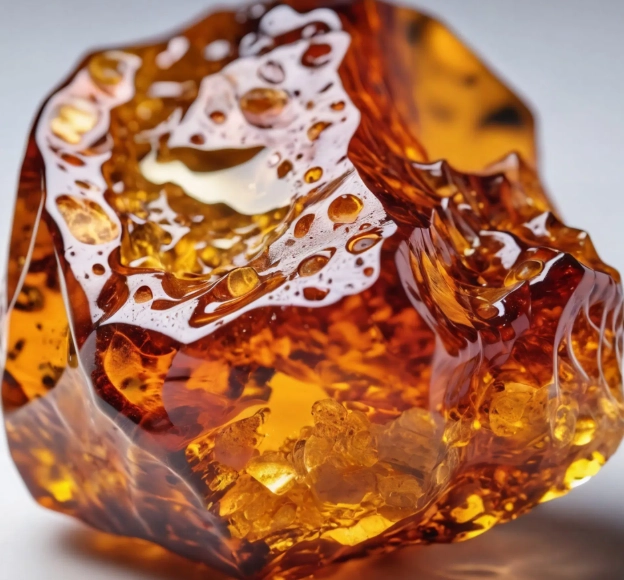
Next comes shaping and polishing. This is done on wheels coated with increasingly fine abrasives, from coarse silicon carbide to a final polish with a paste like tin oxide. It's a dusty, meticulous job. The heat from friction has to be carefully managed – too much and you can damage the amber. For beads, they're drilled after shaping. The final step is often tumbling batches of smaller pieces in a drum with polishing media to achieve a uniform, soft shine.
What about those perfectly clear, faceted amber stones? They're rarer. Amber is relatively soft (2-2.5 on the Mohs scale), so cutting facets requires great skill to avoid chipping. Most amber jewelry you see uses polished cabochons or beads.
How to Tell If Your Amber Is Real (And What It's Worth)
This is the million-dollar question, or at least the fifty-dollar one. With the popularity of amber, fakes are everywhere. Copal (young, not fully fossilized resin), plastic, and glass imitations flood the market. So how can you tell?
Let's start with the famous "salt water test." Real amber has a density very close to that of salt water. Mix a strong solution of salt in water (about 2 tablespoons of salt per cup of water). Real amber will usually float. Plastic and glass will sink. But here's the catch: copal will also float. So this test only rules out some fakes; it doesn't confirm genuine fossil amber.
The hot needle test is more definitive but destructive. Heat a needle (not red-hot, just very warm) and touch it to an inconspicuous spot. Real amber will give off a faint, piney or resinous smell. Plastic will smell acrid and chemical, and it will melt. Copal will smell strongly of resin and melt much more easily than amber. Obviously, don't do this on a finished piece of jewelry you value!
For a non-destructive check, look closely. Real amber often has tiny imperfections, swirls of color, or small bubbles that are spherical (in plastic, bubbles are often elongated). Under a magnifying glass, you might see flow lines from when the resin originally dripped. If it has an inclusion, look at it. In real amber, insects often look contorted, with air bubbles around them, because they struggled. In fake amber, insects are often perfectly posed and too clean.
A Quick Reality Check: That "Baltic amber teething necklace" for babies? The idea is that body heat releases succinic acid which is then absorbed through the skin to reduce pain. There is no credible scientific evidence to support this. The American Academy of Pediatrics warns against them due to choking and strangulation hazards. If you like how they look, fine, but don't rely on them for medicine.
Value depends on a few factors. Color plays a role – rare colors like blue (Dominican), cherry red, or green command higher prices. Clarity is huge. Flawless, transparent amber is more valuable than cloudy material. The presence and quality of an inclusion can skyrocket the price. A piece with a clear, large, and rare insect or vertebrate inclusion can be worth thousands to museums and collectors. Finally, the craftsmanship of the piece matters. A well-made, designed piece of jewelry is worth more than a raw lump of equivalent amber.
Wearing and Caring for Your Amber Jewelry
Amber is beautiful but delicate. Remember, it's only a 2-2.5 on the Mohs hardness scale. Your fingernail is about 2.5. So it scratches incredibly easily.
Amber Care 101: Treat it like the precious fossil it is, not like a diamond.
Store it separately, wrapped in a soft cloth. Never toss it in a jewelry box where harder stones can scratch it. Keep it away from heat and direct sunlight for prolonged periods. An attic or a car dashboard is a terrible place for amber – it can become brittle or even soften. Avoid chemicals: perfumes, hairsprays, cleaners, and even sweat can cloud the surface over time. Put your amber jewelry on last when getting ready.
To clean it, just use lukewarm water, a mild soap, and a very soft cloth. Dry it immediately and gently. No ultrasonic cleaners, no steam cleaners, no harsh polishing cloths.
With proper care, your amber jewelry can last a lifetime and be passed down. But it will likely acquire a fine patina of tiny scratches over the years. Some people think this adds to its character, its life story. I'm one of them. A perfectly pristine piece can sometimes look... new. And there's nothing new about amber.
The Amber Healing Properties Debate
I can't write about amber without addressing the elephant in the room: its alleged metaphysical and healing properties. This is a huge part of its modern popularity. A quick search will tell you amber is an energy cleanser, a pain reliever, a digestive aid, a protector, and a bringer of luck.
Historically, amber has been used in folk medicine for centuries. The ancient Greeks documented its supposed medicinal uses. The tradition is long, but tradition isn't science.
The most common claim is about succinic acid. Baltic amber contains a small amount of it. Proponents say that when worn against the skin, body warmth releases this acid, which is then absorbed and acts as a natural anti-inflammatory. Is there peer-reviewed, double-blind scientific evidence to support this specific mechanism for pain relief? No, there isn't. Any perceived effect could easily be attributed to the placebo effect, which is powerful and real in itself.
Does that mean the experience is invalid? Not necessarily. If someone wears an amber necklace and feels a sense of calm or well-being, that feeling is real to them. It might be the weight of the beads, the beauty of the stone, or a personal connection to it. The mind-body connection is strong. My take? Enjoy amber for its beauty and history. If you feel a personal benefit from wearing it, that's wonderful. But don't substitute it for professional medical advice or treatment. That's a dangerous path.
For a deeper dive into the geological science of amber as a fossil resin, the Geological Society provides excellent, authoritative resources. And for understanding its use and history in jewelry, the Gemological Institute of America (GIA) encyclopedia is an industry-standard reference.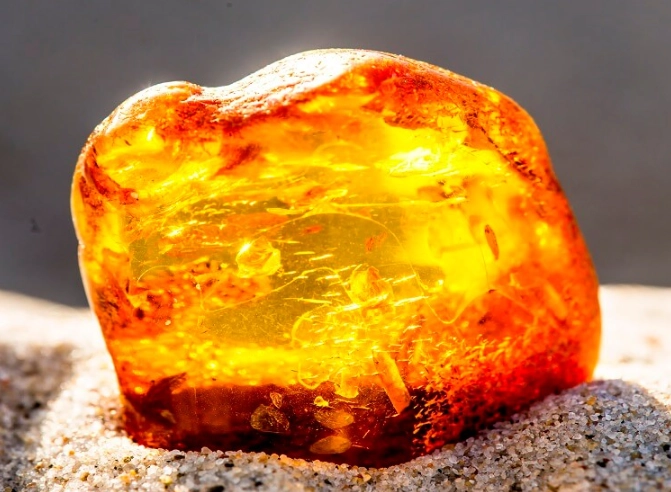
Your Amber Questions, Answered
I get asked a lot of the same things whenever the topic of amber comes up. Here are the straight answers.
Is amber the same as copal?
No, and this is the most common confusion. Copal is also fossilized tree resin, but it's much younger – usually less than a few million years old, often only a few thousand. It's not fully polymerized. Think of copal as a teenager and amber as a senior citizen. Copal is softer, stickier if scratched, and melts more easily. It often has a stronger, fresher resin smell. Sellers sometimes try to pass off copal as "young amber" – it's not. It's copal.
Can amber be any color other than yellow?
Absolutely! While yellow/orange is classic, amber can be white ("bone amber"), red ("cherry amber"), green, blue (under UV light in Dominican pieces), and even a rare black. The color comes from inclusions, soil minerals, or the original tree resin composition.
How can I test my amber at home without damaging it?
The salt water float test is safe and a good first step (real amber and copal float; glass/plastic sink). For a more visual test, examine it under a UV blacklight. Many types of amber, especially Dominican and some Baltic, will fluoresce a blue, green, or white color. Most plastics won't, or they'll fluoresce differently.
Why is some amber so expensive and some so cheap?
Mass-produced, polished beads from smaller pieces or pressed amber (see below) are inexpensive. Large, clear, naturally colored pieces with no inclusions are more costly. Pieces with significant, well-preserved biological inclusions are the most expensive, valued as scientific specimens and unique collectibles.
What is "pressed amber" or "ambroid"?
This is a big one. Pressed amber is made by taking small pieces of natural amber, heating them under high pressure until they fuse, and then reforming them into a larger block or bead. It's still made of real amber, but it's reconstituted. It often has a cloudy, streaky appearance with elongated bubbles. It's not fake, but it's not a single, natural piece either. Ethical sellers should disclose this. It's a way to use fragments that would otherwise be waste.
The Final Word on This Golden Gem
Amber is a storyteller. It tells a story of ancient forests, of survival, of time on a scale we can barely comprehend. When you hold a piece, you're holding millions of years. That's its real magic, far more compelling than any modern marketing claim.
As a gem for jewelry, it's warm, lightweight, and organic. Each piece is unique. It connects us to the deep past in a way a sparkling diamond simply doesn't. But it demands respect and gentle care.
My advice? Buy amber because you love its beauty and its history. Learn to identify the real stuff. Ask questions. A reputable seller, like those associated with museum shops or established lapidary societies (you can often find lists through institutions like the Smithsonian National Museum of Natural History), will be transparent about what they're selling. Don't buy it as a medical device. Buy it as a piece of the Earth's diary, a frozen moment of sunshine from a world before humans. That's more than enough.
And that pendant I bought from the street vendor? After learning all this, I did the hot needle test on a tiny, hidden spot. The smell was sweet, chemical... plasticky. It was a fake. A convincing one, but a fake. The real treasure was the journey of learning it sparked. Hopefully, this guide saves you from that little disappointment and helps you find and appreciate the real, incredible thing.