Your Agate Journey Map
- From Lava Bubbles to Gallery Pieces: How Agate Forms
- A Rainbow in Stone: The Major Types of Agate You Should Know
- What Do You Actually Do With Agate?
- The Tricky Part: Figuring Out If Your Agate is "Real" and What It's Worth
- Finding and Choosing Your Own Agate: A Practical Guide
- Wrapping It Up: The Enduring Appeal of Agate
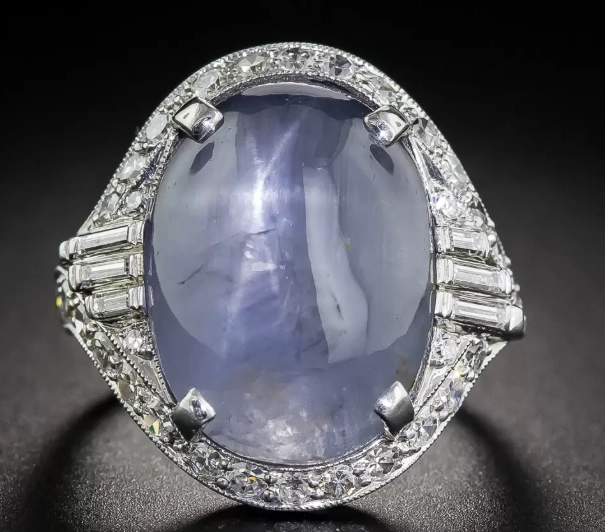
You've probably seen it – those polished slices with mesmerizing bands, the smooth tumble stones in crystal shops, or maybe a ring with a cloudy, dreamy blue stone. That's agate. But if you think it's just a pretty rock, you're in for a surprise. There's a whole world wrapped up in this common yet endlessly fascinating gemstone.
I remember the first time I really looked at an agate. It was at a mineral show, a hefty slice of Brazilian agate. Up close, the bands weren't just lines; they were like a geological fingerprint, layers of history in shades of grey, white, and soft brown. Someone next to me called it "common." I thought it was anything but. That complexity, hidden inside a seemingly humble nodule, is what hooked me.
At its core, agate is a variety of chalcedony, which itself is a type of quartz. The key thing that sets it apart? Those iconic bands. It's a cryptocrystalline quartz, meaning its crystals are so tiny you need a microscope to see them, giving it a smooth, waxy look rather than a faceted, sparkly one. It forms in cavities within volcanic rock, layer by painstaking layer, as silica-rich water seeps in and deposits its microscopic crystals. That process can create not just bands, but incredible inclusions, landscapes, and colors.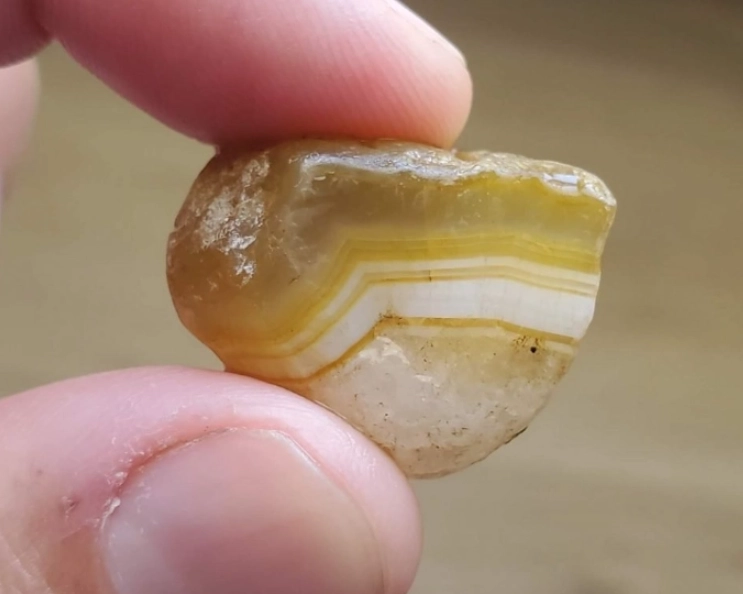
From Lava Bubbles to Gallery Pieces: How Agate Forms
Think of an ancient volcano erupting. The lava flows, cools, and traps gas bubbles inside. Millions of years later, groundwater, supercharged with dissolved silica (from the surrounding rocks), starts percolating through these hollow spaces, now called vesicles.
The silica slowly precipitates out of the water, clinging to the walls. It doesn't happen all at once. Changes in the water's chemistry, temperature, or even seasonal shifts cause different impurities to be trapped—iron, manganese, chromium—which paint each layer a different color. This creates the bands. The process is achingly slow, often taking thousands, if not millions, of years to fill a cavity completely.
Sometimes, the cavity doesn't fill all the way. The center might remain hollow or be filled with later-stage, larger quartz crystals, forming a stunning geode. Other times, mineral-rich solutions create inclusions within the layers—dendrites that look like ferns or trees (that's moss agate), or specks of minerals that create unique patterns.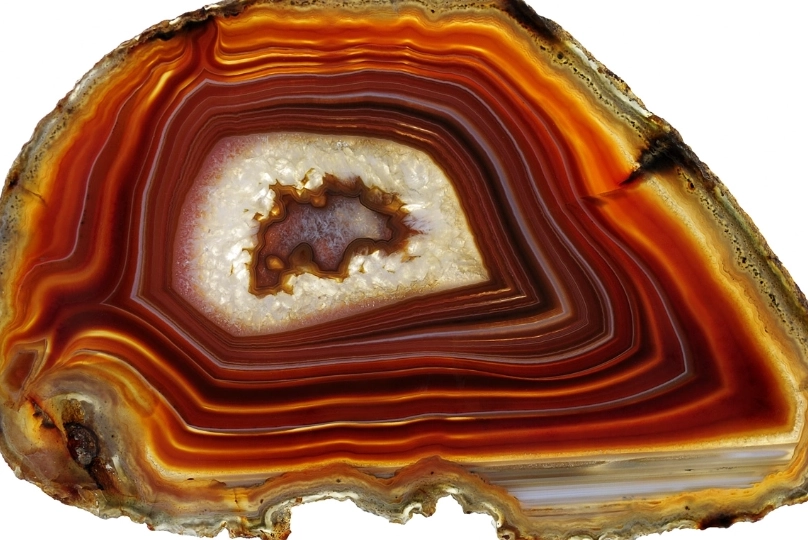
If you want to dive into the real nitty-gritty science of silica deposition and microcrystalline quartz formation, the U.S. Geological Survey has some fantastic, accessible resources on mineralogy that put the whole process into a broader context.
A Rainbow in Stone: The Major Types of Agate You Should Know
This is where agate gets fun. Because of where it forms and what's in the local water, varieties pop up all over the world, each with a signature look. Let's cut through the marketing names and look at the genuinely distinct types.
The Classics: Banded Agates
These are the textbook examples, the ones with clear, parallel bands running in concentric circles.
- Brazilian Agate: Often dyed vibrant blues, pinks, and purples, but in its natural state, it has very fine, often grey and white bands. It's probably the most common agate in jewelry worldwide due to the sheer volume mined.
- Uruguayan Agate: Highly prized by collectors. The bands are often incredibly sharp and contrast beautifully, with deep browns, reds, and whites. It tends to be more translucent than its Brazilian cousin.
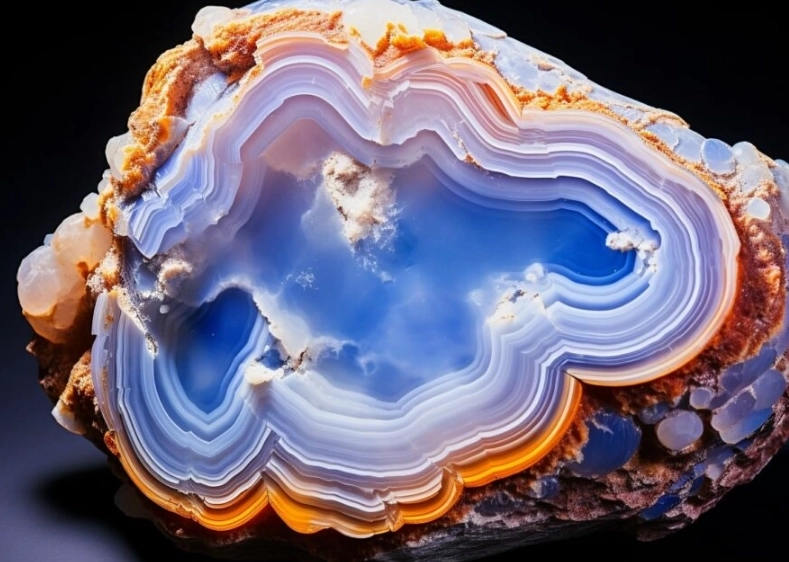
- Lake Superior Agate: The official state gemstone of Minnesota. Its claim to fame is rich, iron-red banding (giving it the nickname "Laker") and often a distinctive "eye" pattern. Finding one on the shores of the Great Lakes is a bucket-list item for many rockhounds.
The Inclusion Masters: Agates with "Stuff" Inside
Dendritic Agate: Very similar to moss agate, but the inclusions are usually black or dark brown manganese oxides, creating delicate, fern-like patterns against a clear or milky white background. It's like a frozen snapshot of a tiny forest.
Tube Agate (Sagenite Agate): This contains needle-like crystal inclusions (often goethite or rutile) that form radiating sprays or tangled masses. It's less common and has a striking, almost chaotic beauty.
The Color Specialists
Some agates are famous for a specific, natural hue.
Blue Lace Agate: Delicate, light blue bands with lacy, undulating patterns. It's one of the most sought-after for its soft, calming appearance. Most comes from Namibia and South Africa. Be warned: a lot of what's sold as "blue lace" is just dyed banded agate. The real stuff has a much softer, more pastel palette.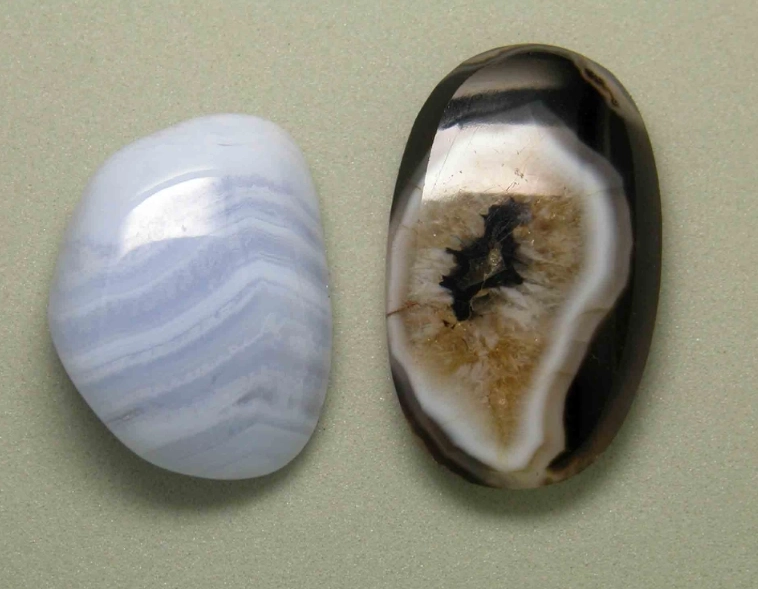
Fire Agate: This is the superstar. It doesn't look like much in rough form—a bumpy, botryoidal (grape-like) crust. But when cut and polished correctly to just the right angle, it reveals an incredible play-of-color—flashes of red, orange, green, and blue—like opal, but with a warmer, deeper base. This iridescence is caused by thin layers of iron oxide (limonite) interfering with light. Cutting it is a high-skill art; botch it, and you ruin the fire.
| Type of Agate | Key Identifying Feature | Primary Source/Origin | Common Uses |
|---|---|---|---|
| Brazilian Banded | Fine, parallel bands; often dyed | Rio Grande do Sul, Brazil | Mass-market jewelry, bookends, slices |
| Uruguayan Banded | Sharp, high-contrast bands | Artigas, Uruguay | High-end cabochons, collector specimens |
| Moss Agate | Green or brown dendritic inclusions | India, USA, various | Cabochons, pendants, tumbled stones |
| Fire Agate | Iridescent "play-of-color" | Northern Mexico, SW USA | High-value cabochons, statement jewelry |
| Blue Lace Agate | Light blue, lacy banding | Namibia, South Africa | Delicate jewelry, carvings |
What Do You Actually Do With Agate?
It's not just for looking at in a museum case. Agate's hardness (6.5-7 on the Mohs scale) and durability make it incredibly versatile.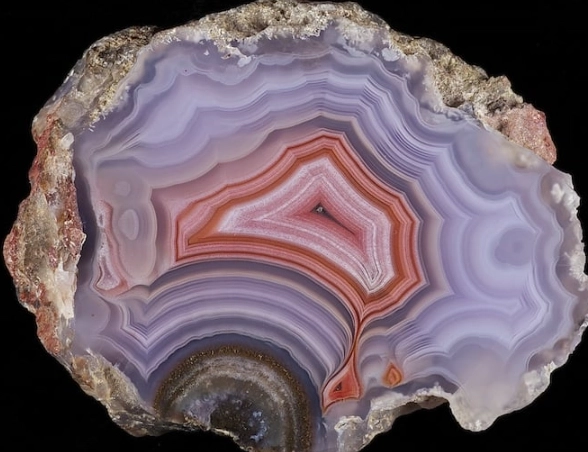
Jewelry: This is the big one. Agate is cut into cabochons (polished, domed shapes) for rings, pendants, earrings, and bracelets. Its wide color range means it fits any style, from bold, dyed statement pieces to subtle, natural moss agate pendants.
Functional & Decorative Art: For centuries, agate's beauty and toughness made it a material for luxury items. Historically, it was used for seals (the wax wouldn't stick to it), cameos, and intricate carvings. Today, you see it as polished slices displayed on stands, bookends, clock faces, and inlaid into furniture. I've even seen stunning agate coasters—though I'd be terrified of spilling red wine on them.
Collecting & Specimens: For many, myself included, the raw or simply sliced agate is the prize. A fine, unpolished nodule showing its rough exterior (often called a "thunder egg" in the US Pacific Northwest) with a stunning interior revealed by a single cut is a thing of beauty. Mineral collectors value pieces that show the formation context or exceptional color.
The Tricky Part: Figuring Out If Your Agate is "Real" and What It's Worth
Identification: Natural vs. Treated
Let's be blunt: the agate market is flooded with treated stones. That doesn't always mean "fake," but you should know what you're buying.
- Dyeing: This is extremely common. Because much natural agate is grey or pale, vendors dye it to make it more appealing. Bright pinks, blues, and neon yellows are almost certainly dyed. A telltale sign? Concentrated color in cracks and around the edges. Sometimes the dye pools in a way that looks unnatural. Is it still "real" agate? The base stone is, but the color isn't. It's worth less than a comparable natural color stone.
- Heat Treatment: Often used on brown or orange agates (like some carnelian, a related chalcedony) to darken or redden the color. It's stable and permanent, but again, it's an enhancement.
- Staining: Different from dyeing, this involves using chemicals (like sugar and acid) to carbonize and create black bands ("black onyx" is often agate treated this way).
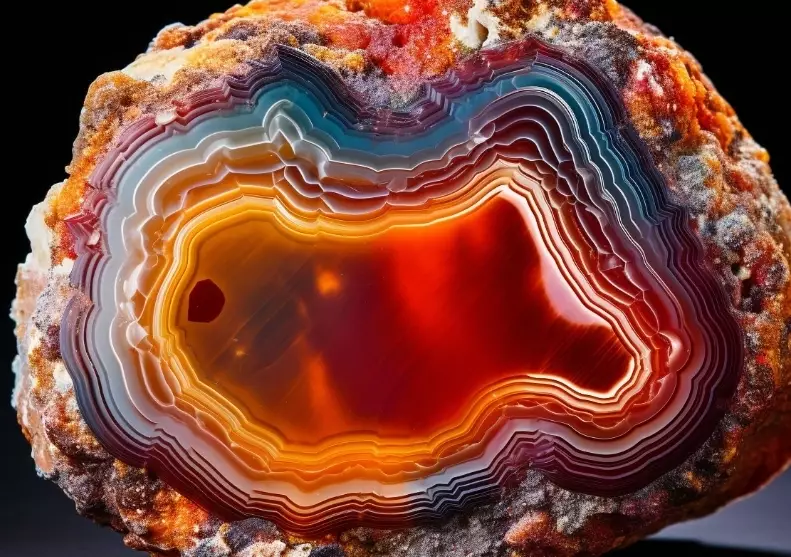
How can you spot natural agate?
Look for soft, muted colors. Nature rarely makes neon. The bands in natural agate often have subtle transitions and may include milky or translucent zones. Inclusions like dendrites are almost never faked convincingly. When in doubt, ask the seller directly: "Is this color natural or enhanced?" Reputable sellers will disclose treatments. For the definitive word on treatments and identification, the Gemological Institute of America (GIA) encyclopedia is the gold standard reference.
What Determines Agate Value?
It's not like diamonds with a strict formula, but several factors push the price up or down.
- Pattern & Color (Natural): Sharp, contrasting bands beat fuzzy ones. Unique patterns (fortifications, eyes, scenic inclusions) are highly desired. Naturally vivid colors (deep reds in Lake Superiors, strong blue in lace agate) command a premium.
- Translucency: Can light pass through it? A translucent, glowing agate slice is usually more valuable than an opaque one, all else being equal.
- Size & Finish: Large, flawless pieces suitable for big cabochons or display slices are rarer. The quality of the polish matters—a great polish shows the pattern's beauty.
- Origin: Certain locales have legendary status. A top-grade Uruguayan or a colorful Mexican crazy lace agate will cost more than an unnamed commercial-grade piece.
- Treatment: As discussed, dyed agate is the lowest value category. Naturally colored, untreated stones are what serious collectors seek.
So, is agate expensive? It can be. A standard dyed, tumbled stone might cost a dollar. A stunning, large, naturally colored and patterned specimen or a expertly cut fire agate cabochon can run into hundreds or even thousands. It's a spectrum.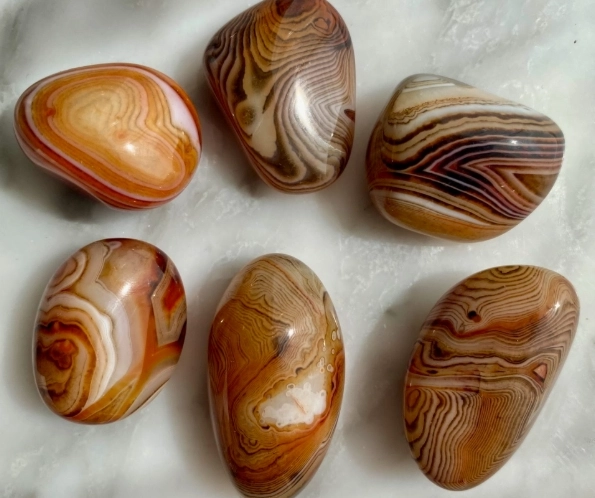
Finding and Choosing Your Own Agate: A Practical Guide
If you're feeling inspired to get a piece of agate for yourself, here's how to navigate it.
Where to Buy:
- Local Rock & Gem Shows: My top recommendation. You can see the material in person, talk to the sellers (often the collectors or cutters themselves), and learn a ton. You can find everything from rough rocks to finished jewelry.
- Specialist Online Retailers: Look for shops that specialize in minerals or lapidary supplies. They tend to be more accurate with descriptions and origins than large, generic marketplaces.
- Digging Your Own: In certain regions (like the American West, parts of Brazil), you can actually go to designated digging sites. It's hard work, but the thrill of finding your own is unbeatable. Check local rockhound clubs for guidance.
A Few Quick Tips Before You Buy:
Ask about treatments. If it's for jewelry, ask if the stone has been stabilized (especially for porous or included pieces). For display pieces, consider how it will be lit—backlighting can make translucent agates pop. Don't be swayed by size alone; a small piece with a perfect pattern is often better than a large, muddy one. And trust your gut—buy what you genuinely love to look at.
Wrapping It Up: The Enduring Appeal of Agate
Maybe it's the connection to ancient volcanic earth. Maybe it's the surprise of cracking open a dull rock to find a hidden galaxy of color inside. Or maybe it's just that there's a type of agate for every taste—from the bold and graphic to the subtle and scenic.
Agate bridges the gap between a common find and a gemstone treasure. It's accessible enough for a beginner to afford a piece, yet deep enough (pun intended) to keep a lifelong collector fascinated. Whether you're drawn to its supposed metaphysical properties (a whole other topic the International Gem Society discusses in a balanced way), its scientific story, or just its plain old beauty, there's a reason it's been cherished for millennia.
So next time you see one, take a closer look. You're not just looking at a rock; you're looking at a slow-motion masterpiece, painted by geology over eons.