Quick Guide
- From the Earth's Crust to Russian Palaces: A Rich History
- Breaking Down Malachite: Properties and Practical Info
- How People Use Malachite Today (The Real Stuff)
- The Other Side of the Coin: Metaphysical Claims and Personal Take
- The Crucial Part: Is Your Malachite Real or Fake?
- Caring for Your Malachite: It's Delicate!
- Your Malachite Questions, Answered
- Final Thoughts
Let's be honest, the first thing that grabs you about malachite is its color. That insane, swirling, deep green. It's like someone captured the essence of a forest pond and a stormy sea and swirled them together in stone. You see it in jewelry stores, on Instagram feeds dedicated to crystals, and even inlaid in antique furniture. But what is it, really? Beyond the stunning looks, there's a whole world of geology, history, and practicality that most quick online glosses completely miss. I remember picking up my first piece years ago, a small tumblestone, and being mesmerized by the bands. I also remember later being horrified to learn how many fakes are out there. That's why we're going deep today.
This isn't just a list of properties. We're going to unpack everything, from how it forms deep in the earth to why you need to be careful cleaning it. Whether you're a budding crystal enthusiast, a jewelry lover curious about your pendant, or someone who just appreciates natural beauty, there's something here for you. And we're going to tackle the big question: how do you know you're getting the real deal?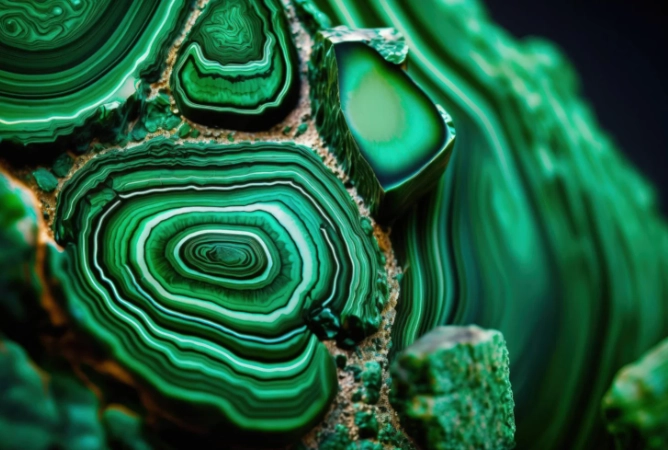
Quick Fact: Malachite is a copper carbonate hydroxide mineral, with the chemical formula Cu₂CO₃(OH)₂. That mouthful basically means it's formed when copper ore interacts with water and carbon dioxide. Its name comes from the Greek word "molochē," meaning mallow plant, because its green color resembled the leaves of the mallow. Pretty poetic for a mineral, right?
From the Earth's Crust to Russian Palaces: A Rich History
Malachite isn't new. It's been turning heads for millennia. Ancient Egyptians were all over it as early as 4000 BC. They crushed it into powder to make eye shadow (a practice called kohl) and pigments for wall paintings. Think about that—the stunning green in some ancient Egyptian art you've seen in museums? That could very well be powdered malachite. They also carved it into amulets and used it in jewelry, believing it offered protection. The link between malachite and copper meant it was often found near mines, serving as a visual guide to valuable copper deposits.
But where malachite really went next-level was in Imperial Russia during the 18th and 19th centuries. They discovered massive deposits in the Ural Mountains. We're not talking small nuggets; we're talking gigantic blocks. The Russian aristocracy didn't just make jewelry—they went full opulence. They used malachite as a decorative stone, slicing it into thin veneers and gluing them onto walls, columns, and tabletops in a technique called "Russian mosaic." The Malachite Room in the Hermitage Museum, St. Petersburg, is the most famous example. Walking into that room is an overwhelming experience; the sheer scale of green is breathtaking. It shouts power and wealth mined straight from the Russian earth.
 That shift from powdered eye shadow to palace walls tells you something about humanity's long fascination with this stone.
The Science Behind the Swirls: How Malachite Forms
So how does nature make these hypnotic patterns? It's a secondary mineral. That means it doesn't crystallize directly from molten rock. Instead, it forms near the surface, in the oxidized zones of copper sulfide ore deposits. When primary copper minerals (like chalcopyrite) are exposed to water, oxygen, and carbon dioxide (think rainwater percolating down), they chemically weather. The copper gets dissolved and then re-precipitates as new minerals, often malachite and its blue cousin, azurite.
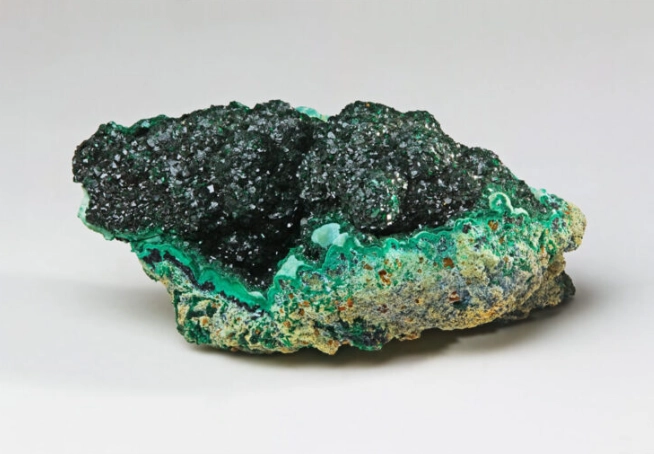
Those iconic banded patterns, called concentric rings or bull's-eye patterns, are a record of its growth. They form in cavities and fractures, with each layer representing a distinct pulse of mineral-rich fluid. The varying shades of green come from slight differences in crystal size and purity during each deposition phase. It's like tree rings, but for mineral formation. This process also means you rarely find giant, flawless crystals of malachite suitable for big gemstones. Most gem-quality material is those aggregated, banded masses that are polished into cabochons or carved.
Breaking Down Malachite: Properties and Practical Info
Let's get technical for a minute, but in a useful way. Knowing these basics helps you understand how to care for malachite and why it's used the way it is.
| Property | Details | What It Means For You |
|---|---|---|
| Chemical Composition | Copper Carbonate Hydroxide: Cu₂CO₃(OH)₂ | Contains copper, which gives it the color. Reacts with acids. |
| Color | Varying shades of green, from light pastel to nearly black. Always green. | If it's blue, red, or has large clear spots, it's not malachite. |
| Hardness (Mohs Scale) | 3.5 - 4 | Relatively soft. Can be scratched by a steel knife (hardness 5.5). Handle with care. |
| Luster | Can be silky, vitreous (glassy), or dull in its earthy forms. | Polished pieces have a beautiful, deep vitreous to silky shine. |
| Specific Gravity | 3.6 - 4.0 | Feels surprisingly heavy for its size, a good clue for identification. |
| Cleavage | Perfect in one direction | It can split along planes, making carving tricky but allowing for thin veneers. |
| Key Identifier | Banding and concentric rings in shades of green. | The most recognizable feature. No other common green stone looks quite like it. |
See that hardness? A 3.5 to 4 is soft. For comparison, your fingernail is about 2.5, a copper penny is around 3, and a steel knife is 5.5. This means a malachite ring worn daily as an engagement ring would be a disaster—it would get scratched and dull very quickly. It's best for pendants, earrings, or pieces that won't see heavy abrasion. This softness is also why it was perfect for the Russians to carve and slice into veneers.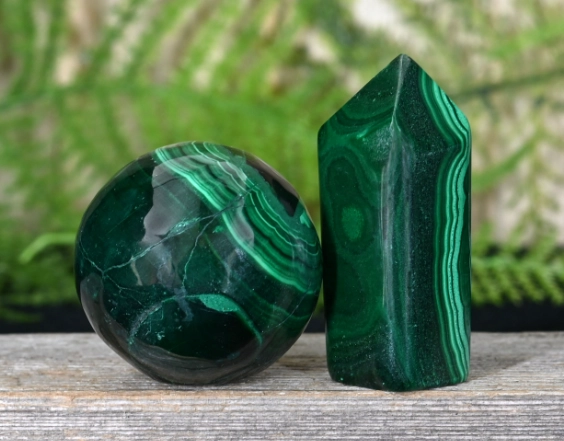
Important Safety Note: Because malachite is a copper carbonate, it can be toxic if ingested or inhaled as dust. This is primarily a concern for lapidaries cutting and polishing the stone without proper ventilation (a wet saw and a mask are essential). For the wearer of a finished, polished piece, the risk is negligible as the copper is locked within the mineral structure. However, never use malachite to make elixirs or "gem water" by putting it directly in your drinking water. The acid in the water can leach copper into the liquid. Stick to wearing it, not consuming it.
How People Use Malachite Today (The Real Stuff)
Beyond its historical roles, malachite has carved out several modern niches. Its primary limitation is its softness, which dictates what it's good for.
Jewelry: This is the most common use. You'll find it set in silver, gold, and other metals. It's almost always cut en cabochon (a smooth, domed, polished shape) to best showcase its bands. Beads for necklaces and bracelets are also popular. A well-cut malachite cabochon with sharp, contrasting bands can be incredibly valuable. When shopping, look for a high polish, distinct patterns, and a deep, vibrant green. Avoid pieces with lots of surface scratches or a waxy feel, which might indicate poor-quality material or even a composite.
Decorative Objects & Art: Carvers love malachite for small sculptures, boxes, and eggs. The banding adds natural drama to the form. You can also find stunning inlaid items, continuing the Russian tradition, though on a much smaller and more affordable scale (think jewelry boxes or picture frames).
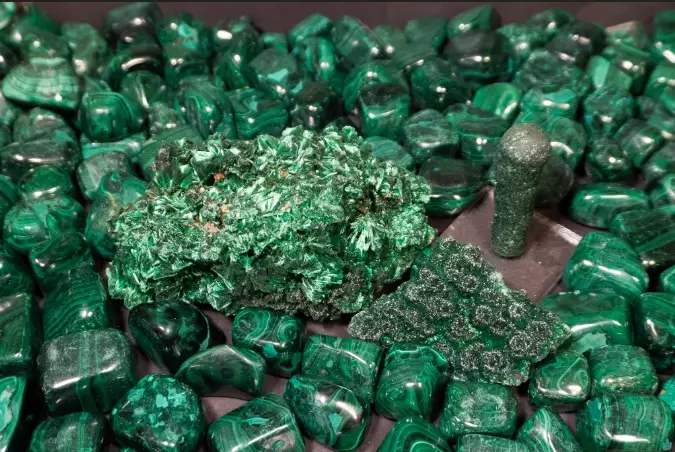
Collector's Specimens: For mineral collectors, a fine specimen of malachite showing botryoidal (grape-like) clusters, velvety surfaces, or interesting formations with other minerals like azurite is a prized possession. The Gemological Institute of America's (GIA) Gem Encyclopedia is a great resource to see examples of top-quality specimens and learn more about their formation.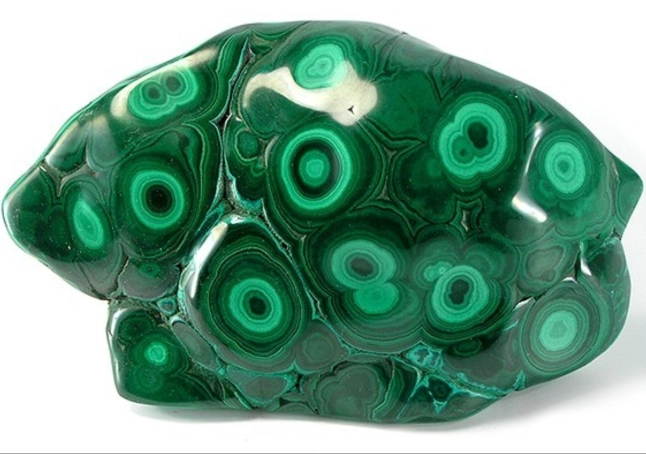
I have a small, polished sphere of malachite on my desk. It's not a perfect piece—there's a small, dull patch on one side—but the bands on the other side are so vivid they look like a topographic map of another world. It's a reminder that natural beauty often comes with imperfections. I'd take it over a flawless piece of plastic any day.
The Other Side of the Coin: Metaphysical Claims and Personal Take
Okay, let's address the elephant in the room. Spend five minutes in the crystal community, and you'll hear malachite called "The Stone of Transformation," a protector that absorbs negative energy, a heart chakra opener, and a catalyst for emotional change. The lore is extensive. It's said to help with taking risks, breaking unwanted ties, and promoting personal growth.
Here's my perspective, and you can take it or leave it. I think the power of any crystal, including malachite, largely comes from the meaning and intention you assign to it. If wearing a malachite pendant makes you feel more courageous or reminds you to let go of old baggage, then it's working for you on a psychological level. That's real and valid. The stone itself, from a strictly scientific standpoint, is a copper carbonate mineral. There is no reproducible scientific evidence that it emits specific energies or vibrations that can heal physical ailments.
Some people talk about malachite "breaking" or cracking to show it has absorbed too much negativity. A more grounded explanation? It's a soft stone with perfect cleavage. It can crack from thermal shock (like going from a hot car into air conditioning), a sharp blow, or even internal stress. Don't blame bad vibes; blame physics.
So, enjoy the folklore. It's a rich and fascinating part of the stone's story. But please, don't forgo medical advice for a piece of malachite. Use it as a tool for mindfulness, not as a treatment.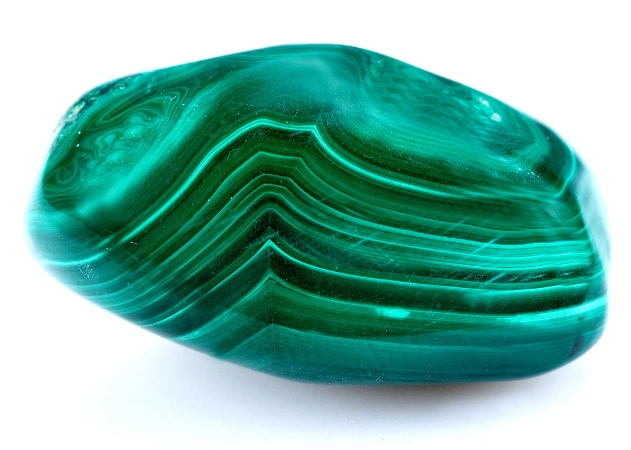
The Crucial Part: Is Your Malachite Real or Fake?
This is probably the most important section here. The popularity of malachite has led to a flood of imitations. They range from cheap plastic to dyed howlite or magnesite to sophisticated glass and resin composites. How can you tell?
Top Signs of Genuine Malachite:
- Natural, Irregular Banding: Real bands are never perfectly uniform or symmetrical. They swirl, change width, and have subtle color variations within the green spectrum. They look organic.
- Cold to the Touch: Like most stones, real malachite will feel cool against your skin for a moment before warming up. Plastic feels warm immediately.
- Weight: It should feel denser and heavier than a similarly sized piece of plastic or resin.
- Imperfections: Look for tiny pits, variations in polish, or minor cracks. Flawless perfection is a red flag for stones like this.
Red Flags of a Fake:
- Perfect, Repetitive Patterns: If the bands look like they were stamped or painted on with too-perfect symmetry, it's likely fake. Some fakes even have repeating "C" or "O" shaped patterns.
- Uniform Color: Solid, flat green with no banding or with bands that are just black lines is suspicious.
- Bubbles or a Waxy Feel: Glass fakes may have tiny air bubbles. Resin or plastic fakes can feel waxy or lightweight.
- Unnaturally Bright or Blue-Green Colors: Real malachite is green. If it's neon or has prominent blue areas (unless it's a malachite-azurite mix), be wary.
- The Price is Too Good: A large, deeply banded, polished malachite cabochon for $10? Almost certainly fake. Quality material has value.
A simple, somewhat destructive test (only for a piece you don't mind damaging): Touch a hot needle to a very inconspicuous spot. Plastic will melt and smell acrid. Stone won't. You can also try a drop of vinegar or lemon juice on an unseen area. Real malachite, being a carbonate, will fizz slightly as it reacts with the acid. A fake won't. Use these tests with extreme caution and as a last resort!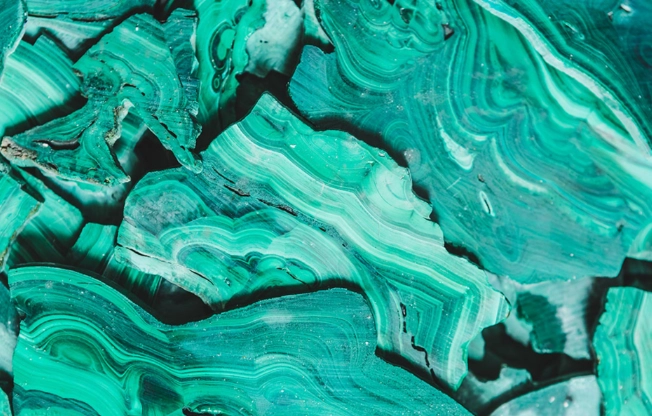
Pro Tip: When buying online, look for sellers who specify "natural malachite" and who provide clear, high-resolution photos from multiple angles. Reputable sellers on platforms like Etsy or dedicated gemstone sites are more reliable than random mass-market retailers. If they can't or won't answer questions about the stone's origin or characteristics, walk away.
Caring for Your Malachite: It's Delicate!
If you're lucky enough to own a genuine piece, you need to baby it a bit. Here's your care checklist:
- Avoid Acids and Chemicals: No household cleaners, perfumes, hairspray, or acidic liquids (lemon juice, vinegar). They can etch and dull the surface.
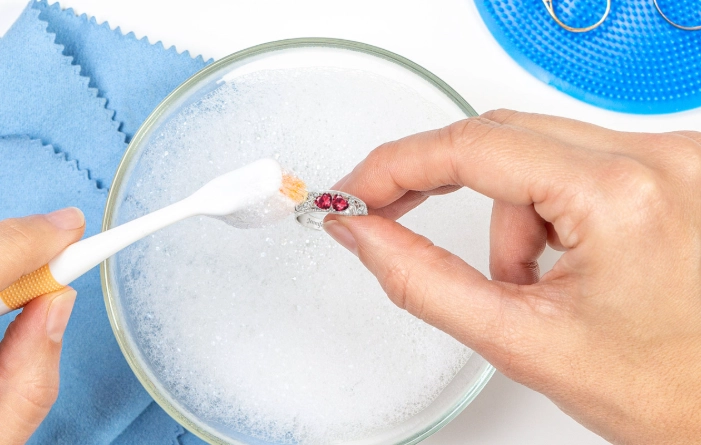
- Clean Gently: Use only lukewarm water, a very soft cloth (like microfiber), and a mild soap if needed. Dry immediately and thoroughly. No ultrasonic cleaners or steamers ever!
- Protect from Scratches: Store it separately in a soft pouch or a lined jewelry box. Don't let it tumble around with harder stones like quartz or sapphire.
- Avoid Extreme Heat and Sun: Prolonged direct sunlight can potentially fade the color over a very long time. Don't leave it on a hot car dashboard.
- Remove During Activities: Take off malachite rings or bracelets before gardening, cleaning, exercising, or any manual work.
It sounds like a lot, but it's just about being mindful. Think of it like caring for a piece of fine wood, not indestructible granite.
Your Malachite Questions, Answered
I've gotten a lot of questions over the years. Here are the most common ones.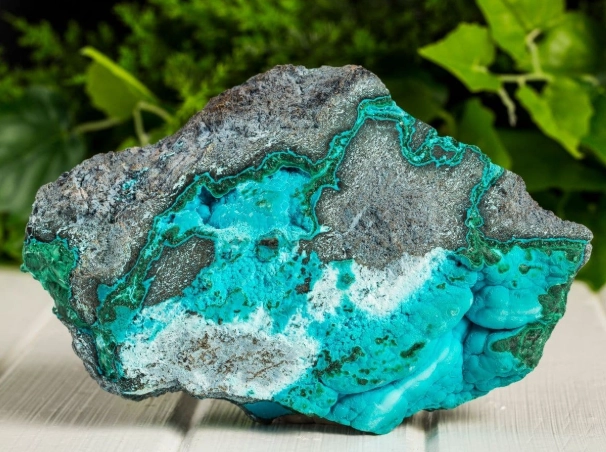
Is malachite expensive?
It ranges widely. A small, low-quality tumbled stone can be a few dollars. A high-quality, large cabochon with excellent banding for a ring can cost hundreds. Rare, museum-quality specimens cost thousands. It's not the most expensive gemstone, but good material isn't dirt cheap either.
Can I wear malachite every day?
As a pendant or earrings, yes, with care. As a ring for your dominant hand, I wouldn't recommend it. The constant abrasion will damage it.
Does malachite have radiation?
This is a common myth that causes unnecessary worry. Malachite is not radioactive. Some minerals associated with uranium or thorium can be, but malachite is not one of them. Its association with copper mines doesn't imply radioactivity. You can confidently own and wear it.
What's the difference between malachite and jade?
Completely different minerals! Jade (nephrite or jadeite) is much tougher and harder (6.5-7 on Mohs scale). Jade is often a more uniform green (though it can be varied), while malachite is defined by its bands. Jade doesn't react with acid. They're both green and used in carvings, but that's where the similarity ends.
Is malachite a birthstone?
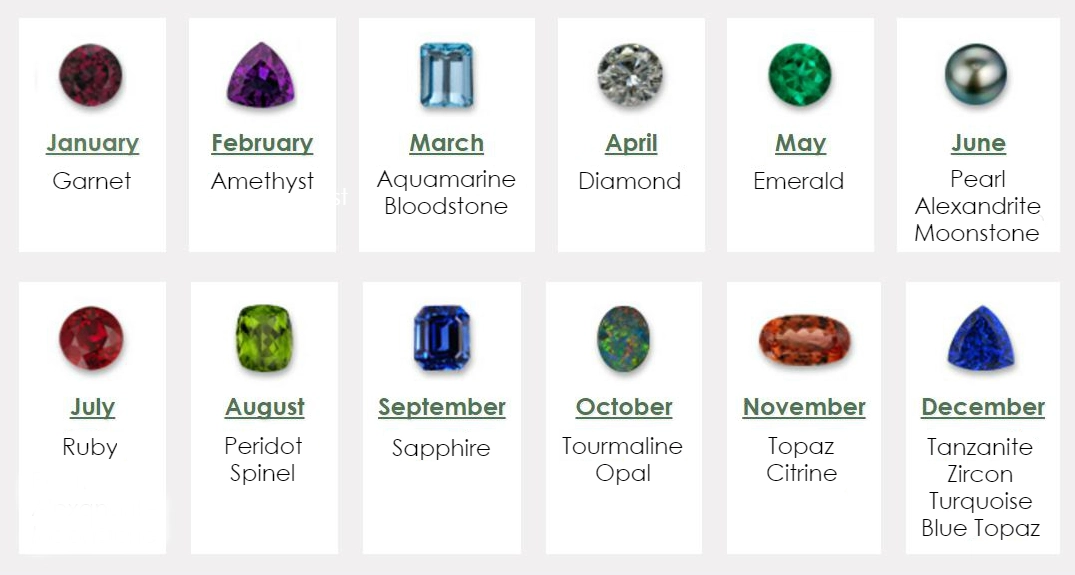
Not in the traditional Western or modern birthstone lists. However, in some alternative or mystical birthstone systems, it is sometimes associated with the zodiac sign of Scorpio or with the month of May.
Where is malachite found today?
Historically, Russia was the giant. Today, significant sources include the Democratic Republic of Congo (DRC), Zambia, Australia (Queensland), Namibia, and the Southwestern United States (Arizona). The U.S. Geological Survey (USGS) tracks copper production, and malachite is often found as a secondary mineral in these copper mining regions.
 Hope that clears things up.
Final Thoughts
Malachite is a stone of contradictions. It's stunningly beautiful yet surprisingly soft. It's ancient yet perpetually fashionable. It's wrapped in deep metaphysical lore but is, at its heart, a simple and fascinating mineral. Understanding these sides—the science, the history, the care, and the hype—lets you appreciate it fully.
If you're thinking of getting a piece, do it for the beauty, for the connection to deep geological processes, or for the personal significance you give it. Just make sure you're getting the real thing. A genuine piece of malachite, with its wild, captured storms of green, is a little piece of the Earth's artistry you can hold in your hand. And that, to me, is pretty special.
Now you know what to look for. Go forth and find your perfect piece of green.