In This Guide
You've probably seen it. A deep, forest green stone dotted with what looks like splashes of rust or dried blood. It's striking, a bit mysterious, and seems to pop up everywhere from jewelry stores to metaphysical shops. That's bloodstone, also known by its older, more dramatic name: heliotrope. But is it just a pretty rock? Far from it. This stone has a resume that spans millennia, weaving through legends, wars, medicine, and modern spiritual practices. I've been collecting and working with stones for years, and bloodstone always surprises me with its grounded, no-nonsense energy. It doesn't whisper; it gets to work. Let's unpack everything you could possibly want to know about it, cutting through the hype to get to the real, useful stuff.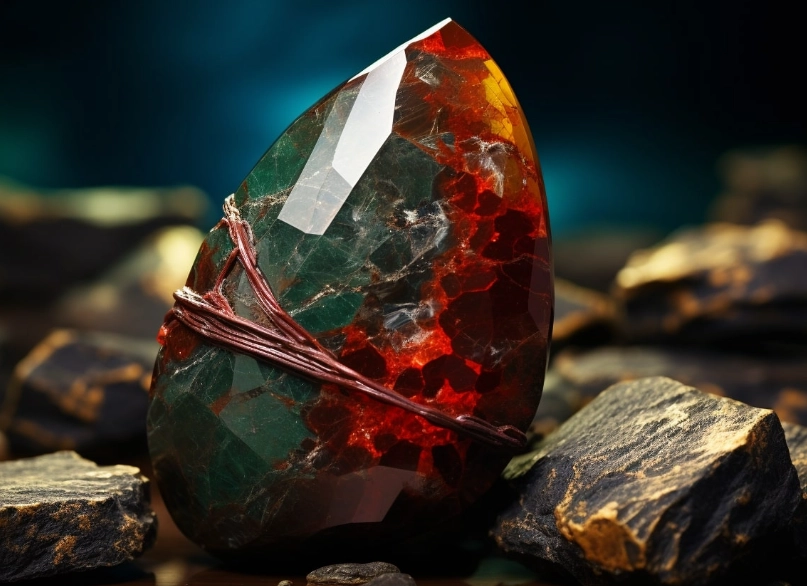
Quick Take: At its core, bloodstone is a variety of chalcedony, which is itself a form of quartz. The green comes from chlorite or other minerals, and the iconic red spots are iron oxide, usually hematite. It's not rare, but a good, vibrant piece with clear contrast is always a find.
So, What's the Story? Meaning and History of Bloodstone
The name "bloodstone" itself tells a tale. One of the most enduring legends comes from Christian mythology. The story goes that during Christ's crucifixion, a few drops of his blood fell onto a piece of green jasper at the foot of the cross, staining it forever. This linked the stone inextricably with martyrdom, courage, and sacrifice. Medieval soldiers often carried bloodstone amulets, believing it could literally staunch bleeding wounds. They'd sometimes even dip the stone in water and use that water to wash injuries. Whether you believe the legend or not, that connection to blood and vitality stuck.
Its other name, heliotrope, comes from Greek words meaning "sun turning." Ancient writers like Pliny the Elder described how certain specimens, when placed in water under sunlight, could supposedly turn the sun's reflection a blood-red color. I've tried this, honestly. Didn't work for me. Maybe my stone wasn't "heliotrope" enough, or maybe it's one of those ancient exaggerations. But it shows how fascinated people were by its appearance.
Beyond Europe, it held significance in Babylonia for sealing deals and in India as a potent healing talisman. The Gemological Institute of America (GIA) notes its use in ancient seal stones and amulets, a testament to its perceived durability and power. You can find some excellent historical examples documented by institutions like the British Museum, where carved bloodstone artifacts tell silent stories of past beliefs.
So, its meaning is layered. Courage. Vitality. Grounding. A connection between the earthly (green) and the vital life force (red). It's a stone of action, not just contemplation.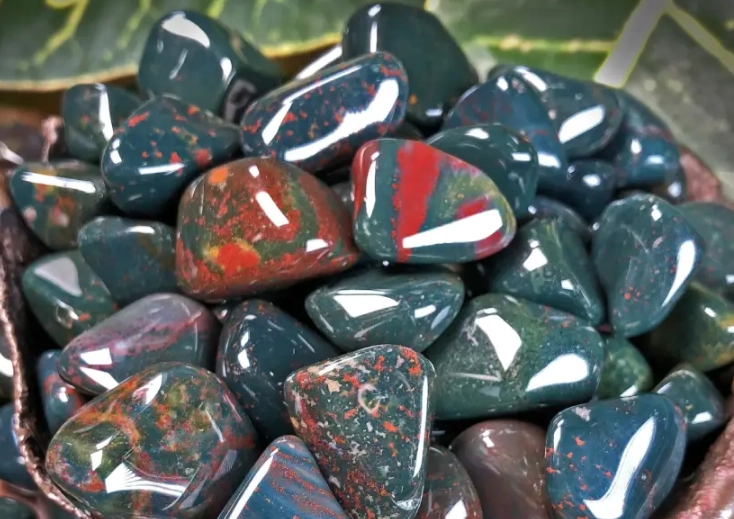
What Can Bloodstone Actually Do? Properties and Uses
This is where everyone's ears perk up. The claims around crystals can get... fluffy. Let's talk about bloodstone's properties in a way that separates common belief from grounded understanding.
First, a table to break down its attributed properties. Think of this as its spiritual and energetic resume:
| Aspect | Common Beliefs & Associations | Practical Takeaway |
|---|---|---|
| Physical | Blood purification, circulatory system support, boosting iron levels, aiding detox, strengthening the liver & kidneys. | Its historical link to blood gives it a symbolic connection to vitality. It's often used as a focus for intentions regarding physical energy and cleansing. Important: This is NOT a substitute for medical care. See a doctor. |
| Emotional & Spiritual | Courage, willpower, grounding during stress, dissolving confusion, promoting decisiveness. | This is where bloodstone shines for many. Its energy is described as stabilizing. If you're feeling scattered or anxious, holding a piece can feel like a mental anchor. It's my go-to when I have too many tabs open in my brain. |
| Metaphysical | Root Chakra powerhouse. Connection to the Earth. Stone of warriors and heroes. | Its deep green color strongly associates it with the Root Chakra, our center for safety and survival. Using it can feel like a spiritual recharge, connecting you to a sense of resilience. |
Now, how do you use this thing? It's not a decoration (well, it can be). Here are real-world ways people incorporate bloodstone:
Wearing It as Jewelry
This is the most direct method. A bloodstone ring, pendant, or bracelet keeps its energy in your personal field all day. A ring is said to be particularly potent for projecting willpower. A pendant over the heart? For courage. I wear a simple bloodstone bead bracelet when I have a big, daunting task list. Is it magic? Maybe not. But it serves as a tangible reminder to stay focused and grounded, and that reminder itself has power.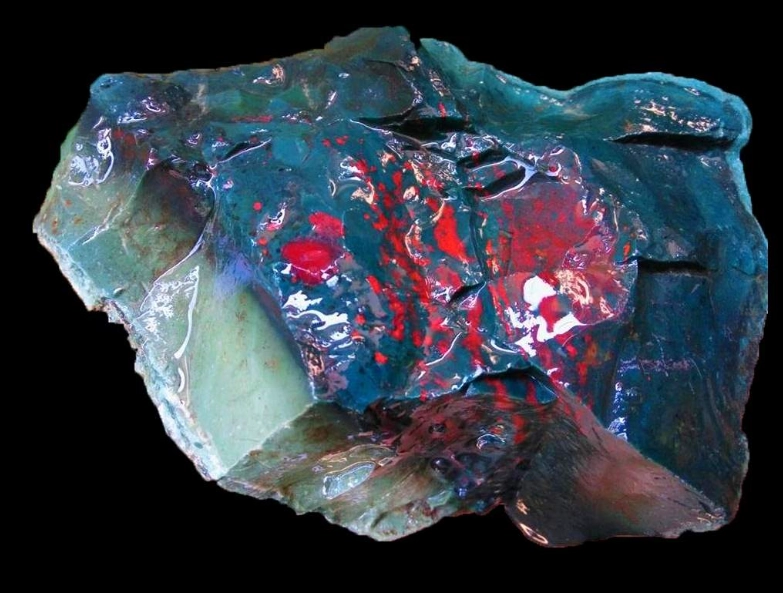
In Your Space: At Home or Work
Place a chunk of bloodstone on your desk. The idea is that it helps clear mental fog and supports endurance during long projects. In the home, some place it near the entrance as a protective, grounding stone for the household. It's not a security system, but it can contribute to the *feeling* of a stable, secure home.
During Meditation or Mindfulness
Hold a tumbled stone in your hand or place it on your lower abdomen (near the Root Chakra). Focus on its weight, its cool temperature, its visual pattern. The goal is to anchor your mind to the present moment. The red spots can serve as a visual focal point if you're prone to distraction. I find it more effective for this than, say, a perfectly clear crystal, because its imperfections give the mind something to explore without wandering.
A Note on "Bloodstone Elixirs"
You'll see advice to make crystal elixirs by putting bloodstone in water. Here's my strong opinion: Be extremely careful. Bloodstone often contains minerals that can leach into water. Some sources, like the always-cautious Mindat mineral database, highlight that without knowing the exact composition of your specific stone, it's risky. If you want the "essence" without the risk, place the stone next to or around a glass bottle of water, not inside it. This indirect method is considered safer in crystal practice.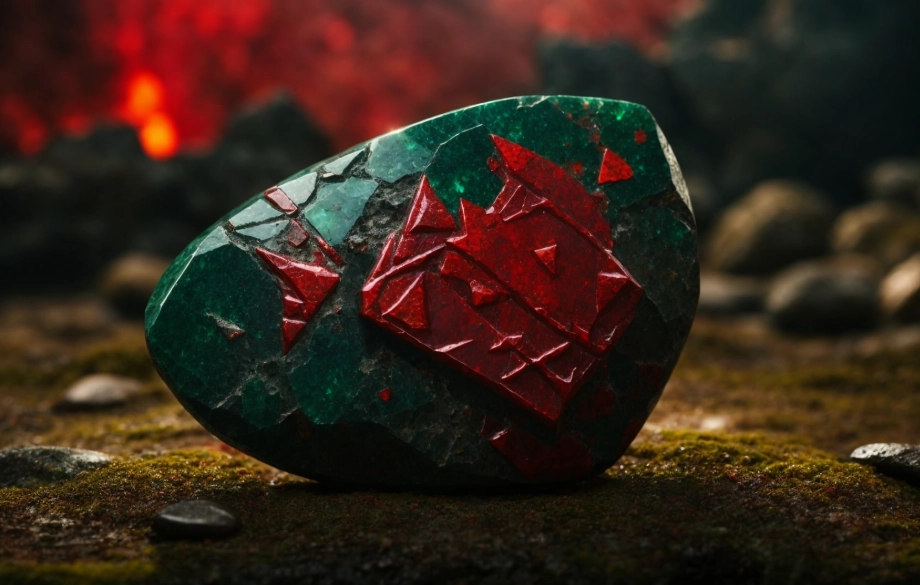
Is My Bloodstone Real? How to Spot a Fake
Let's be real. The crystal market is flooded with fakes, dyed stones, and outright plastic. Bloodstone isn't the most expensive gem, but it's still faked, often with dyed howlite or resin. Here’s how to protect yourself:
- The Look: Real bloodstone has an organic, uneven distribution of red spots. They look like splatters or inclusions. If the red is perfectly uniform, in neat lines, or looks painted on the surface, be suspicious. The green base should be a deep, opaque green, often with other mineral traces (yellow, white).
- The Feel & Weight: It's chalcedony, so it's hard (7 on the Mohs scale) and should feel cool and heavy for its size. Plastic feels warm and light. Glass might feel similar in temperature but can have conchoidal fractures (sharp, shell-like breaks) if chipped.
- The Scratch Test (Careful!): Real bloodstone can scratch glass. You can try gently scratching the bottom of a glass bottle in an inconspicuous spot. If your stone leaves a scratch, that's a good sign. If it crumbles or leaves a mark on itself, it's softer and likely fake.
- Price: If a huge, perfect-looking bloodstone tower is being sold for $10, it's probably too good to be true. Genuine stones have a modest but real cost.
Buying from reputable dealers who provide locality info (India and Brazil are major sources) is your best bet. A trustworthy seller won't mind you asking questions.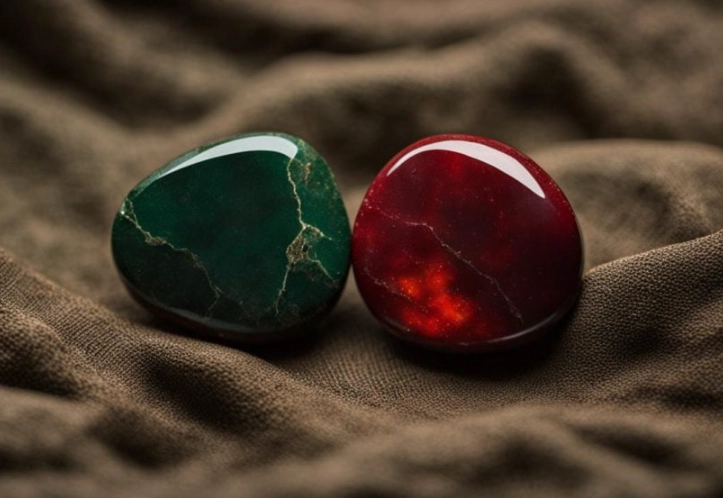
"I bought a 'bloodstone' egg online once. It arrived looking garish, the red was neon and seeped into cracks. A drop of acetone on a cotton pad took the color right off. It was just dyed junk. Lesson learned: photos can lie, and if a deal seems unreal, it probably is."
Buying Bloodstone: A No-Nonsense Guide
Ready to get your own piece? Let's walk through it.
1. Decide Your Budget and Purpose
Are you buying a $5 tumbled stone for your pocket? A $50 pendant for daily wear? Or a $200+ specimen for your collection? Your purpose guides your purchase. For energy work, a simple tumbled stone works perfectly. For jewelry, you'll pay for the craftsmanship of the setting as much as the stone itself.
2. Know What 'Quality' Means for Bloodstone
Unlike a diamond, flaws are part of the character. But quality is judged by:
- Color Contrast: Vivid green with bright, bold red specks is most desirable.
- Pattern: An interesting, natural-looking distribution of red.
- Polish & Cut: For carved items or cabochons (the smooth, domed shapes in jewelry), a high polish that brings out the waxy luster of chalcedony is key.
3. Where to Shop
- Local Crystal/Metaphysical Shops: My favorite. You can hold the stone, feel its energy, and ask questions. The price might be higher, but the experience is worth it.
- Reputable Online Mineral Retailers: Sites that cater to mineral collectors often have high-quality, authentic specimens with good photos and accurate descriptions. They might list the locality, which is a sign of a serious seller.
- Etsy & Craft Fairs: Great for unique, handcrafted jewelry. Look for sellers with detailed photos, clear policies, and lots of positive reviews specifically mentioning the quality of the stones.
- What to Avoid: Mass-market gift shops, generic e-commerce platforms with stock photos, and sellers making outrageous healing claims. They're often moving low-quality or fake goods.
I have a small palm stone I bought from a vendor at a rock and gem show. It's not the prettiest piece—the green is dark and the red spots are sparse—but it fits perfectly in my hand and has a certain humble, sturdy vibe I love. The most expensive piece isn't always the right piece.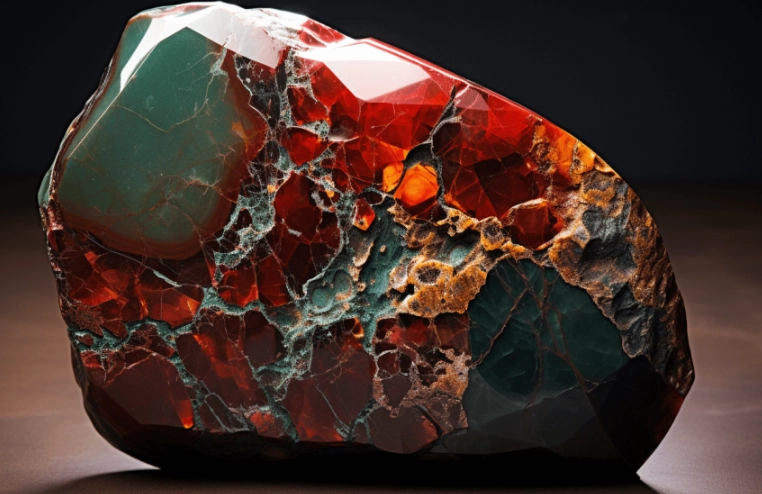
Bloodstone FAQs: Your Questions, Answered
Let's tackle the stuff people are secretly Googling.
Wrapping It Up: The Takeaway on Bloodstone
Bloodstone isn't a subtle crystal. It's a stone with a history written in blood and earth. It doesn't promise to solve all your problems with fairy dust. Instead, it offers a kind of stubborn, earthy support. It's for the moments when you need to stand your ground, make a tough decision, or just feel more present in your own body and life.
Whether you're drawn to its legend, its striking appearance, or its reputation for grounding energy, it's a gem that demands a bit of respect. Don't overthink it. Find a piece that speaks to you—not necessarily the most perfect one, but the one that feels right. Hold it. See if its cool, steady weight brings a sense of calm focus. That feeling, more than any ancient legend or modern metaphysical claim, is the real magic of bloodstone.
And remember, while its lore is powerful, it's a companion on your journey, not a replacement for your own strength or necessary professional help, be it medical or otherwise. Use it as a tool, a reminder, and a piece of the beautiful, mysterious natural world you can carry in your pocket.