Quick Navigation
- What Makes Iolite So Special? The Science & The Magic
- The Iolite Value Proposition: Why It's Not a "Cheap Sapphire"
- Iolite vs. The World: A Handy Comparison
- Buying Iolite Jewelry: What You Need to Know (The Practical Stuff)
- The Pros and Cons: A Brutally Honest Take
- Your Iolite Questions, Answered
- Final Thoughts: Is Iolite Right For You?
You're browsing for a blue gemstone, and the usual suspects pop up: sapphire, topaz, maybe tanzanite. Then you stumble on a photo of something called iolite. It's got this deep, velvety blue, sometimes with a hint of violet, and in other lights, it almost looks grey or yellow. What is this thing? Is it valuable? Can you actually wear it in jewelry without it falling apart tomorrow?
I've been down that rabbit hole. I remember the first time I held a piece of iolite, thinking it was a poorly cut, inky sapphire. The jeweler laughed and said, "That's cordierite. It shows you the way." I was hooked. Since then, I've bought a few pieces, talked to cutters, and even made some mistakes (more on that later). This guide is what I wish I had when I started.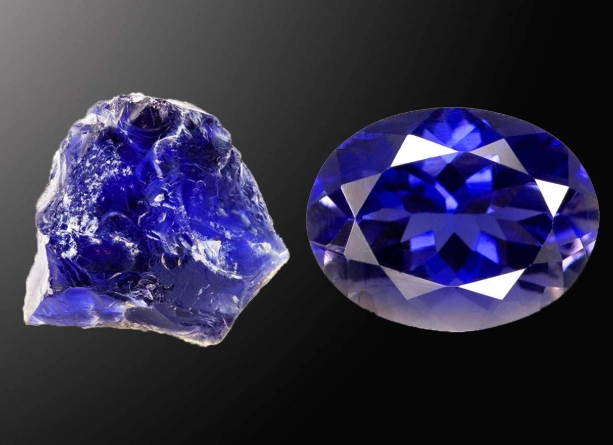
Let's get one thing straight from the get-go: iolite is the gem name for the mineral cordierite. That's its scientific, geologist-approved name. Knowing both terms is useful because you'll see them used interchangeably, especially in more technical circles. The name "iolite" itself comes from the Greek word 'ios', meaning violet. Pretty straightforward.
What Makes Iolite So Special? The Science & The Magic
If you take away one thing about iolite, let it be this: it's a trichroic gem. Now, don't let the jargon scare you off. Most gems show two colors when you look through them from different angles (that's dichroism). Iolite? It shows three. This is its party trick.
Hold a clean piece of iolite up to the light and rotate it. You'll typically see a deep violet-blue from one side, a pale grey or yellow from another, and a clear, light blue from a third. It's like having three different gems in one. This property is so strong that, according to legend, Viking navigators used thin slices of iolite as a polarizing filter to locate the sun on cloudy days to help steer their ships. Whether that's entirely true is debated by historians, but it's a fantastic story that highlights its unique optical property.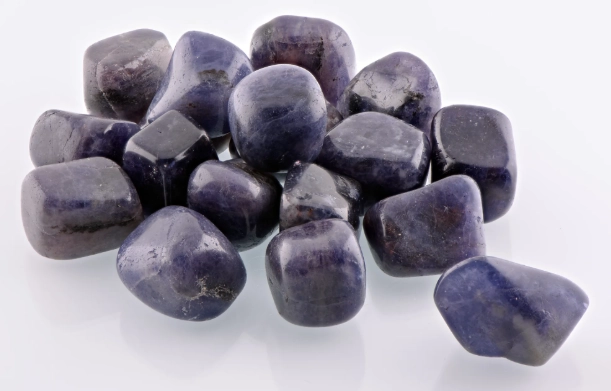
The Trichroism Breakdown: This isn't just a neat visual effect. It's the fingerprint of the crystal structure. Light splits into three different paths inside the stone, each absorbing color differently. For a cutter, this is a nightmare and an opportunity. Cut it wrong, and the stone looks mostly a dull grey. Cut it with the table (the top flat part) perpendicular to the direction of the deepest blue, and you maximize that gorgeous sapphire-like color everyone wants.
Its chemistry is magnesium iron aluminum cyclosilicate. Again, simpler terms: it's a reasonably hard silicate mineral. On the Mohs scale of hardness, it sits at 7 to 7.5. That's important. For comparison, quartz (like amethyst) is a 7, and topaz is an 8. So, iolite is decent for jewelry, but you need to treat it with a bit more care than, say, a diamond or sapphire.
The Iolite Value Proposition: Why It's Not a "Cheap Sapphire"
This is where most online articles get it wrong. They bill iolite as a "sapphire alternative" and leave it at that. It does it a massive disservice. Sure, from a color perspective, a fine blue iolite can scratch the itch for a cornflower blue sapphire without the five-figure price tag. But thinking of it only as a substitute misses the point.
Iolite has its own identity. Its color is often more violet-grey-blue, less pure royal blue than a classic sapphire. It has a softer, sometimes slightly sleepy appearance compared to the brilliant vitreous luster of a sapphire. And that trichroism? Sapphire doesn't have that to the same degree. Iolite is its own gem.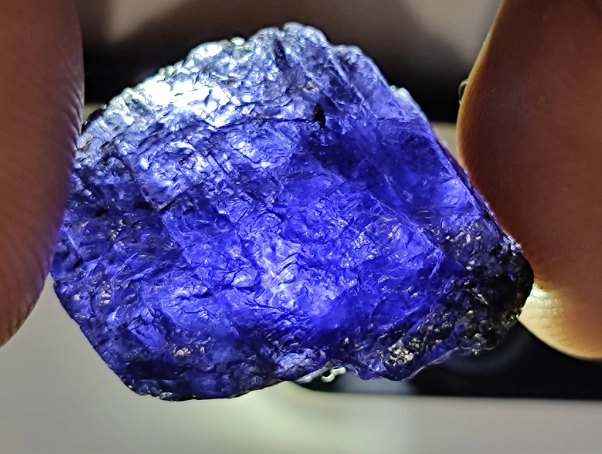
I made the "cheap substitute" mistake early on. I bought an iolite ring expecting it to perform and dazzle like my sapphire. In certain lights, it was stunning. In others, it was subdued, almost introspective. I was disappointed at first. Then I appreciated it for what it was: a more subtle, complex, and frankly, interesting stone. It doesn't scream for attention; it whispers.
So, what does drive iolite's value? It's not about carat weight in the same way as diamonds. Here’s what matters more:
- Color: The most prized color is an intense, saturated violet-blue with minimal grey or brown modifiers. The closer to a clean sapphire blue, the higher the price per carat.
- Clarity: Eye-clean stones are rare. Iolite often has visible inclusions—tiny crystals, feathers, or "zircon halos." The market generally accepts these unless they majorly impact durability or brilliance. Sometimes, parallel needle-like inclusions can create a silky sheen or even cat's eye effect (chatoyancy), which is highly desirable.
- Cut: This is paramount. A great cutter can orient the rough to bring out the best blue and minimize the weaker yellow/grey shades. A poor cut can ruin an otherwise good piece of rough. Well-cut stones command a significant premium.
- Carat Weight: Clean, well-colored material in larger sizes (over 5 carats) becomes exponentially rarer and more expensive.
You can find small, commercial-grade iolite for $20-$50 per carat. Fine gem quality, with great color and cut, typically ranges from $80 to $200 per carat. Exceptional pieces go higher. It's still vastly more accessible than fine sapphire.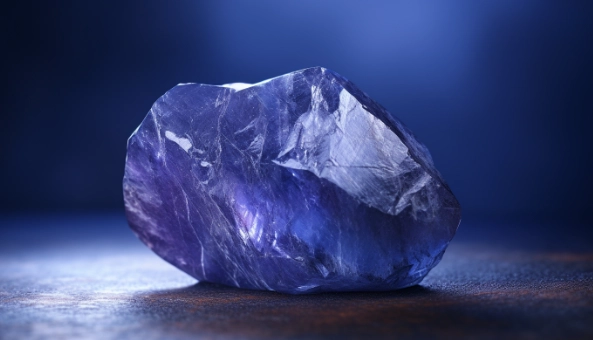
Iolite vs. The World: A Handy Comparison
Let's put it side-by-side with the gems it's often compared to. This table should clear things up.
| Gemstone | Key Similarity to Iolite | Key Difference from Iolite | Relative Price (for comparable color) | Best For... |
|---|---|---|---|---|
| Iolite | N/A - The baseline | Strong trichroism (3 colors) | $$ | Unique color-shift, value, statement pieces |
| Sapphire | Blue color range | Harder (9 Mohs), more brilliant, usually dichroic | $$$$$+ | Heirloom, daily-wear rings, investment |
| Tanzanite | Pleochroic (color-changing), violet-blue hues | Softer (6.5 Mohs), often heat-treated to be blue, more "electric" color | $$$ | Vibrant color, collector items, pendants/earrings |
| Ametrine | Shows multiple colors in one stone | Distinct zones of purple & yellow, not a blend | $ | Two-tone effect, budget-friendly uniqueness |
| Blue Zircon | High refractive index (brilliance) | More fiery dispersion, can be brittle, often heat-treated | $$ | Sparkle, alternative to diamond accents |
See? It carves out its own niche. It's harder than tanzanite, more unique in its optical property than sapphire, and often has a deeper, more mysterious color than zircon.
Buying Iolite Jewelry: What You Need to Know (The Practical Stuff)
Okay, you're interested. Maybe you're looking at an iolite ring or pendant online. Let's talk brass tacks about actually owning and wearing this stone.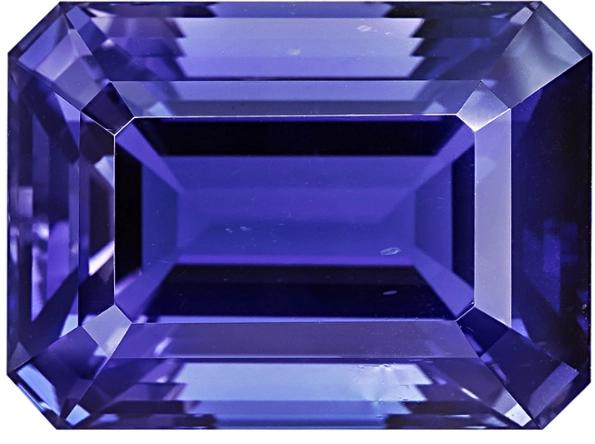
Durability & Wearability
A hardness of 7-7.5 means it's suitable for rings, but with caveats. It's more prone to scratching than harder gems. If you're rough with your hands (gardening, typing, manual work), an iolite ring might not be your best "every single day" choice. For occasional wear or for pendants and earrings, it's perfectly fine. Its cleavage is distinct but not perfect, meaning a hard, sharp knock in the wrong direction could cause a crack. A protective bezel or halo setting is a smart move for a ring.
Myth Buster: I've read that iolite is "too soft for any jewelry." That's simply not true. Countless minerals softer than iolite (like opal, pearl, tanzanite) are set in jewelry all the time. The key is understanding its limits and setting it appropriately. Don't be scared off, just be smart.
Identifying Real Iolite & Spotting Fakes
Iolite isn't expensive enough to be synthesized on a large scale (like synthetic sapphire), but it can be imitated by glass or lesser stones. Here’s how to be a savvy buyer:
- The Trichroism Test: This is the best at-home check. Use a simple dichroscope (a cheap tool) or just look through the stone at a white piece of paper while slowly rotating it. If you see distinct violet-blue, grey, and pale yellow/colorless views, it's likely genuine iolite. Glass will show no change.
- Inclusions: Look for those characteristic inclusions under magnification. Glass will often have bubbles or swirls. Synthetic spinel or corundum (used as simulants) will usually be too clean and lack the trichroism.
- Professional Verification: For a significant purchase, a report from a reputable gem lab is gold standard. They have the tools to confirm it's cordierite. Resources from organizations like the Gemological Institute of America (GIA) Gem Encyclopedia are invaluable for educating yourself on what to look for.
Care and Cleaning
Simple rules: Use warm, soapy water and a soft brush. Ultrasonic cleaners? I'd avoid them. The vibrations could exploit any existing fractures. Steam cleaners? A definite no—the sudden heat change can cause stress. Dry it with a soft, lint-free cloth. Store it separately from harder gems to prevent scratches.
The Pros and Cons: A Brutally Honest Take
The Good (The Pros):
- Uniqueness: That trichroic effect is a conversation starter. You won't see it on every third person's hand.
- Value: You get a lot of visual impact for your dollar compared to other blue gems.
- Color Range: From light denim to deep midnight blue, often with lovely violet undertones.
- Ethical Sourcing: It's not typically associated with conflict zones or intensive mining like some gems, making ethical sourcing easier.
The Not-So-Good (The Cons):
- Durability Concerns: For a ring you'll wear daily, it's not the toughest kid on the block. It requires a mindful owner.
- Clarity Expectations: If you're a perfectionist who demands flawless clarity, you'll have a hard time finding an eye-clean iolite and pay dearly for it.
- Color Inconsistency: The color can shift dramatically under different light sources. Some love this, others find it frustrating if they want a consistent look.
- Cut Dependency: A poorly cut iolite is a sad, dark lump. The quality of the cut makes or breaks the stone more than almost any other factor.
Weigh these up honestly against how you plan to use the gem.
Your Iolite Questions, Answered
I get a lot of the same questions. Here are the straight answers.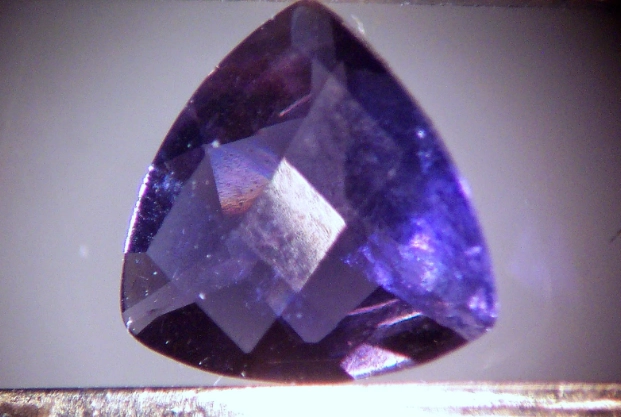
Final Thoughts: Is Iolite Right For You?
Look, iolite isn't for everyone. If you want a bulletproof, brilliant, classic blue stone and money is no object, save up for a sapphire. But if you're someone who appreciates character over perfection, who values uniqueness and a bit of geological magic, then iolite is a fantastic choice.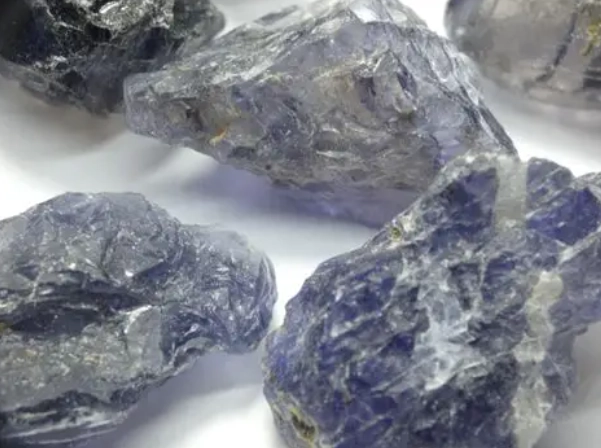
It's a gem for collectors, for those who like to tell a story with their jewelry, and for anyone who wants a splash of serious color without a serious price tag. Just go in with your eyes open. Understand its quirks—the color shift, the need for a good cut, the gentle care requirements.
My advice? Find a reputable jeweler who has a few pieces in stock. Ask to see them. Rotate them in your hand. Watch the color dance from blue to grey to yellow. See how it feels. That's the only way to know if the charm of iolite, this fascinating form of cordierite, speaks to you.
It spoke to me, even after my initial disappointment. Now, that slightly sleepy, deep blue stone with its hidden flashes of other colors is one of my favorite pieces. It has a soul. And sometimes, that's worth more than perfect hardness or blinding brilliance.