Quick Guide to Ammolite
- The Story Behind the Stone: From Ancient Seas to Modern Jewelry
- What Determines an Ammolite's Value? (It's Not Just Color)
- The Real Guide to Buying Ammolite: What No One Tells You
- Is It Real? How to Spot Fake or Treated Ammolite
- Caring for Your Ammolite: It's More Delicate Than You Think
- Answering Your Big Questions About Ammolite
- Final Thoughts: Should You Buy Ammolite?
Let's talk about ammolite. You might have seen it in a high-end jewelry store, a flash of rainbow colors trapped in stone, and wondered what on earth it was. Is it a gem? A fossil? Something made in a lab? I remember the first time I held a piece. It was in a small gem show in Tucson, and the dealer had it under a lamp. The colors shifted from red to green to violet as I turned it in my hand. It felt ancient, like holding a piece of a prehistoric sunset. But here's the thing – for all its beauty, there's a lot of confusion and, frankly, some pretty inflated claims out there about ammolite. I'm going to walk you through everything, the good, the bad, and the stunningly beautiful, so you can decide if this is a gem for you.
So, what exactly is ammolite? In the simplest terms, it's a gemstone that comes from the fossilized shells of extinct sea creatures called ammonites. Think of them as the spiral-shelled cousins of squid and octopus that swam the oceans while dinosaurs walked the land. When conditions were just right – and I mean just right – in what is now southern Alberta, Canada, the nacreous layer of these shells fossilized in a way that preserved its incredible, iridescent play-of-color. That's the magic. It's not a mineral like a diamond or a sapphire. It's an opalized fossil. And that combination of organic history and gemological beauty is what makes it so unique.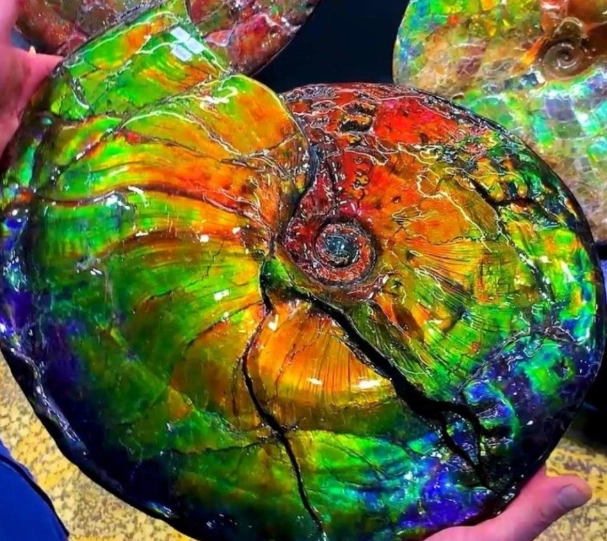
The Story Behind the Stone: From Ancient Seas to Modern Jewelry
The story starts about 70 to 75 million years ago, in a shallow inland sea that geologists call the Western Interior Seaway. This place was teeming with life, including countless ammonites. When they died, their shells sank into the seabed, which was rich in iron and other minerals. The key to ammolite formation was rapid burial under fine-grained sediment, which protected the delicate shell structure from being completely destroyed.
Over millions of years, the aragonite microstructure of the shell was preserved and, through a process of mineralization and replacement, transformed. The brilliant colors we see aren't from pigments. They're a phenomenon called iridescence, caused by the interference of light bouncing off the microscopic layers within the fossilized structure. The thickness and spacing of these layers determine whether you see a flash of red, green, blue, or the full spectrum. It's the same basic physics that makes soap bubbles shine, but locked in stone for eons.
The modern chapter began with the Blackfoot Nation, the indigenous people of the region, who have long valued these "buffalo stones" or "iniskim" for their spiritual and ceremonial significance. Commercial mining didn't really take off until the late 1960s. Even today, the mining is tightly controlled. The primary source is a narrow layer of rock called the "Korite zone," named after Korite International, one of the major miners. The rarity is real. This stuff isn't found just anywhere.
You can read more about the geology and official recognition of ammolite as Alberta's official gemstone on the Government of Alberta's official symbols page. It's a solid, factual resource that cuts through the marketing hype.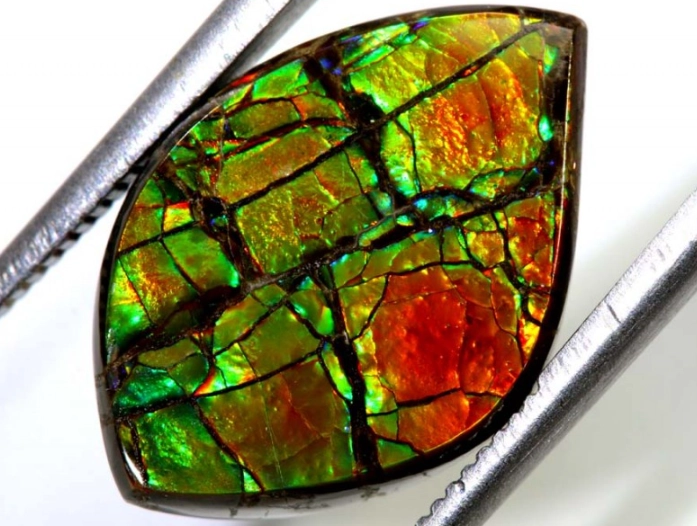
What Determines an Ammolite's Value? (It's Not Just Color)
This is where things get interesting. Judging an ammolite isn't like judging a diamond with its strict 4Cs. It's more nuanced. I've seen people overpay for a flashy but poorly backed piece, and I've seen undervalued gems that are truly spectacular. The value hinges on a few key factors that interact with each other.
| Factor | What to Look For | Why It Matters |
|---|---|---|
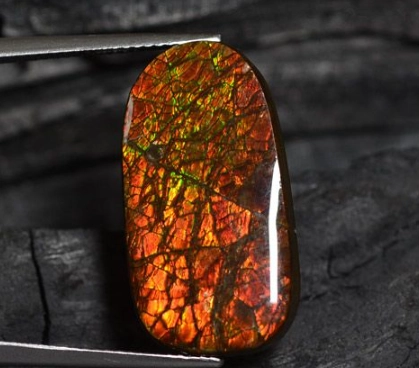
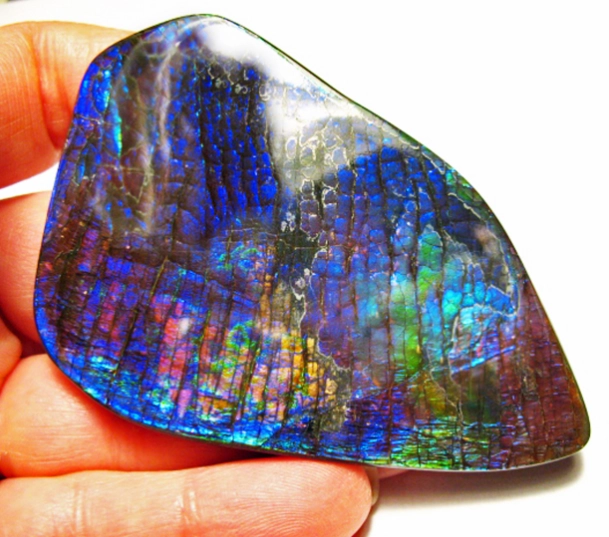
| Color Range & Number | How many spectral colors are visible? Reds and oranges are rarer than greens and blues. A full spectrum (red, orange, yellow, green, blue, violet) is top-tier. | More colors and rarer hues directly increase rarity and visual impact. A piece with just blue-green is common; one flashing crimson and gold is exceptional. |
| Brightness & Iridescence | The intensity and vibrancy of the colors. Does it look dull or does it "pop" under various lights? | A bright, vivid play-of-color is the gem's soul. Dullness significantly lowers value, no matter how many colors are present. |
| Pattern & Play-of-Color | How the colors are arranged. Common patterns include mosaic, flame, ribbon, and pinfire. A broad, sweeping flash is often preferred. | Subjective, but unique, clear, and attractive patterns command higher prices. A chaotic, muddy pattern is less desirable. |
| Rotational Range | Does the color change as you rotate the stone? A stone that shows multiple colors from different angles is more valuable. | Adds dynamism and depth. A stone that only shows color from one angle is considered flat and less engaging. |
| Size & Completeness | The surface area of intact, gem-quality material. Large, unbroken sheets are very rare. | Larger pieces allow for more dramatic jewelry designs. Small fragments are often used in inlays or clusters. |
But here's a factor most casual buyers forget: the backing. Natural ammolite is incredibly thin and fragile, often less than a millimeter thick. To be used in jewelry, it must be stabilized. This is usually done by laminating it to a backing material (like shale or a synthetic base) and capping it with a clear protective dome, usually synthetic spinel or quartz. This isn't a sign of a "fake"—it's a necessity. However, the quality of this workmanship matters. A poorly done backing can look clunky, create a visible "halo" around the stone, or even fail over time.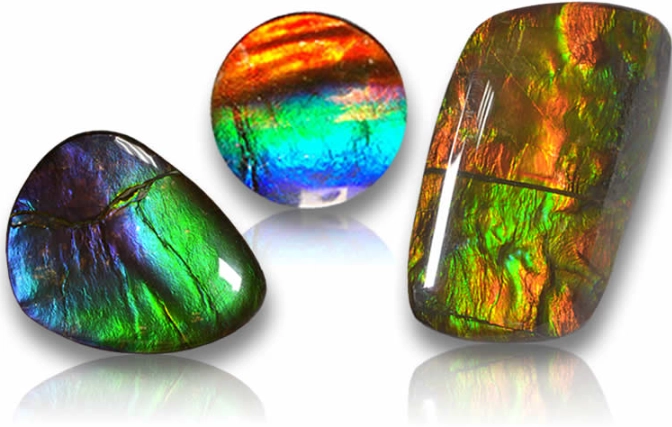
The Grading Systems: A Confusing Landscape
There isn't one universal grading standard. The two main ones you'll encounter are from the major commercial entities.
Korite's System (AA, A+, A, B): This is the most common in the market.
- AA (Select): The best. Multiple bright colors (usually 3+), high iridescence, and broad rotational range.
- A+ (Standard): Two or three bright colors, good iridescence.
- A (Commercial): One or two primary colors, moderate iridescence. This is what you often find in souvenir shops.
- B (Variegated): Lower intensity, often with a fractured or mosaic pattern.
Aurora's System (from the CIBJO Gemstone Blue Book): The International Colored Gemstone Association (CIBJO) recognizes ammolite and provides a more gemological framework, focusing on color, brightness, pattern, and rotational range without the branded grades. For serious buyers, looking at a report from a lab like the Gemological Institute of America (GIA) Gem Encyclopedia can be helpful, though they note it's primarily a collector's stone. The GIA resource is excellent for understanding the scientific basis of its iridescence.
My advice? Don't get hung up on the letter grade alone. Use it as a starting point, but always let your eyes be the final judge. A high-grade piece should take your breath away, not just have a fancy tag.
The Real Guide to Buying Ammolite: What No One Tells You
Okay, let's say you're intrigued and ready to buy. Where do you start? The market is a mix of exquisite art, overpriced trinkets, and outright fakes.
First, decide on your goal. Are you buying a unique piece of jewelry to wear? Or are you looking at ammolite as a potential investment-grade collectible? These are very different paths.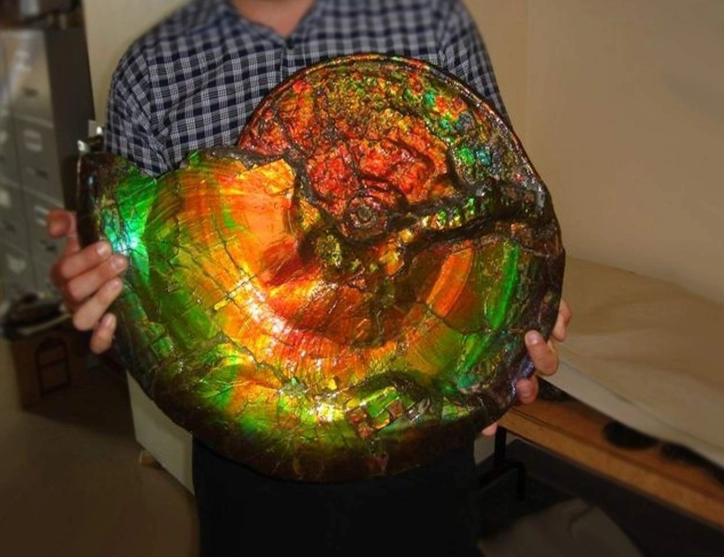
Where to Buy?
- Specialized Gem & Jewelry Shows: Tucson, Hong Kong, Munich. This is where you'll see the best material and can talk directly to cutters and reputable dealers. Prices can be high, but so is quality.
- Reputable Online Dealers: Look for those who specialize in rare gemstones, offer detailed photos/videos under different lights, and have clear return policies. Be very wary of generic e-commerce sites with stock photos.
- Direct from Alberta: Some mines or local lapidaries sell online. This can be good, but ensure they have gem-cutting expertise, not just mining expertise.
Red Flags to Avoid:
- Unbelievably Low Prices: High-quality ammolite is rare. If the price seems too good to be true, it probably is. You're likely looking at low-grade material, a synthetic, or a thin veneer over plastic.
- No Mention of a Cap or Backing: Any seller not transparent about the stone being stabilized is either ignorant or dishonest.
- Claims of "Mystical Healing Properties" at Sky-High Prices: I'm all for gems having personal meaning, but beware of vendors using spiritual claims to justify a 500% markup on a mediocre stone.
- Poor Photography: Blurry shots, only one angle, photos that look heavily processed. A trustworthy seller will provide a video showing the stone rotating under light.
Ask questions. Lots of them. A good seller will have the answers.
Is It Real? How to Spot Fake or Treated Ammolite
This is a major concern. The high value has attracted imitations. Here’s what's out there.
1. Lab-Created Synthetics: Yes, they exist. Companies can create a synthetic material that mimics the layered structure of ammolite, producing iridescence. It's often sold as "synthetic ammolite" or "cultured ammolite." The key is disclosure. It should be sold as exactly what it is—a man-made simulant—at a fraction of the price. Ethically, it's fine if you know what you're getting. Deceptively, it's a problem.
2. Imitations: These are completely different materials made to look similar.
- Opalite Glass: A man-made glass with a milky, opalescent sheen. It lacks the sharp, chromatic flashes of real ammolite and feels like glass (warmer to the touch than stone).
- Foil-Back Treatments: A layer of iridescent film or foil placed behind a piece of clear quartz or glass. The color looks metallic and uniform, not organic and shifting.
- Dyed Fossils: Lower-grade ammonite fossils dyed to enhance color. The color will often collect in cracks and feel superficial.
3. Genuine but Heavily Treated: Some low-grade ammolite is impregnated with resins or dyes to improve color and stability. This treatment should always be disclosed.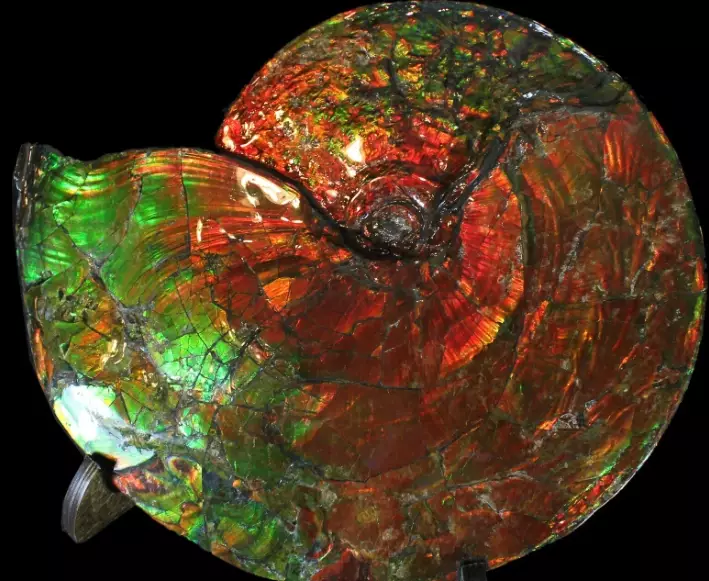
- Buy from Reputable Sources: This is your first and best defense.
- Get a Gemological Report: For any significant purchase (say, over $1000), consider getting an identification report from an independent gem lab.
- Use Your Senses: Real ammolite's color comes from within and shifts. Imitation colors often look painted-on or static. The triple-layer construction (cap, ammolite, backing) is visible from the side on real, stabilized stones.
For authoritative information on gem treatments and synthetics, the Canadian Institute of Gemmology (CIG) provides resources, though their focus is broad. It’s useful context for understanding the Canadian gem trade environment ammolite exists within.
Caring for Your Ammolite: It's More Delicate Than You Think
I learned this the hard way. A beautiful ammolite pendant I owned years ago got a tiny scratch on the cap from careless storage. Treat ammolite jewelry like the precious fossil it is.
- Cleaning: Use only warm water, a tiny drop of mild dish soap, and a very soft brush (like a makeup brush). Never ultrasonic or steam clean it. The heat, vibration, and chemicals can delaminate the layers or damage the cap.
- Storage: Store it alone in a soft cloth pouch. Never toss it in a jewelry box with harder gems like diamonds, sapphires, or even quartz, which will scratch it.
- Wear: Put it on last after applying makeup, perfume, or hairspray. Take it off first when doing household chores, gardening, or any physical activity. Avoid prolonged exposure to direct sunlight or extreme temperature changes, which can potentially cause cracking or fading over decades.
Think of ammolite as a museum piece you're allowed to wear. A little caution goes a long way in preserving its beauty for a lifetime.
Answering Your Big Questions About Ammolite
Final Thoughts: Should You Buy Ammolite?
If you're drawn to something with a deep history, unparalleled uniqueness, and a visual spectacle that changes with the light, then yes, ammolite is absolutely worth considering. It's a conversation starter, a piece of natural art. But go in with your eyes open.
Buy it for the beauty and the story, not as a get-rich-quick scheme. Insist on quality, ask the hard questions, and purchase from someone who respects the stone as much as you will. Start with a smaller piece if you're unsure. See how you feel wearing it, caring for it.
For me, the value of ammolite isn't just in its price tag. It's in holding a piece of the Cretaceous period, a shimmering bridge to a world long gone. When that light hits it just right, and the colors dance, all the complexities of buying it just fade away. You're left with pure, ancient magic.
And honestly, in a world full of mass-produced things, that's something pretty special.