In This Guide
- What Exactly Is a Cat's Eye Stone? It's All About the "Chatoyancy"
- The Real Deal vs. The Look-Alikes: A Buyer's Minefield
- Meaning, Myths, and Metaphysics: What Are You Really Wearing?
- A Practical Guide to Buying Your Cat's Eye Stone
- Your Cat's Eye Stone Questions, Answered
- The Bottom Line: Is a Cat's Eye Stone Right for You?
Let's get one thing straight from the start. When most people hear "cat's eye stone," they picture a glowing slit, a band of light that seems to follow you around the room. It's mesmerizing, a bit magical, and honestly, a little spooky if you think about it too much. But here's the kicker—what you're picturing might not be the cat's eye stone. Not the real, classic, top-shelf one.
The term gets thrown around a lot. You'll see "cat's eye quartz" or "cat's eye tourmaline" in budget jewelry sections. They're nice, sure. But the king of the hill, the one gemologists and serious collectors mean when they say "cat's eye stone" without any other qualifier, is Chrysoberyl Cat's Eye. And that's a whole different ball game in terms of rarity, value, and that hypnotic effect.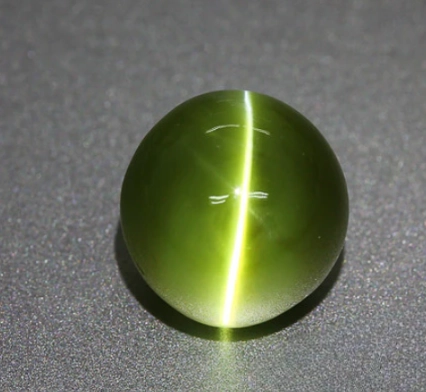
What Exactly Is a Cat's Eye Stone? It's All About the "Chatoyancy"
Forget complicated mineralogy for a second. The magic of a cat's eye stone boils down to one word: chatoyancy (pronounced shuh-TOY-uhn-see). It comes from the French "chat" for cat and "oeil" for eye. Perfect, right?
This effect isn't paint or a trick. Inside the stone, there are millions of microscopic, needle-like inclusions (usually rutile) all running parallel to each other. Think of it like a tightly packed bundle of drinking straws. When light hits the top of the stone (cut as a smooth, rounded cabochon, never faceted), it reflects off these tiny tubes. Instead of scattering everywhere, the light bounces back in one concentrated, bright band. Tilt the stone, and the band glides across the surface. It's a simple, brilliant bit of physics.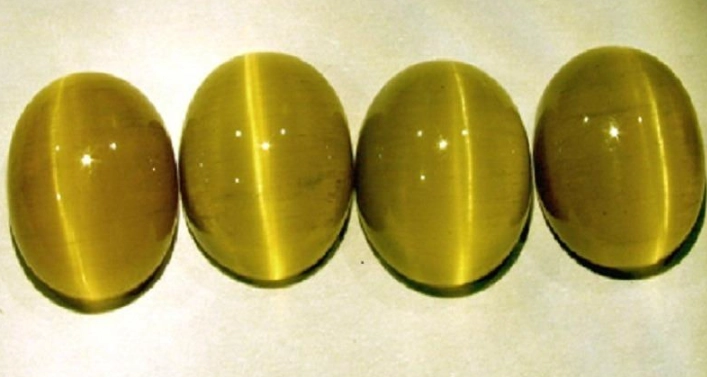
Now, lots of gems can show a cat's eye effect. But why is chrysoberyl the champion?
Chrysoberyl Cat's Eye is special because its needle inclusions are typically incredibly fine and densely packed. This creates a sharper, more defined, and brighter "eye" than you'll find in almost any other material. Its hardness is also a huge plus—8.5 on the Mohs scale. That makes it incredibly durable for everyday wear, right behind sapphire and diamond. Your cat's eye ring won't get scratched up from knocking against a desk.
The Real Deal vs. The Look-Alikes: A Buyer's Minefield
This is where things get messy, and honestly, where a lot of buyers get confused or even ripped off. Walking into a store or browsing online, you might see:
- Cat's Eye Quartz (Hawk's Eye/Tiger's Eye): Very common, usually a golden brown to blue-grey color. The eye is often wider, softer, and more diffused. It's beautiful in its own right and very affordable, but it's not in the same league.
- Cat's Eye Tourmaline: Less common than quartz. Can have a nice eye, but the stone itself is softer (7-7.5 Mohs) and the effect is rarely as razor-sharp as top chrysoberyl.
- Cat's Eye Apatite, Scapolite, etc.: Collector's curiosities. You might stumble upon them, but they're generally less durable.
- The Imposters: Glass or synthetic spinel cut with a groove on the bottom and filled with reflective material to fake the eye. A total scam.
So how do you know you're getting a genuine chrysoberyl cat's eye stone?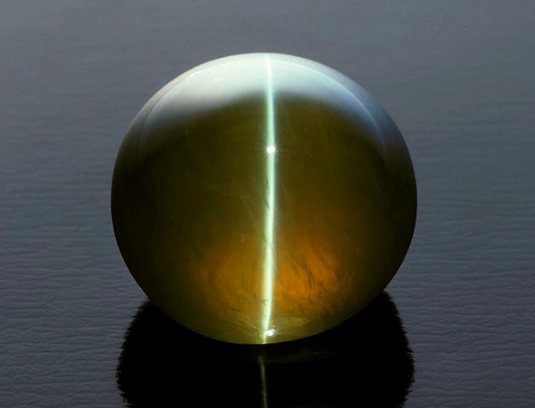
First red flag: The price. If it seems too good to be true, it is. A decent, small chrysoberyl cat's eye starts in the hundreds of dollars per carat for decent quality. Fine pieces with a sharp eye and good color can run thousands per carat. A $50 "cat's eye" ring is almost certainly quartz or glass.
Second, ask for the lab report. Reputable sellers will have a gemological certificate from a lab like GIA (Gemological Institute of America) or AGL that clearly states "Chrysoberyl Cat's Eye." Don't accept vague terms like "precious cat's eye"—that's meaningless marketing speak.
Evaluating Quality: The 4 C's for Cat's Eye
Forget the diamond 4 C's. For cat's eye stones, we have our own checklist.
1. The Eye (Chatoyancy): This is priority number one.
- Sharpness: Is the band a fine, crisp line or a fuzzy smear? Sharper is better.
- Contrast: Does the eye stand out brightly against the body color? High contrast is dramatic and valuable.
- Centering: Is the eye centered perfectly down the middle of the cabochon when viewed from above? A well-cut stone will have it dead center.
- Mobility: Does the eye open and close (widen and narrow) or move fluidly when you tilt the stone? Good mobility shows skilled cutting.
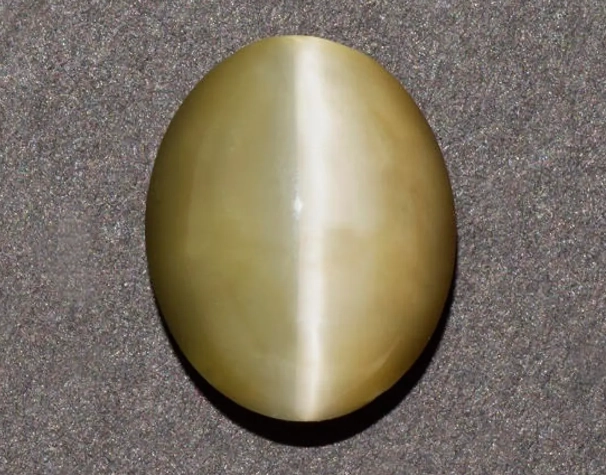
2. Body Color: The classic, most valued color is a rich, honey-yellow to greenish-yellow or a brownish-yellow. Think the color of honey, cognac, or apple cider. Some rare stones have a slightly greenish ("milk and honey") or greyish hue. Generally, more saturated, pleasing colors command higher prices. A pale, washed-out yellow is less desirable.
3. Transparency & Clarity: We're not looking for flawless, faceted-gem clarity. Some haze or silkiness is normal and even necessary for the eye to form. However, the stone shouldn't look overly milky or murky. You want a sort of translucent glow behind the eye.
4. Cut & Proportion: The cabochon should be smoothly domed with a good, symmetrical oval or round shape. It shouldn't be too flat (which weakens the eye) or too lumpy. The bottom (pavilion) is often left unpolished or slightly hollowed to help light reflect back up through the stone and enhance the eye.
Meaning, Myths, and Metaphysics: What Are You Really Wearing?
Let's talk about the woo-woo stuff, because let's be real, a lot of people are drawn to gemstones for more than just looks.
Across cultures, the cat's eye stone has been a talisman. In Sri Lanka (a major source), it's historically been known as "The Stone of Fortune," believed to protect wealth and ward off evil. The moving eye is said to see danger coming, making it a protective amulet for travelers. In Vedic astrology (Jyotish), it's linked to the planet Ketu and is worn to counteract its malefic influences, supposedly aiding in spiritual growth, intuition, and breaking free from karmic cycles.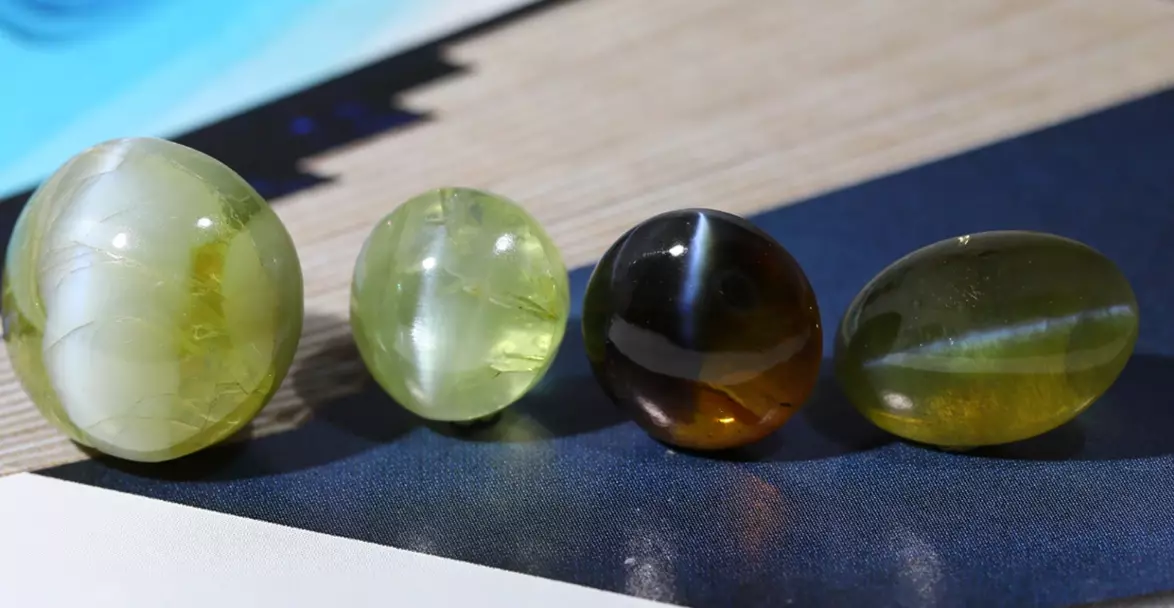
My take? I'm a bit skeptical of hard claims about healing or fortune. But I do think there's a psychological power to it. Wearing a stone you believe is protective can make you more confident and aware. If it brings you a sense of security or luck, that's a real value, even if it's not scientifically measurable. Just don't mortgage your house because a psychic told you a cat's eye stone would triple your money.
A Practical Guide to Buying Your Cat's Eye Stone
Okay, you're sold. You want one. How do you not get taken for a ride?
Before You Buy: Ask These Questions
- "Can you provide a gemological lab report specifying 'Chrysoberyl Cat's Eye'?" (If they hesitate, walk away).
- "What is the country of origin?" (Sri Lanka/Ceylon and India are traditional and respected sources, but Brazil and African sources also produce fine material).
- "Has this stone been treated in any way?" (Genuine chrysoberyl cat's eye is almost never treated—the eye is a natural inclusion. Any treatment is a major red flag).
- "Can I see it under a pinpoint light source to judge the eye's movement?" (A good seller will have a small flashlight for this).
Setting and Wearing Your Stone
Cat's eye stones are almost always set as cabochons. Bezels or semi-bezel settings are great because they protect the girdle (edge) of the soft-domed stone. Prong settings can work but need to be secure.
Care is simple but important: Ultrasonic cleaners are usually safe for durable chrysoberyl, but I'm paranoid. I stick to warm, soapy water, a soft brush, and a rinse. Avoid harsh chemicals. Store it separately to prevent scratches to softer gems (though it will scratch others!).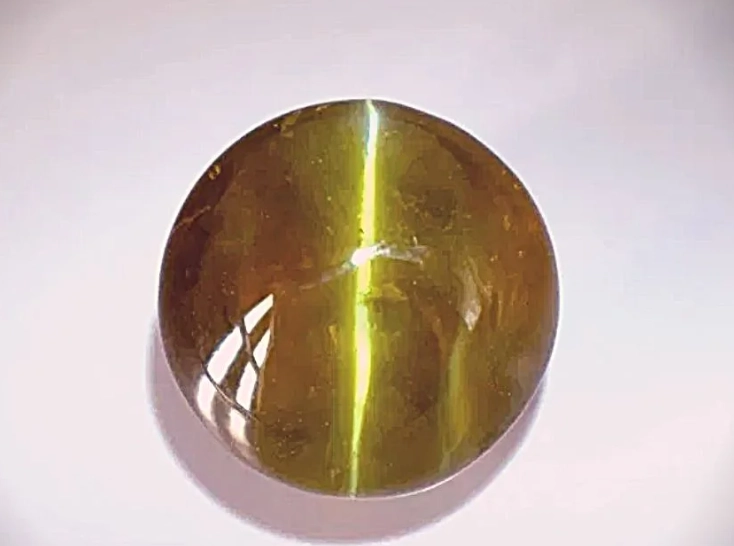
Your Cat's Eye Stone Questions, Answered
Let's tackle the stuff people are quietly Googling.
The Bottom Line: Is a Cat's Eye Stone Right for You?
If you're looking for a mass-produced, sparkly, faceted gem, this isn't it. The allure of a cat's eye stone is subtler, more mysterious. It's for people who appreciate unique optical phenomena, who want a gem with a story and a "living" quality to it. It's for those who value durability and a connection to ancient gem lore.
It demands a bit more knowledge from the buyer. You have to learn to judge the eye, to understand the difference between chrysoberyl and its imitators. But that's part of the joy. Owning a true cat's eye stone feels like being part of a secret club—you know what you have, and its silent, watchful glow is a constant, fascinating companion.
Do your homework. Buy from reputable, knowledgeable dealers who provide documentation. Start by looking at stones in person if you can—the movement of the eye on a fine specimen is something no photo or video can fully capture. Once you see it, you'll understand why this gem, above all others, truly deserves the name cat's eye.