Quick Guide
- What Is a Chrysoberyl Cat's Eye, Really? (The Science Made Simple)
- The Big Five: What Determines the Value of Your Stone?
- How to Buy a Chrysoberyl Cat's Eye: A Step-by-Step Reality Check
- Caring for Your Treasure: It's Not Just a Rock
- Chrysoberyl Cat's Eye vs. The World: Common Imitations & Lookalikes
- Your Questions, Answered (The Stuff You Actually Google)
- Wrapping It Up: Finding Your Perfect Stone
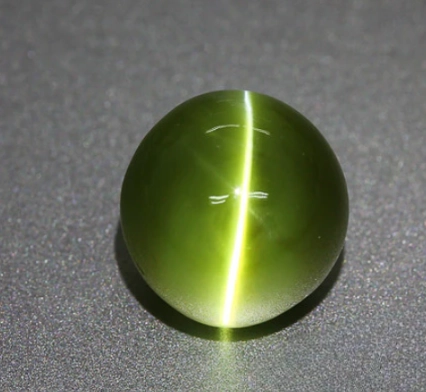
Let's be honest, most people have heard of rubies, sapphires, and emeralds. But when you mention chrysoberyl cat's eye, you often get a puzzled look. Is it a cat's eye? Is it chrysoberyl? What's the deal with that glowing line that seems to follow you? I was just as confused when I first saw one at a gem show years ago. The dealer called it "cymophane," which sounded more like a medical condition than a gemstone. But once he held it under a lamp and that silky band of light slid across the honey-colored surface, I was hooked. It wasn't just shiny; it was alive.
This isn't your average birthstone. We're talking about one of the most phenomenally precise optical effects in the gem world, tied to a mineral that's tough enough to survive daily wear (hardness of 8.5 on the Mohs scale, for the nerds among us). But here's the thing that most articles gloss over: the market is full of imitations and confusing information. I've seen quartz sold as cat's eye, and I've seen decent stones priced like they're from another planet. It's a minefield.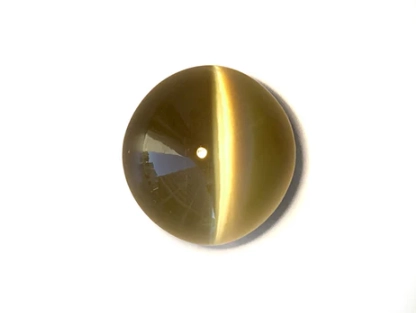
So, whether you're a collector, someone looking for a unique piece of jewelry, or just gem-curious, this guide is for you. We're going to strip away the mystery and the marketing fluff. We'll talk about what it really is, why some cost a fortune while others don't, how to buy one without getting ripped off, and how to keep it looking incredible for decades. No PhD in geology required.
Key Takeaway Right Off the Bat: True "cat's eye" refers specifically to the chatoyancy effect in chrysoberyl. If a seller says "quartz cat's eye" or "tourmaline cat's eye," they must use the mineral name as a prefix. Otherwise, they're being misleading. The real deal is just called chrysoberyl cat's eye.
What Is a Chrysoberyl Cat's Eye, Really? (The Science Made Simple)
Forget the textbook definition for a second. Imagine you have a stone packed with millions of incredibly thin, parallel tubes or needle-like crystals, all lined up like perfectly stacked drinking straws. When light hits the top of this stone, it can't just pass through or reflect willy-nilly. It gets caught and channeled along these tubes, concentrating into a single, bright band of light that appears to float on the surface. That's the "eye." The stone itself is chrysoberyl, a beryllium aluminum oxide. The effect is called chatoyancy, from the French "chat" for cat and "oeil" for eye.
The magic happens during the stone's formation. Under very specific geological conditions, tiny hollow tubes or needle-like inclusions of rutile (or sometimes other minerals) grow inside the chrysoberyl crystal in one direction. It's a flaw, but a perfectly organized one. This is what creates the potential for the cat's eye effect. Without this precise, parallel structure, you just have a regular (and often still lovely) chrysoberyl crystal.
Now, here's a common point of confusion. The cat's eye effect is not exclusive to chrysoberyl. You can see it in other gems like tourmaline, scapolite, and even quartz. So why does chrysoberyl get to be the king? Three reasons: sharpness, contrast, and durability. The eye in a fine chrysoberyl cat's eye is typically razor-sharp, sits on a rich, often honey-yellow to greenish-yellow body color, and the gem itself is incredibly hard and durable. Other gem species might show a blurry, washed-out band. The chrysoberyl version is the definition of crisp.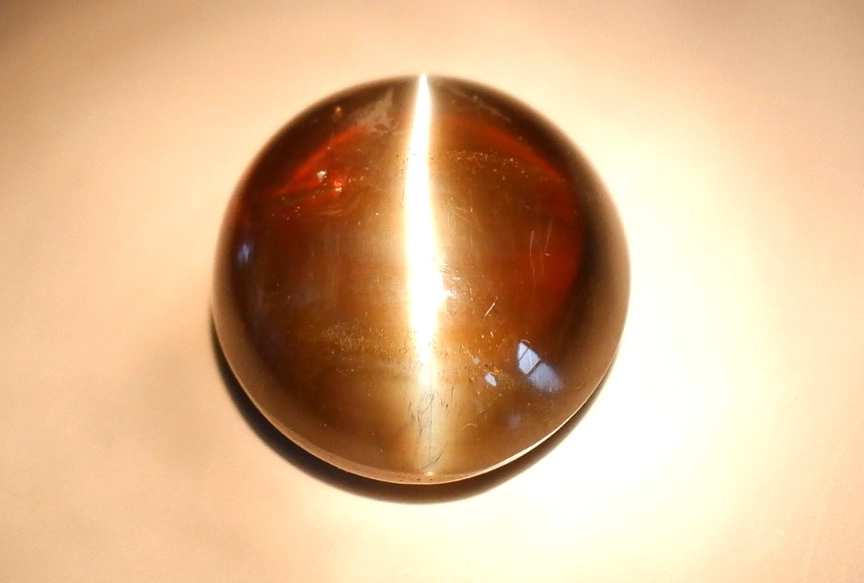
The Big Five: What Determines the Value of Your Stone?
This is where things get real. You can't just walk in and say "I want a cat's eye." You need to know what you're paying for. The value is a complex cocktail of several factors, and missing one can mean overpaying by a lot. Let's break down the five pillars of chrysoberyl cat's eye value. I've even put the core of it in a table because it's easier to compare.
| Factor | What to Look For (The Ideal) | What to Avoid | Impact on Price |
|---|---|---|---|
| 1. The Eye (Chatoyancy) | Needle-sharp, straight, centered, and unbroken from side to side. The eye should open and close clearly as the stone is rotated under light. | A fuzzy, wide, off-center, or broken eye. An eye that doesn't move much. | Highest. This is the star of the show. A perfect eye can make a stone. |
| 2. Body Color | Rich, saturated "honey" yellow, greenish-yellow, or a slightly brownish-yellow. The color should be even and appealing. | Pale, washed-out yellow, or overly dark, muddy brown. Grayish tones are less desirable. | Very High. The best colors command a massive premium. Think honey, not mustard or mud. |
| 3. Transparency & Milky Effect | Semi-transparent to slightly translucent. A fine milky or silky appearance (the "milk and honey" look) that gives the eye a soft glow is highly prized. | Completely opaque (dull) or overly transparent (the eye gets lost). | High. The ideal is a balance where the milky background enhances the eye's contrast. |
| 4. Cut & Proportion | A high, symmetrical domed cabochon (no facets). The dome should be even, with the eye perfectly parallel to the base. The stone should not be too flat or too lumpy. | Poor symmetry, a flat top, or an eye that's crooked. A stone cut too deep or too shallow. | Moderate to High. A bad cut can ruin a good piece of rough. It's all about maximizing the effect. |
| 5. Size (Carat Weight) | Larger sizes are exponentially rarer. A fine eye over 5 carats is a major find. | N/A. Even small stones can be beautiful, but price per carat jumps dramatically with size. | Exponential. A 5-cat stone isn't just double the price of a 2.5-carat one; it can be 5x or 10x more. |
Let me add a personal note on the "milk and honey" thing. It sounds poetic, but it's crucial. I once saw a stone that was almost perfectly transparent with a sharp eye. It looked… odd. Like a clear jelly with a line in it. It lacked the velvety, mysterious depth of a stone with that slight milky haze. The best chrysoberyl cat's eye gems have this inner glow, as if the light from the eye is diffusing gently through the stone. A totally transparent stone often feels cold and less magical by comparison. It's a matter of taste, but the market heavily favors the classic silky look.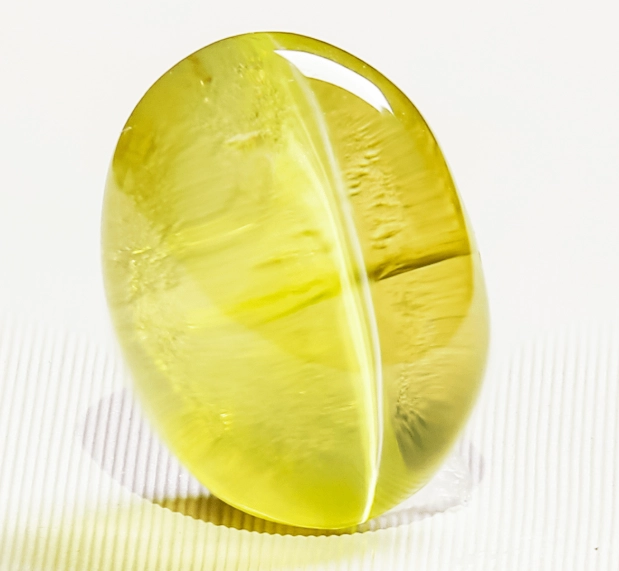
Watch Out: Be very wary of stones where the eye is too perfect and the color is an unnaturally vivid green or blue. Synthetic chrysoberyl cat's eye exists and is very convincing. Always, always get a report from a reputable lab like the Gemological Institute of America (GIA) for any significant purchase. They can conclusively identify natural vs. synthetic. It's worth the fee.
How to Buy a Chrysoberyl Cat's Eye: A Step-by-Step Reality Check
Okay, you're armed with knowledge. Now, how do you actually go about buying one? I'm not here to sell you anything, but I've made a few mistakes along the way, so learn from mine.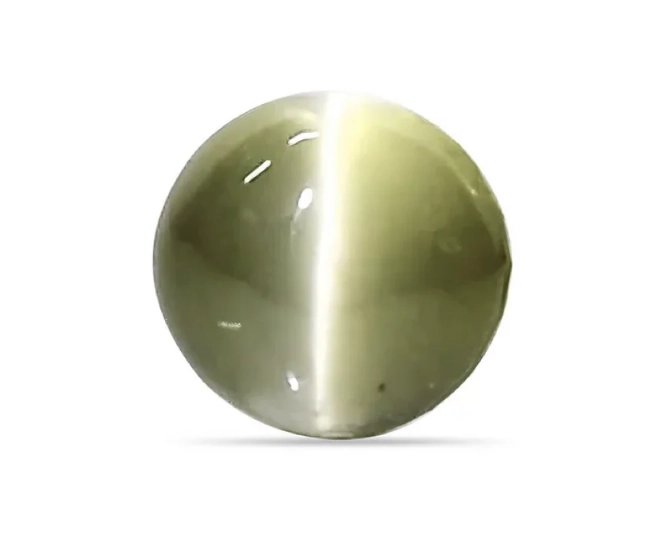
First, Know Your Source
This isn't something you buy from a random online marketplace with three stock photos. Reputable gem dealers, estate jewelers, and auction houses (with good gemological departments) are your best bets. Look for sellers who provide detailed, high-resolution videos that show the stone rotating under different lights. A static photo of a cat's eye is useless—you need to see the eye move.
Ask questions. Where is it from? (Sri Lanka and India are classic sources, but Brazil and East Africa produce material too). Does it have a lab report? If they hesitate or get defensive, walk away. A confident seller with a good stone will have the answers and the paperwork.
Second, Evaluate the Stone (Not the Story)
Sellers love a good story. "This was from a maharaja's collection!" Maybe, maybe not. Focus on the stone in front of you using the "Big Five" criteria above. Use the 10x jeweler's loupe they should provide. Check for:
- Eye Sharpness & Centering: Is it crisp? Is it straight down the middle?
- Body Under the Loupe: Look for distracting black spots, cracks (especially near the edge, which is a durability risk), or an uneven color distribution.
- The Dome: Run your finger (gently!) over it. Is it smooth and symmetrical, or are there flat spots or wobbles?
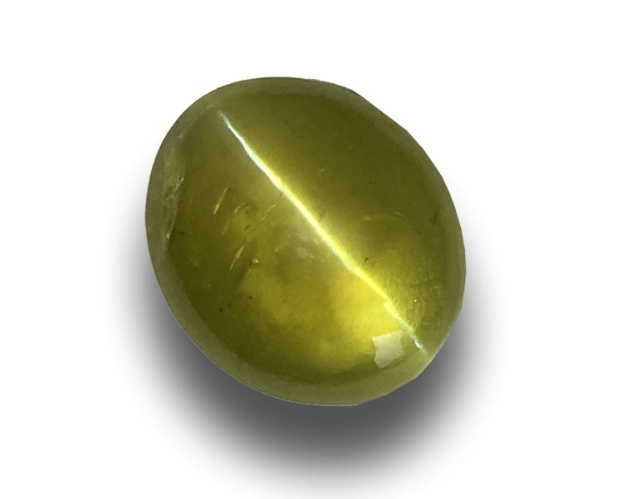
I made the mistake once of being so captivated by a stone's color that I ignored a slightly wobbly dome. In certain lights, it created a weird, distorted reflection. It bugged me forever until I had it recut (which costs money and risks the stone).
Third, Think About Setting and Wear
A chrysoberyl cat's eye is durable, but it's not indestructible. The ideal setting protects the girdle (the thin edge). A bezel or partial bezel setting is often safer and more stylish for these organic-shaped cabochons than prongs. Also, consider the orientation. The eye is typically set to move side-to-side across the finger (in a ring) or up-and-down (in a pendant), as this is the most natural viewing angle.
Pro Tip: When comparing stones, don't just look at the total price. Look at the price per carat. A 2-carat stone at $2,000 per carat is $4,000 total. A 3-carat stone at $3,000 per carat is $9,000. That third carat doubled the price. Understanding this helps you see where the real value (and cost) lies.
Caring for Your Treasure: It's Not Just a Rock
You've invested in it, so take care of it. The good news is, chrysoberyl is tough. The bad news is, people still find ways to damage them with carelessness.
The Do's:
- Clean it regularly with warm, soapy water and a soft brush. Dish soap is fine. Rinse well.
- Store it separately from other jewelry. Despite its hardness, a sharp knock from a diamond can still chip it.
- Have it checked by a jeweler once a year, especially if it's in a ring. They'll check for setting wear.
The Big Don'ts:
- No ultrasonic cleaners. I don't care if the manual says it's okay for sapphires. The intense vibrations can, in rare cases, exacerbate hidden fractures in any gem. Why risk it? Steam cleaners are also a no-go.
- No harsh chemicals. Take it off before using bleach, ammonia, or strong cleaners. They won't dissolve the stone, but they can damage the metal setting and dull the polish over time.
- No extreme heat. Don't leave it on a windowsill in blazing sun or wear it in a sauna. Sudden temperature changes are rarely good for any gemstone.
It's simple, really. Treat it like the precious object it is, not a piece of costume jewelry.
Chrysoberyl Cat's Eye vs. The World: Common Imitations & Lookalikes
This is a huge area of confusion. Let's clear it up. Many materials can show a cat's eye effect. Here’s how to tell what you're probably looking at:
- Quartz Cat's Eye: Very common. The eye is usually softer, wavier, and less sharp. The body color is often a grayish or greenish hue. It's much less valuable. If the price seems too good to be true for a large stone, it's probably quartz.
- Glass Imitations: These are the worst. The "eye" is often painted on the back or created with embedded fibers. It looks fake—too perfect, too static. The material will feel glassy and warm to the touch quickly, unlike gemstones which stay cooler. A loupe will often reveal bubbles.
- Synthetic Chrysoberyl Cat's Eye: This is the tricky one. The chemistry is identical, so it requires a lab to be 100% sure. The giveaway for experts is often that the eye is too perfect and the silk is too uniform. Natural stones have slight imperfections in the silk. Again, a GIA report is your friend.
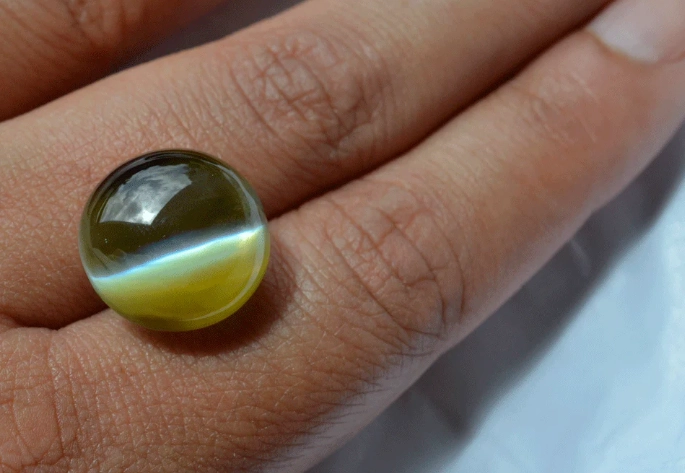
- Other Natural Gems (Tourmaline, Scapolite): These can be lovely in their own right! The key is the seller should always use the full name: "tourmaline cat's eye." They are generally less expensive than true chrysoberyl. Their eyes are often not as sharp or bright.
The bottom line? If a seller just says "cat's eye" without a qualifier, assume it's not chrysoberyl and price it accordingly. True chrysoberyl cat's eye is a specific, premium product.
Your Questions, Answered (The Stuff You Actually Google)
Is chrysoberyl cat's eye a good investment?
It can be, but with major caveats. Fine quality stones from reputable sources have historically held and increased in value, especially in larger sizes. But don't buy it purely as a financial instrument. Buy it because you love it, and view any potential appreciation as a bonus. The market is thinner than for diamonds, so selling it quickly for top dollar isn't always easy. It's an investment of passion first.
What's the difference between alexandrite and chrysoberyl cat's eye?
They're cousins! Both are varieties of the mineral chrysoberyl. Alexandrite is famous for its color-change (green in daylight, red in incandescent light). Cat's eye is famous for its chatoyancy. They are different phenomena caused by different internal structures. It's incredibly rare, but a stone can exhibit both effects—a color-changing cat's eye. That is a museum-piece level rarity.
Can the eye in the stone ever fade or disappear?
No. The eye is a permanent, structural feature of the stone, caused by those parallel inclusions. Short of completely grinding the stone into dust, you cannot remove it. It might be less visible in very low light, but under any direct light source, it will always be there. That's part of its magic.
How should I wear a cat's eye ring? Are there beliefs?
In Vedic astrology, it's associated with the planet Ketu and is considered a powerful talisman. Some wear it for protection, good luck, or to ward off the "evil eye." Whether you believe in that or not is personal. From a purely aesthetic standpoint, it's typically worn with the eye pointing across the finger (towards your thumb and pinky), as this is the most natural way for the eye to "open and close" as your hand moves.
See? Not so mysterious after all.
Wrapping It Up: Finding Your Perfect Stone
Looking for a chrysoberyl cat's eye is a journey. It's not like buying a diamond where you compare four C's on a spreadsheet. It's about connecting with a unique natural wonder. The interplay of light, color, and that mesmerizing silky band is something no other gem quite replicates.
My final piece of advice? Prioritize the eye. A stone with a fantastic, sharp, centered eye in a slightly less-than-perfect color will always be more desirable than a stone with perfect color and a weak, fuzzy eye. The eye is the soul of the stone. Everything else supports it.
Take your time. Look at lots of stones, in person if you can, or via high-quality videos. Ask for lab reports. Work with someone knowledgeable. And remember, you're not just buying a gem; you're buying a tiny, wearable piece of geological artistry that took millions of years to form. That's a pretty cool thing to own.
For further, incredibly detailed technical reading, the GIA's Encyclopedia entry on Chrysoberyl is an authoritative resource that dives deep into the geology and gemology. It's the gold standard for unbiased information.