Quick Navigation
Let's be honest. Most people think of a flawless, clear blue gem when they hear "sapphire." But then there's the star sapphire. It's the mysterious cousin, the one that doesn't play by the same rules. In a dim room, it might look like a deep, opaque cabochon. But catch it under a single light source—sunlight, a lamp, your phone's flashlight—and magic happens. A sharp, six-rayed star seems to glide across its surface as you move it. It's not a trick. It's a phenomenon called asterism, and it turns a beautiful gem into a captivating one.
I remember the first time I held a really fine grayish-blue star sapphire. It was in a vintage ring, and the dealer just casually rolled it under his desk lamp. The star didn't just appear; it sliced across the dome, sharp as a knife. I was hooked. But I also had a million questions. What causes that? Why are some stars so sharp and others fuzzy? Is a black star sapphire a real sapphire? And the big one: how much should I actually pay for one?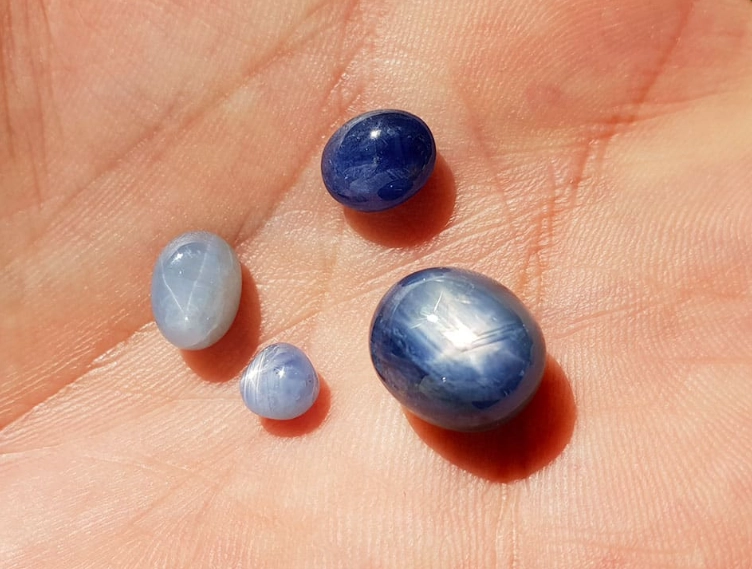
If you're looking at star sapphires, whether for an engagement ring, a collector's piece, or just to understand the hype, you've probably found a lot of generic, surface-level info. This guide is different. We're going deep—into the geology that creates the star, the market that prices it, and the practical tips you need to buy with confidence. No fluff, just the stuff that matters.
Where Does the Star Come From? It's All in the Needles
Forget any idea of the star being painted on or some clever illusion. The star is a built-in feature, a direct result of the gem's internal structure. Here's the simple version: pure corundum (the mineral family for sapphire and ruby) is clear. But as it forms deep in the earth, tiny, needle-like inclusions of a mineral called rutile (mostly titanium dioxide) get trapped inside.
Now, these rutile needles don't just scatter randomly. They align themselves along the crystal's natural growth directions. In corundum, which has a trigonal crystal system, these directions intersect at 60-degree angles. When you cut and polish the stone as a smooth, rounded cabochon (never faceted), the dome shape concentrates light. The light reflects off those dense, parallel bundles of needles, and each bundle creates one bright ray of the star. Three intersecting bundles give you the classic six-rayed star.
Think of it like the grooves on a vinyl record reflecting light, but in three dimensions.
Sometimes, in rubies (which are also corundum), you might get a six-rayed star, but more often it's a six-rayed star due to intersecting rutile needles. For sapphires, six rays is the standard. The clarity of the star depends entirely on the density and uniformity of these rutile silk inclusions. Too few, and the star is weak. Too many, and the stone becomes too opaque and dark. It's a stunningly precise natural balance.
The Color Palette: It's Not Just Blue
This is where a lot of newcomers get surprised. When we say "sapphire," we're not just talking blue. Sapphire is any color of corundum that isn't red (that's ruby). So, a star sapphire can come in a huge range of hues. The color comes from different trace elements (like iron and titanium for blue, vanadium for purple, etc.) mixing in during formation, alongside the rutile needles.
Here’s a quick rundown of the most common colors you'll find, and what makes them unique:
- Blue Star Sapphire: The classic. Ranges from a light, milky blue to a deep, inky navy. The star often shows up best against the medium to darker blues. The most sought-after shade is a vivid cornflower blue, but it's exceptionally rare with a sharp star.
- Black Star Sapphire: Often the most dramatic and affordable. The body color is an opaque, glossy black (from high iron content), and the star is usually a brilliant, silvery-white. It creates incredible contrast. A common misconception is that these are lower quality—they're just a different type, and a great entry point.
- Gray, Silver, or White Star Sapphire: These can have a beautiful, ethereal quality. The star might be white or a slightly darker gray. They can look almost mystical.
- Pink, Purple, and Yellow Star Sapphires ("Fancy Colors"): Much rarer. Finding a pink sapphire with enough rutile silk to form a sharp star is a real challenge. When you do, the price reflects it. They're true collector's items.
- The Star Ruby: Worth a special mention. A ruby with asterism. The star is usually a lighter pink or silvery color against the red body. Fine, transparent star rubies with a sharp star are among the most valuable asteriated gems in the world.
Judging Quality: The Four Factors That Actually Matter
Evaluating a faceted gem uses the 4Cs. For star sapphires, we need a modified framework. Color, Clarity, Cut, and Carat weight still apply, but their definitions shift. Let's add the most critical one: the Star itself.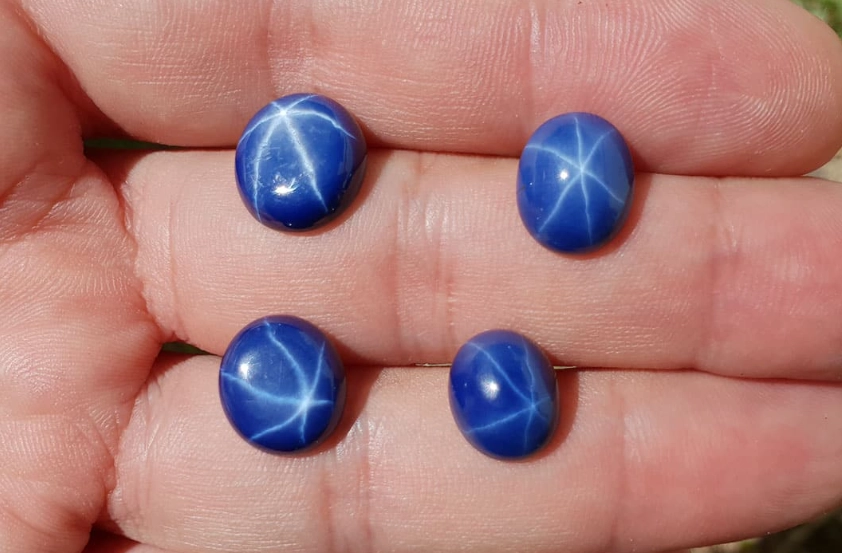
1. The Star: Sharpness, Centering, and Movement
This is the heart of the gem. A weak, blurry star kills the value. A sharp, well-defined star makes it.
- Sharpness & Definition: The rays should be straight, needle-like, and run from one edge of the cabochon to the other without breaking or fading. A fuzzy, diffused star is less desirable. The best stars look like they're painted on with a fine brush.
- Centering: The meeting point of all rays should be as close to the geometric center of the dome as possible. An off-center star feels unbalanced and is a sign of poorer cutting.
- Balance & Completeness: All rays should be of equal length and intensity. If one ray is faint or short, it detracts from the effect.
- The "Gut" Test (Movement): This is the magic. When you rotate the stone under a direct light, the star should glide smoothly and effortlessly across the surface. It shouldn't jump or stutter. A star that seems to float is a sign of excellent silk alignment and skillful cutting.
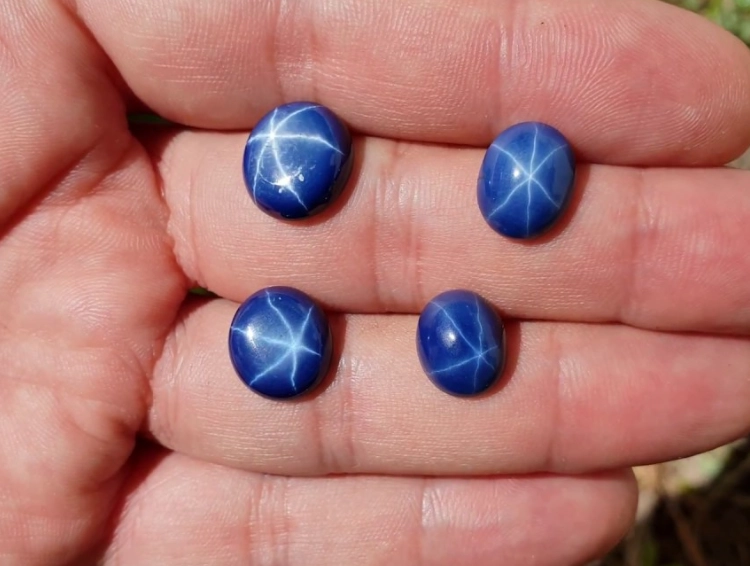
I've seen stones with great color but a star that only shows up under a jeweler's loupe. What's the point? The visual impact is everything.
2. Body Color: Hue, Tone, and Saturation
Because of the rutile silk, most star sapphires are translucent to opaque. You're not looking for the crystal-clear transparency of a faceted sapphire. Instead, you want a pleasing, even color.
- Avoid a body color that's so dark (like some black or midnight blue stones) that it completely swallows the star unless the star is brilliantly bright.
- Conversely, a stone that's too pale might have a weak star because there isn't enough contrast.
- Look for even color distribution. Obvious blotches or zoning can be distracting.
3. Cut & Proportion: The Cabochon's Shape
The cut is a domed cabochon, but there's artistry here. The dome needs the right height. Too flat, and the star will be weak and wash out. Too high and bulbous, and the star might only be visible from a very narrow angle, making it impractical for jewelry. A well-cut cabochon has a symmetrical, smooth dome with a pleasing proportion to its length and width. The back (pavilion) is usually flat or slightly curved.
A quick word on synthetics and imitations: They're everywhere. Synthetic star sapphires (like Linde stars) have been made since the 1940s. They often have a too-perfect star—dead center, razor-sharp, and in colors rarely found in nature. They also lack natural inclusions. Glass imitations exist too. The only way to be 100% sure is a report from a reputable lab like the Gemological Institute of America (GIA). For any significant purchase, insist on one.
4. Carat Weight & Transparency
Size matters, but not like you think. A large, muddy stone with a poor star is worthless. A smaller stone with a mesmerizing star is a treasure. Because the silk makes them opaque, star sapphires are often cut to retain weight, so you can get a larger carat size for your money compared to a transparent faceted sapphire. However, a star sapphire that shows even a slight degree of transparency (letting some light pass through the body, not just reflect off the star) is considered more valuable, as it indicates a finer balance of inclusions.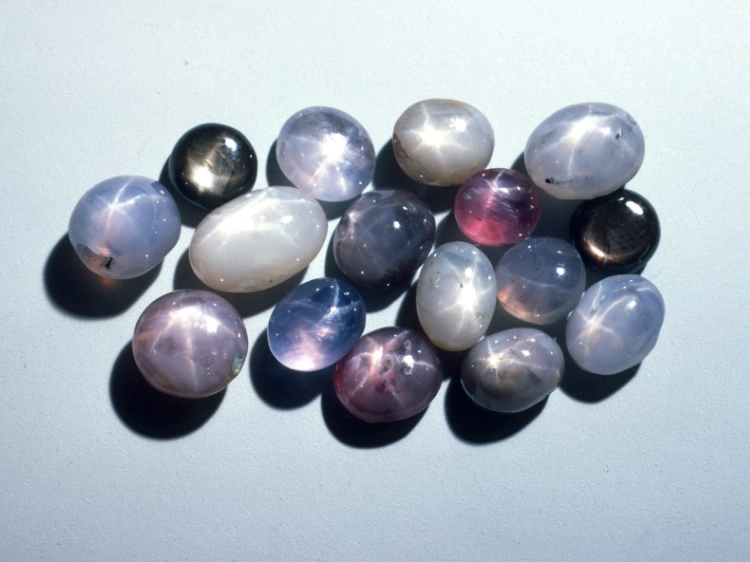
The Market Reality: What Are You Actually Paying For?
Let's talk numbers. Pricing a star sapphire is a dance between the quality factors above, origin, and market trends. It's less standardized than diamonds, which is why knowledge is power.
First, the origin can play a role, though it's less critical than for faceted gems. Historically, the most famous source was Sri Lanka (Ceylon), known for producing lighter blue and milky star sapphires with beautiful stars. Other sources include Myanmar (Burma), India, Thailand, and Africa. Montana in the USA produces some unique specimens. A reputable dealer should disclose origin if known, but don't pay a massive premium for origin alone unless it's backed by a lab report and you're a specialist collector.
Here’s a rough, very general price table to give you a framework. These are for well-cut, commercial to good quality stones. Exceptional gems can command 5-10x these figures.
| Color Type | Quality Description | Price Range per Carat (Approx.) | Notes |
|---|---|---|---|
| Black Star Sapphire | Good sharp star, even black body, 1-5 cts | $20 - $150 | The most accessible entry point. Large stones can still be affordable. |
| Gray/Blue Star Sapphire | Medium tone, decent star, translucent | $50 - $400 | The bulk of the market lives here. Great for jewelry. |
| Fine Blue Star Sapphire | Vivid blue, very sharp & centered star, some transparency | $300 - $2,000+ | Rarity drives price. A true investment-grade piece. |
| Fancy Color (Pink/Yellow) | Pronounced color with visible star | $500 - $3,000+ | Extremely rare. Prices are highly individual and volatile. |
| Star Ruby | Good red color, sharp star | $500 - $5,000+ | Often the most expensive per carat. The finest are museum pieces. |
See? It's a huge range. A $50 black star sapphire can be stunning in a pendant. A $5,000 blue star sapphire might be a lifetime centerpiece.
My personal take? The mid-range market (say, $100-$500 per carat) is where you find the best "joy per dollar." You can get a stone with real character and a lovely star without needing a museum budget. I'm often underwhelmed by the very cheap online offerings—the stars are usually ghosts.
Buying Guide: How Not to Get Burned
So you're ready to look for your star sapphire. Whether online or in a store, these steps will save you headaches.
1. Light is Everything. Demand a Video. A static photo of a star sapphire is almost useless. Any reputable seller should provide a short video showing the stone being slowly rotated under a single, direct light source (like a penlight). Watch how the star moves. Does it glide? Is it sharp? This video is non-negotiable.
2. Ask the Right Questions. Don't just ask "is it natural?" Dig deeper.
- "Can you describe the sharpness of the star on a scale of 1-10?"
- "Is the star centered?"
- "Are there any visible cracks or chips, especially on the dome?" (The dome is vulnerable).
- "What is the stone's origin, and is it disclosed on a report?"
3. Understand Treatments. Heat treatment is common for faceted sapphires to improve color, but it can dissolve rutile silk! A heat-treated star sapphire would lose its star. So, asterism itself is a strong indicator the stone is untreated. However, some stones might have fractures filled with glass or resin to improve appearance. Ask directly: "Has this stone been treated in any way to enhance the surface or clarity?" Reputable dealers affiliated with organizations like the American Gem Trade Association (AGTA) adhere to strict disclosure standards.
4. Get a Lab Report for Major Purchases. For any star sapphire over, say, $1,000, a report from GIA or another major lab (AGTA Gemological Testing Center, etc.) is wise. It will confirm natural corundum, note any treatments, and describe the asterism. It's your insurance policy.
5. Think About the Setting. Star sapphires need light to perform. Bezel settings (a metal rim encircling the stone) can block too much light if they're too high. A lower bezel or claw/prong settings are often better. The stone should be easy to tilt into the light. For rings, consider a protective setting as the cabochon dome can be prone to scratching.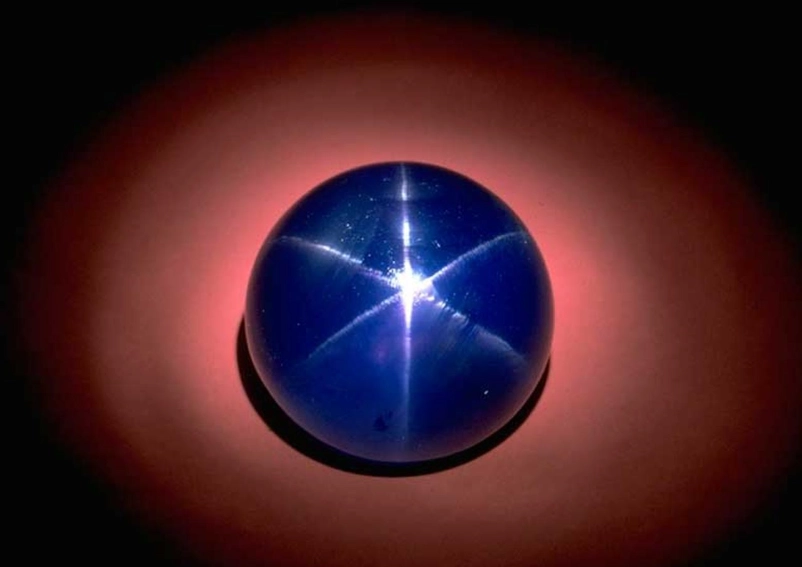
Your Star Sapphire Questions, Answered
I get asked these all the time. Let's clear them up.
Is a star sapphire a good choice for an engagement ring?
It's a unique and meaningful choice, but with caveats. It's softer than diamond (9 vs. 10 on the Mohs scale, but 9 is still very hard). The bigger issue is that the star needs direct light to be seen. In diffuse indoor light, it might just look like a colored cabochon. If your partner loves unique, symbolic gems and understands its nature, it can be stunning. Choose a durable setting and maybe a slightly darker stone where the star has strong contrast.
What's the difference between a 6-ray and a 12-ray star?
Almost all star sapphires are six-rayed, from two sets of intersecting rutile needles. A twelve-ray star is incredibly rare and occurs when there are two different types of inclusion needles (like rutile and hematite) forming at different angles. They're mostly seen in some garnets or rare corundum. If a seller has a dozen "12-ray star sapphires," be very, very skeptical.
Can the star wear off or get scratched?
The star is about 0.5mm below the surface. You cannot polish it off. However, if the cabochon dome itself gets deeply scratched or chipped, it can disrupt the light's path and make the star appear broken or fuzzy. This is why you should remove a star sapphire ring during heavy manual work.
How do I clean my star sapphire jewelry?
Simple is best. Warm water, a drop of mild dish soap, and a soft toothbrush. Gently brush the stone and setting, rinse thoroughly, and pat dry with a soft cloth. Avoid ultrasonic cleaners and steamers, as they can potentially damage treatments in other stones in the piece or loosen the setting over time.
Are star sapphires astrologically significant?
In many traditions, yes. They are often associated with Saturn and are considered stones of discipline, focus, and protection from negative energy. The "star" is seen as a guiding light. Whether you believe in that or not, the lore adds to their romantic appeal. The GIA's Gem Encyclopedia has great info on historical lore for many gems, including sapphire.
Final Thoughts: Finding Your Star
Looking for the perfect star sapphire is a hunt. It requires patience. Don't jump on the first stone you see. Compare. Watch dozens of videos. Learn to see the difference between a good star and a great one.
Start by figuring out what draws you. Is it the Gothic drama of a black star sapphire set in silver? The classic elegance of a blue star in yellow gold? Or the quirky charm of a gray star in a modern pendant? Let that guide your search.
Remember, you're buying a natural object, not a manufactured product. It will have quirks. A slight off-centering, a tiny inclusion near the edge—these can be part of its character and make it more affordable. Focus on the overall effect. When you see a video and that smooth, gliding star makes you pause, you've probably found it.
The market for these gems is nuanced. Arm yourself with the knowledge from this guide, buy from sellers who educate rather than just sell, and don't be afraid to ask for proof and documentation. Your reward will be a gem that doesn't just sparkle—it performs. A living star in the palm of your hand.
And hey, if you find an amazing pink one, let me know. I'm still looking.