Quick Guide
Let's talk about black opal. You've probably seen pictures – those dark stones that seem to hold a miniature fireworks display, flashing reds, greens, and blues that dance as you move them. It's the kind of gem that makes you stop and stare. But here's the thing I learned the hard way: the world of black opal is filled with as much mystery and marketing hype as it is with genuine beauty. Not everything called "black" is truly black, and the price tags can range from surprisingly accessible to "you must be joking." So, how do you navigate it?
I remember the first time I held a premium black opal from Lightning Ridge. It felt heavier than I expected, and the play-of-color wasn't just on the surface; it felt like looking into a deep, colorful universe. It was nothing like the flat, plastic-looking doublets I'd seen online. That experience sent me down a rabbit hole, talking to miners, cutters, and gemologists to understand what really makes this stone tick. This guide is what I wish I had back then.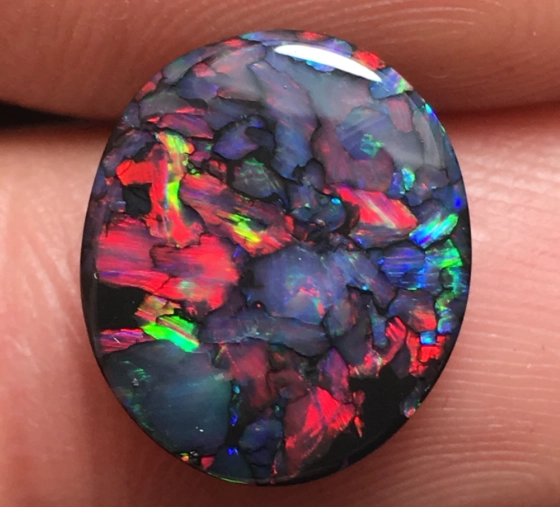
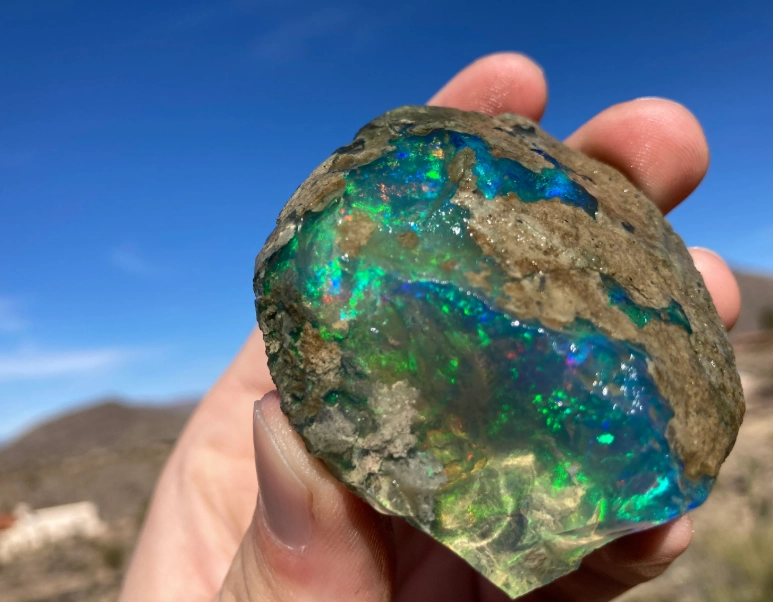
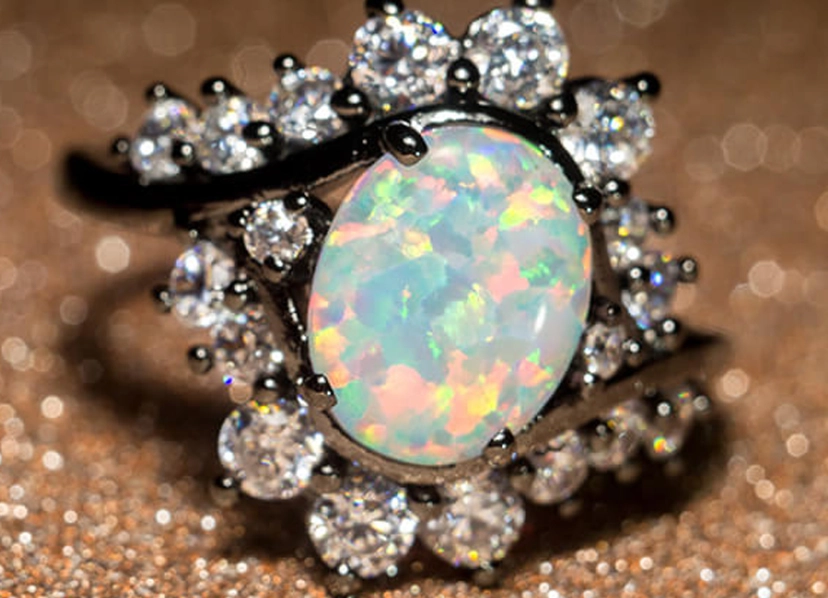
At its core, a black opal stone is a variety of precious opal characterized by a dark body tone (ranging from dark gray to jet black) that serves as a dramatic backdrop for its famous play-of-color. The dark background makes the spectral colors pop with an intensity you just don't get with lighter opals. It's this contrast that creates the legendary, almost magical appearance.
What Exactly Is a Black Opal? (It's Not Always Jet Black)
This is the first big misconception. The term "black" in gemology refers to the body tone, not the actual base color you see in normal light. Think of it like a theater. The play-of-color are the actors on stage, and the body tone is the color of the stage curtain. A dark curtain makes the actors stand out vividly.
The Gemological Institute of America (GIA), a top authority in gem science, classifies opal body tones from N1 (blackest) to N9 (white). True black opals fall into the N1 to N4 range. Stones from N5 to N6 are often called "semi-black" or "dark" opals, and they can still be stunning. Many stones sold as "black opal" online are actually in this semi-black range, which isn't necessarily bad – it just means you need to know what you're paying for.
The stone itself is amorphous silica, containing a good amount of water (usually 6-10%). Its structure is a marvel: a grid of tiny silica spheres that diffract light, splitting it into the rainbow of colors we see. The size and arrangement of these spheres determine which colors flash. Smaller spheres create blues and violets, while larger ones allow reds and oranges to appear. Red is the rarest color to see in a black opal's display.
Key Sources: Where the Magic Comes From
Not all dirt produces this gem. The most famous and historically valuable black opals come from Lightning Ridge in New South Wales, Australia. The conditions there just happened to be perfect millions of years ago. The Australian Government's Opal Mining page details the unique geology of these fields. The stones from here often have that coveted jet-black potch (the non-colorful opal base) and incredibly bright, large patterns of color.
Other sources exist, and they're important to know because they affect value and character:
- Lightning Ridge, Australia: The classic. Known for the darkest body tones and often the most intense, multi-color play. The benchmark for quality.
- Mintabie, Australia: Produces beautiful opals, often with lighter body tones (more gray than black) but sometimes with spectacular color patterns.
- Ethiopia: A major newer source. Ethiopian Welo opal can have a very dark body tone when dry, but here's the catch – it's hydrophane. It absorbs water, which can temporarily darken the body tone and enhance color, but can also lead to cracking if it dries out too fast. It's beautiful but requires different care. The GIA's Opal Gem Page has excellent technical info on hydrophane opal behavior.
- Others: Brazil, Honduras, and the US (Nevada) produce dark opals too, but they are less common on the mainstream market.
What Determines a Black Opal's Value? (Beyond Just Looking Pretty)
Evaluating a black opal is an art. Dealers often talk about the "three Cs" for diamonds, but for opal, it's more like a symphony of factors. Getting a handle on these will stop you from overpaying for a mediocre stone or missing a great deal on a unique one.
1. Body Tone (The Foundation)
As discussed, N1 to N4 is true black. N1 is exceptionally rare. Most top-tier jewelry pieces use N2-N4. The darker it is, the more the color contrasts, and generally, the higher the price per carat – all else being equal. But a dark stone with poor color is worth less than a lighter stone with fantastic color.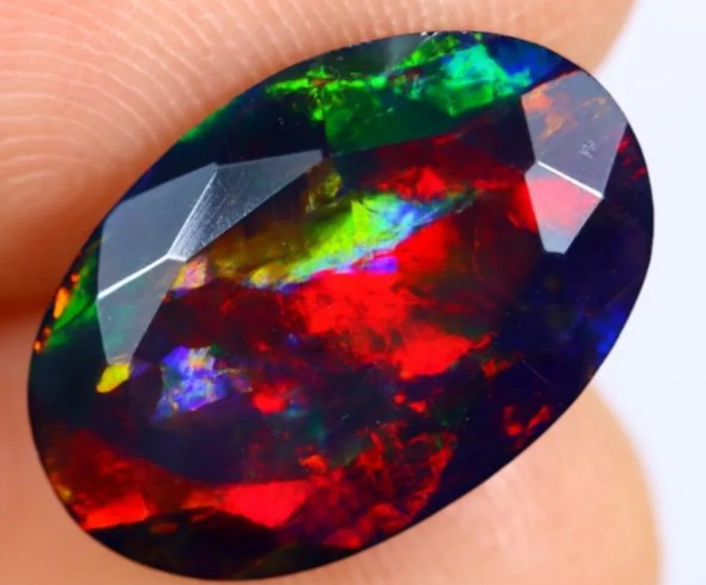
2. Play-of-Color (The Star of the Show)
This is everything. It's broken down into three parts:
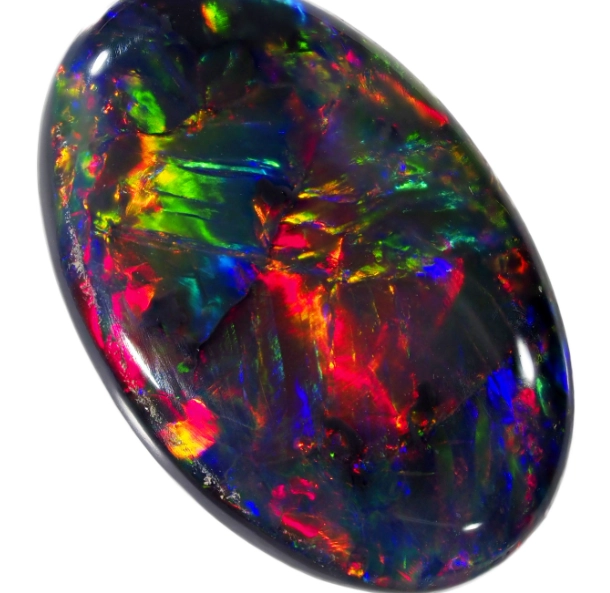
- Color Range: Which colors are present? A full spectral display (red, orange, yellow, green, blue, violet) is most prized. Red is the king. If you see a stone flashing bright reds, especially on a black background, you're looking at a high-value piece. Next comes orange, then green, and finally blue/violet. A stone showing only blue is far more common.
- Color Brightness/Saturation: Are the colors electric and vivid, or dull and milky? Vividness trumps almost everything. A bright, electric blue is more valuable than a dull red.
- Pattern: How are the colors arranged? Some patterns are more sought-after:
- Harlequin: Large, angular, mosaic-like patches. This is the holy grail and commands massive premiums.
- Ribbon or Flagstone: Parallel bands of color.
- Straw or Chinese Writing: Fine, needle-like patterns.
- Flash or Pinfire: Small, pinpoint flashes. Very common, but can be beautiful if bright.
I once saw a stone marketed as "rare harlequin" that was, at best, a messy straw pattern. Knowing the patterns helps you see through the sales talk.
3. Clarity, Cut, and Carat Weight
Clarity: You want the gem to be free of obvious cracks, pits, or sand inclusions. However, a completely clean black opal stone is rare. Some matrix (host rock) on the back or sides is acceptable, especially if it adds character (like in a "matrix opal") and doesn't threaten stability.
Cut: Opal is often cut into freeform cabochons to maximize the color bar. A good cut should have a smooth, domed surface to best show the play-of-color, and it should be stable (not too thin where it can crack). A poorly cut stone can hide its best color or be prone to breaking.
Carat Weight: Price per carat increases significantly with size. A 5-carat black opal is worth far more than five times the price of a 1-carat stone of similar quality. Large, high-quality pieces are investment-level rare.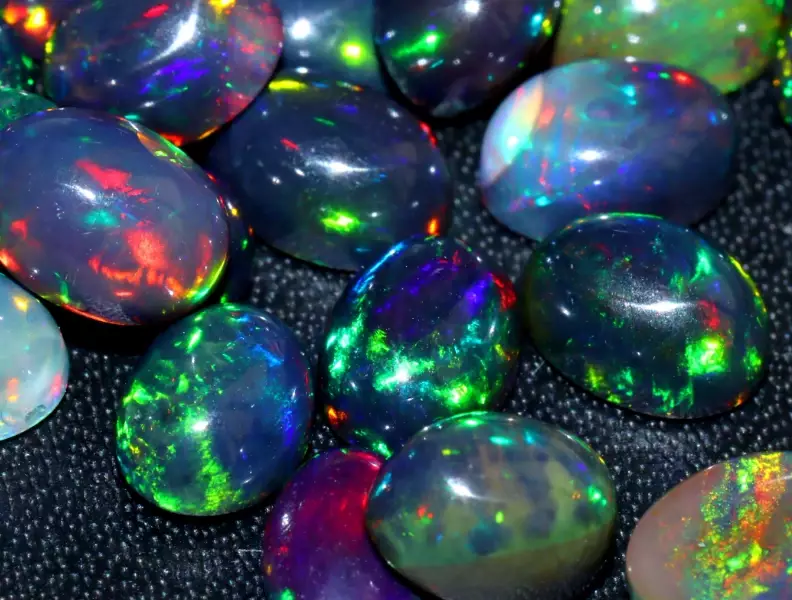
| Factor | High Value Traits | Lower Value Traits | Why It Matters |
|---|---|---|---|
| Body Tone | N1 (Jet Black) to N4 (Dark Gray) | N5 (Medium Gray) and lighter | Darker background creates maximum contrast for play-of-color. |
| Play-of-Color: Hue | Red present, full spectrum (ROYGBV) | Only blue/violet present | Red is the rarest spectral color to achieve in opal's structure. |
| Play-of-Color: Pattern | Harlequin, Ribbon, Flagstone | Common Pinfire, Diffuse Flash | Distinct, large patterns are much rarer than scattered flashes. |
| Brightness | Vivid, Electric, "Flashy" | Dull, Milky, Washed-out | Brightness is the "wow" factor and is directly linked to the quality of the silica structure. |
| Clarity | Eye-clean, no major cracks | Visible sand inclusions, cracks (crazing) | Inclusions can compromise durability and distract from the color play. |
A Realistic Buying Guide: How Not to Get Burned
Okay, so you want to buy a black opal stone. The market is a minefield of synthetics, treated stones, and outright fakes. Let's walk through it.
Natural vs. Treated vs. Synthetic vs. Fake
The single biggest pitfall: assuming "black" means natural. Many dark opals are treated to achieve that look.
- Natural Solid Black Opal: Mined and cut as-is. The gold standard. It should be described as "natural" or "untreated."
- Smoked or Sugar-Treated Opal: Often from Brazil. Lighter opal is treated with heat and sugar or smoke to darken the body tone. The color can look a bit murky or brownish, and the treatment is not always permanent. It must be disclosed. It's a legitimate product if sold honestly as "smoked opal" at an appropriate price.
- Doublets and Triplets: These are composites, not solid stones.
- A doublet is a thin slice of color opal glued onto a dark backing (like black potch or glass).
- A triplet adds a clear quartz or glass cap on top to protect the thin opal layer.
- Synthetic/Lab-Created Opal: Man-made materials like Gilson opal have a very regular, repeating pattern that looks too perfect (often described as "lizard skin" or "chicken wire"). They are real opal in composition but created in a lab. Again, fine if disclosed.
- Imitations: Plastic, glass, or "opalite." These have a fixed sheen, not a moving play-of-color. Easy to spot once you've seen the real thing.
My advice? Always ask: "Is this a natural, solid black opal? Has it been treated in any way?" Reputable sellers will answer clearly. Check resources like the Smithsonian's Gem Collection to train your eye on world-class natural examples.
Where to Buy (And Where to Be Cautious)
Specialist Gem & Jewelry Shows: Probably the best place for a serious buyer. You can see hundreds of stones, talk to cutters directly, and compare quality and price instantly.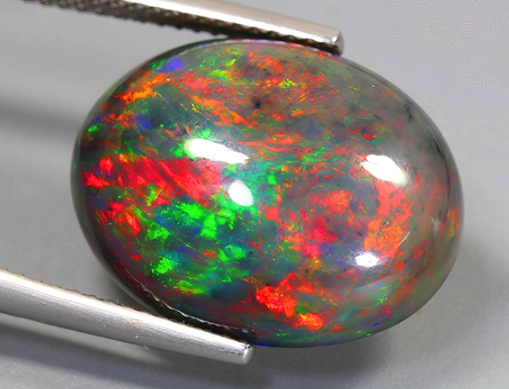
Reputable Local Jewelers with a gemology focus. They can provide expertise and often have connections to trusted sources.
Online from Established, Specialist Dealers: Look for dealers who provide detailed descriptions, high-resolution videos (photos are never enough for opal), clear return policies, and certificates from recognized labs like GIA or the Australian Opal Centre for high-value pieces.
Red Flag Checklist: Be extremely wary of any seller who: uses only stock photos, has prices that seem too good to be true for "solid black opal," cannot or will not provide a video of the stone rotating under light, uses vague terms like "precious opal" without specifics, or pressures you to buy immediately.
Caring for Your Black Opal: It's Not as Fragile as You Think (If You're Smart)
The horror stories about opals cracking if you look at them wrong are overblown, but they come from a real place. Opal contains water, and sudden temperature changes or extreme dryness can cause stress. Here’s a no-nonsense care routine:
- Avoid Extreme & Sudden Temperature Changes: Don't wear your opal ring while taking a hot bath or baking. The expansion/contraction can cause cracks.
- Protect from Knocks and Abrasion: Opal's hardness is around 5.5-6.5 on the Mohs scale, so it can be scratched by common dust (which contains quartz). Don't wear an opal ring for heavy manual work. Store it separately in a soft pouch.
- Chemicals are the Enemy: Perfume, hairspray, bleach, and harsh cleaners can damage the polish and potentially seep into cracks. Put your jewelry on last when getting ready.
- Cleaning: Warm, soapy water and a soft brush are perfect. Rinse well. Never use ultrasonic or steam cleaners.
- Long-Term Storage: If you live in a very dry climate or are storing the stone long-term, some people keep it in a sealed bag with a damp cotton ball. This is more critical for Ethiopian hydrophane opals than for Australian stones, which are generally more stable. For a piece you wear regularly, normal humidity is fine.
The bottom line? Wear and enjoy your black opal stone, but treat it like the precious, somewhat delicate artwork it is. Don't baby it to the point of never wearing it, but don't treat it like a diamond either.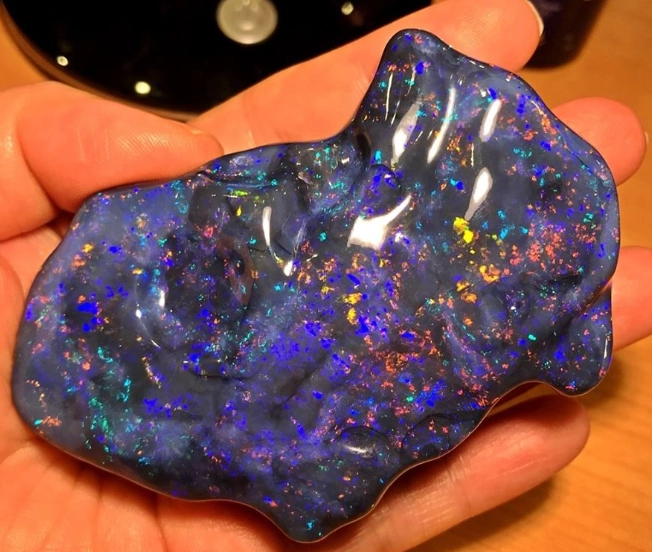
Answering Your Black Opal Questions
Is black opal a good investment?
High-quality, natural black opal from classic sources like Lightning Ridge has historically appreciated in value, especially for larger, exceptional pieces. It's a finite resource, and mining is becoming harder. However, treat it first and foremost as a purchase of beauty and passion. The market is less liquid than diamonds or gold. Only buy investment-grade pieces from ultra-reputable sources with proper documentation. Don't expect your average commercial-grade stone to be a retirement fund.
Why is black opal so expensive?
Rarity, pure and simple. Finding a stable, dark piece of opal with a thick color bar showing bright, multi-colored patterns is incredibly rare. Most opal mined is potch (colorless). Of the precious opal found, only a small fraction is black, and only a tiny slice of that is top quality. The labor-intensive mining (often by individuals or small teams) and the skilled artistry required to cut it without ruining the color bar all add to the cost.
Can black opal get wet?
Yes, absolutely. Getting caught in the rain or washing your hands while wearing it is no problem at all. The issue is prolonged immersion or sudden temperature change. The water in tap water isn't the enemy; thermal shock is. Showering with it regularly is not recommended due to soaps and shampoos, plus the constant heat cycles.
How can I tell if my black opal is real?
For a solid natural stone, look for: a play-of-color that moves and changes as you rotate it (imitations have a static flash), a warm feel to the touch (glass feels cooler), and under magnification (a loupe), you might see a natural, somewhat chaotic internal structure. For a definitive answer, especially on a costly piece, take it to a certified gemologist or send it to a lab like GIA. They can identify synthetics, treatments, and composites definitively.
I hope this guide pulls back the curtain a bit. It's a fascinating gem, worthy of the fascination. Go in with your eyes open, know what to look for, and you can find a piece of this natural magic that speaks to you, without the fear of being taken for a ride. Start by looking at lots of pictures and videos, then if you can, visit a museum or a good jeweler to see the real thing in person. That first-hand experience is the best teacher of all.