What's Inside?
- What Exactly Is a White Sapphire?
- White Sapphire vs. Diamond: The Side-by-Side Breakdown
- Buying a White Sapphire: What to Look For (The 4 Cs, Adapted)
- White Sapphire in Jewelry: Ideas and Inspiration
- Caring for Your White Sapphire Jewelry
- Answering Your White Sapphire Questions (FAQs)
- The Final Verdict: Who is a White Sapphire Perfect For?
Let’s talk about white sapphires. You’ve probably seen them pop up online, maybe in an ad for a stunning, sparkly ring that looks a bit too good to be true for the price. Or perhaps a friend mentioned they’re considering one for their engagement ring. Your first thought might be, "Wait, sapphires are blue, right?" That’s where the story gets interesting.
I remember the first time I held a well-cut white sapphire. I was in a small, independent jeweler's workshop, not some fancy showroom. The jeweler, a guy with glasses perched on his nose and fingers stained with metal dust, plopped it into my palm. "People overlook these," he said. "They hear 'sapphire' and think color. But this? This is all about the light." He was right. It wasn’t the explosive fire of a diamond, but it had a cool, steely, brilliant gleam that felt incredibly elegant and substantial. It didn’t shout; it whispered with confidence. That moment changed how I saw them—from a simple diamond simulant to a gemstone with its own distinct personality.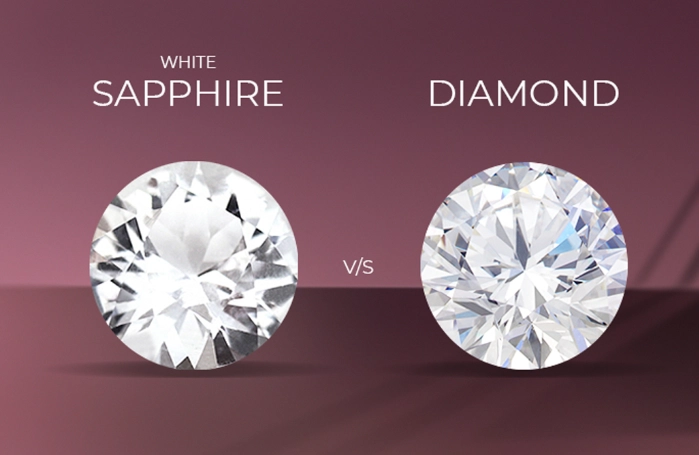
This guide is for anyone who’s curious, skeptical, or seriously considering a white sapphire. We’ll cut through the marketing fluff. We’ll talk about why you might absolutely love one, and also the reasons you might be disappointed if you go in with the wrong expectations. No hype, just the practical details you need to decide if this gorgeous, often misunderstood gem is right for you.
What Exactly Is a White Sapphire?
First things first: let's clear up the name. A white sapphire is, quite simply, a sapphire that has no color. That’s it. Sapphire is the gem variety of the mineral corundum (aluminum oxide). Trace elements like iron and titanium are what give us the famous blue sapphires. When those elements are absent in significant amounts, the corundum grows colorless. That colorless corundum is a white sapphire. It’s a natural, precious gemstone in its own right, not a "fake" diamond. It’s chemically identical to a blue, pink, or yellow sapphire—just without the color-causing guests at the atomic party.
This is a crucial point. Because it’s corundum, it shares the same exceptional hardness. On the Mohs scale of mineral hardness, which runs from 1 (talc) to 10 (diamond), corundum scores a 9. That makes the white sapphire one of the hardest natural substances on Earth, second only to diamond. In practical terms, this means a white sapphire is exceptionally resistant to scratching, making it a brilliant choice for everyday wear in an engagement ring or a daily-wear pendant. You won’t have to baby it.
White Sapphire vs. Diamond: The Side-by-Side Breakdown
This is the comparison everyone wants to see. It’s not about one being "better" than the other. It’s about them being different. Choosing between them is like choosing between a classic, crisp white shirt (the diamond) and a luxurious, heavy silk blouse (the white sapphire). Both are stunning, but they serve different aesthetics and budgets.
Here’s a detailed look at how they stack up across the key factors buyers care about.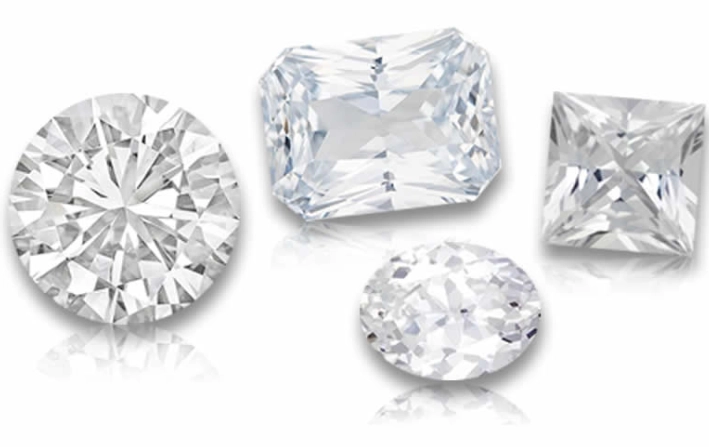
| Feature | White Sapphire | Diamond |
|---|---|---|
| Composition & Hardness | Corundum (Al₂O₃), Mohs 9 | Carbon (C), Mohs 10 |
| Brilliance & Fire | Vitreous (glassy) luster. Exhibits less "fire" (rainbow flashes). Sparkle is often described as a cooler, silvery-white gleam. Can appear slightly milky or hazy if not excellently cut. | Unmatched brilliance and fire due to its high refractive index and dispersion. The sparkle is bright, white, and full of colorful flashes. |
| Durability for Daily Wear | Excellent. 9/10 hardness makes it highly scratch-resistant. Can be worn every day with confidence. | Exceptional. The hardest known material, ideal for lifelong, heirloom-quality daily wear. |
| Clarity & Inclusions | Often has more visible inclusions (feathers, silk) to the naked eye than a typical diamond. A completely eye-clean white sapphire is less common and commands a premium. | Graded on a precise clarity scale. A wide range is available, from included to flawless. Eye-clean diamonds are readily found in various price ranges. |
| The Cost Factor | Significantly more affordable. A 1-carat, good quality white sapphire can cost a fraction of a 1-carat diamond. This allows for a much larger stone for the same budget. | Commands a high price due to market demand, branding, and rarity of high-quality stones. Price increases significantly with carat weight and quality grades. |
| Ethical & Environmental Choice | Often a good choice for ethically-minded buyers. Many are lab-created with minimal environmental impact, and even natural ones typically don't carry the same conflict concerns as diamonds. Transparency is generally easier to find. | The market now offers strong ethical options (like Canadian diamonds or reputable lab-grown diamonds), but requires diligent research to ensure conflict-free and responsible sourcing. |
Looking at that table, the trade-offs become clear. The white sapphire’s biggest win is undoubtedly the price. You get the look and feel of a large, precious gemstone without the heart-stopping invoice. Its biggest challenge is the sparkle. If you are someone who loves watching rainbows dance across the walls from a stone, a white sapphire might leave you wanting. Its sparkle is more subdued, more of a consistent glow. Some people, myself included, actually prefer that. It feels more vintage, more subtle.
But here’s a personal gripe: not all jewelers know how to cut a white sapphire properly. A poorly cut one can look downright dead—like a piece of glass. It lacks the internal life of a diamond and depends heavily on expert cutting to maximize its light return. A great cut is non-negotiable.
Buying a White Sapphire: What to Look For (The 4 Cs, Adapted)
You can’t use the diamond 4Cs checklist directly. You need a sapphire-specific lens. Let’s break it down.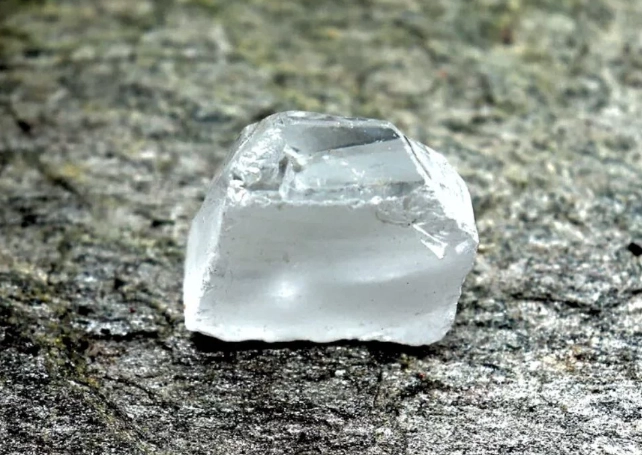
Cut: The Most Important "C" by Far
For a white sapphire, cut is everything. It’s not just about shape (round, oval, cushion). It’s about the precision of the facets. A great cutter will angle the facets to compensate for the sapphire’s lower refractive index, trying to bounce as much light back to your eye as possible. A shallow or deep cut will leak light, making the stone look dark or glassy. Look for terms like "ideal" or "precision" cut. Don’t be shy—ask the seller about the cut quality. A well-cut white sapphire should look bright and lively, not flat.
Color: The Quest for True Colorless
"White" is a bit of a misnomer. Many white sapphires have a faint tinge of gray, yellow, or blue. The most desirable are those that are as colorless as possible, rivaling a D/E/F color diamond. These are rarer. Often, a stone might face-up white but show a slight body color when viewed from the side. This isn’t necessarily bad, but know what you’re getting. If you want a truly neutral, icy white, be prepared to look harder and pay a bit more.
Clarity: Eye-Clean is the Goal
Unlike diamonds, where clarity is microscopically graded, with white sapphires, you just need it to look clean to the naked eye. Inclusions are common. Look at the stone in normal light. Can you see any obvious black spots, clouds, or cracks? If not, it’s fine for jewelry. Remember, those inclusions are proof it’s a natural stone. But if they bother you, lab-created white sapphires often offer flawless clarity at a lower cost.
Carat: Size Without the Sticker Shock
This is where the fun begins. Because white sapphires are more affordable per carat, you can go bigger. A 3-carat white sapphire center stone is a feasible dream for many budgets. But remember, a larger, poorly cut stone will just look like a bigger piece of glass. Prioritize cut over sheer size.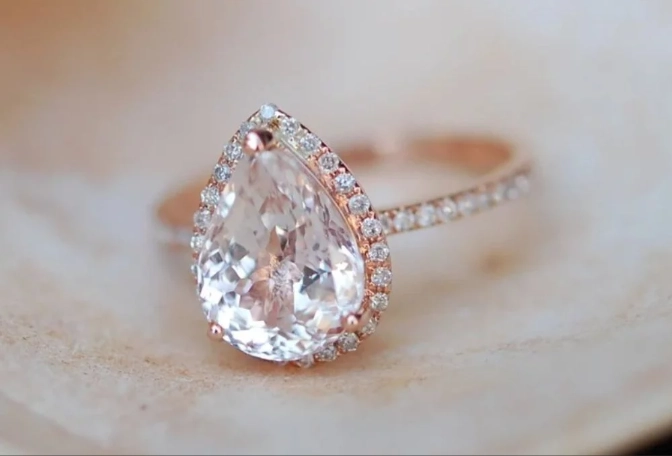
Natural vs. Lab-Created: Which Should You Choose?
This is a big question. Natural white sapphires are mined, rare, and have that "born of the earth" allure. Lab-created white sapphires are grown in controlled environments, have identical chemical and physical properties, and are much more affordable and eco-friendly.
My take? For a white sapphire, I almost always lean towards lab-created. Here’s why: The primary appeal of a natural colored sapphire (a rare padparadscha, for instance) is its unique, natural color. Since we’re specifically seeking no color in a white sapphire, the main differentiator is gone. A lab-created white sapphire will often be more colorless, have better clarity, and be cut with more precision because the rough material is more consistent and less costly to work with. You get a better-performing stone for less money, with a clear conscience. It’s a practical win.
White Sapphire in Jewelry: Ideas and Inspiration
So, what kind of jewelry sings with a white sapphire?
Engagement Rings: This is a huge growing category. A white sapphire engagement ring offers the classic, clear-stone look with serious durability and a story that’s about smart choice, not just tradition. It pairs beautifully with all metal colors. A rose gold setting can warm up the stone’s cool tone, while platinum enhances its icy feel.
Right-Hand Rings & Cocktail Rings: Want a big, bold statement piece without the luxury price tag? A large white sapphire in an art deco or vintage-inspired setting is absolutely breathtaking. It has the presence of a diamond but lets you experiment with style more freely.
Accent Stones: White sapphires make fantastic accent stones. They’re often used as melee (small stones) in pavé settings or halos around a colored center stone. They provide brilliant sparkle without competing for attention or blowing the budget.
Men’s Jewelry: The cooler, less flashy sparkle of a white sapphire can be perfect for men’s rings or cufflinks. It reads as sophisticated and strong, not overly glitzy.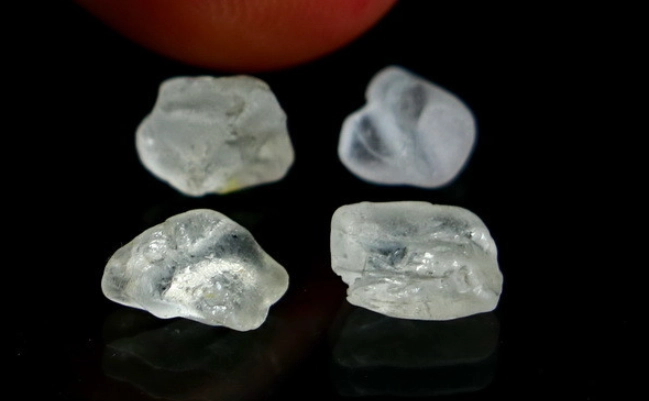
Caring for Your White Sapphire Jewelry
Hardness doesn’t mean invincibility. Here’s how to keep your white sapphire looking its best:
- Cleaning: Simple is best. A soft toothbrush, warm water, and a drop of mild dish soap will do. Gently scrub behind the stone where grime builds up. Rinse and pat dry with a soft, lint-free cloth. Do this every few weeks if worn daily.
- The Grime Factor: This is the #1 reason a white sapphire might look dull. Oils from skin, lotion, and daily dust can coat the stone, drastically reducing its sparkle. Regular cleaning is the easiest way to restore its fire.
- Ultrasonic Cleaners: Usually safe for white sapphires, but never use one if the stone has significant fractures or inclusions, as the vibrations can cause damage. When in doubt, stick to manual cleaning.
- Storage: Keep it separate from other jewelry. While it can scratch most other gems, another sapphire or a diamond could theoretically scratch it. A soft pouch or a separate compartment in your jewelry box is perfect.
Answering Your White Sapphire Questions (FAQs)
Does a white sapphire get cloudy?
It shouldn’t, if it’s a quality stone. Cloudiness is usually caused by two things: 1) A poor cut that doesn’t reflect light well, making it look hazy, or 2) A buildup of dirt and oils on the surface (see cleaning tips above!). A clean, well-cut white sapphire will be clear and bright.
Is a white sapphire a good investment?
Let’s be real: Most jewelry is a terrible financial investment. It’s an investment in joy, sentiment, and personal expression. While natural white sapphires retain some value, they don’t appreciate like high-quality colored sapphires or diamonds. Buy a white sapphire because you love it, not because you think it’ll fund your retirement.
Can a jeweler tell it's not a diamond?
Yes, a qualified gemologist or jeweler can identify a white sapphire in seconds with simple tools. The difference in refractive index and thermal conductivity (how it conducts heat) are dead giveaways. To the naked eye, however, a well-cut white sapphire can be a convincing look-alike to the untrained observer.
What are the best settings for a white sapphire?
Settings that maximize light entry are key. Solitaires, three-stone settings, and halo settings are all excellent. Bezel settings, while secure and modern, can cover the edges and reduce the amount of light entering the stone, potentially dampening its sparkle.
Where can I buy a reputable white sapphire?
Look for jewelers who specialize in colored gemstones or alternative engagement rings. They tend to understand cut quality better. Reputable online retailers with clear, magnified videos and good return policies are also a great option. Always check for customer reviews and ask about their return policy. For authoritative information on corundum (sapphire’s mineral family), resources like the Gemological Institute of America (GIA) Gem Encyclopedia are invaluable for independent research.
The Final Verdict: Who is a White Sapphire Perfect For?
Let’s wrap this up. A white sapphire isn’t for everyone, and that’s okay. It’s a specific choice for a specific person.
Choose a white sapphire if you:
- Want the look of a large, clear, precious gemstone on a realistic budget.
- Prefer a cooler, more subtle sparkle over explosive fire.
- Value durability and want a ring you can wear without constant anxiety.
- Are ethically or environmentally conscious and want a transparent sourcing story.
- Appreciate gemology and want a stone with its own identity, not just a diamond substitute.
You might want to reconsider a white sapphire if you:
- Have your heart set on the specific, rainbow-fire sparkle of a diamond.
- Are bothered by the possibility of slight tints of gray or blue in the stone.
- Want a stone that is guaranteed to be completely flawless to the eye without a high premium.
In the end, the best gemstone is the one that makes you smile when you look at it. For some, that’s the timeless tradition of a diamond. For others, it’s the clever, elegant, and deeply personal choice of a beautiful white sapphire. Now that you know exactly what it is—and what it isn’t—you can make that choice with your eyes wide open.