Key Takeaways
Let's talk about pigeon blood ruby. You've probably heard the name thrown around in fancy jewelry stores or seen it in headlines about record-breaking auctions. It sounds exotic, expensive, and maybe a little mysterious. What I want to do here is strip away the marketing fluff and the auction house hype. I want to get down to what this term actually means, why these stones command such insane prices, and how you can navigate the often-confusing world of high-end rubies without getting burned.
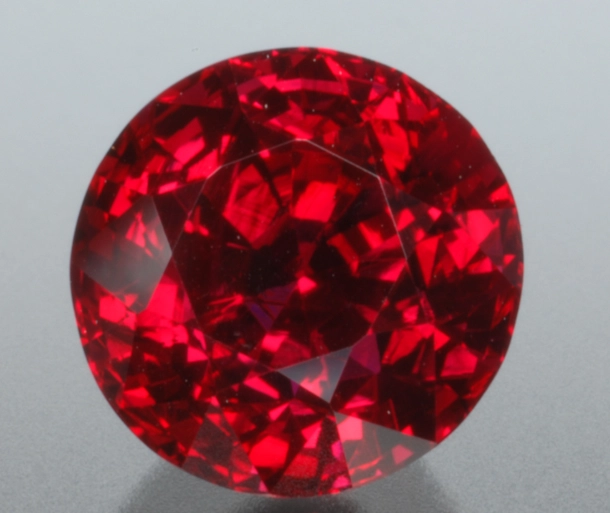
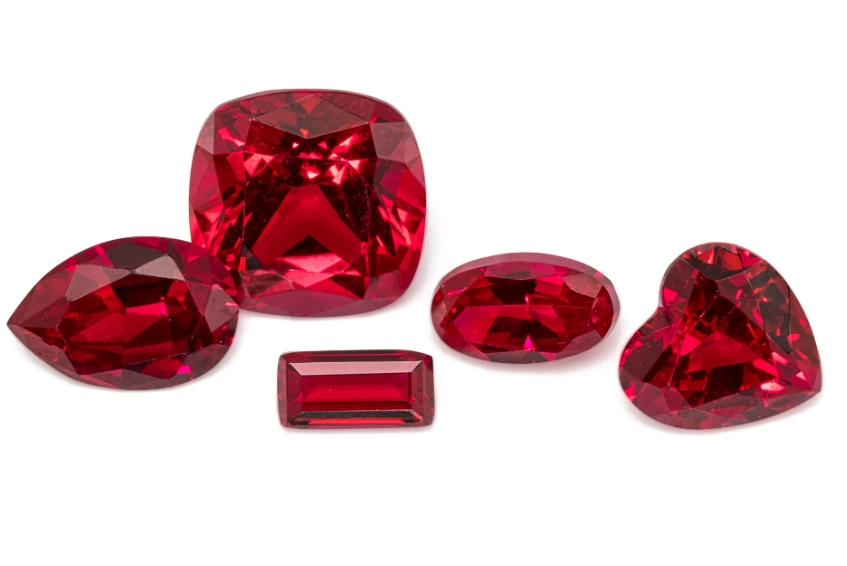
I remember the first time I held a certified pigeon blood ruby from the legendary Mogok Valley. It wasn't huge, maybe two carats. But the color... it wasn't just red. It was a vivid, saturated, almost luminous red with a faint hint of blue that made it look alive under the light. It was like holding a drop of liquid fire. That's the experience everyone's chasing. But behind that beauty lies a complex web of geology, gemology, and a market filled with both incredible treasures and clever imitations.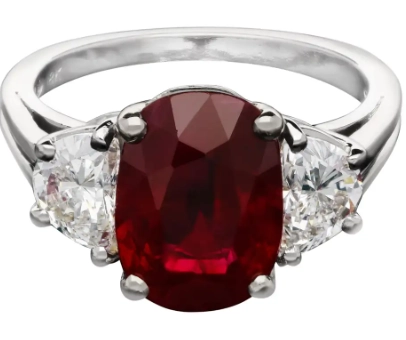
What Exactly IS a Pigeon Blood Ruby?
This is where most online explanations get fuzzy. Is it a specific type? A brand? A scientific category? Not quite. "Pigeon blood" is a color descriptor, not a geological classification. It's a subjective, trade-based term for the top tier of ruby color. Think of it like the "triple-A" rating for reds.
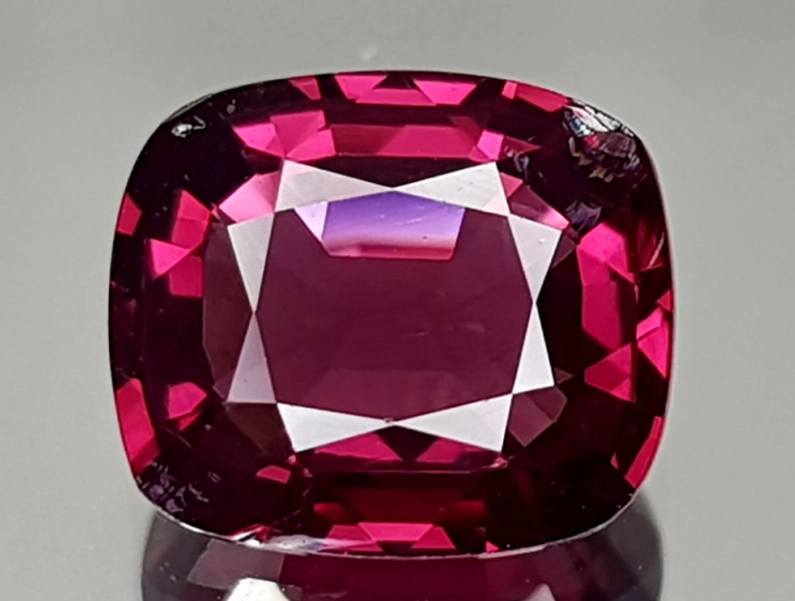
The key is the combination of hue, tone, and saturation. The hue must be predominantly red. Not pinkish-red (that's a pink sapphire), not orangey-red. A pure, strong red. The tone (how light or dark the stone is) needs to be medium to medium-dark. Too light, and it looks pink and weak. Too dark, and it becomes a murky garnet-like color where the brilliance dies. Saturation is the king here. It refers to the intensity or purity of the color. A pigeon blood ruby has maximum saturation. It's a red so intense it seems to glow from within, even in lower light. That slight secondary blue or purple hue is what prevents it from looking orange or brownish and gives it that legendary depth.
No single element creates this magic. It's a cocktail.
The color comes primarily from chromium replacing aluminum in the corundum crystal structure. But the presence of other trace elements, like iron, can muddy the color. The finest pigeon blood rubies from Myanmar typically have very high chromium and very low iron content. The geological conditions in the marble-hosted deposits of places like Mogok seem to create this perfect chemical recipe. Fluorescence also plays a massive role. Under sunlight or UV light, the chromium causes these rubies to fluoresce a strong red. This internal glow amplifies the color, making it appear more vibrant and alive than a non-fluorescent stone. It's like the stone has its own built-in light source.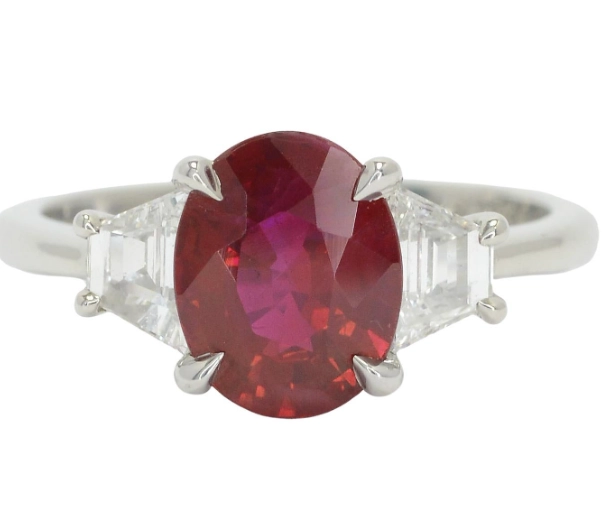
The Origin Story: Why Burma (Myanmar) is Synonymous with the Best
You can't talk about pigeon blood rubies without talking about Burma. For centuries, the Mogok Valley has been the holy grail. The rubies from there set the standard for what "pigeon blood" means. The combination of the marble-hosted geology, specific trace elements, and historical mining tradition created stones with an unmatched combination of color, fluorescence, and often, a silky texture caused by fine rutile needles (though too many can negatively impact clarity).
Other origins produce fantastic rubies, but they often have a different character. Mozambican rubies, which flooded the market in the 2000s, are generally larger and can have excellent color, but they often contain higher iron. This iron suppresses fluorescence, so their red can be a more solid, less glowing red. Still beautiful, often more affordable per carat for size, but purists argue they lack that magical inner fire. Vietnam, Tajikistan, and parts of Africa also produce fine rubies, but the Burmese stones retain their mythic status.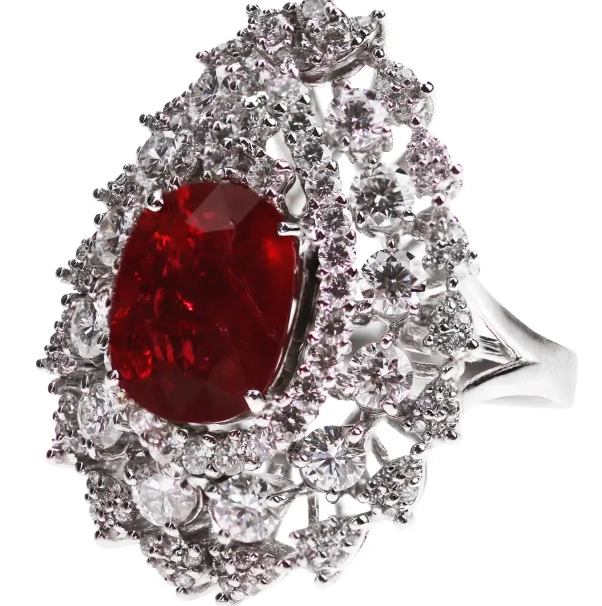
Key Ruby Origins Compared
| Origin | Typical Color Character | Common Clarity Features | Market Note |
|---|---|---|---|
| Mogok, Myanmar (Burma) | Vivid red with strong fluorescence; the "pigeon blood" benchmark. Often has a purplish/blue secondary hue. | May have "silk" (rutile needles). Fluid inclusions are common. Often smaller sizes. | Commands the highest premium. Subject to ethical sourcing concerns and trade regulations. |
| Mozambique (Africa) | Rich red, often slightly darker. Fluorescence is usually weaker due to higher iron content. | Generally cleaner (fewer inclusions) than Burmese stones. Can be found in larger sizes. | Revolutionized the market with larger, high-quality stones. More readily available. |
| Vietnam | Often a purplish-red or pinkish-red. Some stones show strong fluorescence. | Varied. Can have interesting crystalline inclusions. | Produces some fine gems, but volume is lower. Less established in consumer mindshare. |
| Madagascar | Color ranges widely from pinkish to deep red. Some material rivals other origins. | Variable clarity. | An important newer source, adding to global supply. |
The Million-Dollar Question: How Are They Graded and Certified?
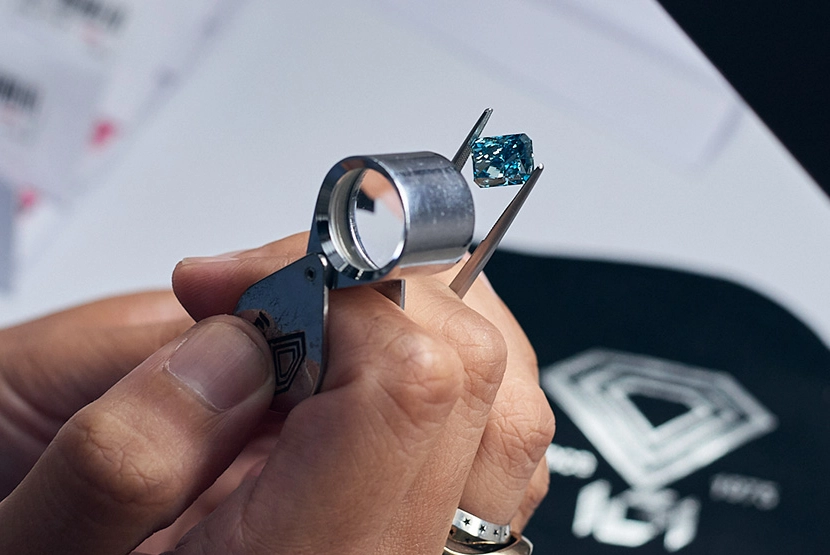
This is the most important section for any buyer. Because "pigeon blood" is a trade term, who gets to decide? You can't just trust a seller's label. This is where independent gemological laboratories are non-negotiable. They provide the objective, third-party verification.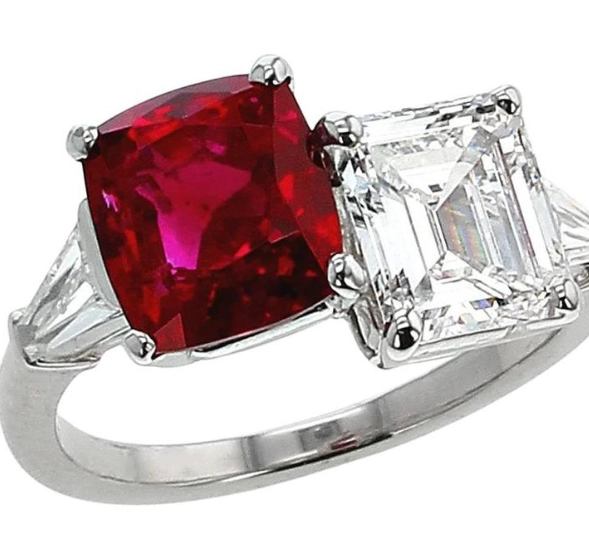
The top labs for colored stones, especially rubies, are:
- Gübelin Gem Lab (Switzerland): Their "Pigeon's Blood" designation is the most prestigious and conservative. They use it extremely sparingly, primarily for top-tier Burmese stones meeting strict color, origin, and treatment criteria.
- SSEF (Swiss Gemmological Institute): Equally prestigious. They also use "pigeon's blood" but may apply it to exceptional stones from non-Burmese origins if the color matches their high standards.
- GRS (Gemresearch Swisslab): More commonly seen in the market. They popularized the term in modern reports and use a wider range of color descriptors (like "vivid red") and will specify "pigeon's blood" for qualifying stones, often noting the origin.
- GIA (Gemological Institute of America): Interestingly, GIA typically avoids the term "pigeon blood" on its main reports. They use descriptive color grading (e.g., "vivid purplish red") and focus on scientific analysis of origin and treatment. Some see this as more objective, though the market still craves the romantic term.
A report doesn't just slap on a "pigeon blood" sticker. It's a comprehensive document. The most critical parts to check are:
- Color Grade: The specific description.
- Origin: Determined through advanced spectroscopic and inclusion analysis. A simple seller's claim is worthless without this.
- Treatment: This is the biggest landmine.
The Treatment Trap: Heat, Glass, and Everything Else
Almost all rubies on the market are heat-treated. This is a traditional, accepted practice that removes purplish or bluish tints and improves clarity by dissolving silk. It's considered stable and permanent. A report will state "heat treatment" or "no indications of heating." For a natural pigeon blood ruby, minor, traditional heat treatment is usually acceptable and doesn't drastically lower its value compared to an untreated stone (which is exceedingly rare and commands a huge premium).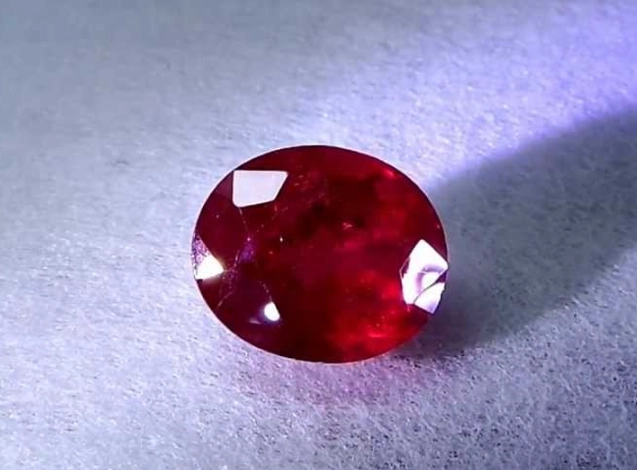
The problems start with other treatments.
Lead-Glass Filling (Fracture Filling): This is the big one. Low-quality rubies with lots of surface-reaching cracks are filled with lead-based glass to improve their apparent clarity and make the color look more solid. These treatments are not stable. They can be damaged by heat, ultrasonic cleaners, or even mild acids. The value of a glass-filled ruby is a tiny fraction of a naturally clean or traditionally heated ruby. Reputable labs like GIA have detailed explanations of how they detect this, and their reports will clearly state "clarity enhanced by filling cavities with foreign substance" or similar. Avoid these for a serious investment.
Diffusion Treatment: Adding elements to the surface to deepen color. It's a shallow treatment. Beryllium diffusion can add orangey tones. This is also considered a major treatment that significantly reduces value.
Buying a Pigeon Blood Ruby: A Realistic Guide
So you want one. Let's be practical. The price for a certified, 1-carat pigeon blood ruby from Burma with a good report can start in the tens of thousands of dollars and go up exponentially with size and quality. A 3-carat stone can easily reach six figures. Prices aren't linear; a 5-carat stone isn't 5 times the price of a 1-carat stone—it could be 20 times or more due to rarity.
Your buying checklist should look like this:
- Budget First: Be brutally honest. This determines if you're looking at a small, true pigeon blood ruby or a larger, fine ruby from another origin that approaches the color.
- Prioritize the Report: Insist on a report from Gubelin, SSEF, GRS, or GIA. Read every line, especially origin and treatment. Understand what the lab's "pigeon blood" designation means.
- See It in Person (or High-Res Video): Color on a screen is unreliable. See the stone under different lights—daylight, incandescent, fluorescent. Does it come alive? Does it go dark?
- Work with a Specialist: Don't buy a high-end ruby from a generic jeweler. Find a dealer or jeweler who specializes in colored gemstones. They have access to better stones and can properly explain the nuances. Check affiliations with bodies like the American Gem Society (AGS).
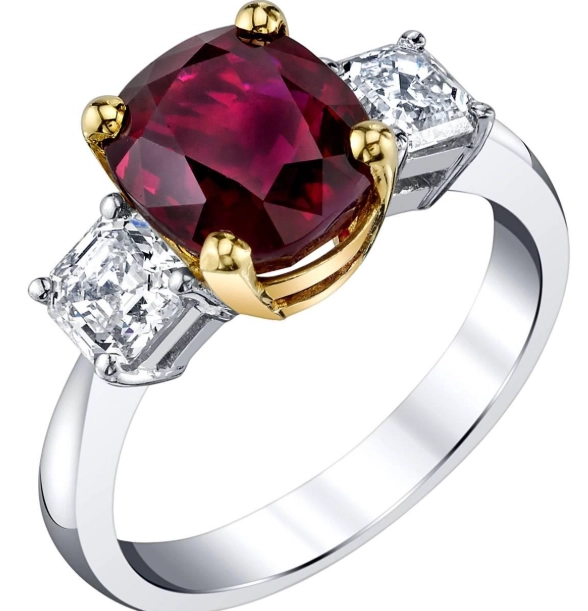
- Consider the Setting: For a stone of this value, the setting must be secure and protect the gem. Prong settings are common to allow maximum light entry. Ensure the metal (platinum or high-karat gold) is appropriate.
Caring for Your Investment
It's a tough gem, but not indestructible. Ruby is a 9 on the Mohs scale, so it's excellent for daily wear. But it can still chip or fracture if hit hard, especially if it has inherent inclusions.
- Cleaning: Warm soapy water, a soft brush. Rinse well. Never use ultrasonic or steam cleaners unless you are 1000% certain the stone has no fractures, fillings, or significant inclusions. When in doubt, don't risk it. A quick professional cleaning by your jeweler is safer.
- Storage: Keep it separate from other jewelry to prevent scratches. A soft pouch or individual compartment in a box is ideal.
- Wear with Sense: Take it off for heavy manual work, gardening, or gym sessions. Chemicals in pools and cleaning products aren't good for any fine jewelry.
Answering Your Burning Questions
Final Thoughts
Chasing a pigeon blood ruby is a journey into the heart of what makes natural gems so captivating. It's about color that seems impossible, born from specific geological accidents millions of years ago. It's a market that requires knowledge, patience, and a healthy dose of skepticism.
My personal take? The obsession with the term itself can sometimes blind people to other beautiful rubies. I've seen Mozambican rubies with such a glorious, deep red that they take your breath away, even if they don't fluoresce. They can be a smarter buy for many people. But if you have the means and the desire for that specific, historic, top-of-the-mountain standard—the one with the inner fire—then a certified pigeon blood ruby is the ultimate prize.
Just do your homework. Get the report. Understand the treatments. And buy from someone who knows more about rubies than just how to sell them. The right stone isn't just a purchase; it's a piece of the Earth's history you get to hold.