In This Guide
- What Exactly Is an Emerald Cut Diamond?
- The History and Allure of the Emerald Cut
- How to Evaluate an Emerald Cut Diamond: Beyond the Four Cs
- Buying an Emerald Cut Diamond: Practical Tips and Tricks
- Styling and Setting Your Emerald Cut Stone
- Emerald Cut Diamond FAQ: Your Top Questions Answered
- The Final Word
So you're thinking about an emerald cut diamond. Good choice. It's not the flashy, in-your-face sparkle of a round brilliant, and that's precisely the point. There's a quiet confidence to this shape, a kind of vintage elegance that feels both timeless and incredibly modern at the same time. I remember helping a friend pick out an emerald cut engagement ring last year. She kept saying she wanted something "different," something that didn't look like every other ring on her Instagram feed. The moment she tried on that elongated, hall-of-mirrors stone, her face just lit up. It was the one.
But here's the thing about the emerald cut—it's a shape that demands a bit more knowledge from the buyer. You can't just go by the basic "four Cs" checklist and call it a day. It has its own personality, its own set of rules for what makes it beautiful. This guide is here to walk you through everything, from its Art Deco origins to the nitty-gritty of what to look for under the jeweler's loupe. Let's dive in.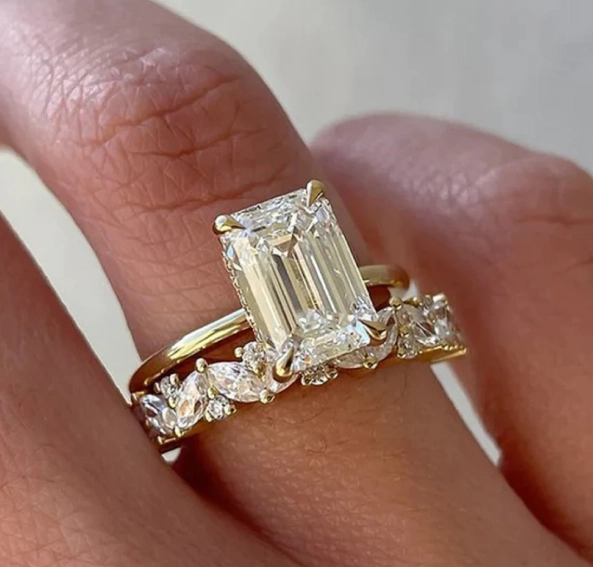
What Exactly Is an Emerald Cut Diamond?
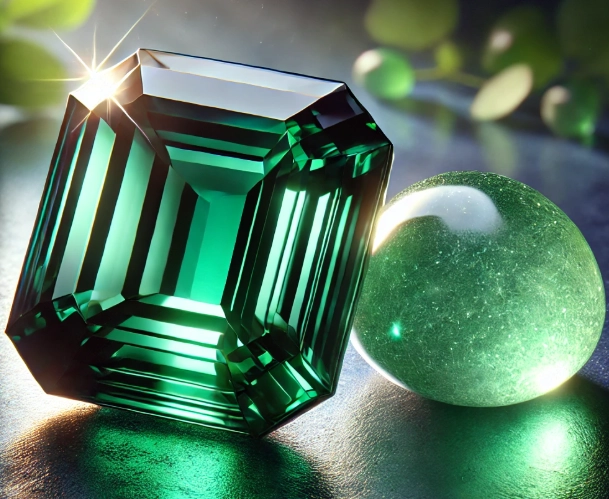
At its core, an emerald cut is a rectangular step cut with truncated corners. That "step cut" part is crucial. Instead of the many small, triangular facets (the little mirrored surfaces) of a round brilliant that are designed to create maximum fire and sparkle, the emerald cut features long, parallel step-like facets that run down its sides. This creates a hall-of-mirrors effect, with broad, clear planes that offer a deep, luminous clarity. It's less about scattered rainbow flashes and more about a sleek, sophisticated gleam.
The shape is defined by its length-to-width ratio. This isn't just an aesthetic preference; it fundamentally changes the stone's character.
- Classic Emerald Cut: A ratio between 1.30 and 1.50. This is the balanced, traditional look most people picture.
- Square Emerald Cut (or "Square Emerald Cut"): A ratio closer to 1.00 to 1.10. It's almost square, offering a more contemporary, geometric feel.
- Elongated Emerald Cut: A ratio above 1.55. This creates a more dramatic, finger-lengthening silhouette that's hugely popular in modern solitaire settings.
I personally lean towards the more elongated ratios. They just feel more elegant on the hand to me. But a friend of mine has a beautiful square emerald cut set east-west, and it's one of the coolest rings I've ever seen. It's all about what speaks to you.
The History and Allure of the Emerald Cut
This cut has a backstory, and it's a good one. Contrary to what the name might suggest, the "emerald cut" wasn't created for diamonds first. It was actually developed in the 1500s as a way to reduce the risk of chipping when cutting emeralds, which are more brittle. The stepped facets and truncated corners provided more security. Diamond cutters eventually borrowed this smart design, and by the 1920s and 1930s, it became the quintessential shape of the Art Deco era. Think Gatsby, think sleek skyscrapers, think geometric elegance—that's the emerald cut's natural habitat.
Its popularity has waxed and waned over the decades, often seen as a more "mature" or "vintage" choice. But in the last 10-15 years, there's been a massive resurgence. Celebrities like Beyoncé, Amal Clooney, and Jennifer Lopez have all sported stunning emerald cut engagement rings, cementing its status as a symbol of modern, confident glamour. It's no longer your grandmother's diamond (though it might be—and what a great heirloom that would be!).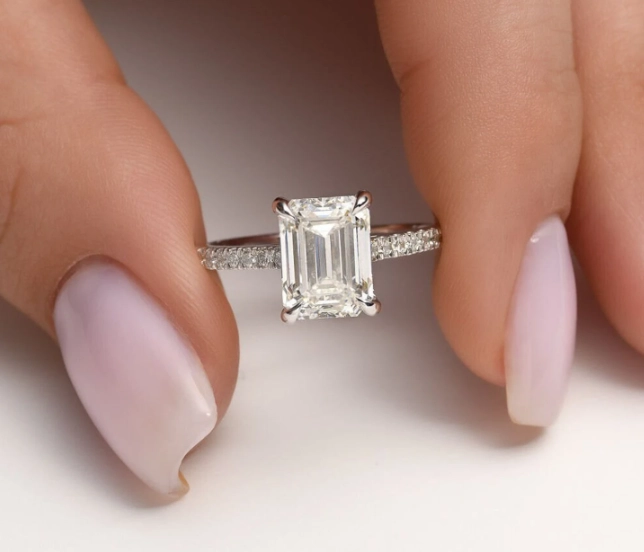
What makes the emerald cut so captivating isn't just its look, but what it represents. It's a diamond that doesn't try too hard. Its beauty is in its clarity and its lines, not in a frenetic burst of sparkle. It feels intentional and intellectual.
How to Evaluate an Emerald Cut Diamond: Beyond the Four Cs
This is where most generic buying guides fall short. With an emerald cut, the standard rules get bent. You need a different lens. Let's break it down.
The Hall of Mirrors Effect: Clarity is King
This is the single most important factor. Those large, open table facets act like windows straight into the stone. Any inclusions—tiny internal flaws—are incredibly visible. A black crystal or a feather that might be hidden in the sparkle of a round brilliant will sit there in plain sight in an emerald cut.
My advice? Don't even look at diamonds graded below VS2 clarity, and even within VS2 and VS1, you need to check the plot (that map of inclusions from the grading report) carefully. Ideally, aim for VVS2 or better. The inclusions should be small, white, and located near the girdle (the outer edge), not dead center under the table. A "clean" look is paramount for an emerald cut to achieve its signature hall-of-mirrors effect. It's one area where I wouldn't recommend trying to save money.
Color Considerations: Warmer Can Be Wonderful
Here's a twist: the emerald cut can often "face up" whiter than other shapes. Its broad facets don't disperse light as much, so they don't highlight body color as intensely. A G or H color emerald cut can look as white as a D or E color round brilliant in many settings.
This opens up opportunities. You can potentially go a grade or two lower on color to put that budget into a better clarity or a larger carat weight. If you're setting it in yellow or rose gold, you can go even further—a J or K color can look beautifully warm and creamy, not yellow, in the right setting. It's a more forgiving characteristic, which is a nice break after the strict clarity demands.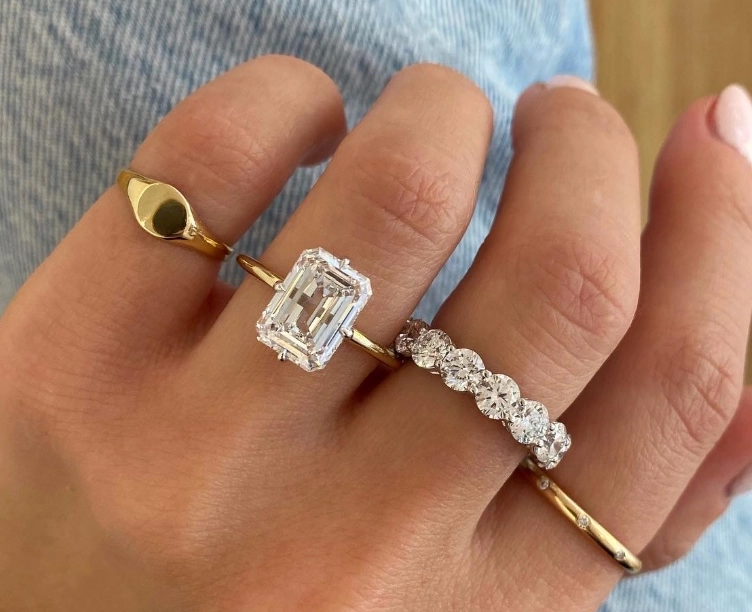
Cut Quality: The Step Cut's Unique Demands
For round brilliants, cut is graded (Excellent, Very Good, etc.). For fancy shapes like the emerald cut, labs like GIA don't give a cut grade, only a polish and symmetry grade. So the onus is on you to judge. Look for:
- Symmetry: The steps should be perfectly even and parallel. Misaligned steps are a dead giveaway of poor cutting and will ruin the optical effect.
- Depth and Table Percentage: While there's a range, a well-cut emerald cut typically has a depth percentage between 60% and 68% and a table percentage between 60% and 68%. Too shallow, and it looks flat and glassy. Too deep, and it loses its open, luminous quality and can look dark in the center.
- Windowing: This is a bad thing. Tilt the stone. If you can see straight through it like a pane of glass (instead of seeing a patterned reflection), it's cut too shallow. It kills the life of the diamond.
- Bow-Tie Effect: Almost all elongated fancy shapes have some degree of a dark, bow-tie-shaped area across the center. A slight one is normal. A prominent, dark, and distracting bow-tie is a sign of poor cut proportions. Always view the diamond in motion, under different lights, to assess this.
I've seen stunning stones with "Very Good" symmetry and mediocre ones with "Excellent." The certificate is a starting point, not the final verdict. You have to look at it. The Gemological Institute of America (GIA) provides a useful overview of diamond cut factors, though it's focused on rounds, the principles of light performance still apply in spirit.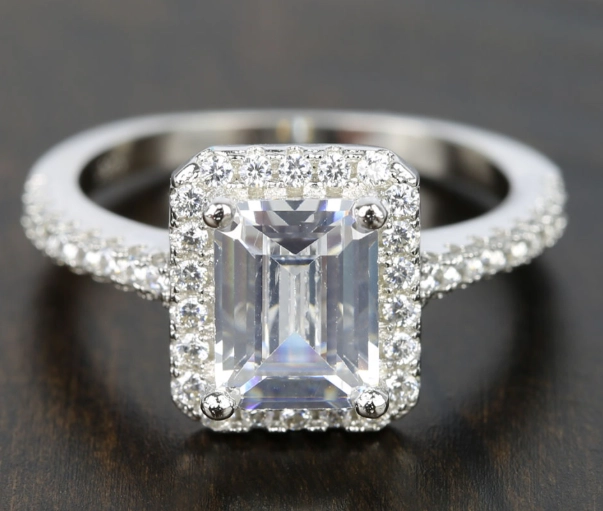
Carat Weight and Face-Up Size
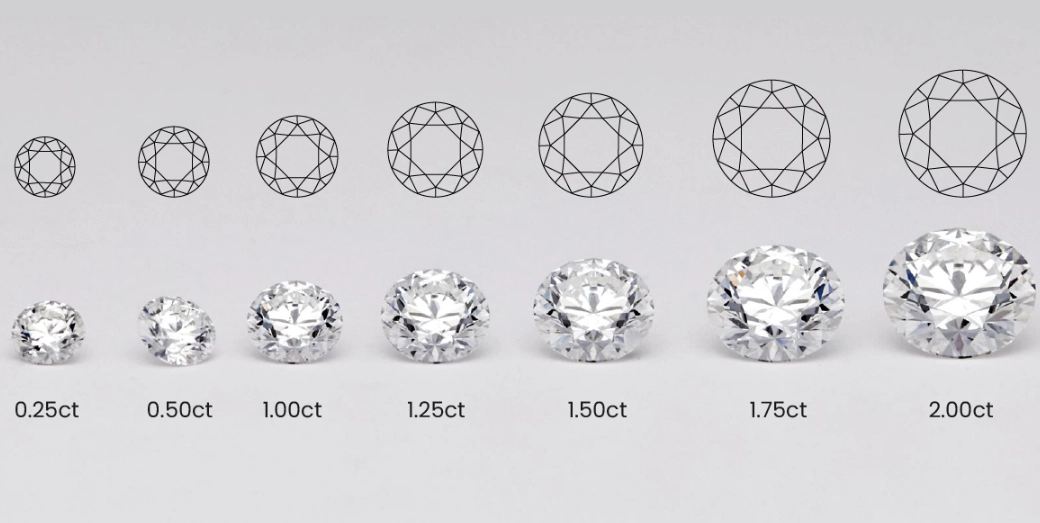
An emerald cut diamond will generally look larger than a round brilliant of the same carat weight because it's spread out more. That elongated shape covers more finger real estate. This is its little secret for maximizing impact. A 1.5-carat emerald cut can have the visual presence of a 1.7 or 1.8-carat round.
But is bigger always better? Not necessarily. The elegance of an emerald cut often lies in its proportions, not just its sheer size. A perfectly proportioned 1-carat stone can be more beautiful than a poorly cut 2-carat one.
Let's put some of this side-by-side.
| Feature | Emerald Cut Diamond | Round Brilliant Diamond |
|---|---|---|
| Primary Sparkle | Hall-of-mirrors gleam, flashes of light | Intense fire and scintillation (rainbow sparkle) |
| Clarity Importance | Extremely High (flaws are very visible) | High (flaws can be masked by sparkle) |
| Color Flexibility | More Flexible (can go lower grade) | Less Flexible (higher grades often needed) |
| Face-Up Size | Looks Larger per carat | Looks Smaller per carat |
| Style Vibe | Vintage, architectural, sleek, modern | Classic, traditional, maximum brilliance |
Buying an Emerald Cut Diamond: Practical Tips and Tricks
Alright, theory is great, but let's get practical. You're ready to shop. Here's what to do (and what to avoid).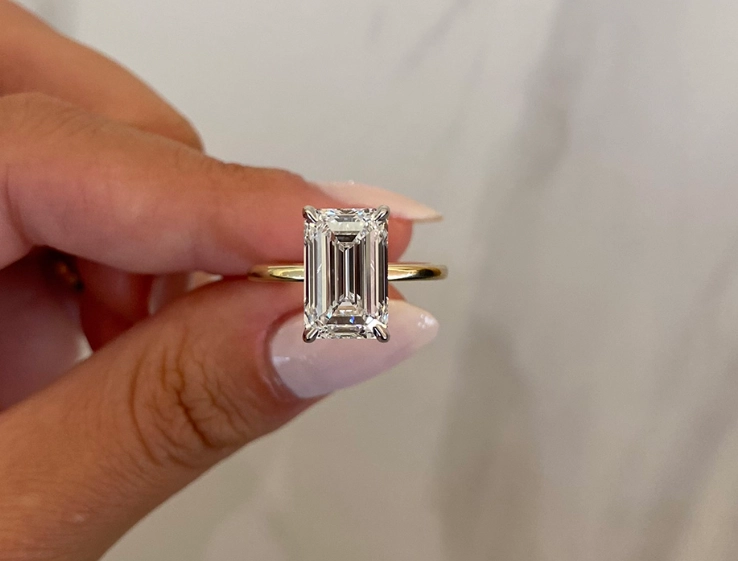
First, always, always get a lab report from a reputable gemological laboratory like GIA or AGS. For an emerald cut, this isn't optional—it's your blueprint. It tells you exactly what you're getting, free from sales hyperbole. The American Gem Society (AGS) has a rigorous cut-grading system for some fancy shapes that can offer additional insight beyond GIA's polish/symmetry grades.
Second, see it in person if you can. Photos and videos online are helpful, but they're curated. You need to see how the stone behaves in dim restaurant light, in bright sunlight, under office fluorescents. Does it go dark? Does the bow-tie become a black hole? Movement is everything.
If buying online, use vendors that provide high-definition, 360-degree videos under multiple light sources. And have a good return policy.
My Personal Checklist When Viewing an Emerald Cut:
- Clarity First: Ignore the sales pitch. Look at the stone with my own eyes (or a loupe). Can I see any inclusions from the top without straining? If yes, it's probably not the one.
- Check the Corners: Those truncated corners are potential weak points. Make sure they are well-protected by prongs in the setting and don't have any chips or feathers.
- The Tilt Test: Tilt it slowly. Does it go completely see-through (windowing) or completely black (excessive light leakage)? Or does it maintain a soft, patterned glow?
- Symmetry Scan: Do the steps line up perfectly from one side to the other? Are they even in width?
- Ask About Fluorescence: Some emerald cuts with medium to strong blue fluorescence can appear hazy or oily in sunlight. This is more of an issue with higher color grades (D-F). For G-J stones, it can actually make them look whiter. It's a case-by-case thing—see it in UV light if possible.
One negative I'll point out: some jewelers will try to pass off a poorly cut, included stone as a "great value" emerald cut. They'll emphasize the size and downplay the visible flaws or terrible light performance. Don't fall for it. A small, beautiful emerald cut is infinitely better than a large, dead, and flawed one. It's the quality of the light, not the weight of the stone.
Styling and Setting Your Emerald Cut Stone
This is the fun part. The setting can make or break an emerald cut.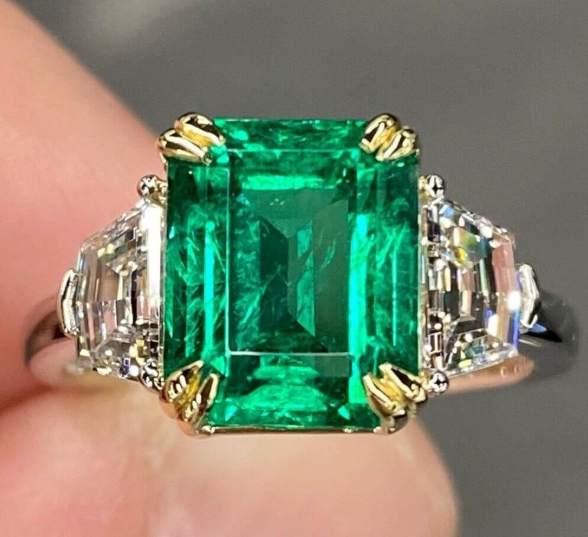
The Classic Solitaire: You can't go wrong. A simple four-prong or six-prong setting in platinum or white gold lets the stone's clean lines speak for themselves. For an elongated stone, consider longer, tapered baguette side stones. It's a look that screams quiet luxury.
The Three-Stone: A popular and stunning choice. Pairing an emerald cut with two trapezoid or tapered baguette side stones enhances its linear elegance and makes the center stone look even more substantial. It's a very balanced, regal look.
East-West Setting: This is where things get cool. Setting the emerald cut horizontally across the finger is a bold, modern, and incredibly chic move. It's less common, which I love, and it emphasizes the geometric shape in a fresh way. Works best with a square or near-square ratio.
Vintage and Milgrain: Given its Art Deco roots, an emerald cut looks phenomenal in a filigree or milgrain setting. Think platinum, delicate engraving, and geometric patterns. It tells a cohesive story.
Metal Choice: As discussed, yellow and rose gold are fantastic with emerald cuts. They add warmth and a contemporary twist. White metals highlight its cool, sleek elegance.
A word on halos: Some people love a halo around an emerald cut to add sparkle. Personally, I'm not a fan for this particular shape. I feel it fights against the clean lines and can make the overall piece look busy and less refined. But hey, it's your ring. If you love sparkle, try it on and see.
Emerald Cut Diamond FAQ: Your Top Questions Answered
I get a lot of the same questions. Let's tackle them head-on.
Is an emerald cut diamond less sparkly than a round?
Yes, but that's not a bad thing. It's a different kind of sparkle. It's more of a flash and gleam than a constant, shattered-light sparkle. It's elegant, not explosive. If you want maximum blinding brilliance, a round is probably your match. If you want sophisticated clarity and a chicer vibe, the emerald cut wins.
Does an emerald cut look smaller?
Actually, the opposite! Due to its elongated shape and larger face-up area, an emerald cut typically looks larger than a round brilliant of the same carat weight. It's an optical illusion that works in your favor.
Is it more expensive than a round?
Usually, no. Round brilliants are the most expensive diamond shape due to higher demand and the significant rough diamond waste during cutting. Emerald cuts are generally 20-30% less expensive per carat for a stone of similar quality (except for the premium you pay for top-tier clarity). This means you can often get a bigger or higher-color emerald cut for the same budget.
Is it true they show more flaws?
Absolutely yes. This is the trade-off. The large, open facets are like windows. You must prioritize clarity. Don't skimp here.
Are emerald cuts only for engagement rings?
Not at all! They make stunning earrings, pendants, and right-hand rings. A pair of emerald cut diamond studs is incredibly sleek. A solitaire pendant is a timeless neckline accent.
How do I clean and care for it?
The same as any diamond: a soft toothbrush, mild dish soap, and warm water. But be extra mindful of the corners. Avoid harsh impacts. The Federal Trade Commission's guides on product care (while not jewelry-specific) underscore the principle of following specific material guidance—for diamonds, that means protecting it from hard knocks. Ensure your setting has prongs that adequately protect those four corners, and get them checked by a jeweler annually.
What's the difference between an emerald cut and an Asscher cut?
They're cousins—both step cuts. The Asscher is square, has a higher crown, smaller table, and often more dramatic, X-shaped facet patterns when you look down into it. It's even more vintage-feeling and has more internal sparkle than an emerald cut. The emerald cut is more rectangular and open.
The Final Word
Choosing an emerald cut diamond is a statement. It says you value understated elegance, architectural beauty, and a touch of history. It's not the easy, default choice, and that's what makes it special. It requires a more discerning eye, a focus on flawless clarity and precise cut over brute carat weight.
But when you find the right one—the one with that perfect, deep glow, the even steps, and the clean, open table—it's magic. It doesn't just sit on your finger; it makes a quiet, confident comment. It's a piece of wearable art.
Take your time. Learn to look at it critically. Prioritize quality over size. And most importantly, fall in love with the stone itself, not just the idea of it. When you see that hall of mirrors reflecting back at you, clear and bright, you'll know.
It's stunning.