Quick Guide Highlights
Let's be honest. Walking into a jewelry store or browsing an online gem marketplace can feel overwhelming. You're surrounded by sparkling stones with price tags that range from "okay" to "are you kidding me?" and a salesperson is throwing words like "saturation," "inclusion," and "origin" at you. I remember my first time trying to buy a sapphire for my wife's birthday. I left more confused than when I started, worried I'd either overpay for junk or miss out on a fantastic deal. Sound familiar?
That's exactly why I spent months talking to gemologists, seasoned jewelers, and even a few collectors to put this guide together. Think of it as your cheat sheet. This isn't about turning you into an overnight expert—it's about giving you the confidence to ask the right questions, spot the red flags, and ultimately walk away with a beautiful stone that's worth what you paid for it. A proper gemstone buying guide should demystify the process, not add more layers of confusion.
Forget the 4 Cs (At First): What REALLY Matters When You Buy a Gem?
Everyone talks about the 4 Cs for diamonds, and some try to apply them to colored stones. It's a decent starting point, but it's incomplete. With colored gemstones, the game changes. The value and appeal hinge on a more nuanced set of factors. If you focus only on the classic 4 Cs, you might buy a "flawless" stone that looks dead and lifeless, or you might overpay for a minor characteristic that doesn't actually impact beauty.
So, let's break down what you should be evaluating, in roughly this order of importance for most buyers.
Color: The King of Gemstone Value
This is, without question, the most important factor for 99% of colored gemstones. It's what grabs your eye first. But "color" isn't just about being blue or red. It's a combination of three things:
- Hue: The basic color family—is it a pure blue, or does it lean slightly greenish or purplish? For some stones, like sapphires, a pure hue (say, a velvety blue) is top-tier. For others, like tourmaline, a blend can be desirable.
- Saturation: This is the intensity or purity of the color. A pale, washed-out pink sapphire has low saturation. A vivid, electric pink has high saturation. High saturation usually means higher value. Think of it as the difference between a faded t-shirt and a brand new, deeply dyed one.
- Tone: How light or dark the color is. A stone can be a perfect hue with perfect saturation, but if it's so dark it looks black in normal light, its beauty and value plummet. The ideal is usually a medium to medium-dark tone that lets the color shine.
Personal Anecdote: I once saw two rubies side-by-side. One was larger and had a "cleaner" label. The other was smaller with a tiny inclusion. But the smaller one had this incredible, glowing red color that seemed to come from within. The larger one was a dull, brownish red. Guess which one cost three times more? The smaller, more colorful one. The seller of the larger stone kept talking about "clarity," trying to distract from the mediocre color. Don't fall for that.
When using a gemstone buying guide, always prioritize color. A great color can forgive a lot of other "imperfections." A bad color makes even a flawless stone unremarkable.
Cut: The Maker or Breaker of Brilliance
This is probably the most underrated factor by new buyers. A gemstone's cut isn't about its shape (round, oval, cushion). It's about how well that shape has been executed. A great cut maximizes three things:
- Brilliance: The white light reflected back to your eye.
- Fire: The flashes of colored light (dispersion).
- Color Presentation: How the cut enhances the stone's inherent color. A deep stone might look too dark, a shallow stone might look washed out.
A poorly cut stone, even with perfect color and clarity, will look glassy, dark, or lifeless. It's like having a high-definition TV with a blurry, poorly tuned signal. You're not seeing its full potential.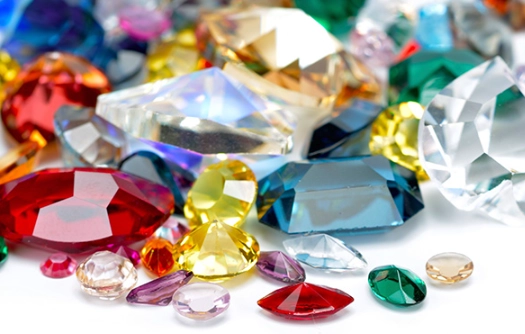
Watch Out: Many commercial-grade stones are cut to maximize carat weight (yield from the rough crystal), not beauty. They leave them too deep or too shallow to save weight. Always ask to see the stone in different lights, especially from the side profile. A well-cut stone should be bright and lively even under the dull lighting of a mall.
Clarity: Inclusions Are Like Birthmarks
Here's where you need to shift your diamond mindset. Inclusions (internal flaws) are not just common in colored gemstones; they're expected. They're proof the stone grew naturally in the earth. The key questions are:
- Do the inclusions affect the stone's durability? (Cracks reaching the surface are bad.)
- Do they significantly impact the beauty? (A large, dark inclusion right in the center is bad.)
- Are they the type that can actually increase value? (Like the silky "silk" in some sapphires that causes asterism, or the "jardin" in emeralds that some collectors adore.)
An "eye-clean" stone—one where you can't see inclusions with the naked eye—is a good goal for many. But don't pay a massive premium for microscopic perfection you'll never see. The Gemological Institute of America (GIA), a top authority, has great public resources on how they grade clarity for different gem species, which you can find on their Gem Encyclopedia.
Carat Weight: The Most Misunderstood Metric
Carat is a measure of weight, not size. 1 carat = 0.2 grams. Because different gem materials have different densities, a 1-carat ruby will look smaller than a 1-carat emerald. Price per carat also increases exponentially with size. A 2-carat stone of the same quality is almost always more than twice the price of a 1-carat stone because large, clean, colorful rough material is much rarer.
My advice? Don't fixate on carat weight. Focus on the millimeter measurements (the actual face-up size) and how the stone looks on the hand. A beautifully cut 0.9-carat sapphire will look more impressive than a poorly cut 1.2-carat one.
The Non-Negotiables: Treatments, Origins & Certificates
This is the part of the gemstone buying guide that separates the savvy buyers from the soon-to-be-disappointed ones. You must ask about these three things.
Treatments: The Great Disclosure (or Lack Thereof)
Most gemstones on the market are treated in some way to improve their appearance. This isn't inherently bad—some treatments are stable and traditional—but you must know about them and pay accordingly.
| Common Treatment | Typical Gemstones | What It Does | Stability & Disclosure | Impact on Value |
|---|---|---|---|---|
| Heat Treatment | Sapphire, Ruby, Tanzanite, Aquamarine | Improves/evens out color, removes "silk" | Generally permanent and stable. Considered standard. MUST be disclosed. | Lowers value vs. an identical untreated stone, but untreated stones are very rare/expensive. |
| Fracture Filling | Emerald, Ruby, sometimes Sapphire | Fills surface-reaching cracks with oil, resin, or glass to improve clarity. | Can be unstable. May require re-oiling. Can be damaged by heat/ultrasonic cleaners. MUST be disclosed. | Significantly lowers value. A filled stone should cost much less than a comparable unfilled one. |
| Diffusion Treatment | Sapphire, sometimes Topaz | Adds color (often blue) only to the surface layer. | Color is only skin-deep. Can be removed if stone is re-cut. MUST be disclosed. | Dramatically lowers value. Essentially a coated stone. |
| Irradiation | Topaz (blue), Diamonds (fancy colors), Pearls | Changes color permanently. | Usually stable for gems like topaz. Should be disclosed. | Lowers value for topaz. For diamonds, it's a way to create affordable fancy colors. |
The rule is simple: Always, always ask, "Has this stone been treated in any way?" Get the answer in writing on your receipt. An ethical seller will volunteer this information. If they hesitate or say "all stones are treated," walk away. You want a seller who is transparent. The International Colored Gemstone Association (ICA) has clear guidelines on disclosure that reputable dealers follow.
Origin: Does It Matter?
Sometimes, a lot. Certain locations are famous for producing the finest quality of a particular gem. Burmese rubies, Kashmir sapphires, Colombian emeralds—these command a significant premium due to their legendary color and rarity. For other stones, like amethyst or citrine, origin matters very little to value.
Should you, as a new buyer, pay a huge premium for origin? Probably not. Focus on the actual quality of the stone in front of you. A stunning sapphire from Madagascar can be more beautiful than a mediocre one from Ceylon (Sri Lanka). However, if you're paying a premium price that references a specific origin, that claim should be backed up by a reputable lab report (like from GIA, GRS, or AGL).
The Holy Grail: A Reputable Lab Report
For any significant purchase (I'd say over $1,000, but use your own threshold), insist on an independent lab report. This is not an "appraisal" for insurance (which states value). A lab report (or gemological certificate) identifies the stone, details its measurements, and—critically—notes any and all treatments.
It's your stone's unbiased passport. It takes the seller's claims out of the equation. Top-tier labs include:
- GIA (Gemological Institute of America): The gold standard, especially for diamonds. Their colored stone reports are highly trusted.
- GRS (Gemresearch Swisslab): Highly respected for colored stones, especially for origin determination.
- AGL (American Gemological Laboratories): Another top lab known for thorough colored stone analysis.
Pro Tip: When you get a report, don't just file it away. Read it! Understand what it says about treatments. Look up the report number on the lab's website to verify it matches your stone. I've heard stories of people being shown a report for a different, better stone.
This step alone is the single best piece of advice in any credible gemstone buying guide. It levels the playing field.
Where to Buy? Navigating the Minefield of Options
Each venue has its pros, cons, and specific rules of engagement.
Local Jewelry Stores
Pros: You can see the stone in person, under different lights. You can build a relationship. They often provide servicing for the jewelry you buy. Good for beginners who need hand-holding.
Cons: Selection can be limited. Overhead costs are built into the price. Some may have high-pressure sales tactics.
How to Buy Smart: Compare stones between stores. Ask all the treatment and certification questions. Don't be rushed. A good store will educate you, not pressure you.
Online Retailers & Marketplaces
Pros: Vast, global selection. Often better prices due to lower overhead. Easy to compare hundreds of stones.
Cons: CANNOT see the stone in person before buying. Relies heavily on photos/videos, which can be misleading. Risk of scams or misrepresentation.
How to Buy Smart: ONLY buy from sites that offer high-definition, unenhanced videos in multiple light sources (daylight, incandescent, etc.). They must have a rock-solid return policy (e.g., 30-day no-questions-asked). Read independent reviews. Start with a small purchase to test them. Reputable online vendors like those on the American Gem Society (AGS) website are a safer bet.
Gem Shows & Direct from Wholesalers
Pros: Potentially the best prices. Unparalleled selection. Chance to meet cutters and miners directly.
Cons: Overwhelming for newbies. Zero hand-holding. "All sales are final" is common. Requires the most knowledge.
How to Buy Smart: Not for your first purchase. Go with a knowledgeable friend or hire a gemologist as a consultant for the day. Bring a loupe and a flashlight. Ask about return policies—some wholesalers will offer a short window if you get a lab report that contradicts their claims.
Answering Your Burning Questions (The FAQ You Actually Need)
Putting It All Together: Your Pre-Purchase Checklist
Right before you pull the trigger, run down this list. Print it out if you have to.
Your Gemstone Buying Checklist:
- Color: Do I love the color in daylight, lamp light, and indoors? Does it look vibrant, not dull or dark?
- Cut: Does the stone look bright and lively? Does it have a window (a see-through dead spot) in the middle? Check the side profile.
- Clarity: Are any inclusions obvious to my naked eye? Do they affect durability or beauty?
- Treatment Disclosure: Do I have a clear, written statement from the seller detailing ALL treatments? (If the answer is "no" or "I don't know," STOP.)
- Certification: For a major purchase, do I have an independent lab report from a reputable lab (GIA, GRS, AGL) that confirms the species and treatments?
- Seller Reputation: Have I checked reviews? Do they have a physical address/contact? Is their return policy clear and reasonable?
- Gut Check: Am I feeling pressured? Am I buying because of a "deal" or because I genuinely love the stone? Does anything feel off?
If you can tick all those boxes, you've done your homework. You've moved from a vulnerable buyer to an informed one. That's the entire purpose of a thorough gemstone buying guide.
Look, buying a gemstone should be exciting, not terrifying. It's about acquiring a little piece of the earth's magic. Armed with these questions and this framework, you can talk to any seller with confidence. You'll know what to look for, what to ask, and when to walk away. Remember, the power is in your knowledge. Now go find something beautiful.