So you've got a stone. Maybe it's in an old piece of jewelry from your grandmother, or you found something interesting at a flea market. Or perhaps you're just starting to get curious about the sparkling things in jewelry stores. Your first question is almost always the same: how do I figure out what this actually is? Is it glass? Is it a real gem? If it is real, what kind of gemstone is it?
Your Gemstone Journey at a Glance
- Before You Start: The Mindset for Identifying Gemstones
- The First Clue: Visual Inspection Under Good Light
- The Practical Tests: Getting Hands-On
- Common Gemstone Identification Scenarios
- When to Stop: The Limits of Home Identification
- Your Gemstone Identification Toolkit (What to Actually Buy)
- Frequently Asked Questions (The Stuff People Really Want to Know)
Let's be honest, the world of gemology can feel overwhelming. Professionals use microscopes and machines that cost more than a car. But you don't need all that to get started. I remember the first time I tried to identify a gemstone—I was convinced I had a rare sapphire. It turned out to be blue spinel, which is still cool, but it taught me a valuable lesson about jumping to conclusions. The process of learning how to identify gemstones is part detective work, part science experiment, and it's honestly a lot of fun once you know what to look for.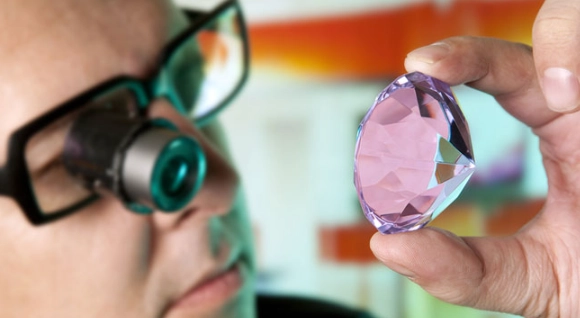
Before You Start: The Mindset for Identifying Gemstones
This isn't an exact science for the beginner, and that's okay. You're gathering clues, not printing a certificate. The goal is to narrow down the possibilities, not always to hit the single, perfect answer on your first try (even experts get it wrong sometimes). Think of it like identifying a bird. You note the color, size, shape, where you found it, and its song. A combination of factors leads you to the most likely candidate.
The same is true for gems. A single test is rarely enough. A hardness test might tell you it's not quartz, but is it topaz or corundum? You'll need to check other properties. This multi-property approach is the golden rule for anyone learning how to identify gemstones accurately.
And a word of caution—some tests are destructive. You wouldn't scratch your grandmother's heirloom ring with a nail file, right? Always, always start with the safest, non-destructive observations.
The First Clue: Visual Inspection Under Good Light
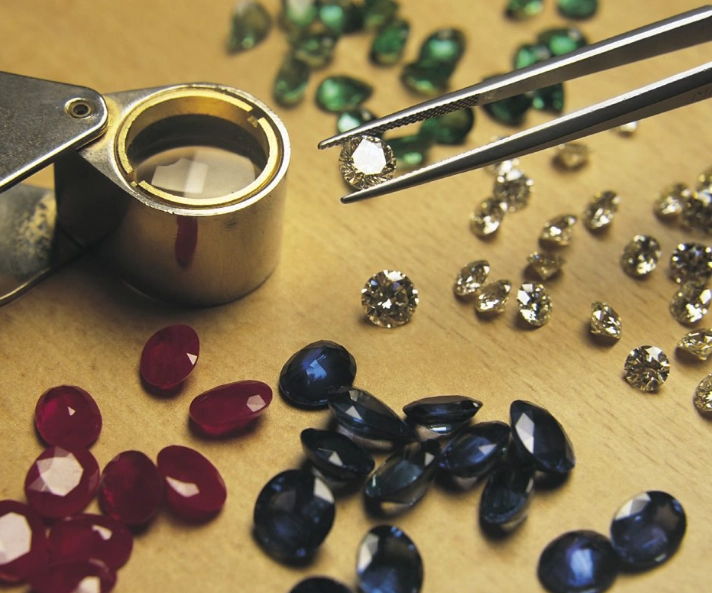
Your eyes are your most powerful tool. Forget the fancy gear for a moment. Grab a bright light (daylight is best, a good LED lamp works too) and a simple 10x loupe if you have one. If not, get as close as you comfortably can. We're looking for the story the stone tells on its surface and inside.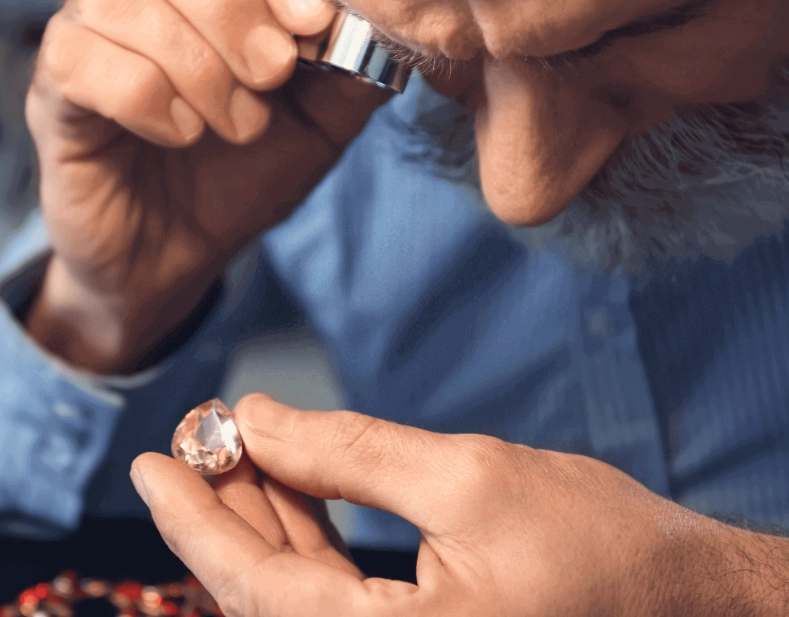
Color and Its Nuances
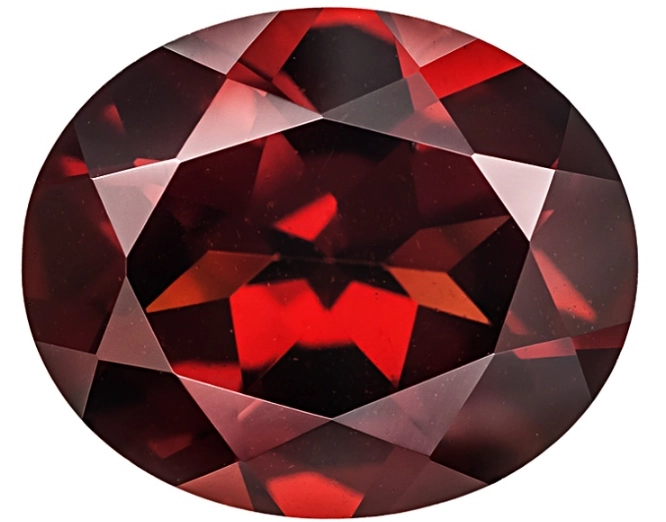
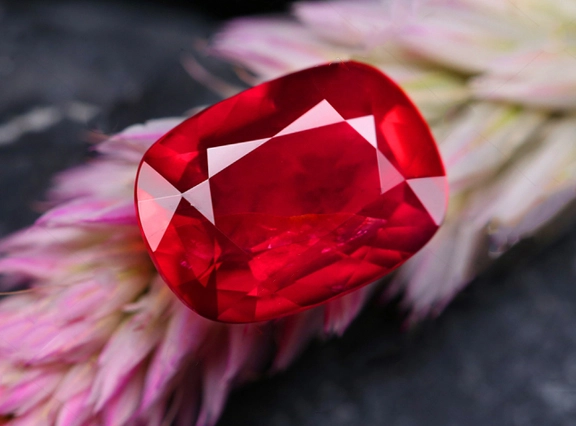
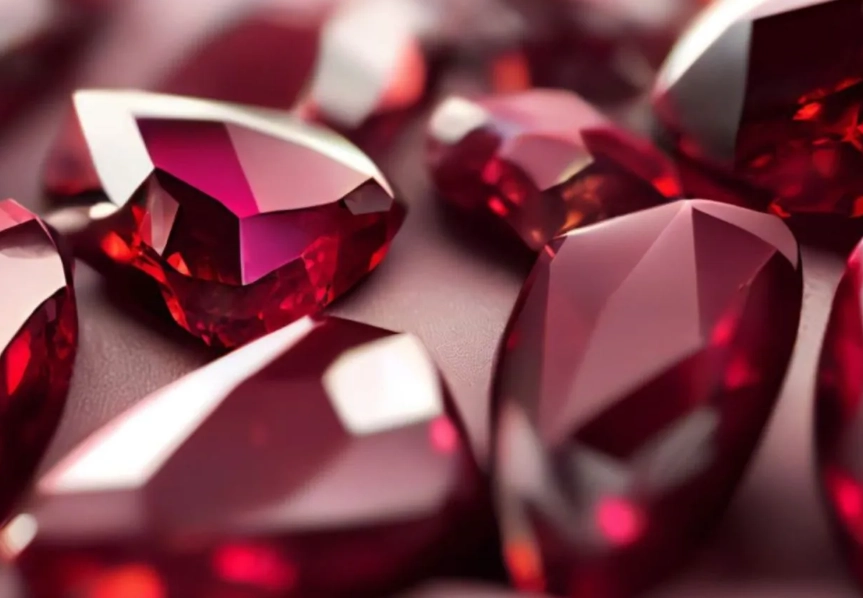
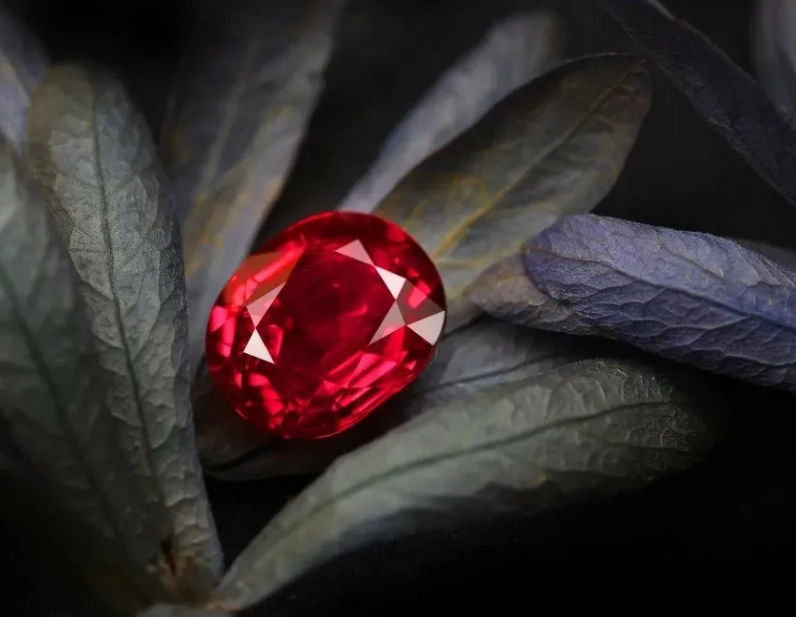
Color is the most obvious feature, but it's also a tricky one. Many different gems share the same basic color. A deep red stone could be a ruby, a garnet, a red spinel, or even red glass. The key is in the subtleties.
Look at the distribution of color. Is it even throughout, or are there bands or patches? Natural stones often have slight variations, while synthetic or glass imitations can be perfectly uniform, which sometimes looks... too perfect. I once saw a "ruby" that was such a consistent, vivid red it looked like it was lit from within with LED lights. That's a red flag (pun intended). Real rubies often have areas called "color zoning"—slightly lighter or darker patches.
Also, note the hue. Is it a purplish-red or an orangish-red? Describing the color precisely helps a lot later when you're comparing notes.
Inclusions: The Stone's Fingerprint
This is where a loupe becomes your best friend. Inclusions are tiny natural imperfections trapped inside the gem as it formed in the earth. Contrary to popular belief, they're not always bad. In fact, they are fantastic clues for identification.
- Needles: Fine, thread-like inclusions. Rutile needles in quartz give us rutilated quartz, a beautiful sight.
- Crystals: Tiny mineral crystals trapped inside. You might see a diamond crystal inside an emerald, for instance.
- Gas or Liquid Bubbles: This is a big one. Round, perfectly separated bubbles are almost always a sign of glass. Natural fluid inclusions are usually irregular in shape and may have a moving bubble inside.
- Fractures or Feathers: Internal cracks. Their pattern can be telling.
Glass and cheap synthetic stones are often too clean. They might have swirling lines from the manufacturing process (called "striae") or those tell-tale round bubbles. A completely flawless, deep-colored gem is exceptionally rare and expensive. If you find one in a bargain bin, it's probably not natural.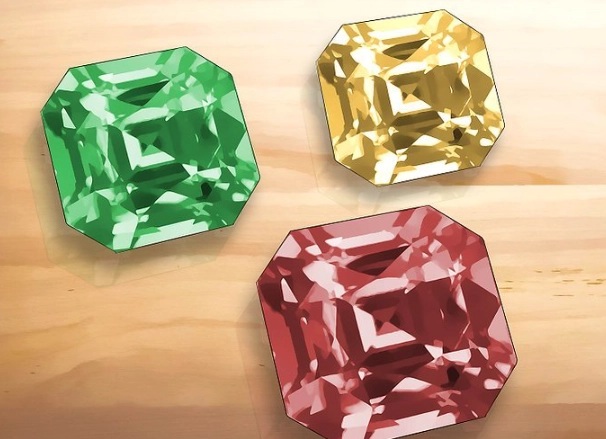
Cut and Polish Quality
How well is the stone cut? Natural gems, especially older ones, might have slightly uneven facets or minor abrasions on the edges (called "facet wear"). A perfect, razor-sharp, and flawless cut on every facet is more common in modern synthetic stones. Also, look at the polish. A high-quality natural gem will have a brilliant, glassy polish. A waxy or dull polish might indicate a softer material or a poor-quality imitation.
The Practical Tests: Getting Hands-On
Once you've looked your fill, you can move on to some simple physical tests. These give you harder data to work with. Remember: Prioritize non-destructive tests. If the stone is set in valuable jewelry or is an antique, maybe skip the scratch tests altogether.
The Hardness Test (Mohs Scale)
This is the famous one. The Mohs scale of mineral hardness ranks minerals from 1 (talc, very soft) to 10 (diamond, the hardest). It's a scale of scratch resistance. A mineral can scratch any mineral softer than itself.
You don't need a full kit. You can use common items as reference points.
| Common Object | Approx. Mohs Hardness | What it can help identify |
|---|---|---|
| Fingernail | 2.5 | Can scratch materials like gypsum. If your nail scratches it, it's very soft. |
| Copper Penny | 3 | Good test for calcite, a common imitation material. |
| Pocket Knife/Steel Nail | 5.5 | A key divider. If the stone scratches easily with steel, it's likely below 6 (like opal, turquoise). If it resists, it's 6+ (like quartz, topaz). |
| Window Glass | 5.5 | Similar to the knife test. Can your stone scratch glass? |
| Quartz (piece of crystal) | 7 | If it scratches quartz, it's harder than 7 (topaz, corundum, diamond). |
How to do it safely: Find a discreet spot, like the girdle (the widest edge) of the stone, or better yet, use a loose stone. Try to scratch the *test material* with the *gemstone's point*. If you're testing if the gem scratches glass, press the gem's point against the glass and try to make a scratch. Don't grind it, just a firm drag. Wipe the area. A permanent, fine scratch means the gem is harder. If the glass scratches the gem, the gem is softer.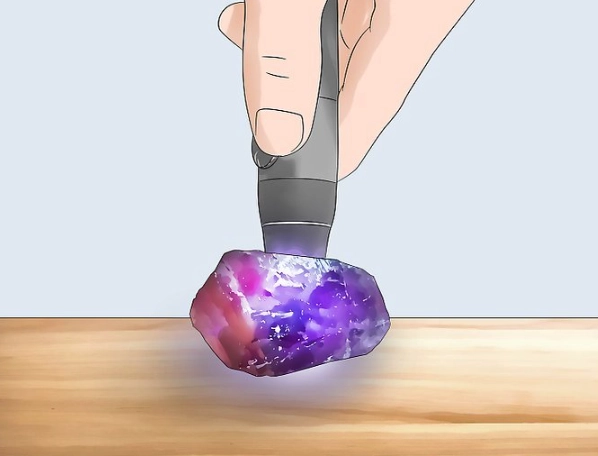
Learning how to identify gemstones using hardness is powerful. For example, if you have a blue stone that can scratch quartz, you've eliminated aquamarine (7.5-8) and blue topaz (8) as possibilities, but sapphire (9) is still in the running.
Specific Gravity (Heft Test)
This is a brilliant and underused test. Specific gravity (SG) is essentially the density of the gem compared to the density of water. Different gem materials have characteristic SGs. A citrine quartz and a yellow sapphire might look similar, but the sapphire will feel noticeably heavier for its size.
You can do a rough "heft test" by simply comparing two stones of similar size. Does one feel surprisingly heavy or surprisingly light? Amber, for instance, is very light (SG ~1.08) and will feel like plastic. A cubic zirconia imitation diamond is much heavier (SG ~5.8) than a real diamond (SG ~3.52). If you're used to the feel of a diamond, a CZ of the same size will feel "hefty."
Checking for Doubling (Birefringence)
Some gems, like peridot, zircon, and most quartz varieties, have a strong optical property called double refraction. When you look through them at a facet edge or a line, you might see two lines instead of one. It's like a ghost image.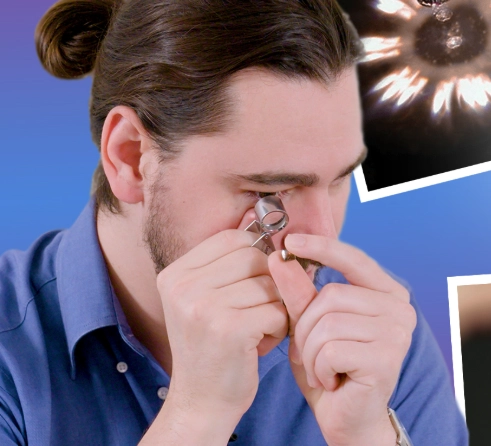
To test this, place the stone table-down (the big flat top facet down) on a piece of paper with a single straight line drawn on it. Look straight down through the stone. If you see two distinct lines through the pavilion (the bottom part), the stone has strong double refraction. If you see a single line, it could be a singly refractive stone like garnet, spinel, or diamond—or the doubling might just be too weak to see with your eye.
This test is harmless and can quickly separate, for example, citrine (doubling) from yellow sapphire (no doubling).
Common Gemstone Identification Scenarios
Let's apply what we've learned to some real-world puzzles. These are the questions I get asked all the time.
Is it a Diamond or a Fake?
The classic question. Here’s your at-home checklist:
- The Fog Test: Breathe on it like you're fogging up a mirror. A diamond disperses heat instantly, so the fog clears in a split second. On glass or cubic zirconia, the fog lingers for a few seconds. It's not foolproof (a cold diamond might fog a tiny bit), but it's a good first indicator.
- Look Through It: Place the stone table-down on some text. Due to its exceptional light refraction, you will not be able to read the text clearly through a well-cut diamond. You'll just see a blurry, distorted shadow. With many fakes like CZ or glass, you can often see the letters, albeit magnified.
- Check the Setting: Real diamonds of any significant size are rarely set in cheap, plated metals like brass or nickel. Look for hallmarks: 10K, 14K, 18K, PT, Plat. It's not a guarantee, but it's a clue.
- The "Sparkle": This is subjective, but diamonds have a unique fire and brilliance—a mix of white light (brilliance) and flashes of rainbow colors (dispersion or fire). Some high-quality CZ comes close, but often the fire looks a bit too dramatic, almost like a disco ball.
Ultimately, the only way to be 100% sure is with professional tools that test thermal and electrical conductivity. For peace of mind, take it to a reputable jeweler.
Is it a Ruby or a Red Garnet?
They can look very similar. Here's the breakdown:
- Hardness: Ruby (corundum) is a 9. It will scratch quartz easily. Garnet is around 7-7.5. It will scratch glass but can be scratched by a ruby. If you have a known piece of quartz, see if your red stone can scratch it deeply. If it does, it leans towards ruby.
- Color: Rubies often have a purplish or bluish secondary hue. Garnets (specifically almandine) tend to have a more burgundy or brownish red. This isn't always reliable, but it's a hint.
- Inclusions: Rubies frequently have tiny needle-like inclusions of rutile (called "silk") that can create a soft, silky look and sometimes a star effect. Garnets often contain rounded crystal inclusions.
If you're serious about learning how to identify gemstones like these, getting a small reference set of known minerals (a piece of quartz, a garnet bead) to practice tests on is incredibly helpful.
When to Stop: The Limits of Home Identification
This is crucial. You can become very good at narrowing things down, but some identifications require advanced spectroscopy, refractometers, and microscopes.
You should seek a professional appraisal or lab report if:
- The stone is potentially valuable (your gut will tell you).
- You need a definitive answer for insurance or sale.
- The stone is a treated gem (like a fracture-filled ruby or a diffusion-treated sapphire). These treatments are often invisible to the naked eye and require professional equipment to detect. The Gemological Institute of America (GIA) is the most globally recognized authority for grading reports, especially for diamonds.
- You're dealing with a synthetic stone. High-quality synthetic sapphires, rubies, and emeralds have nearly identical physical properties to their natural counterparts. Only subtle internal growth patterns, visible under high magnification, can distinguish them.
Other reputable labs include the International Gemological Institute (IGI) and the American Gem Society Laboratories (AGSL). For mineralogical data and identification help, the Mindat.org database is an incredible, community-driven resource.
Your Gemstone Identification Toolkit (What to Actually Buy)
You don't need much to start. Build your kit slowly.
- A 10x Loupe: The single most important tool. Don't buy a cheap plastic one. Get a triplet loupe with three lenses (achromatic) to avoid color distortion. It's worth the $20-$30.
- A Good Light Source: A daylight-balanced LED lamp or a simple, bright flashlight.
- A Magnet: Some gems are magnetic! Hematite and some varieties of garnet (like pyrope) are strongly attracted to a rare-earth magnet (neodymium). It's a fun and quick test.
- A Ceramic Tile: An unglazed ceramic tile (like the back of a floor tile) is a great streak plate. Some gems leave a characteristic colored powder streak when scratched on it. Hematite leaves a reddish-brown streak, for example.
- Reference Materials: A piece of quartz crystal, a small piece of glass, a steel nail. Keep them in a little pouch.
From there, if you get hooked, you might consider a handheld refractometer (measures refractive index) or a Chelsea filter (helps with emerald/idocrase identification), but that's for the next level.
Frequently Asked Questions (The Stuff People Really Want to Know)
Can I use a UV light to identify gemstones?
Yes! A lot of gems fluoresce under long-wave or short-wave ultraviolet light. For example, some rubies glow a strong red, some diamonds glow blue, and some synthetic spinel glows a bright green. It's a fantastic diagnostic tool, but the reactions can vary, so it's best used with other tests. A cheap long-wave UV flashlight from an online retailer can be a great addition to your kit.
What's the easiest gemstone to identify?
For beginners, I'd say amber. It's warm to the touch (not cold like glass), very light, and if you rub it vigorously on cloth, it generates static electricity and can pick up tiny pieces of paper. Also, it often contains ancient insects or plant matter. Turquoise is also pretty distinct with its opaque, robin's egg blue color and common matrix (the host rock it forms in).
My gemstone has a scratch. Does that mean it's fake?
Not at all! It means it's not as hard as whatever scratched it. All gems can be scratched by something harder. A scratched diamond is still a diamond (just a damaged one). A scratched piece of glass is still glass. The scratch tells you about hardness, not automatically authenticity.
Are phone apps for gem identification any good?
Honestly? Mostly not yet. They rely on photos, which are terrible for accurate color and inclusion analysis. Lighting, camera sensors, and screen displays vary too much. They might give you a list of possibilities, but treat that list as a starting point for your own investigation, not an answer. Don't rely on them.
Learning how to identify gemstones is a journey. You'll make mistakes. You'll be surprised. That clear crystal you thought was quartz might turn out to be a piece of calcite that fizzes with vinegar (a fun acid test, but only on raw specimens!). The process itself—looking closely, testing, researching—is what connects you to these incredible pieces of the earth. It turns a pretty rock into a story with a name. And that, I think, is the real treasure.
Start with the visual check. Be safe. When in doubt, ask for help from the community or a professional. And most importantly, have fun with it.