Quick Navigation
- What Are Synthetic Gemstones, Really? (Spoiler: They're Not "Fake")
- How Are These Lab-Created Marvels Made?
- Synthetic vs. Natural vs. Imitation: A No-BS Comparison
- The Good, The Bad, and The Sparkly: Weighing Your Options
- Your Smart Buyer's Checklist: How to Shop Confidently
- Straight Answers to Your Burning Questions
- Wrapping This Up: What's Right for You?
Let's be real for a second. You're probably here because you've seen the term "synthetic gemstones" pop up everywhere—in jewelry ads, on blogs, maybe even from a friend who just got engaged with a stunning lab-grown diamond. And you're left with a bunch of questions buzzing in your head. Are they fake? Are they cheap? Will they last? Is buying one a smart move or a total compromise?
I get it. I was in the same boat a few years back, staring at two nearly identical sapphires with a price difference that made my eyes water. One came with a story of the earth, the other from a lab. It sparked a deep dive that completely changed how I see sparkly things. So, let's have a real chat about this. Forget the marketing fluff and the old-school jewelers' skepticism. We're going to break down exactly what synthetic gemstones are, how they stack up, and whether they deserve a spot in your jewelry box.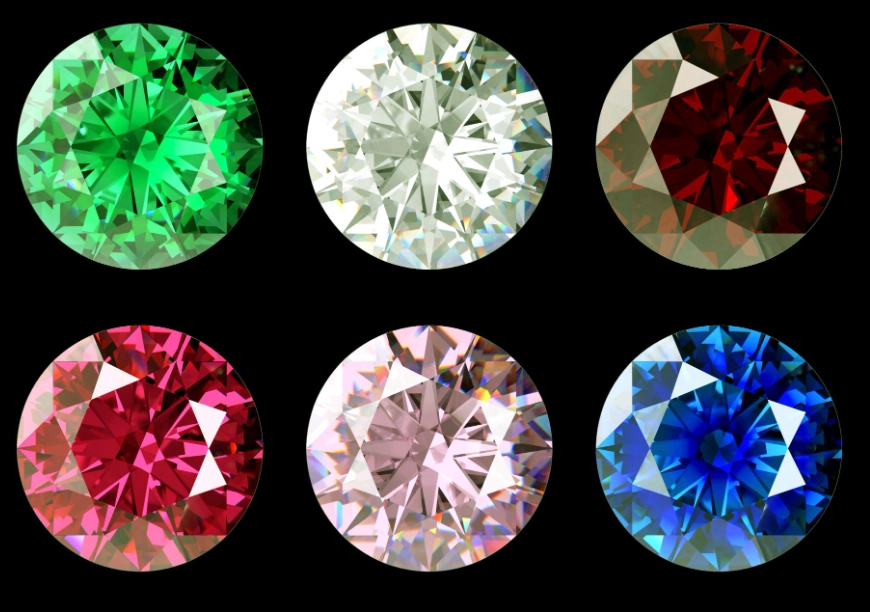
What Are Synthetic Gemstones, Really? (Spoiler: They're Not "Fake")
This is the biggest point of confusion, so let's clear it up right away. When we talk about synthetic gemstones, we're not talking about plastic or glass. That's a whole different category called "imitation" or "simulant" gems—think cubic zirconia (CZ) or colored glass. Those are just lookalikes.
A true synthetic gemstone is the real deal, chemically and physically. It has the same crystal structure, the same chemical composition, the same optical and physical properties as its natural counterpart dug from the ground. The only difference? Its origin story. Instead of forming over millions of years under immense heat and pressure deep within the Earth, scientists and technicians recreate those conditions in a controlled laboratory environment. They're basically giving Mother Nature a massive head start.
This is a crucial distinction that even major authorities like the Gemological Institute of America (GIA) emphasize. They are genuine gemstones. Calling them "fake" is just plain wrong and does a disservice to the incredible science behind them.
How Are These Lab-Created Marvels Made?
Okay, science time. But don't worry, I'll keep it simple. There are a few main methods, each with its own vibe and best-suited gems.
Flame Fusion (The Verneuil Process)
This is the old-school workhorse, invented over a century ago. Imagine a very precise, super-hot oxy-hydrogen flame. Fine powder of the gem's ingredients (like aluminum oxide for corundum—ruby/sapphire) is sprinkled through the flame. It melts and falls onto a rotating pedestal, forming a teardrop-shaped crystal called a "boule." It's fast, efficient, and how most synthetic rubies and sapphires you encounter are made. The downside? The crystals can have curved growth lines and gas bubbles, which are telltale signs for gemologists.
Crystal Pulling (The Czochralski Method)
This one feels more futuristic. A tiny seed crystal is dipped into a molten "soup" of the gem material. It's then slowly pulled upward and rotated. As it rises, the molten material crystallizes onto the seed, growing a larger, cylindrical single crystal. This method is king for creating synthetic gems that need extreme purity and perfection, like the lab created diamonds used in lasers and semiconductors. It's also used for some jewelry-grade stones.
Hydrothermal Growth
This is my personal favorite because it's the closest mimic to how many gems form in nature. Think of a giant, high-pressure laboratory autoclave (a fancy pressure cooker). A nutrient of the gem material is placed in the bottom with a seed plate hung above it. The chamber is filled with a water-based solution and heated to insane pressures and temperatures (like 1,000°C and 10,000 times atmospheric pressure!). The nutrient dissolves, travels up, and slowly crystallizes onto the cooler seed plates over weeks or months. This is the primary method for synthetic quartz (like amethyst and citrine) and is also used for emeralds. The result? Stones that often have inclusions looking eerily similar to natural ones.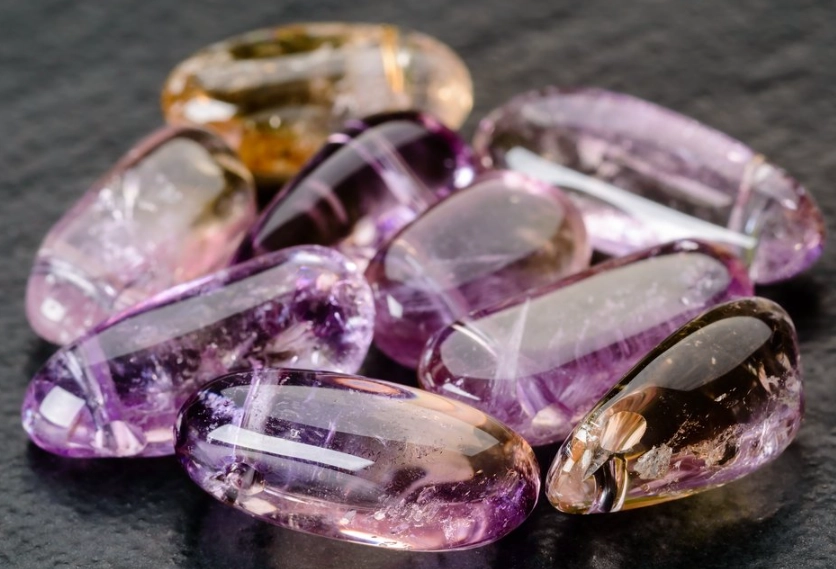
Synthetic vs. Natural vs. Imitation: A No-BS Comparison
This is where a table really helps to see the differences side-by-side without getting lost in paragraphs.
| Feature | Synthetic Gemstones | Natural Gemstones | Imitation/Simulant Gems |
|---|---|---|---|
| What it is | Real gem, lab-grown. Identical chemistry & structure to natural. | Real gem, earth-grown over millennia. | Different material made to look like a gem (e.g., glass, CZ, plastic). |
| Composition | e.g., Synthetic Sapphire = Al₂O₃ (with color elements) | e.g., Natural Sapphire = Al₂O₃ (with color elements) | e.g., Blue Glass = Silica, soda, lime, cobalt dye |
| Durability & Hardness | Identical to natural. A synthetic diamond is a 10 on the Mohs scale. | Varies by gem type (Diamond=10, Talc=1). | Usually much lower. CZ is 8-8.5, glass is ~5.5. Scratches easily. |
| Price Point | Typically 20% - 50% (or less) of an equivalent natural gem's price. | Highest. Value tied to rarity, quality, and origin. | Very low, mass-produced cost. |
| Inclusions & "Flaws" | Often extremely clean. May have specific lab-created patterns (flux remnants, curved lines). | Almost always has inclusions (nature's fingerprint). Often increases value if attractive. | May have bubbles, swirls, or be perfectly clear. |
| Environmental & Ethical Impact | Generally lower. Controlled lab setting, no mining. But uses significant energy. | Can be high. Mining can cause habitat destruction, water pollution, and carbon emissions. Ethical concerns (e.g., conflict minerals) exist. | Varies, but production of materials like glass or CZ has an industrial footprint. |
| Resale Value | Currently low. Value is in the beauty/wear, not as an investment asset. | Can hold or appreciate, especially for rare, high-quality stones. | Virtually none. Consider it a consumable. |
Looking at that table, the main takeaway is this: Synthetic gemstones are a substitute for natural gems, while imitations are deceptions. One is an alternative origin of the real thing; the other is a costume.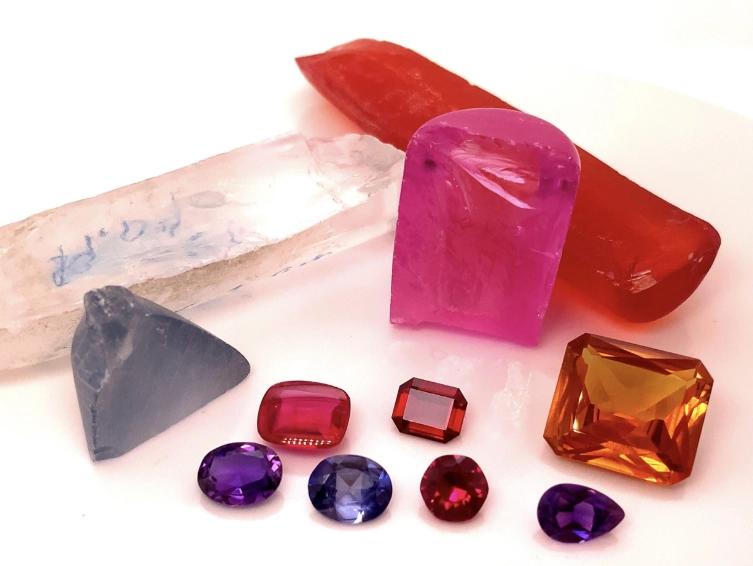
The Good, The Bad, and The Sparkly: Weighing Your Options
Let's get into the nitty-gritty of why you might choose one or why you might hesitate.
Why Synthetic Gemstones Are a Game-Changer (The Pros)
Accessibility is the big one. You can get a larger, clearer, more vibrantly colored stone for a fraction of the price of a comparable natural one. This opens up doors. Want a emerald-cut emerald the size of your thumbnail without a five-figure price tag? Lab-grown gemstones make that possible. It's democratizing beauty.
Ethical and environmental peace of mind. While no industrial process is impact-free, buying a stone created in a lab lets you bypass the often murky and destructive world of mining. There's no worry about "blood diamonds" or funding conflict when your diamond's origin is a facility in Singapore or Oregon. Organizations like the U.S. Federal Trade Commission (FTC) have even updated their guidelines to reflect that these are legitimate alternatives, requiring clear disclosure but acknowledging their place in the market.
Consistency and choice. Nature is random. Finding the perfect hue, saturation, and clarity is rare and expensive. Labs can produce a specific, consistent color on demand. Always loved a particular shade of peachy-pink sapphire? A lab can make it, repeatedly.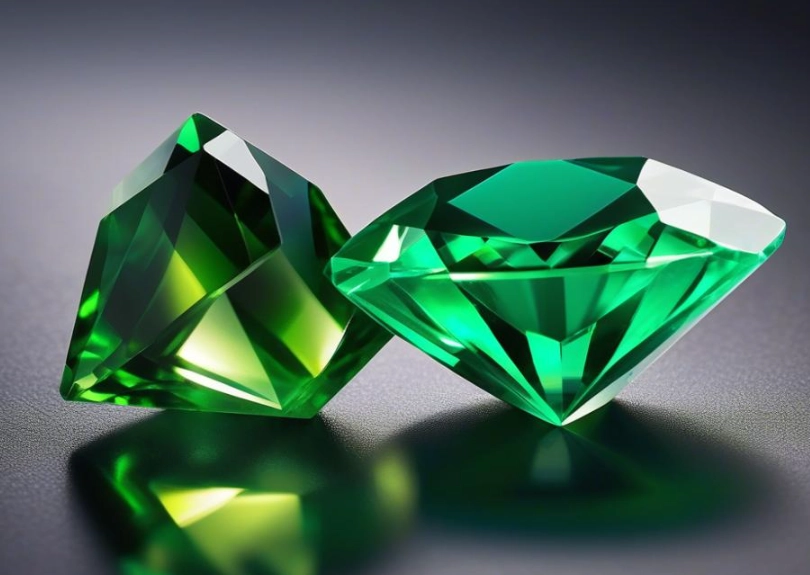
The Trade-offs and Considerations (The Cons & Caveats)
They lack rarity, and that affects value. This is the most common critique, and honestly, it's valid. A natural gem is a one-of-a-kind piece of geological history. A synthetic stone can, in theory, be produced indefinitely. So, while you're paying less upfront, don't expect it to be an heirloom investment. Its value is purely in the joy of wearing it. If you're buying jewelry as a financial asset, look elsewhere.
The "soul" argument. Some folks, myself included on some days, feel a connection to the ancient history of a natural stone. There's a romance to it. A lab-created gemstone can feel, for lack of a better word, clinical to them. It's a personal preference, not a flaw, but it's a real feeling for many buyers.
Disclosure is everything, and sometimes it's lacking. While reputable dealers will always disclose a stone's lab origin, the market isn't perfect. There are sellers who might try to pass off a synthetic as natural to an uninformed buyer. This is why certification from a reputable lab (like GIA, IGI, or AGS) is non-negotiable for any significant purchase, natural or synthetic. The certificate is the stone's birth certificate.
Your Smart Buyer's Checklist: How to Shop Confidently
Feeling overwhelmed? Don't be. Arm yourself with these questions and steps, and you'll be fine.
The Pre-Purchase Interrogation (Ask These Questions)
- "Is this stone natural, synthetic, or imitation?" Get a clear, written answer.
- "What is its exact method of synthesis?" (Flame fusion, hydrothermal, etc.). A knowledgeable seller should know.
- "Does it come with an independent laboratory report?" Insist on it. IGI and GCAL are labs that commonly certify synthetics. GIA reports will clearly state "Laboratory-Grown."
- "Have any post-growth treatments been applied?" (Heat, diffusion, fracture filling). Treatments are common in naturals too, but you deserve to know.
- "What is your return policy?" Reputable sellers offer a cooling-off period.
Where you buy matters. I've had great experiences with specialized online retailers who are transparent about their sourcing. I'd be more cautious on generic auction or marketplace sites where provenance is fuzzy. Look for vendors who educate, not just sell.
Finally, think about the piece itself. For an engagement ring you'll wear daily, the durability of a synthetic diamond, moissanite, or sapphire is perfect. For a once-in-a-while statement necklace, maybe you can explore more colors. Match the stone's properties to the wear and tear it will get.
Straight Answers to Your Burning Questions
Wrapping This Up: What's Right for You?
So, where do we land on synthetic gemstones? They aren't a magic bullet, but they are a brilliant, legitimate, and often more responsible choice for modern jewelry.
Choose them if your priority is size, color, and clarity for your budget. Choose them if ethical sourcing and a smaller environmental footprint matter deeply to you. Choose them if you view jewelry as personal adornment, not a savings account.
Stick with natural if you cherish the unique story, rarity, and geological wonder of an earth-mined stone. If long-term financial value and tradition are key parts of the purchase for you.
The world of gems isn't black and white anymore. There's a whole spectrum of beautiful, real options between a million-year-old crystal and a piece of glass. Synthetic gemstones have firmly carved out their space in that spectrum. They're real, they're gorgeous, and they're here to stay. Now you have the knowledge to decide if they're right for you.