Quick Navigation
- A Color Steeped in Legend and Royalty
- Beyond the Birthday: Meanings and Metaphysical Properties
- Your Practical Guide to Buying Amethyst Jewelry
- Caring for Your Amethyst Birthstone
- Amethyst vs. The Look-Alikes (And Its Own Family)
- Answering Your Burning Questions About the Amethyst Birthstone
- Wrapping Up: Is the Amethyst Birthstone Right for You?
Let's be honest, when you think of February's birthstone, you probably picture a nice purple gem. Maybe you've seen it in a necklace or a ring. But there's so much more to the amethyst birthstone than meets the eye. I remember buying my first piece—a small, rough crystal from a shop that smelled like incense. I thought it was just cool looking. I had no idea about the stories, the science, and the sheer history packed into that lilac-colored stone.
That's what this guide is for. We're going to dig deep. Not just into what it is, but what it means. From ancient myths to modern geology, from picking the perfect piece to avoiding scams. Whether you're a February baby shopping for yourself, someone looking for a meaningful gift, or just a curious soul drawn to its color, I want this to be the only page you need to read.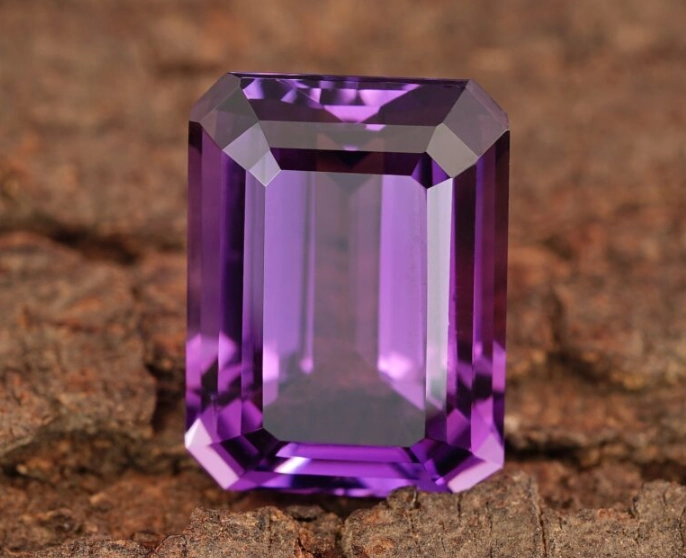
Funny enough, the name itself comes from trying not to do something. "Amethyst" stems from the ancient Greek word "amethystos," which literally means "not intoxicated." The Greeks believed wearing it or drinking from a cup made of it would protect you from drunkenness. I've never tested that theory myself—seems like a risky experiment—but it tells you how deeply this stone is woven into human culture.
A Color Steeped in Legend and Royalty
Why purple? For most of human history, purple dye was insanely expensive, made from sea snails. It was the color of emperors, kings, and high priests. So a gemstone that naturally came in that hue? It was instantly associated with power, spirituality, and wealth. The amethyst birthstone sat on the fingers of Egyptian royalty and adorned the robes of Catholic bishops. It was considered just as precious as rubies or sapphires.
That changed in the 19th century. Large deposits were found in places like Brazil. Suddenly, what was once rare became more accessible. Some people see that as a downgrade, but I think it's wonderful. It means more people can connect with this beautiful stone. It went from being a symbol of exclusive power to a symbol of accessible beauty and personal meaning. That's a pretty good trade-off.
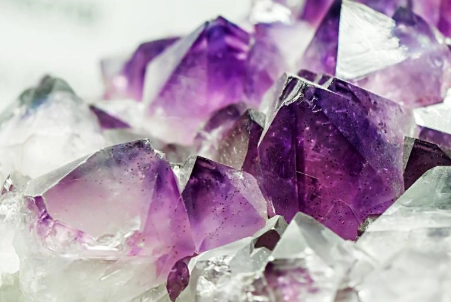
But don't let the availability fool you. A high-quality amethyst is still a breathtaking thing. The color can range from a pale, almost pinkish lavender to a deep, velvety purple that seems to swallow the light. The best ones have a rich, saturated color without getting so dark they look black in dim light.
What Gives Amethyst Its Purple Color?
This is where it gets sciency, but stick with me. Amethyst is actually a variety of quartz, which is silicon dioxide. Clear quartz is, well, clear. So what makes amethyst purple? It's down to tiny amounts of iron and natural radiation inside the earth. The iron gets trapped in the quartz crystal structure, and over millions of years, natural radiation from surrounding rocks changes its charge, creating those famous purple color centers.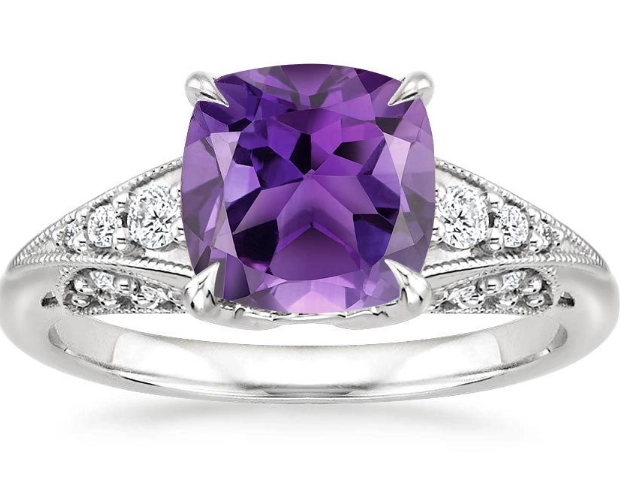
Heat and light can mess with this delicate balance, though. Leave an amethyst in strong sunlight for years, and it can fade. That's why you'll sometimes see amethyst jewelry that's turned a faint yellow or brownish color. It's not necessarily fake; it's just a tired, faded amethyst. A bit sad, really.
Geology Snapshot: Most amethyst forms in hollow, gas-filled cavities within ancient lava flows, called geodes. Cracking open a geode to find a glittering purple interior is a rockhound's dream. Major sources today include Brazil, Uruguay, Zambia, and South Korea. The Zambian material often has a deeper, more bluish-purple tone that many collectors (myself included) really go for.
Beyond the Birthday: Meanings and Metaphysical Properties
Okay, let's talk about the elephant in the room: the spiritual and healing properties. This is a huge reason people are drawn to the amethyst birthstone. Even if you're a total skeptic, it's fascinating to see what people have believed for centuries.
Across cultures, amethyst is primarily seen as a stone of calm, clarity, and connection. It's the anti-chaos gem. In ancient times, it was used to ward off negative thoughts and nightmares. Today, people in the crystal healing community use it for:
- Stress Relief: It's often called the "all-purpose" stone for calming anxiety and promoting peace. People place it in their bedrooms or hold it during meditation.
- Mental Clarity: Tied to the crown chakra, it's believed to help quiet mental chatter and enhance focus and decision-making. I keep a small tumbled stone on my desk. Does it work? I can't prove it scientifically, but I like having it there. It's a physical reminder to breathe and focus.
- Spiritual Awakening: Many consider it a powerful aid for meditation and deepening one's spiritual practice.
Now, here's my personal take. I'm not a doctor, and no gemstone is a substitute for professional medical or psychological help. But the power of intention and the placebo effect are real. If holding a beautiful amethyst birthstone helps you feel more centered during a stressful day, that's a genuine benefit. The value is in the meaning you give it.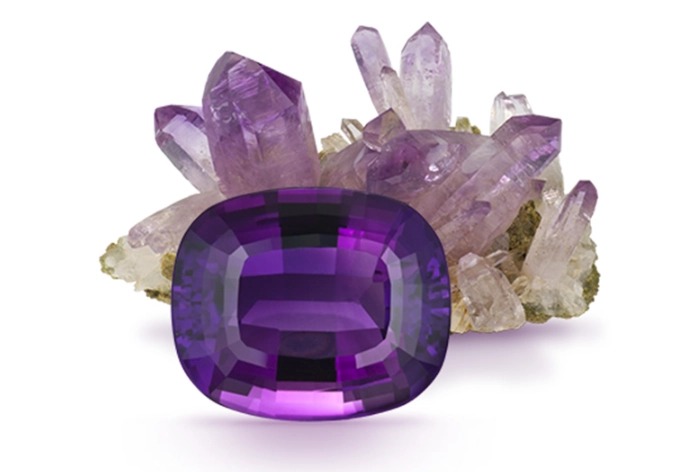
Your Practical Guide to Buying Amethyst Jewelry
This is where most people get stuck. You want a piece of amethyst jewelry, but you're faced with a huge range of prices and styles. How do you know you're getting a good one? Let's break it down using the classic gemology factors, but in plain English.
The 4 Cs, Adapted for Amethyst
You've heard of the 4 Cs for diamonds. They apply here too, but with different priorities.
| Factor | What to Look For | What to Avoid / Be Aware Of |
|---|---|---|
| Color | A strong, saturated purple or violet. Even color distribution. “Siberian” grade has flashes of red/blue. | Stones that are too pale or have gray/brown undertones. Extremely dark stones that look black indoors. |
| Clarity | Eye-clean stones are common and desirable. Some inclusions (like “tiger stripes” or veils) can be attractive. | Large, distracting cracks or clouds that make the stone look milky or deaden its sparkle. |
| Cut | A well-proportioned cut that makes the stone sparkle (brilliance) and shows its color best. Ovals, cushions, and emerald cuts are popular. | Shallow cuts that create a “window” (you can see through the stone), or cuts that are too deep and darken the color. |
| Carat Weight | Size is a personal choice. Amethyst comes in large sizes, so you get more “bang for your buck” compared to many gems. | Prioritizing size over color and cut. A huge, poorly colored stone isn't a good deal. |
The most important factor, hands down, is Color. A smaller stone with a fantastic purple is almost always better than a huge, washed-out one. The term "Siberian Amethyst" is sometimes used to describe top-color material with a deep purple and red/blue flashes, a reference to the historical (and now largely depleted) Russian source.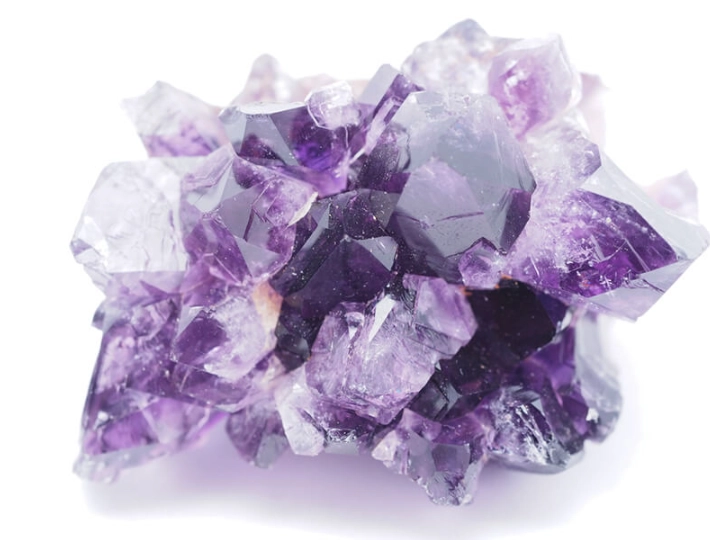
Watch Out For: Synthetic amethyst. It's common, and it's not necessarily “fake”—it's lab-created quartz with the same chemical makeup. The problem is when it's sold without disclosure as natural. Synthetic amethyst often has “too perfect” color zoning (sharp straight lines) and is flawless. If a deal seems too good to be true for a large, perfect, deep purple stone, it might be synthetic. A reputable jeweler will always tell you.
Popular Amethyst Jewelry Styles and Settings
Amethyst is versatile. Its hardness of 7 on the Mohs scale means it's durable enough for daily wear in protective settings, but I'd still avoid it in a ring you plan on gardening with.
- Rings: Look for settings with a protective bezel or high prongs. A sterling silver setting really makes the purple pop, but white or yellow gold are classic and more durable.
- Necklaces & Pendants: A great choice as they're less prone to knocks. A simple solitaire pendant is timeless. I love seeing raw, unpolished amethyst points in wire-wrapped pendants for a more natural look.
- Earrings: Studs or dangles, they're safe and stylish. The color complements almost every skin tone and wardrobe.
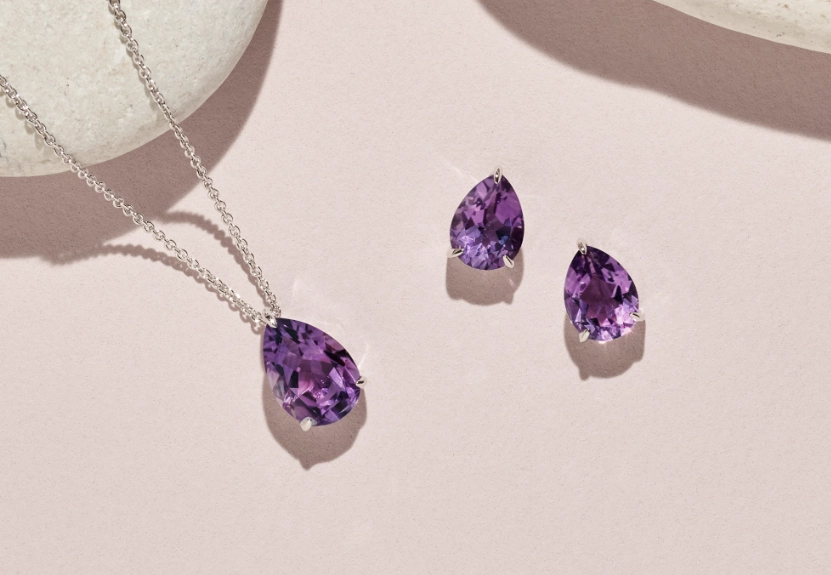
A word on metal: My first amethyst was set in silver, and it tarnished quickly from my skin chemistry. I had to polish it constantly. Now I prefer gold-filled or solid gold for pieces I wear often. It's a more expensive upfront cost, but so much less hassle.
Caring for Your Amethyst Birthstone
You've invested in a beautiful piece. How do you keep it that way? It's not hard, but there are a few key things to remember.
The Golden Rules of Amethyst Care:
- Avoid Prolonged Sun Exposure: This is the big one. Don't leave your amethyst jewelry on a sunny windowsill. The color can fade over time. Wear it, enjoy it, then put it away in a box.
- Clean Gently: Warm, soapy water and a soft brush (an old toothbrush is perfect) are all you need. Rinse well. Avoid harsh chemicals, ultrasonic cleaners (they can shake loose inclusions), and steam cleaners (the heat can cause damage).
- Store Separately: Don't just toss it in a jumbled jewelry box. Quartz can scratch softer stones, and harder stones (like diamonds, sapphires) can scratch it. A soft pouch or a compartment in a lined box is ideal.
- Put It On Last: Apply perfumes, hairsprays, and lotions before putting on your amethyst jewelry. Chemicals can dull its surface over time.
It sounds like a lot, but it quickly becomes habit. Think of it like caring for a good wool sweater—a little attention goes a long way.
Amethyst vs. The Look-Alikes (And Its Own Family)
Purple stones can be confusing. Here’s a quick cheat sheet.
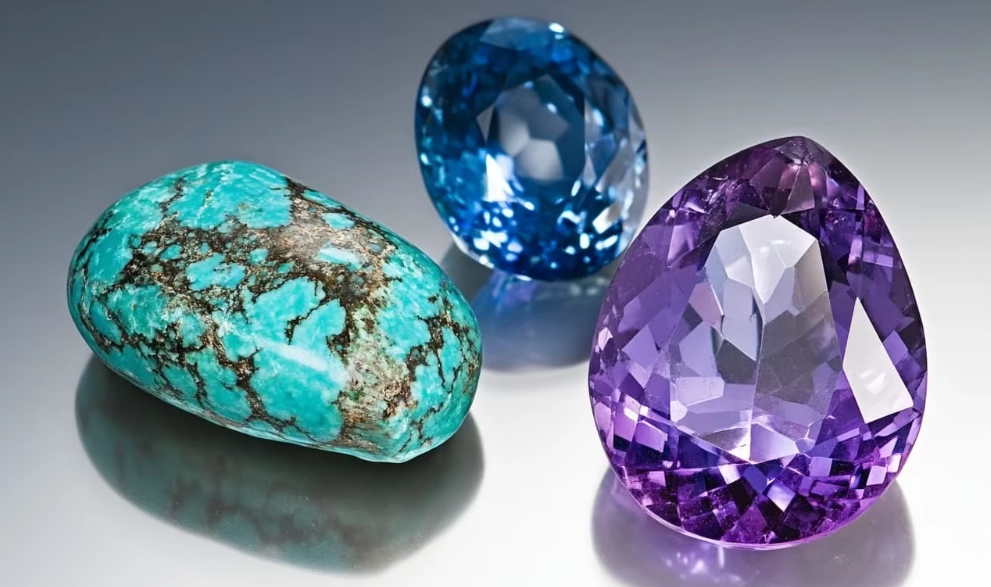
Amethyst vs. Purple Sapphire: Purple sapphire is much rarer and significantly more expensive. It's also harder (9 on the Mohs scale) and often has a more brilliant sparkle. If a seller is offering a “purple sapphire” at an amethyst price, be very skeptical.
Amethyst vs. Tanzanite: Tanzanite is softer, has a more distinct blue-violet color (often with strong pleochroism—looking different from different angles), and is also more expensive. It requires very careful wear.
Within the Quartz Family: Amethyst has close relatives.
Prasiolite (Green Amethyst): This is heat-treated amethyst or certain quartz that turns a lovely green. It's stable and sold as “green amethyst,” but it's not a natural green color.
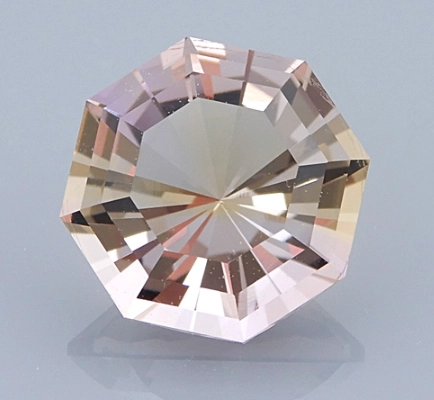
Ametrine: A stunning natural combination of amethyst and citrine (yellow quartz) in one crystal, often with a sharp color zoning between purple and yellow. It comes primarily from a single mine in Bolivia.
Knowing these differences helps you understand what you're buying and talking about with a jeweler.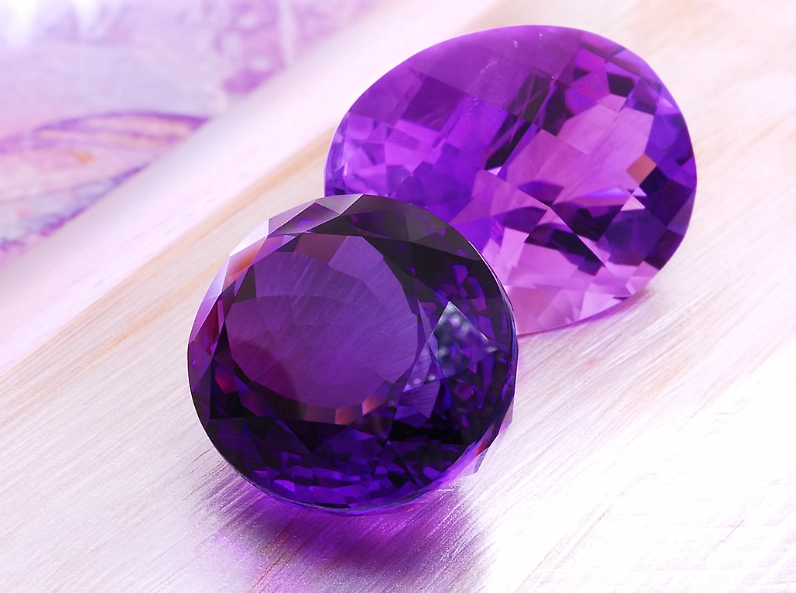
Answering Your Burning Questions About the Amethyst Birthstone
I get asked a lot of questions. Here are the most common ones, answered straight.
Is amethyst a good birthstone for everyday wear?
Yes, with caveats. Its hardness of 7 means it's resistant to scratches from dust (which contains quartz particles), but it can be scratched by harder materials. For a ring, choose a protective setting. For pendants and earrings, it's generally very safe for daily wear.
Can amethyst go in water?
For short periods during cleaning, yes. But don't soak it for hours, and definitely don't wear it in chlorinated pools or hot tubs. The chemicals and extreme conditions aren't good for it or its setting.
How can I tell if my amethyst is real?
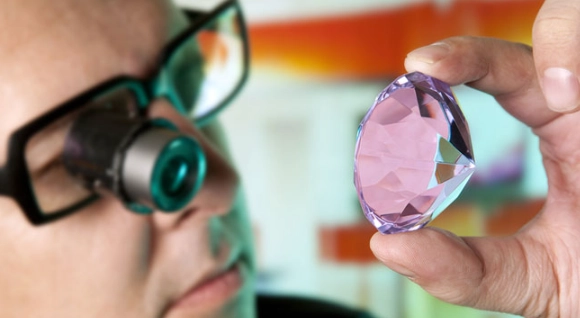
A few at-home clues: It should feel cool to the touch. It will have slight imperfections (inclusions) when viewed under magnification. The color zoning is usually uneven or patchy, not in perfect straight lines. But the only definitive way is to have it assessed by a qualified gemologist, like those at the Gemological Institute of America (GIA). They provide the world's standard in gem identification.
Why is some amethyst so cheap?
Abundance. Large, commercial-grade deposits keep the price of basic material low. You're paying for the artistry of the cut, the quality of the color, and the metal in the setting, not necessarily for an extremely rare material. This is a good thing! It makes beautiful jewelry accessible.
What is the spiritual meaning of the amethyst birthstone?
It's widely regarded as a stone of peace, protection, and spiritual connection. It's associated with the crown chakra and is said to promote calm, clarity, and sobriety (going back to those Greek roots).
Wrapping Up: Is the Amethyst Birthstone Right for You?
So, after all this, what's the verdict? The amethyst birthstone is a unique blend of accessibility and depth. It's a gem you can actually afford to own in a beautiful size, yet it carries a legacy that spans empires and religions.
If you're looking for a piece of jewelry with:
- A stunning, regal color that works with everything
- A rich history you can feel connected to
- Versatility in styles from modern to vintage
- An affordable entry point into the world of colored gemstones
...then amethyst is an absolutely fantastic choice.
My final piece of advice? Don't overthink it. Learn the basics about color and care, find a reputable seller (check reviews, ask questions), and then choose the piece that speaks to you. The one you keep looking back at. Whether it's a deep Zambian purple or a soft Siberian lilac, the best amethyst birthstone for you is the one that makes you smile when you put it on. That's the real magic of it.
For further, incredibly detailed reading on quartz varieties and their geology, the mind-blowingly comprehensive resources at the Mindat.org mineral database are an absolute treasure trove for the truly curious.