Guide Overview
Let's be honest, we've all been there. A birthday is coming up—maybe yours, maybe a friend's—and you're staring at jewelry online or in a store, completely overwhelmed. "What's the birthstone for June again?" you mutter to yourself. Is it pearl or alexandrite? And what on earth does that stone even mean? If you've ever felt lost in the world of birthstones, you're not alone. That's exactly why I put together this complete birthstone list.
It started for me a few years back. I wanted to get my sister something special, something more personal than just another necklace. I knew her birth month was August, but beyond "peridot," I was clueless. Was it a good stone for everyday wear? Did the color mean anything? My search led me down a rabbit hole of conflicting lists, outdated information, and gemology jargon that made my head spin. After finally piecing it all together (and making a few mistakes along the way), I decided to create the guide I wish I'd had.
This isn't just a dry list of names and dates. We're going to dig into the colors, the stories, the practical stuff like durability, and yes, the meanings people have attached to these gems for centuries. Whether you're picking a gift, treating yourself, or just satisfying your curiosity, this birthstone list is your starting point.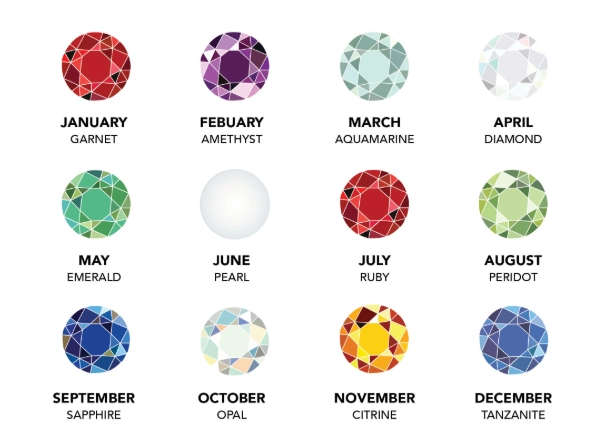
Quick Takeaway: Your modern birthstone list is mostly standardized by organizations like the Jewelers of America, but there are traditional and alternative stones too. The "right" stone can be the modern one, the traditional one, or simply the one you're drawn to.
What Exactly is a Birthstone?
Before we dive into the monthly breakdown, let's clear up what we're talking about. A birthstone is simply a gemstone that's associated with a person's birth month. The idea is ancient—think Biblical times and the Breastplate of Aaron describing twelve stones. But the modern list we commonly use today? That was standardized much later, in the early 20th century, mainly to help jewelers sell more jewelry (a practical, if not slightly unromantic, origin story).
There are usually three main types referenced in any good birthstone list:
- Modern Birthstones: The list most widely accepted in the U.S. and many other places, established by the Jewelers of America in 1912 and updated a few times since. This is the list you'll see in most mall jewelry stores.
- Traditional Birthstones: These come from older, often 15th-18th century Polish, Russian, or Arabic traditions. They can be completely different from the modern ones and are a cool alternative if the modern stone doesn't speak to you.
- Mystical/Alternative Birthstones: These are based on Tibetan or other astrological traditions from even earlier times. They add another layer of choice.
My personal opinion? The modern list is a great default, but don't feel boxed in by it. If you're a December baby who finds turquoise boring and loves the deep red of garnet, go for it! The best birthstone list is the one that helps you find a gem you'll actually love and wear.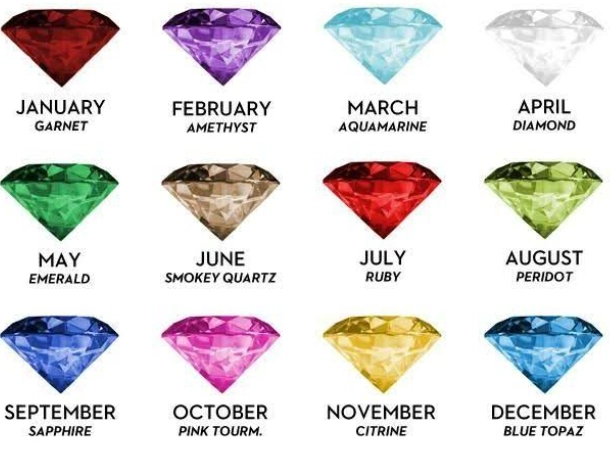
The Complete Monthly Birthstone List
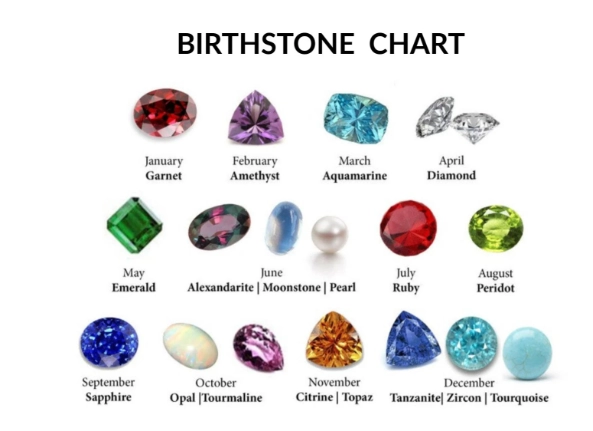
Alright, here's the core of it. I've organized this birthstone list into a table because, let's face it, comparing gems side-by-side is way easier. We'll look at the modern primary stone, its classic color, a bit about its hardness (on the Mohs scale, where 10 is diamond-tough), and the key meaning or vibe associated with it.
| Month | Modern Birthstone | Classic Color | Hardness (Mohs) | Key Symbolism |
|---|---|---|---|---|
| January | Garnet | Deep Red | 6.5 - 7.5 | Protection, friendship, trust |
| February | Amethyst | Violet Purple | 7 | Peace, courage, stability |
| March | Aquamarine | Pale Blue | 7.5 - 8 | Serenity, clarity, courage |
| April | Diamond | Colorless | 10 | Strength, eternal love, innocence |
| May | Emerald | Vivid Green | 7.5 - 8 | Rebirth, love, wisdom |
| June | Pearl / Alexandrite / Moonstone | White, Color-Change, Sheen | 2.5 (Pearl) / 8.5 (Alex.) | Purity, luck, intuition |
| July | Ruby | Vivid Red | 9 | Passion, vitality, wealth |
| August | Peridot / Spinel / Sardonyx | Lime Green, Various | 6.5 - 7 | Strength, harmony, protection |
| September | Sapphire | Royal Blue | 9 | Wisdom, loyalty, nobility |
| October | Opal / Tourmaline | Play-of-Color, Multi | 5.5 - 6.5 (Opal) | Hope, creativity, inspiration |
| November | Topaz / Citrine | Yellow-Orange | 8 (Topaz) | Friendship, joy, abundance |
| December | Turquoise / Zircon / Tanzanite | Sky Blue, Blue, Violet-Blue | 5 - 6 (Turq.) | Success, fortune, healing |
See how some months, like June, August, October, and December, have multiple modern stones? That's an official update to the birthstone list, giving people more options. October used to be just opal, but tourmaline was added later. I think that's a smart move—opal is stunning but delicate, so tourmaline offers a tougher, often more affordable alternative with every color imaginable.
Diving Deeper: A Month-by-Month Breakdown
The table gives you the snapshot, but each stone has its own personality. Let's walk through the year and talk about what makes each one special, and sometimes, a little tricky.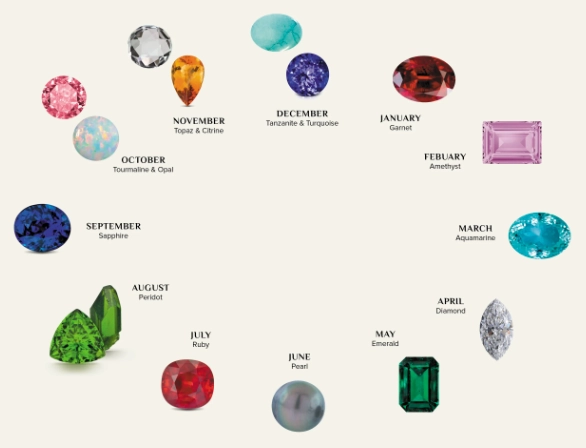
January - Garnet
Most people picture that classic deep red, like a pomegranate seed (that's actually where the name comes from). But here's a fun fact your typical birthstone list might not mention: garnet comes in a rainbow of colors—greens, oranges, even rare blues. The green variety, called tsavorite, is particularly stunning and rivals emerald. The downside? That common red almandine garnet can look a bit... dull in poor lighting. It needs good light to really sparkle. For a January birthday, I'd suggest looking at a rhodolite garnet if you want a more vibrant, raspberry-red hue.
February - Amethyst
A perennial favorite and one of the most affordable gemstones on the birthstone list. Its purple color ranges from light lilac to deep, velvety royal purple. It's a type of quartz, so it's durable enough for daily wear (a solid 7 on the Mohs scale). Historically, it was thought to prevent intoxication—the name comes from the Greek "amethystos," meaning "not drunken." A charming idea, though I wouldn't test it! The one critique some have is that it's so common it can feel less "special." I disagree. A well-cut, deeply colored amethyst is breathtaking.
March - Aquamarine
The color of serene tropical waters. This stone is almost always heat-treated to get rid of greenish tones and enhance that pure blue, which is a standard and accepted practice. It's very clear and sparkly, usually with few inclusions. My advice? Go for a slightly darker blue if you can find it; the very pale stones can sometimes look washed out, especially in small sizes. It's a great alternative to diamond for an engagement ring if you want something less traditional but still hard-wearing.
April - Diamond
The king of gems. No birthstone list creates more immediate recognition. Its supreme hardness (a perfect 10) makes it ideal for jewelry you never take off. But let's talk about the elephant in the room: ethics and cost. The diamond industry has a complex history. Today, it's crucial to ask about provenance. Look for terms like "Canadian diamonds" with tracking, or consider high-quality lab-grown diamonds. They are physically, chemically, and optically identical to mined stones but often cost significantly less and have a clear ethical footprint. It's a personal choice, but one worth thinking about.
May - Emerald
Lush, vivid green. Emeralds are almost always included (have internal flaws), and that's part of their character—jewelers call it the "jardin," French for garden. A flawless emerald is exceptionally rare and pricey. Because of these inclusions and its good-but-not-great hardness, emerald can be brittle. The classic "emerald cut" was developed specifically to reduce the risk of chipping at the corners. If you're clumsy like me, maybe save an emerald ring for special occasions rather than everyday knocks.
June - The Triple Threat
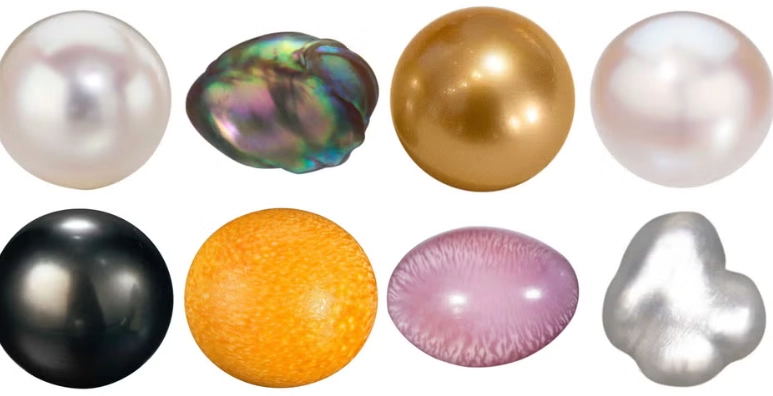
June has the most diverse modern birthstone list. Pearls are organic, grown in mollusks. They're soft and can be damaged by acids (perfume, sweat), so they require care. But their luster is timeless. Alexandrite is the magic trick of gemstones—it changes color from green in daylight to red under incandescent light. It's rare and expensive. Moonstone has that mysterious, glowing adularescence (a floating light effect). For a June gift, I'd base the choice on personality: classic and elegant (pearl), unique and magical (alexandrite/moonstone), and budget.
July - Ruby
The red sister to sapphire (both are corundum). A fine ruby is one of the most valuable gemstones. The prized color is "pigeon's blood" red—a pure, vibrant red with a hint of blue. Most rubies are heat-treated to improve color and clarity, which is standard. Be wary of very cheap "rubies"; they might be garnet or glass. A real ruby's red seems to glow from within. It's a stone of passion, and it carries that energy in its price tag too.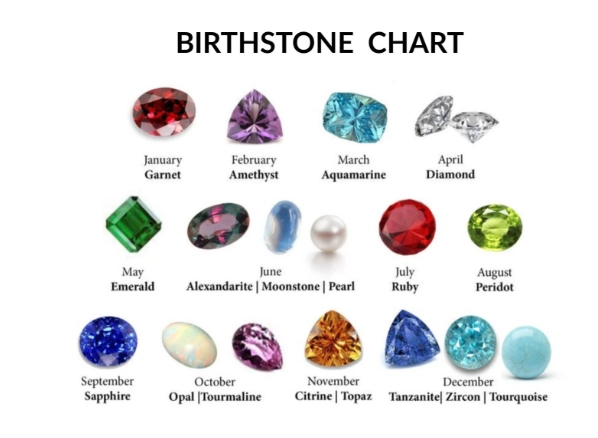
August - Peridot
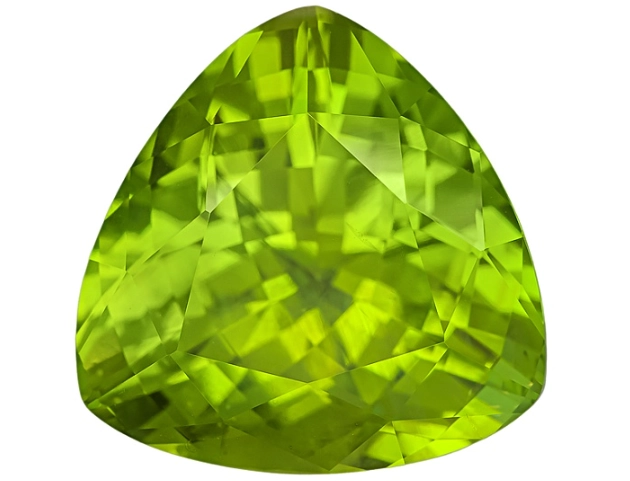
That bright, limey green is unmistakable. It's one of the few gemstones that only comes in one color (though shades vary from yellow-green to olive). It's formed deep in the earth's mantle and sometimes arrives in meteorites! How cool is that? Peridot is relatively affordable but can be included. It's not the hardest stone, so keep it away from sharp blows. I love peridot for summer birthdays—it looks like a drop of sunlight.
September - Sapphire
While blue is classic, sapphires come in every color except red (that's a ruby). Pink, yellow, orange (padparadscha), even black and white. They are incredibly durable (Mohs 9), second only to diamond. This makes them arguably the best all-around gemstone on the birthstone list for active lifestyles. A sapphire engagement ring is a fantastic, durable, and unique choice. The famous royal blue comes from trace elements of iron and titanium.
October - Opal and Tourmaline
Opal is the queen of play-of-color, flashing every hue of the rainbow. It's a hydrated silica gel, so it contains water. This makes it sensitive to extreme heat and dryness, and it's relatively soft. Some people still believe the old superstition that opals are bad luck for those not born in October—absolute nonsense, in my view. Tourmaline, its modern partner, is a workhorse. It's tough, comes in dazzling pinks, greens, and bi-colors (like watermelon tourmaline), and is generally more affordable than opal. For an October birthday, you really can't go wrong.
November - Topaz and Citrine
Here's where a lot of confusion happens. The birthstone list says topaz, and most people think of the abundant, vibrant blue topaz in jewelry stores. That blue is almost always created by irradiating and heating colorless topaz. Natural blue topaz is very pale. Imperial topaz, a gorgeous orange-pink, is the rarest and most valuable. Citrine, the other November stone, is the yellow-to-orange variety of quartz. It's almost always heat-treated amethyst (again, a standard practice). It's sunny, affordable, and durable. Be aware: much "citrine" on the market is actually just baked amethyst with a washed-out, brownish color. Look for a nice, natural-looking yellow.
December - Turquoise, Zircon, Tanzanite
December's birthstone list offers incredible variety. Turquoise is an opaque blue-to-green phosphate mineral, often veined with matrix (host rock). It's porous and can be damaged by chemicals and oils. Treat it gently. Zircon is a brilliant, high-dispersion gem that comes in blues, browns, and colorless varieties. Don't confuse it with cheap cubic zirconia (CZ), which is a synthetic diamond simulant. They're totally different! Tanzanite is a stunning violet-blue variety of zoisite, found only in one place on earth: Tanzania. Its pleochroism means it shows different colors from different angles. It's softer (6-7), so it's better for protected settings.
How to Use This Birthstone List (Beyond Just Your Month)
Finding your own stone is just the beginning. A good birthstone list is a tool for connection.
Gift-Giving Goldmine: This is the most obvious use. A piece of jewelry with someone's birthstone shows you put thought into it. But think outside the ring or necklace. What about cufflinks, a tie pin, a watch with a birthstone dial, or even a high-quality pen with a stone inlay?
The "Family Tree" or "Mother's Ring": This is a beautiful tradition. A ring or pendant set with the birthstones of your children, your partner, or your entire immediate family. It's a wearable story. When designing one, consider the color harmony of the stones. A good jeweler can help arrange them in a pleasing way.
Choosing an Alternative Stone: Don't like your modern birthstone? Check the traditional list! For example, the traditional birthstone for April is sapphire, for June is agate. You can also choose by your zodiac sign or simply by the color or meaning that resonates with you. The birthstone list is a guide, not a prison.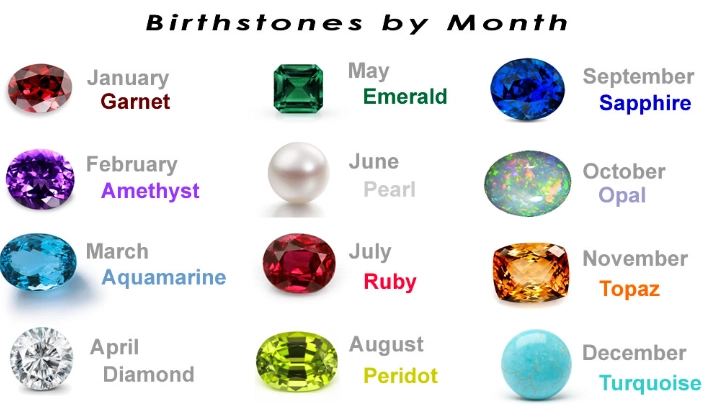
Common Birthstone Questions Answered
After talking to friends and readers, certain questions pop up again and again. Let's tackle them.
Final Thoughts on Choosing From a Birthstone List
At the end of the day, a birthstone list is a wonderful starting point for finding meaning in gemstones. It connects us to tradition, to our personal timeline, and to the people we care about.
But don't let it limit you.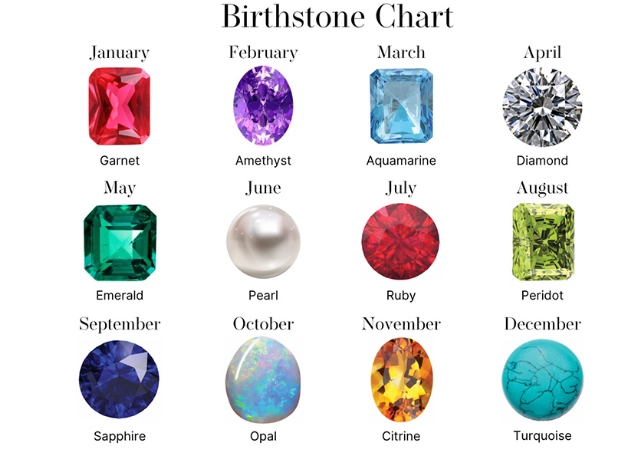
The best stone for you is the one that makes you pause when you see it, the one whose color brings you joy, the one that feels like "you." Maybe that's the classic modern choice. Maybe it's the older traditional one. Maybe it's a different stone altogether whose story speaks to you.
Use this guide, this birthstone list, as a map. Not a set of instructions. Look at the colors, read about the histories, consider the practicality. Then trust your gut. The right gem has a way of finding its person.
So, what's your birthstone? And more importantly, do you love it, or is there another on the list calling your name?