You've probably seen the list. January gets garnet, April gets diamond, and so on. It's neat, it's personal, and it makes for an easy gift idea. But have you ever stopped to wonder where this list actually came from? Or why your August-born friend might have a peridot pendant while her sister wears sardonyx? The story behind birthstones is a lot messier, more fascinating, and frankly, more human than that tidy little chart lets on. It's a tale that stretches from the breastplate of a biblical high priest to the marketing meetings of 20th-century jewelers.
Stick with me, and I'll show you what most articles gloss over. We'll dig into the ancient origins, unpack why the "official" list isn't so official, and give you the straight talk on how to actually choose and care for a birthstone piece you'll love for years, not just because a chart told you to.
What You'll Discover
The Ancient (and Surprising) Origins
Let's clear one thing up right away. The idea of wearing a gemstone for your specific birth month is a relatively recent invention. The real origin story starts with the idea of wearing stones for their symbolic or talismanic power, linked to the stars, the seasons, or the calendar year.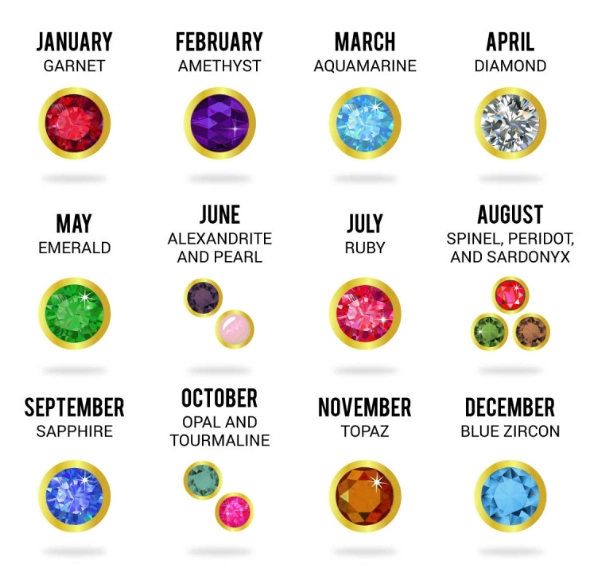
The most famous starting point is the Breastplate of Aaron, described in the Book of Exodus. It featured twelve gemstones, each representing one of the tribes of Israel. Later, scholars like Josephus in the 1st century AD and St. Jerome in the 5th century made a connection between these twelve stones and the twelve signs of the zodiac. The idea was that you'd wear all twelve stones throughout the year, changing them monthly to harness their celestial power.
For centuries, the practice was about accumulating stones, not being assigned one at birth. You collected them, you wore them in sequence. The shift to a single, permanent birthstone is a much more modern, and commercially convenient, concept.
How the Modern List Became a Mess
Fast forward to 1912. The jewelry industry in the United States was booming, but it needed standardization. The National Association of Jewelers (which later became Jewelers of America) met and officially adopted a standardized list of birthstones. This is the list that forms the backbone of what we know today.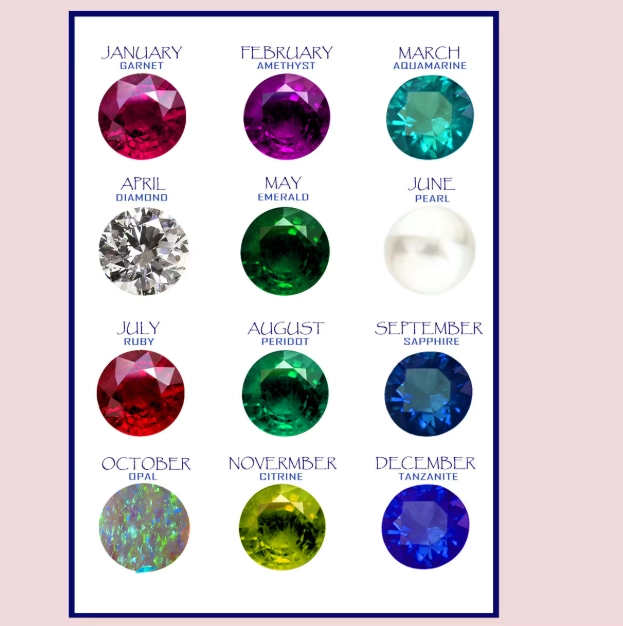
Why did they do it? Uniformity. It made marketing and inventory easier for every jeweler in the country. But this list wasn't pulled from an ancient text. It was a consensus-based, commercial creation.
And it hasn't been static. It's been updated several times—in 1937, 1952, 2002, and 2016—adding "alternative" stones. June is the perfect example. Originally just pearl, it later added alexandrite (1937) and moonstone (2002). Why? Because natural alexandrite is incredibly rare and expensive. Moonstone offered a beautiful, more affordable option. These updates were often driven by trade associations, gem discoveries, and frankly, sales potential.
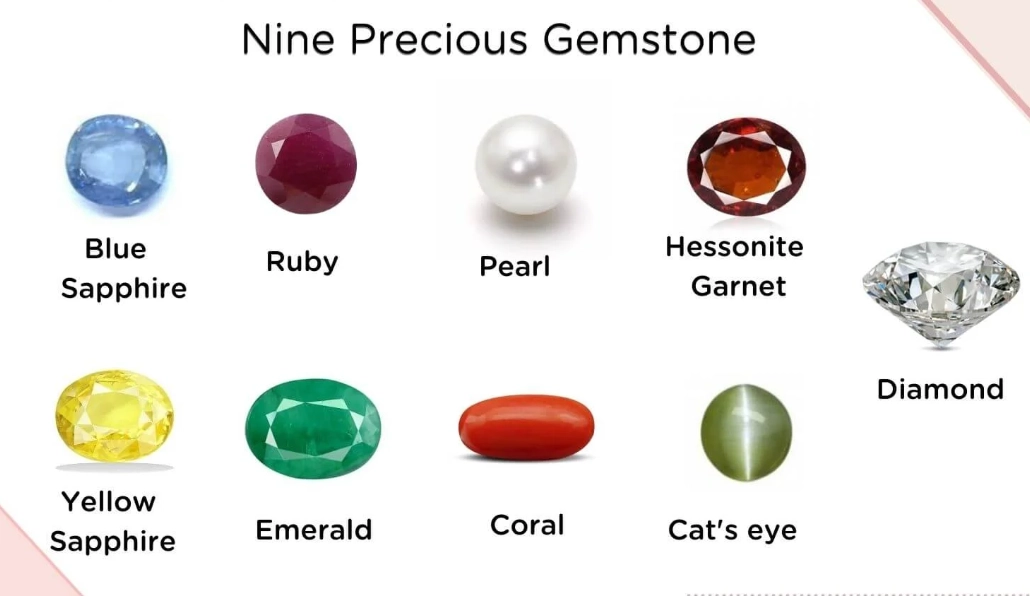
Don't get me wrong, the list has value. It gives us a shared cultural shorthand. But it's not a decree from history. Other cultures have their own lists. In Hindu tradition, for example, there are nine planetary gemstones (Navaratna) linked to astrological charts, not birth months. Tibetan and Ayurvedic traditions have their own systems.
So if you're a December baby feeling stuck with turquoise or zircon, know that in older European lists, ruby was sometimes associated with December. You have more heritage to draw from than you think.
A Real Guide to the Stones, Month by Month
Okay, with that context, let's look at the modern American list with clearer eyes. This table isn't just a chart; it's a starting point for understanding what each stone is really about, beyond the basic color.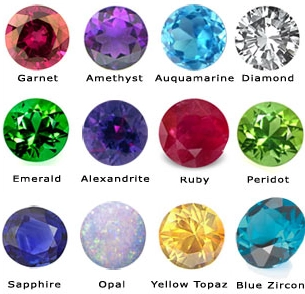
| Month | Primary Stone(s) | What You Should Really Know | Durability Note (Mohs Scale) |
|---|---|---|---|
| January | Garnet | Not always red! Explore tsavorite (green), demantoid (green), or rhodolite (purple-red). A far more versatile family. | 6.5-7.5 (Good for rings with care) |
| February | Amethyst | Once as valuable as ruby, until huge deposits were found in Brazil. Now offers incredible value in large, clean stones. | 7 (Durable, great for daily wear) |
| March | Aquamarine, Bloodstone | Aquamarine's pale blue deepens with larger carat weights. Bloodstone is an opaque, grounding alternative few consider. | 7.5-8 (Aqua: Very good) |
| April | Diamond | The modern king. But remember, the historical April stone was more likely a white sapphire or clear quartz. | 10 (The hardest) |
| May | Emerald | Expect inclusions ("jardin"). A flawless emerald is a red flag. Oil treatments are standard; ask about them. | 7.5-8 (Can be brittle, chip-prone) |
| June | Pearl, Alexandrite, Moonstone | A study in contrasts. Cultured pearls are real. Real alexandrite changes color (green/red). Moonstone has that glow (adularescence). | Pearl: 2.5-4.5 (Very soft) |
| July | Ruby | The pigeon's blood red is the ideal, but a vibrant, slightly purplish red can be just as stunning and less costly. | 9 (Excellent) |
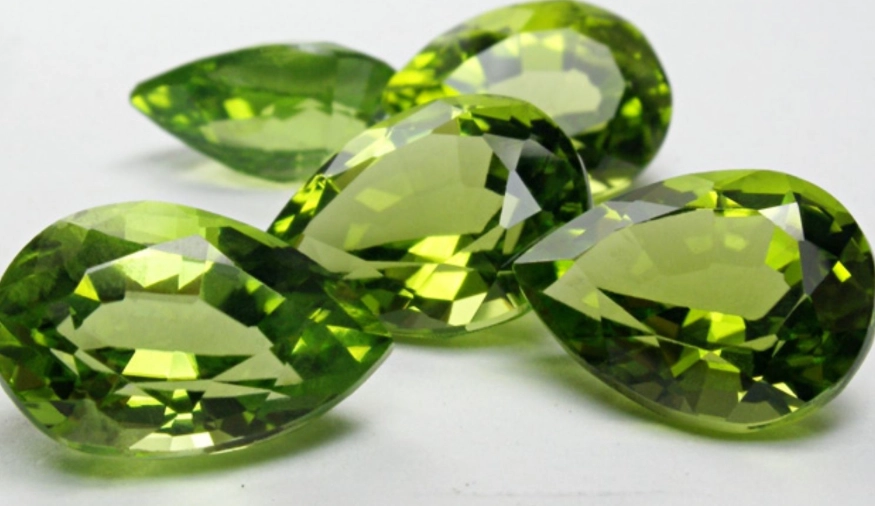
| August | Peridot, Sardonyx, Spinel | Spinel (added 2016) is the insider's pick. It comes in brilliant reds and hot pinks, often mistaken for ruby/sapphire. | Peridot: 6.5-7 (Okay) |
| September | Sapphire | Blue is classic, but "fancy" sapphires in pink, yellow, and padparadscha (orange-pink) are breathtaking. | 9 (Excellent) |
| October | Opal, Tourmaline | Opal is hydrated silica—it can crack if dried out. Tourmaline comes in every color; watermelon (pink/green) is a favorite. | Opal: 5.5-6.5 (Delicate) |
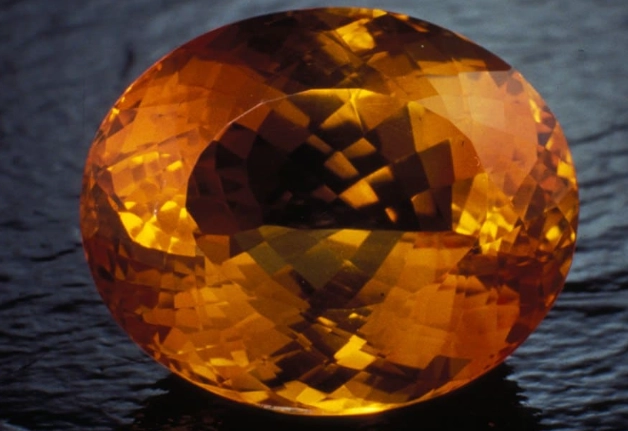
| November | Topaz, Citrine | Most blue topaz is colorless stone irradiated to be blue. Citrine is often heat-treated amethyst. Natural citrine is paler. | 8 (Topaz: Very good) |
| December | Turquoise, Zircon, Tanzanite | Tanzanite is only found in one place (Tanzania). Zircon has incredible fire but is brittle. Turquoise needs protection from chemicals. | Tanzanite: 6-7 (Care needed) |
See? Each stone has a personality, a practical consideration, and a little secret. This is the stuff that makes choosing one interesting.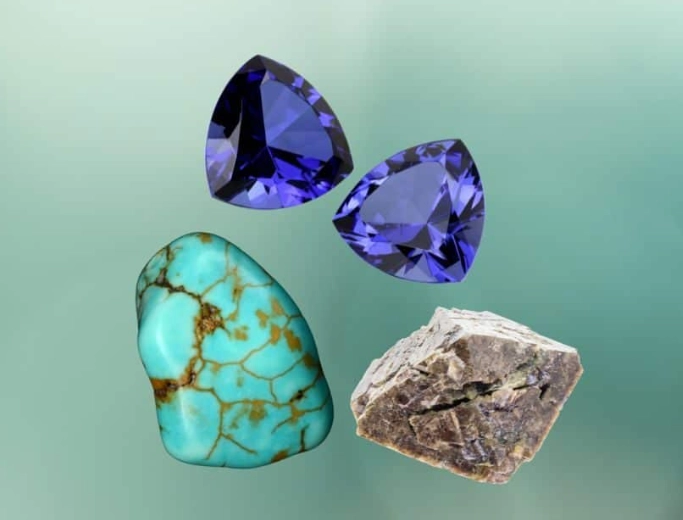
How to Actually Choose Your Birthstone Jewelry
Forget the pressure of picking the "right" one. Here's a more practical framework.
1. Consider Your Lifestyle First
Are you looking for an everyday ring? Then a soft pearl, opal, or emerald might give you anxiety. A sapphire, diamond, or garnet would be more resilient. For occasional wear pendants or earrings, you can be more adventurous with delicate stones. I once saw a stunning opal ring ruined by a year of daily gardening—the stone dried out and cracked. Heartbreaking and avoidable.
2. Look Beyond the Primary Color
Love the idea of garnet but hate red? Look at a green tsavorite garnet. Drawn to sapphire but blue isn't your thing? A padparadscha sapphire is uniquely beautiful. The birthstone families have variety. Resources from the Gemological Institute of America (GIA) are fantastic for exploring these varieties.
3. Decide on Natural vs. Lab-Created
This is a personal choice, not a moral one. Natural stones have geological history. Lab-created stones (like sapphire, emerald, diamond) are physically and chemically identical, often with fewer flaws and a lower price. For something like a large, rich blue topaz, it's almost certainly lab-created—and there's nothing wrong with that. Just know what you're buying.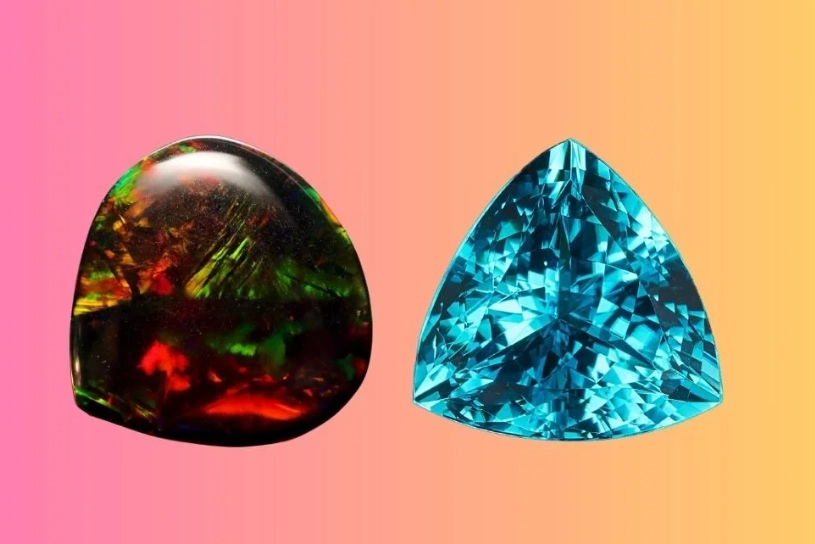
4. The Setting Matters as Much as the Stone
A bezel setting (metal wrapped around the edge) protects a soft stone like turquoise far better than a prong setting. For a high-profile ring, a flush or gypsy setting can protect the stone from knocks. Talk to your jeweler about the best setting for the specific stone and your daily life.
The goal is a piece you'll wear and enjoy, not one that lives in a box because you're afraid to damage it.
Your Top Birthstone Questions, Answered
Can I wear a birthstone that isn't for my birth month?
How can I tell if my birthstone jewelry is real or synthetic?
What's the best way to clean my birthstone ring at home?
Why are there multiple birthstones for some months?
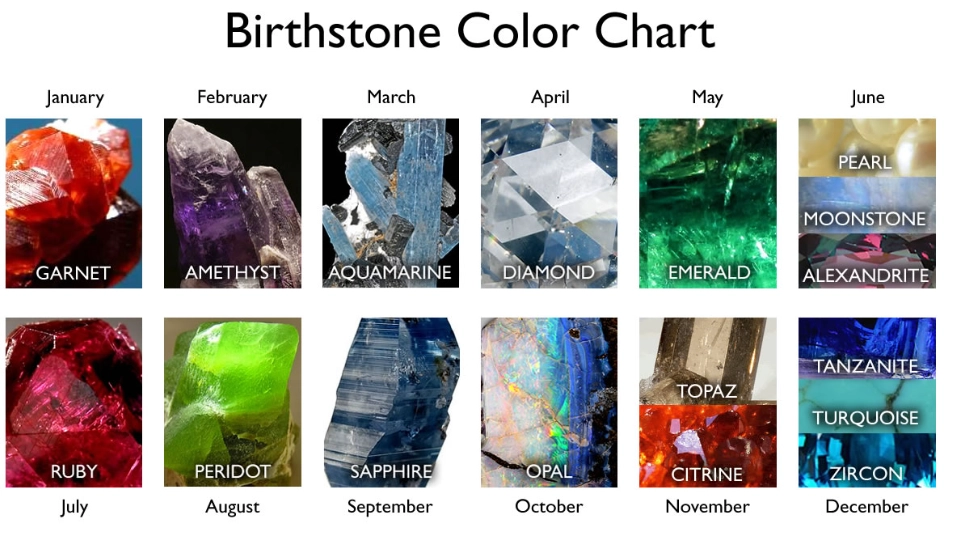
So there you have it. Birthstones are a wonderful tradition, a launchpad for personal style, and a connection to a deep history of gem lore. Just remember that the chart is a guide, not a rulebook. The best birthstone fact of all? The one that brings you joy is the right one for you.