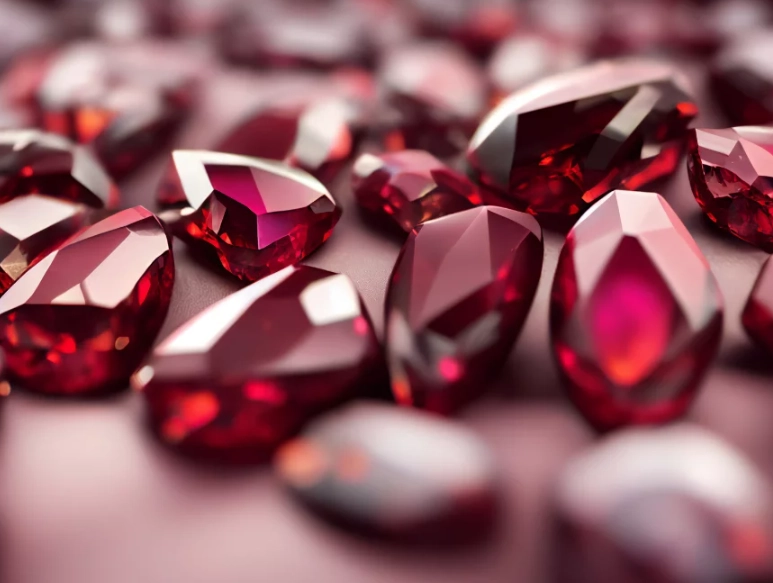
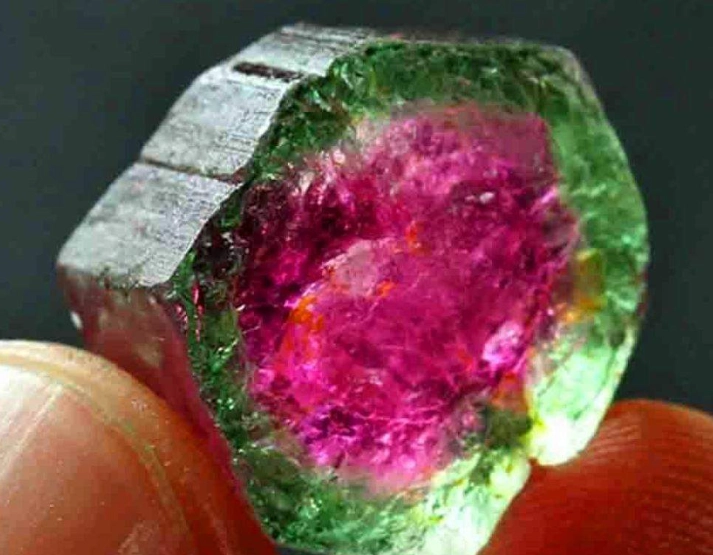
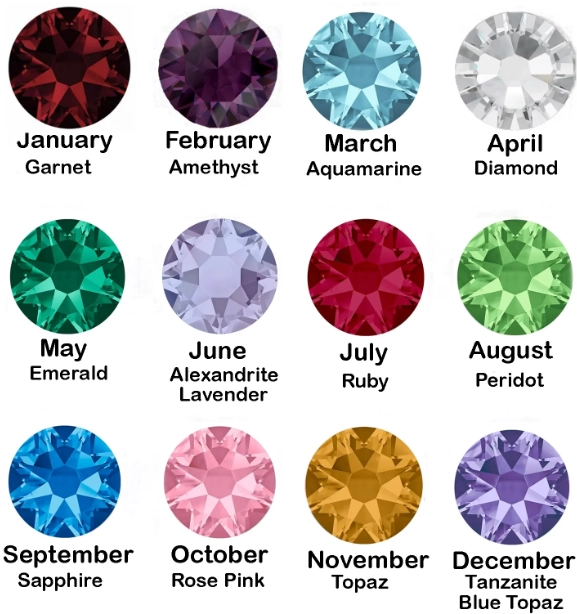
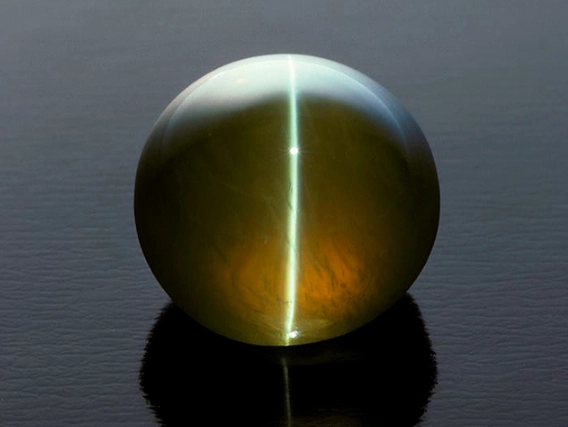
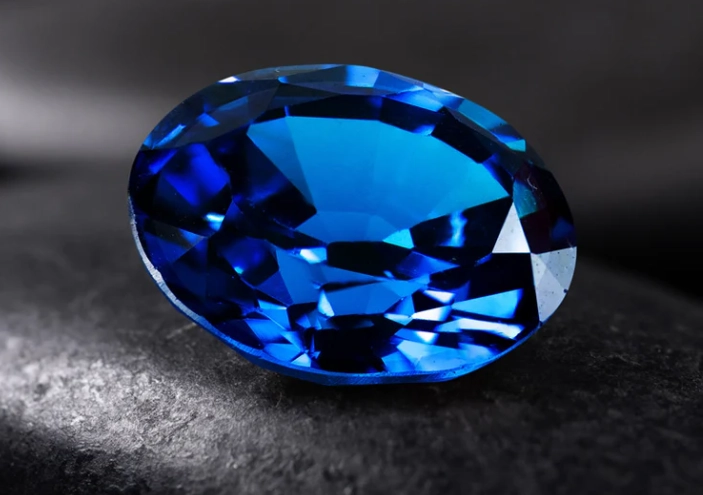
Let's be honest, the classic diamond solitaire is beautiful, but it's not for everyone. More and more couples are looking for something that shouts "you" instead of just "engagement." That's where birthstone engagement rings come in. They're not just colorful alternatives; they're wearable stories, pieces of personal history, and a declaration that your love is unique.
But where do you start? But how do you make sure it's not just a pretty ring, but a durable, everyday piece of jewelry?
Quick Navigation: What's Inside
- Why a Birthstone Ring Might Be Your Perfect Fit
- Choosing Your Stone: It's More Than Just Your Month
- Modern Birthstone Engagement Ring Design Ideas
- Pairing Your Gem: How Metal Choice Changes Everything
- Keeping Your Ring Beautiful: Care & Maintenance Must-Knows
- Your Birthstone Ring Questions, Answered
Why a Birthstone Ring Might Be Your Perfect Fit
Think about it. An engagement ring is a symbol. A diamond symbolizes enduring strength, which is great. But what if your symbol could be your story? A deep blue sapphire that matches his eyes. A vibrant emerald that reminds you of your first hike together. A fiery opal that captures her unpredictable, wonderful spirit.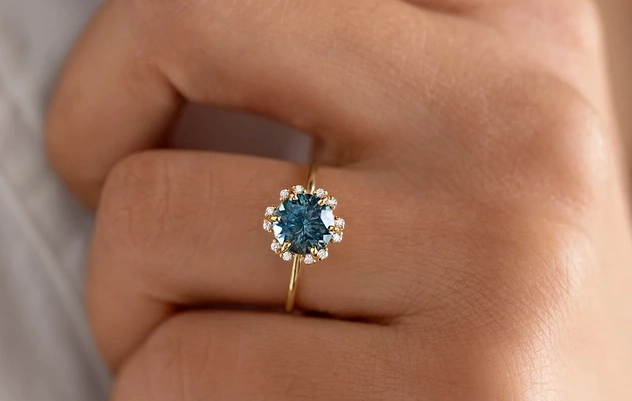
That's the core appeal. It's hyper-personalization.
There's also a practical side. For some, it's a more accessible entry point into fine jewelry. A high-quality colored gemstone can often be more affordable per carat than a diamond of similar grade, letting you get a more substantial center stone for your budget. It's also a chance to support more sustainable or ethical sourcing. Many jewelers now specialize in traceable gemstones, like Montana sapphires or responsibly-mined tourmalines. Organizations like the Gemological Institute of America (GIA) provide crucial education on origin and treatment.
Expert Aside: A mistake I see often? People get so caught up in the color meaning they forget the practicality. You love the idea of a pearl for its purity symbolism? That's lovely, but a pearl is a 2.5 on the Mohs hardness scale. It will scratch if you so much as look at a grocery cart. Always, always pair your emotional connection with a reality check on durability for daily wear.
Choosing Your Stone: It's More Than Just Your Month
Okay, so you're intrigued. The first step isn't looking at rings—it's understanding the star of the show: the gemstone.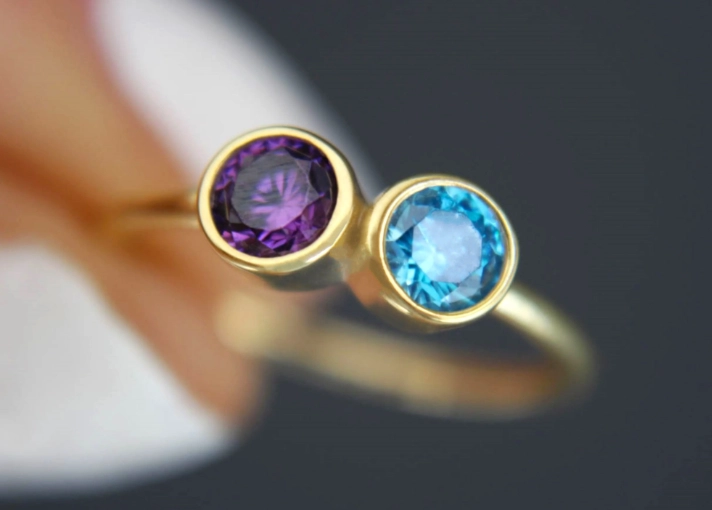
Forget just picking your birth month. That's one way, but it's the most basic. Maybe your partner's birthstone is peridot (August), but they absolutely hate green. That's a problem. The modern approach is to choose a stone for its personal significance. Is there a stone from a place you traveled together? A color that dominates your shared home? The birthstone of a child or a beloved family member?
Here’s the part most blog posts gloss over: the technical specs. This isn't boring jargon; it's what determines if your ring will last a lifetime or a season.
The Non-Negotiable: Hardness & Durability
We measure gemstone hardness with the Mohs scale, from 1 (talc) to 10 (diamond). For a ring you'll wear every single day, you generally want a stone rated 7.5 or higher. Below that, you're looking at a high risk of scratches and abrasions. This doesn't mean you can't use softer stones, but it dictates the design. A stone like opal (5.5-6.5) needs a ultra-protective bezel setting and the understanding it's a more delicate piece.
Let's break down some popular choices, moving beyond the basic birthstone list.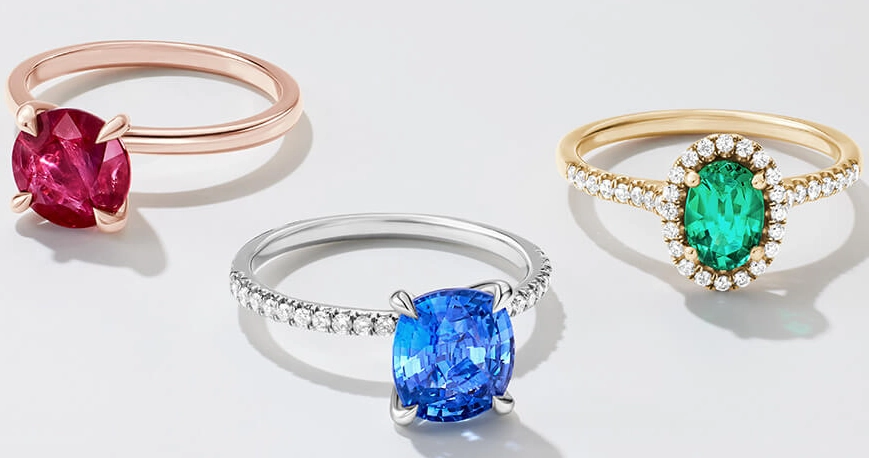
| Gemstone (Example) | Mohs Hardness | Key Considerations for a Ring | Style Vibe |
|---|---|---|---|
| Sapphire (Not just blue!) | 9 | Exceptional for daily wear. Look for stones with good clarity. Heat treatment is common and stable. | Classic, Regal, Versatile |
| Ruby | 9 | Same durability as sapphire. Can have inclusions ("silk") that add character. Watch for treated glass-filled stones. | Bold, Passionate, Vintage |
| Emerald | 7.5-8 | Softer and often included. Requires a protective setting (bezel or halo). Avoid ultrasonic cleaners. | Elegant, Garden-Inspired, Art Deco |
| Aquamarine | 7.5-8 | Pale blue, often very clean. Durable enough but can chip on edges. Best in slightly protected settings. | Ethereal, Coastal, Modern |
| Morganite | 7.5-8 | Beautiful peach-pink. Good hardness, but can look dusty if not cut well. Often needs rose gold to enhance color. | Romantic, Soft, Contemporary |
| Spinel | 8 | A fantastic diamond alternative. Comes in reds, blues, pinks. Often untreated, brilliant sparkle. | Unexpected, Brilliant, Geometric |
| Opal (Solid Australian) | 5.5-6.5 | Delicate. Must have a full bezel, low profile, and worn with great care. Not for active lifestyles. | Artistic, Magical, Bohemian |
See how the choice immediately leads to design? That's the key.
Modern Birthstone Engagement Ring Design Ideas
Now for the fun part. Let's translate that stone into a ring. Ditch the image of a clunky, old-fashioned colored stone ring. Today's designs are sleek, intentional, and breathtaking.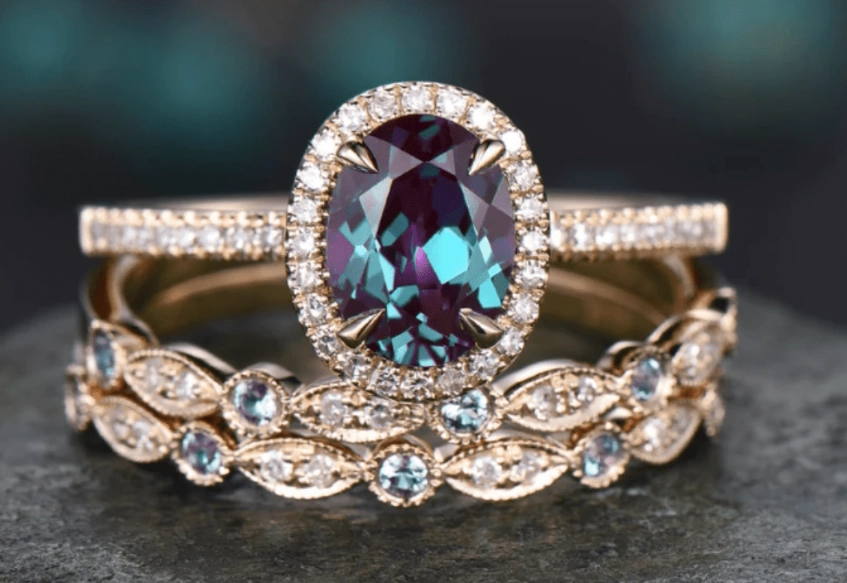
The Modern Solitaire
It's not just for diamonds. A beautifully cut colored gemstone in a simple four-prong or six-prong setting is stunning. Think an emerald-cut aquamarine in white gold. A round red spinel in yellow gold. The clean lines let the stone's color do all the talking.
The Symbolic Halo
A halo of smaller diamonds (or even smaller sapphires) around a central colored stone does two things: it protects the center stone's girdle (the edge) and makes it look larger and more luminous. A dark blue sapphire with a micropavé diamond halo is a classic for a reason.
The "Toi et Moi" (You & Me)
This trend features two stones side-by-side. It's perfect for combining birthstones—one for each partner. Or a diamond and a birthstone. The key is choosing two stones that complement in shape and size. A pear-cut morganite next to a pear-cut diamond. So personal, so chic.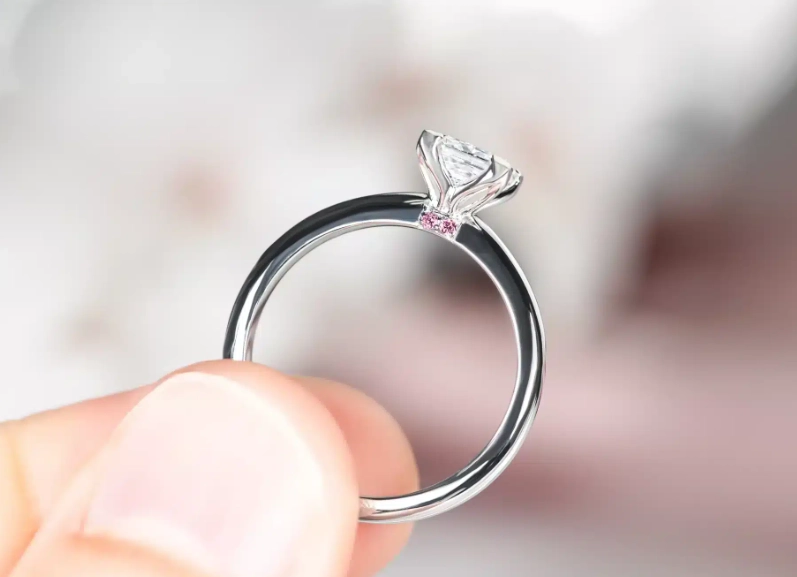
The Three-Stone Story
Past, present, future. Or, you, me, and us. The three-stone ring is a narrative. The center could be a diamond flanked by two birthstones. Or the center could be the birthstone, with diamonds on the side. This design offers tons of balance and sparkle.
Asymmetric & East-West Designs
For the truly unique. Setting an oval or emerald-cut stone horizontally (east-west) feels incredibly modern. Or designs with open spaces, asymmetrical accents, and organic metalwork that cradles the stone. These work brilliantly with nature-inspired stones like peridot or tourmaline.
Designer's Note: I once worked with a client who wanted a tanzanite ring. Gorgeous stone, but only a 6.5 on Mohs. We designed a "cage" or basket-style setting where the metal almost cradled the stone from below, with a low profile. It looked like a work of art and protected the gem. Sometimes the limitation inspires the most creative solution.
Pairing Your Gem: How Metal Choice Changes Everything
The metal isn't just a holder; it's a frame. And the frame changes the picture.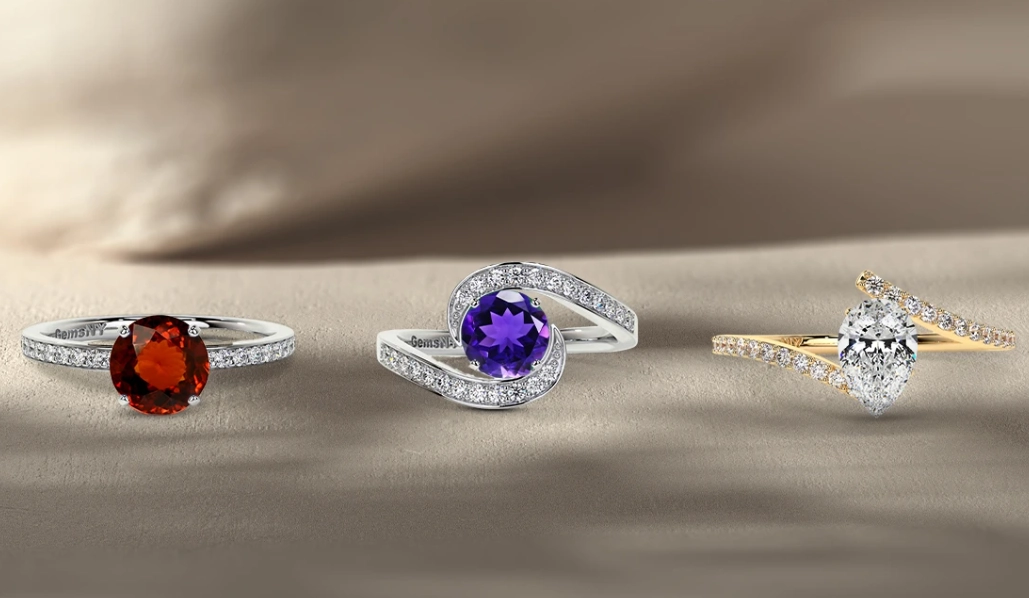
- White Gold/Platinum: Makes cool-toned stones (sapphire, aquamarine, diamond) pop with a crisp, modern look. Can sometimes make warm stones (citrine, some garnets) look slightly duller by contrast.
- Yellow Gold: Warm and classic. It makes blues and greens look richer (think emerald in yellow gold—iconic). It enhances warm stones like morganite, making the peach tone glow.
- Rose Gold: The contemporary favorite. It creates a gorgeous, romantic blend with pinks (morganite, pink sapphire), peaches, and even some blues. It can mute very green stones slightly.
My personal rule? If the stone has a warm undertone, use a warm metal. If it's cool, you can go either way. Always ask your jeweler to place a loose stone on different metal samples. The difference can be surprising.
Keeping Your Ring Beautiful: Care & Maintenance Must-Knows
A birthstone ring isn't "set it and forget it." Different gems have different needs.
First, know your enemy: heat, harsh chemicals, and sharp blows. Take your ring off when doing dishes, gardening, or hitting the gym. It's not being precious; it's being smart.
Second, cleaning. Most stones (sapphire, ruby, spinel) are fine with a soft toothbrush, mild dish soap, and lukewarm water. Never use an ultrasonic cleaner for emeralds, opals, tanzanite, or any stone with fractures or liquid inclusions. It can shatter them. When in doubt, a soft cloth is your best friend.
Finally, insurance and check-ups. Get your ring appraised by a certified gemologist (find one through Jewelers of America or similar) and insure it immediately. Have your jeweler check the prongs and setting every 6-12 months. A loose stone in a softer gem can lead to a catastrophic chip.
Your Birthstone Ring Questions, Answered
Let's get specific. Here are the questions I hear most in my studio.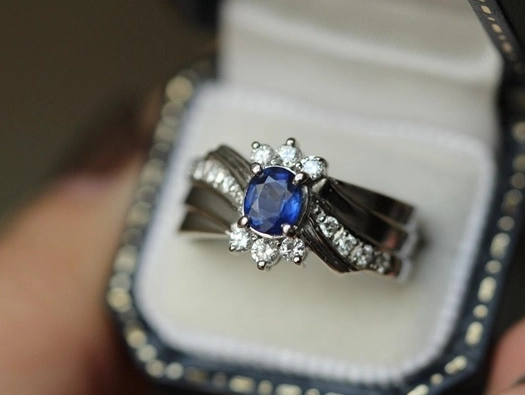
Are birthstones durable enough for daily wear in an engagement ring?
Can I combine a birthstone with a traditional diamond?
How much does a custom birthstone engagement ring cost?
How do I personalize it beyond just the month?
The journey to a birthstone engagement ring is more involved than picking a preset design. It's a collaboration. It requires asking questions, understanding materials, and working with a jeweler who listens. But the result isn't just a ring. It's a one-of-a-kind artifact of your love story, with a color and sparkle that's uniquely yours. That's an idea worth building on.