If you or someone you love is a Gemini born in June, you've hit the birthstone jackpot. You don't get just one gem—you get three: Pearl, Moonstone, and Alexandrite. It's like the universe knew Geminis needed options to match their multifaceted personalities. But here's the thing most basic guides miss: not all three stones resonate equally with every Gemini. Choosing the right one isn't just about picking the prettiest; it's about which facet of the Gemini spirit it speaks to. Is it the adaptable communicator, the intuitive dreamer, or the intellectual chameleon? Let's cut through the generic lists and talk about what these stones really mean, how to pick one that fits, and the insider details most jewelers won't tell you.
Your Quick Guide to June's Gemini Gems
Why Three Stones Fit the Twins Perfectly
Geminis, ruled by Mercury, are known for duality, curiosity, and adaptability. A single stone feels too limiting. The trio of June birthstones offers a spectrum that mirrors this complexity.
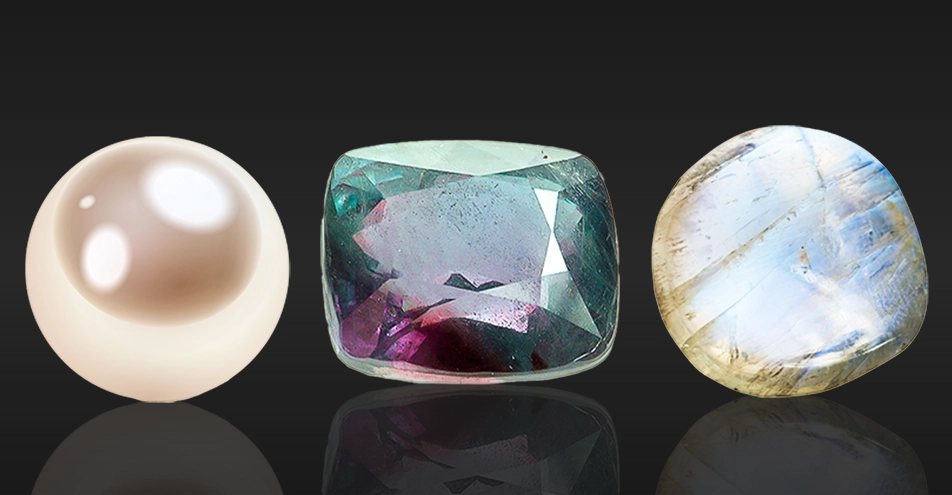
Pearl connects to the communicative, social side. It's calm, wise, and formed through layered experience—much like a Gemini's ability to absorb information and reflect it in conversation. It’s the stone for the Gemini who thrives on connection and brings people together.
Moonstone taps into the intuitive, reflective, and sometimes mysterious twin. Its shimmering adularescence is like the ever-changing flow of ideas and moods. This is for the Gemini who lives in their imagination and values emotional depth as much as intellectual spark.
Alexandrite is the ultimate chameleon gem, famously changing color from green in daylight to red under incandescent light. It embodies the Gemini's adaptability, intellectual agility, and love for the extraordinary. It’s for the Gemini who embraces change and loves to surprise.
The Stone-by-Stone Breakdown: Beyond the Basics
Let's get concrete. What do you actually need to know about each one?
| Gemstone | Key Trait for Gemini | What to Look For (The Real Quality Factors) | Price Reality & Accessibility |
|---|---|---|---|
| Pearl | Clarity, Communication, Wisdom | Luster (sharpness of reflection) is king. Then surface cleanliness, then shape. A high-luster, slightly blemished pearl looks richer than a perfect, dull one. Nacre thickness matters for durability. | Wide range. Freshwater pearls are very accessible. South Sea or Tahitian pearls are luxury items. Don't assume "cultured" means cheap—it's the standard for quality pearls. |
| Moonstone | Intuition, Creativity, Flow | The blue sheen (adularescence) is prime. A clear, almost transparent body with a strong, rolling blue flash is top-tier. Milky or white sheen is more common and affordable. | Generally affordable. High-quality blue flash moonstone from places like Sri Lanka commands a premium, but it's still within reach for most fine jewelry budgets. |
| Alexandrite | Adaptability, Wonder, Intellect | Color change strength and contrast. A strong green-to-red change is ideal. Many stones show a murky brownish-green to purplish-red. Clarity is secondary—most have inclusions. | Natural alexandrite is one of the rarest and most expensive gems. Prices are per carat and skyrocket with size and color quality. Lab-created alexandrite is a stunning, ethical, and affordable alternative with the same physical properties. |
The Alexandrite Reality Check
Let's pause on alexandrite because there's so much confusion. Many people search for it, get shocked by the price of a natural stone, and give up. What they don't know is that modern lab-created alexandrite isn't a "fake." It's chemically identical (Chrysoberyl) and grown in a controlled environment. The color change is often even more dramatic. For a Gemini who wants the magic without the astronomical cost or ethical mining concerns, it's a brilliant choice. I often recommend it as the default for jewelry unless someone specifically wants and can invest in a natural collector's piece.
The Moonstone Glow Secret
With moonstone, the cut is everything. A cabochon (smooth, domed) cut is necessary to display the sheen. But a skilled cutter will orient the stone so the blue flash floats across the dome when you move it. A poorly cut moonstone has a static, dull sheen. Always ask to see the stone moved under light before buying.
How to Choose the Right June Birthstone for a Gemini
This is where we move from theory to practice. Ask these questions:
For the Gemini's Lifestyle: Is this for everyday wear (durability matters—pearls are soft, moonstone and alexandrite are tougher)? Is it for a ring that will take knocks (avoid pearls) or a pendant (anything goes)?
For Personal Style: Does the Gemini wear mostly cool tones (silver, white gold) or warm tones (yellow gold, rose gold)? Pearl and moonstone lean cool. Alexandrite, magically, works with both.
For the "Which Twin?" Test: Is the Gemini more outgoing and social (Pearl), deeply introspective and creative (Moonstone), or intellectually playful and love a good surprise (Alexandrite)?
You can also combine them. A necklace with a moonstone flanked by two small pearls? That's a literal and beautiful representation of the twins.
Expert Care & Common Mistakes to Avoid
Here’s the advice from a decade of seeing gems come back damaged.
Moonstone & Alexandrite: Both are decently hard (6-6.5 and 8.5 on the Mohs scale respectively), but can be chipped by a sharp blow. Ultrasonic cleaners are usually safe for lab alexandrite but a firm no for moonstone and pearls. Stick to warm soapy water and a soft brush for cleaning.
A subtle but common mistake with birthstone jewelry is getting the setting wrong. A delicate pearl needs a protective setting like a bezel or a deep basket. Prong settings for alexandrite should be checked regularly as the stone's value makes loss a real risk.
Your Burning Questions Answered
I'm a Gemini looking for an everyday ring. Is moonstone or alexandrite durable enough?
Alexandrite (especially lab-created) is the better choice for an everyday ring. At 8.5 on the Mohs scale, it's very resistant to scratches. Moonstone (6-6.5) is softer and more prone to scratching and chipping on a ring that's constantly exposed to bumps. If you love moonstone, consider it for a pendant or earrings instead.
Why does my pearl necklace look dull and yellowed after years in the jewelry box?
Pearls need moisture. Sealing them in a plastic bag or a very dry environment dehydrates them, causing them to lose luster and potentially crack. That yellowish tint is aging of the organic material. To prevent this, store pearls in a soft pouch (not airtight) with a damp cloth in the drawer occasionally, or simply wear them regularly. Once severely dehydrated, a jeweler can sometimes re-polish them, but the damage is often permanent.
Is lab-created alexandrite a "fake" birthstone for a Gemini?
Not at all. This is a major misconception. Lab-created alexandrite is real alexandrite—same chemical composition, crystal structure, and physical properties, including the famous color change. It's just grown in a lab instead of the earth. For most people, it's the only way to own a sizeable, clean, vividly color-changing alexandrite. It's an ethical, sustainable, and stunningly beautiful option that fully qualifies as a June birthstone. The magic is in the color change, not the mine it came from.
What's a sure sign I'm looking at a low-quality moonstone being sold as high-end?
If the seller only shows it in one static photo. Quality moonstone is about movement. Ask for a video or see it in person. If the sheen is a weak, cloudy white that doesn't move much, it's a lower-grade stone, regardless of what the listing says. Also, be wary of stones described as "rainbow moonstone"—that's often a trade name for white labradorite, a different (though lovely) gemstone. True blue flash moonstone has a more specific, floating light.
Can I clean my pearl and alexandrite jewelry in the same way?
No, this is a quick way to ruin pearls. Alexandrite (lab or natural) is tough and can handle mild ultrasonic cleaners or steam cleaners used by jewelers. Pearls are destroyed by these methods. The universal safe method for all three is lukewarm water with a drop of mild dish soap, a very soft brush (like a baby toothbrush), a gentle swish, and a thorough pat dry with a soft, lint-free cloth. When in doubt, go gentle.
The world of June birthstones for Gemini is rich and wonderfully varied. It’s not about finding the single "best" stone, but about discovering which gem resonates with the unique individual behind the star sign. Whether it’s the classic wisdom of a pearl, the dreamy glow of a moonstone, or the captivating color-change of an alexandrite, each offers a way to celebrate the complex, brilliant, and dual-natured spirit of the Gemini. Armed with these specifics—from what to look for in a quality stone to how to avoid common care pitfalls—you’re ready to make a choice that’s as intelligent and distinctive as the Gemini it represents.