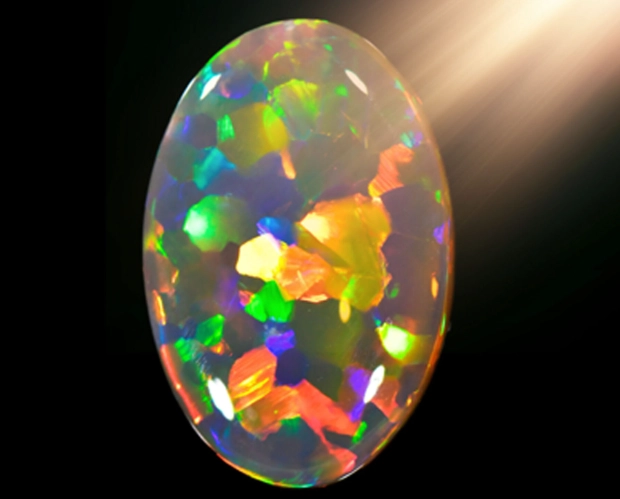
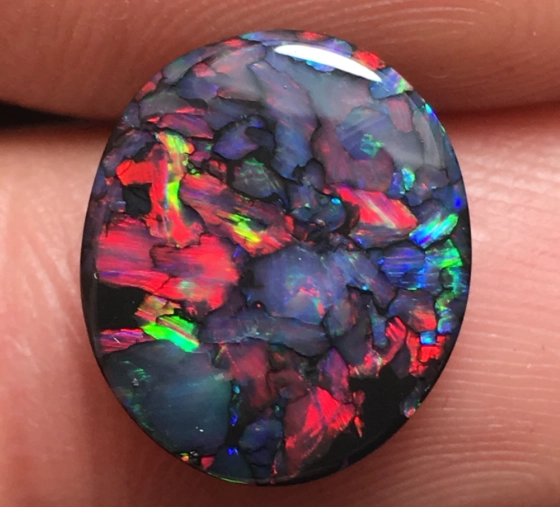
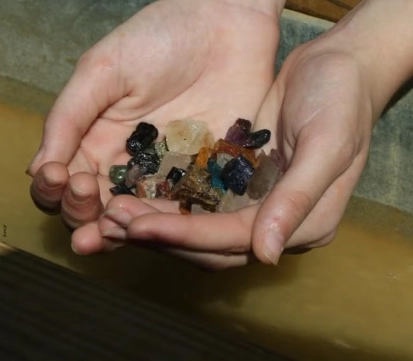
Ask anyone about the opal birthstone meaning, and you'll likely hear "October" and "pretty colors." That's like describing the ocean as "big and wet." It misses the point entirely. The true meaning of the opal birthstone is a layered story of fire, water, myth, and personal transformation. It's not just a gem for October babies; it's a symbol of hope, creativity, and the unpredictable beauty of life itself. If you've ever been captivated by its shifting play-of-color, you've felt a hint of that deeper meaning. Let's dig past the surface sparkle.
What's Inside: Your Quick Guide
Opal as a Birthstone: The Official Story
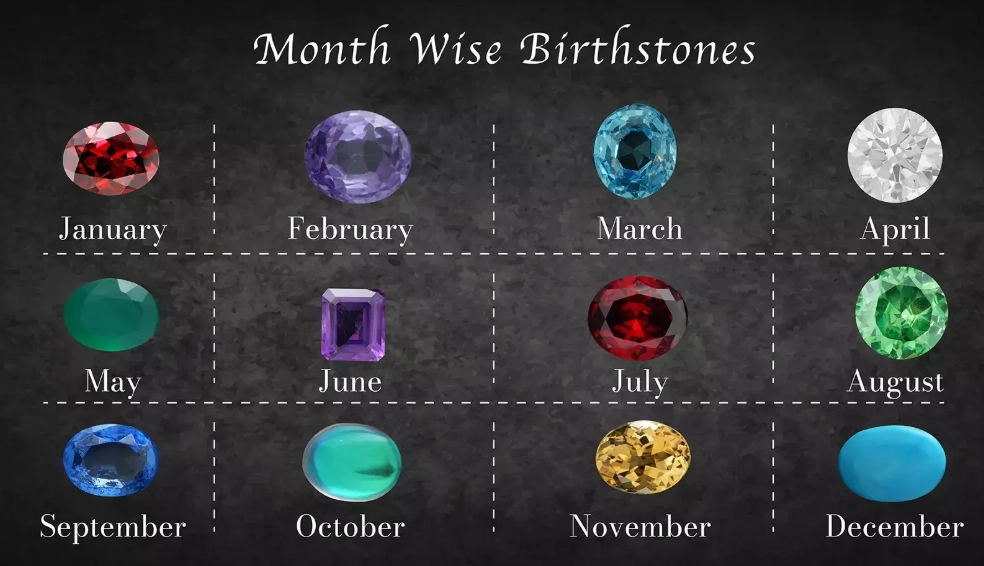
The opal is the undisputed modern birthstone for October, a designation solidified by the American National Association of Jewelers in 1912. It also shares the spotlight as a zodiac stone for Libra (Sept 23 - Oct 22) and Scorpio (Oct 23 - Nov 21). This dual association is perfect because the opal's meaning touches on both Libra's love for beauty and balance and Scorpio's depth and capacity for transformation.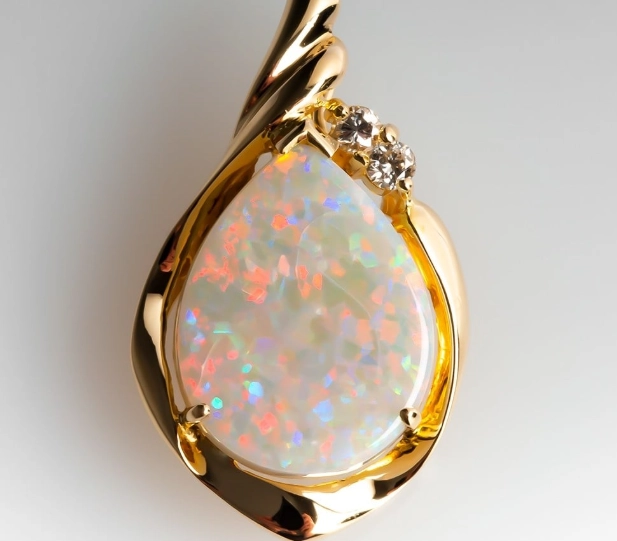
But its history runs much deeper. Ancient Romans called it "opalus," meaning "precious stone." They prized it above all others for its ability to contain the colors of every gem. Arabic legends said opals fell from the heavens in flashes of lightning. For centuries, it was a talisman for royalty and seers, believed to grant foresight and amplify personal traits.
Here's a detail most articles skip: The opal's status as an October birthstone wasn't always secure. In the 19th century, a popular novel (Sir Walter Scott's Anne of Geierstein) wrongly portrayed an opal bringing bad luck to its wearer. This fiction tanked opal sales in Europe for decades. It took a savvy marketing campaign by Australian miners—who had just discovered massive deposits—to reposition the opal as a symbol of hope and good fortune, ultimately leading to its official birthstone status. So, its modern meaning is partly a story of brilliant recovery.
The Deeper Symbolism and Meaning of Opal
So, what does an opal symbolize beyond your birth month? Its meaning is woven from its unique physical properties.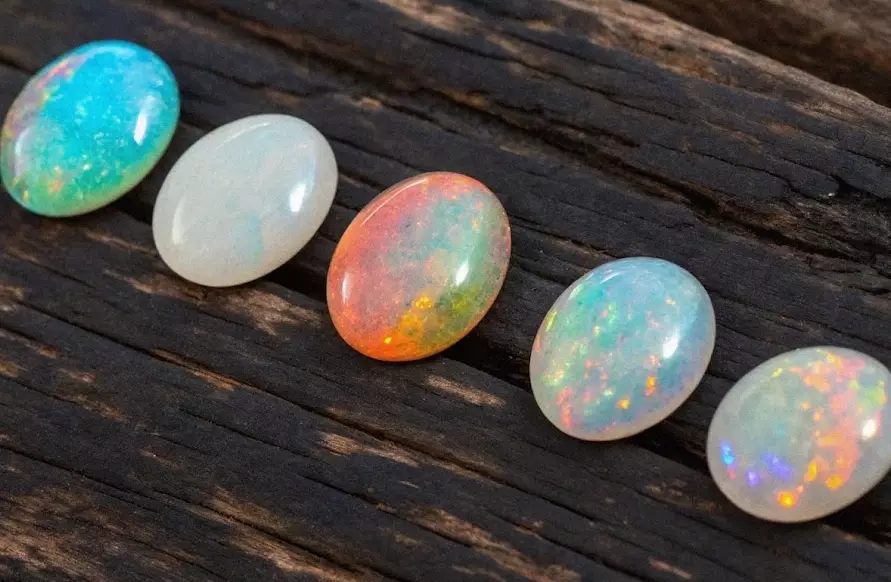
Hope, Purity, and Truth: Historically, opal has been linked to these virtues. Its milky or clear body color evokes purity, while its hidden, fiery colors symbolize hope emerging from within.
Love and Passion: This is a big one, especially for fiery red and orange opals. It's considered a stone of emotional amplification. It doesn't create love but is said to intensify existing feelings—both good and bad. That's why some historical figures loved it and others feared it.
Creativity and Imagination: The ever-changing play-of-color is a direct metaphor for the creative mind. Wearing opal is often associated with unlocking inspiration, embracing uniqueness, and flowing with new ideas. If you're in a creative rut, an opal might serve as a beautiful reminder to look at things from a different angle.
The Most Important Symbol: Change and Transformation. This is the core of the opal birthstone meaning. No two opals are alike, and no single opal looks the same from one moment to the next. It represents the beauty of embracing change, personal growth, and life's wonderful unpredictability. It's the antithesis of a rigid, fixed mindset.
I once had a client, a woman leaving a corporate career to start a pottery studio, who chose an opal pendant. For her, it wasn't about October; it was a tangible symbol of her own "play-of-color," her shift from structured black-and-white to a more fluid, creative life. That's the real power of its meaning.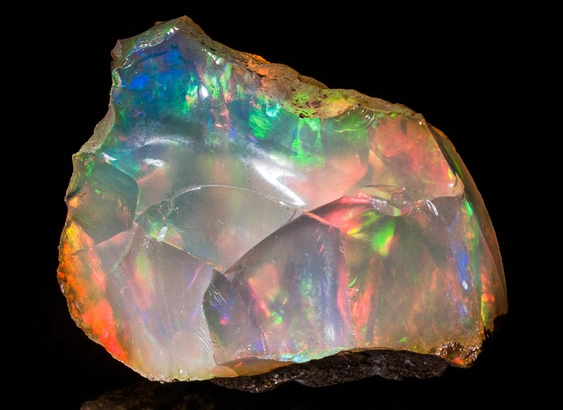
A Practical Guide to Opal Types and Colors
Understanding the types of opal is crucial because the base color dramatically affects its appearance, value, and even the subtle shade of its meaning. Let's clear up the confusion.
| Opal Type | Body Color (Background) | Key Characteristics & Play-of-Color | What It Often Symbolizes |
|---|---|---|---|
| Black Opal | Dark blue, gray, or black. | The most valuable type. The dark background makes the play-of-color incredibly vivid and dramatic, like fireworks in the night sky. Primarily from Lightning Ridge, Australia. | Depth, mystery, intensity. Amplifies the stone's inherent fire. |
| White or Light Opal | White, milky, or pale gray. | The most common type. The play-of-color appears softer, more pastel, like light shining through a prism. A classic, elegant look. | Purity, hope, innocence. A gentler, more calming energy. |
| Fire Opal | Transparent to translucent with body colors of yellow, orange, or red. | May or may not have play-of-color. Valued for its warm, fiery body color alone. Mainly from Mexico. | Passion, energy, personal power. The "spark" of creativity and action. |
| Boulder Opal | Formed attached to ironstone host rock. | Natural, rugged beauty. Thin veins of brilliant color flash against a dark brown ironstone background. A two-in-one organic art piece. | Resilience, grounding, natural beauty. Strength combined with brilliance. |
| Crystal Opal | Transparent or semi-transparent. | The play-of-color is visible through the clear body, giving it a "deep water" effect with incredible clarity and brightness. | Clarity, insight, emotional transparency. Seeing things clearly. |
Choosing a type isn't just about budget (black opal is top-tier). It's about which color story speaks to you. Do you want drama or softness? Earthy grounding or fiery passion?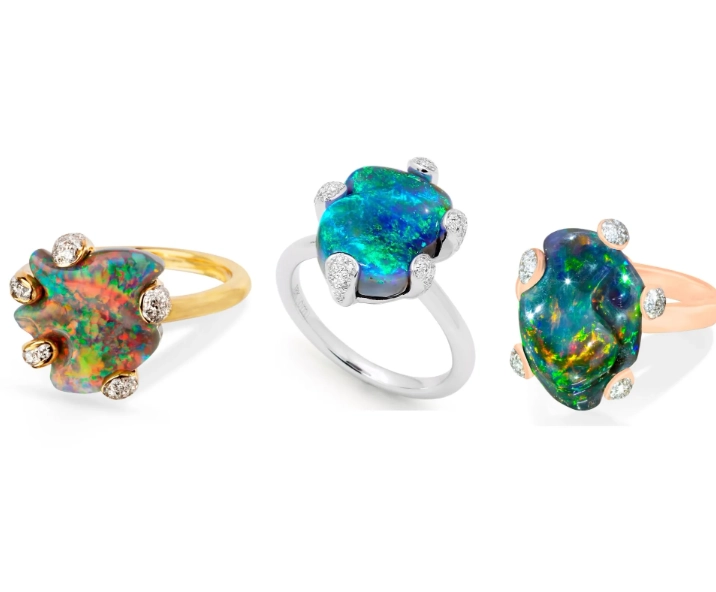
How to Choose the Right Opal For You
Let's get practical. You're sold on the opal birthstone meaning, and you want one. Here’s how to navigate the purchase without regret.
Setting a Realistic Budget and Expectation
Opal prices range from $20 for a small, simple cabochon to tens of thousands for a spectacular black opal. For a meaningful birthstone piece in solid gold, a realistic starting budget is $300-$800. This can get you a lovely white opal or a small fire opal. Don't expect a huge, flashy black opal at this price—that's a common disappointment. For a stunning statement black or boulder opal, think $2,000+.
The Shape and Cut That Matters
Opals are almost always cut en cabochon (a smooth, rounded dome) to best showcase the play-of-color. The shape—oval, round, pear, freeform—is less important than the dome's symmetry and how the color plays across it. Look for color that spreads across the surface, not just huddled in one corner.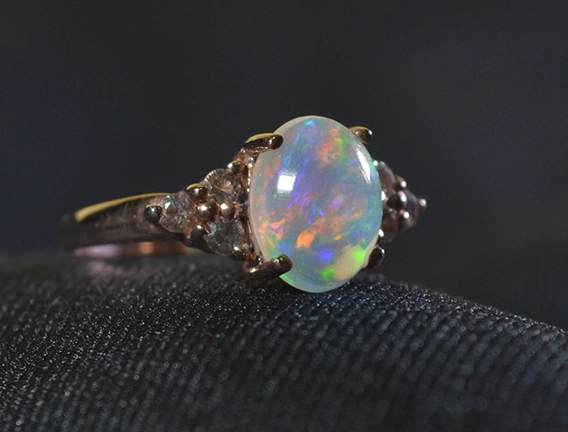
Metal and Setting: Security is Key
This is where experience talks. Opal is relatively soft (5.5-6.5 on the Mohs scale) and can be brittle. Avoid: Prong settings that are too tall or flimsy. Opt for:
- Bezel settings: A metal rim encircles the stone, offering the best protection against chips and knocks.
- Halo settings: Small diamonds or gems around the opal add sparkle and create a protective barrier.
- Pendant or earrings: These generally face less wear and tear than rings.
If you must have an opal ring (and many do), choose a low-profile bezel setting and commit to taking it off for manual tasks.
The Non-Negotiable Rules of Opal Care
Ignoring care is the fastest way to ruin your opal's meaning and beauty. Most opals contain 3-10% water. They're like a beautiful, hydrated gel.
The Golden Rule: Avoid Extreme Dryness and Sudden Temperature Changes. Don't leave your opal on a sunny windowsill, next to a heater, or in a sealed safe with a dehumidifier for months. This can cause "crazing"—fine cracks on the surface as the stone loses moisture and stresses.
Cleaning: Use only a soft, damp cloth. Never use ultrasonic cleaners, steam cleaners, or harsh chemicals. That's a one-way ticket to a dull or cracked stone.
Wearing: Put your opal jewelry on last after applying makeup, perfume, and hairspray. Take it off first when washing hands, showering, or doing dishes. This protects it from chemicals and hard knocks.
I've seen too many people treat opals like diamonds. They aren't. Think of caring for an opal like caring for a fine wood instrument—it needs a stable, moderate environment to stay in top form.