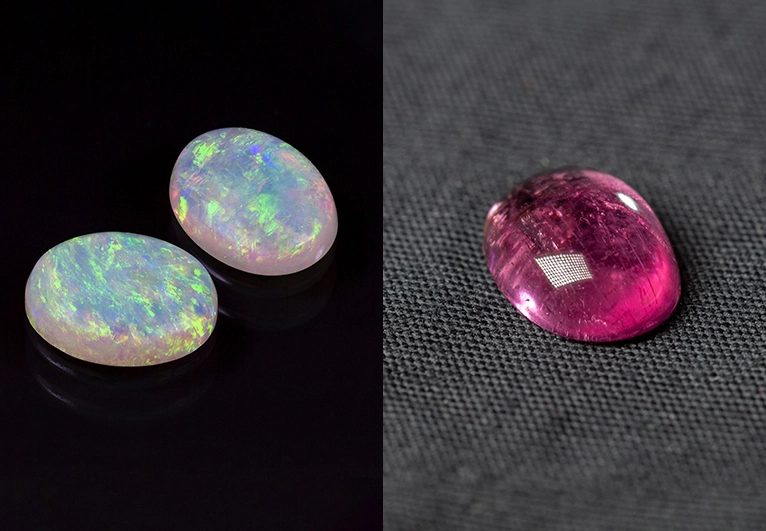
If you were born in October, you've hit the jewelry jackpot. You don't have just one birthstone to call your own—you have two. Tourmaline and opal, two of the most visually captivating gems on the planet, both claim October as their month. This isn't a mistake or a recent marketing gimmick. It's the result of a century-long evolution in gemology, culture, and commerce. The short answer? History, symbolism, and a desire for choice. But the full story is much richer, involving ancient beliefs, modern gemology, and a bit of industry politics. Let's dig into why October is uniquely blessed with this duo and what it means for you.
What's Inside This Guide
The Historical Shuffle: How the Birthstone List Evolved
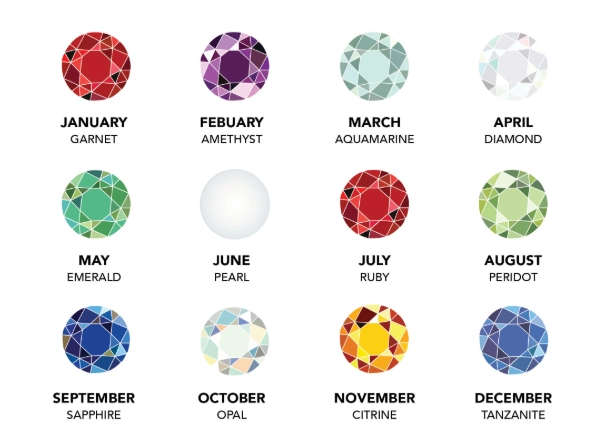
Most people think the birthstone list was handed down on stone tablets. It wasn't. It's a living tradition. The modern list we know is primarily standardized by the American Gem Trade Association (AGTA) and the Jewelers of America, but its roots are a tangled mix of biblical lore, medieval astrology, and 20th-century marketing.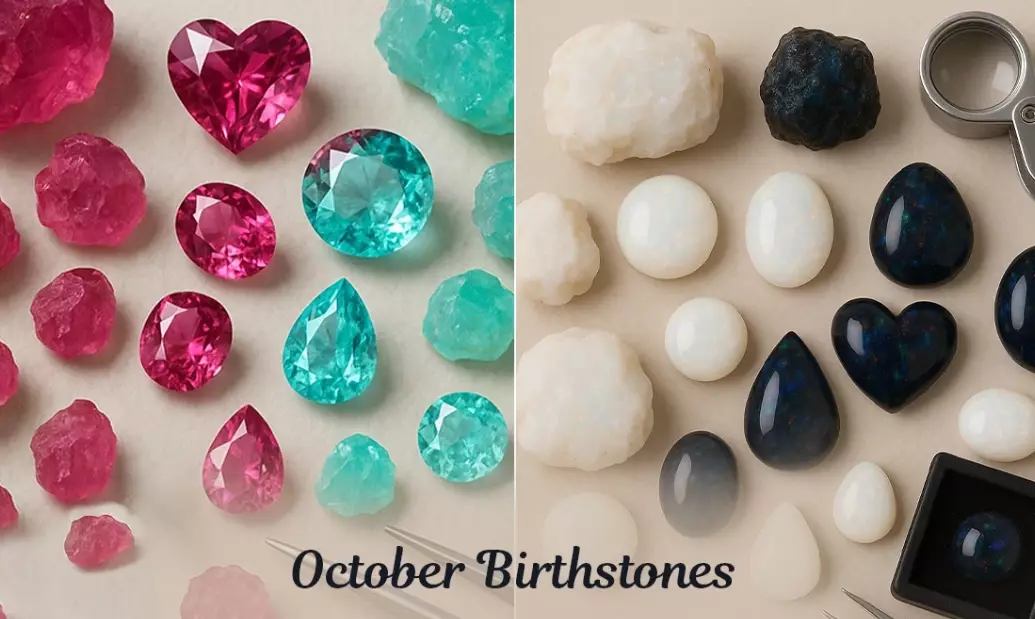
Originally, opal was the sole October birthstone. Its history is ancient. Roman scholar Pliny the Elder described it as containing "the fire of the carbuncle, the brilliant purple of the amethyst, and the sea-green of the emerald." For centuries, it was revered, though its fragility and sensitivity to dehydration (a fact often glossed over in romantic descriptions) made it a gem for careful wearers.
A Key Point Everyone Misses: The biggest misconception is that the list is fixed. In reality, different cultures and organizations have proposed variations. For example, in 1912, the National Association of Jewelers in the U.S. officially adopted a standardized list to streamline marketing. Even then, they listed only opal for October. Tourmaline's addition came later, reflecting its growing popularity and commercial availability.
Tourmaline entered the scene powerfully in the 20th century. As large deposits were discovered in places like Brazil and Maine, this incredibly diverse gemstone family captured the public's imagination. Gemologists and jewelers advocated for its inclusion, arguing its durability and vast color range (from vibrant pinks and greens to stunning watermelons) offered a practical and beautiful alternative to the more delicate opal. By the mid-20th century, it was common to see both listed. The modern official stance is one of inclusivity: October has two primary birthstones.
This evolution matters because it gives you, the wearer, agency. You're not stuck with a gem that doesn't suit your lifestyle or taste simply because of an archaic list.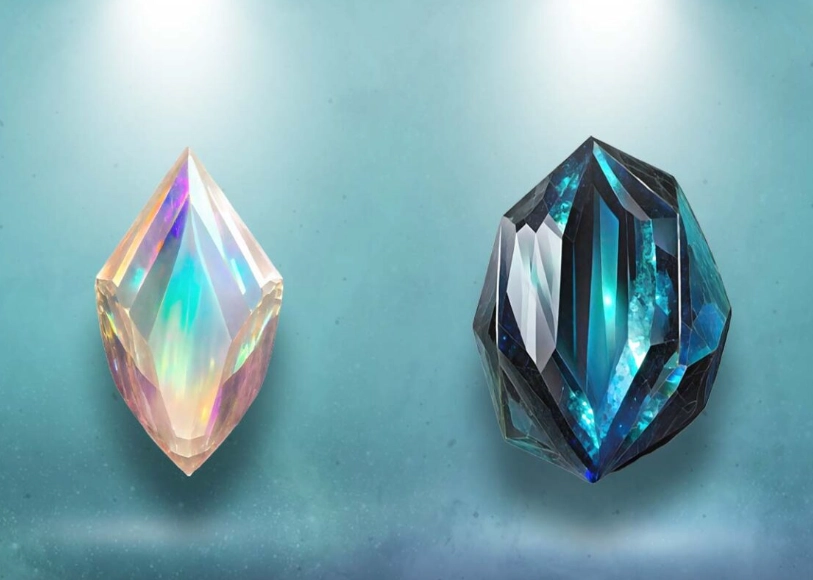
Tourmaline: The Chameleon of Gems
Calling tourmaline a "pink gem" is like calling the ocean "wet." It's technically true but misses the spectacular scope. Tourmaline is a complex mineral group, and its color comes from trace elements like iron, manganese, and lithium. This results in one of the broadest color palettes in the gem world.
Beyond Pink: The Rainbow in One Stone
While pink (rubellite) and green (verdelite) are classic October favorites, the variety is staggering:
Paraíba Tourmaline: A neon-blue or green variety colored by copper, discovered in Brazil in the 1980s. It's exceptionally rare and commands top prices. Seeing one in person is breathtaking—it looks electrified.
Watermelon Tourmaline: A crystal that's pink in the center and green on the outer edge, like a slice of watermelon. It's usually cut into slices to showcase this natural phenomenon.
Indicolite: Deep blue tourmaline, a stunning and less common choice.
Chrome Tourmaline: A vibrant green rivaling emerald, colored by chromium and vanadium.
From a practical standpoint, tourmaline is a dream. It ranks 7 to 7.5 on the Mohs scale of hardness, making it very suitable for daily wear in rings and bracelets. It has no cleavage planes, meaning it's less prone to cracking from a sharp blow than many other gems. Clean it with mild soap and warm water, and it'll look new for generations.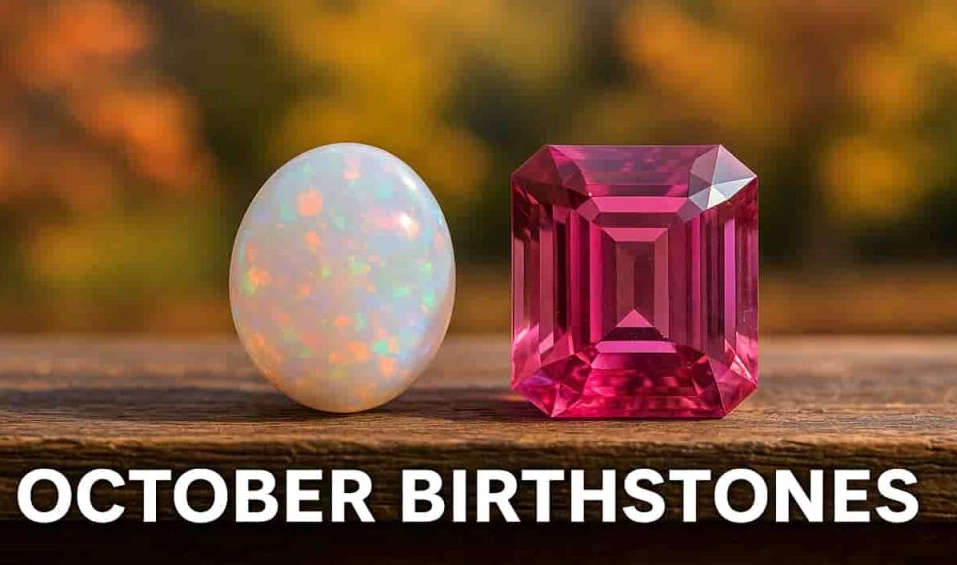
Opal: The Fire of the Earth
Opal is magic. Scientifically, it's a hydrated silica gel, but that dry description fails utterly. Its play-of-color—that shimmering dance of spectral hues—is caused by the diffraction of light through a microscopic grid of silica spheres. No two opals are identical.
Not All Opals Are Created Equal
This is where many first-time buyers get tripped up. "Opal" is a category with major internal divisions.
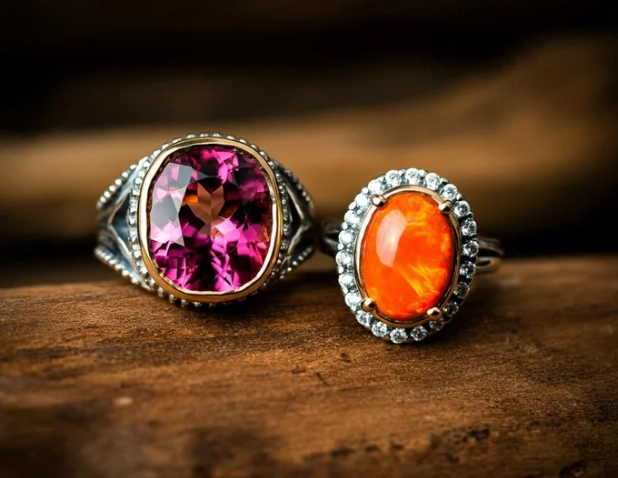
Precious Opal: This displays play-of-color. It's the classic, coveted type. Within this, you have:
- Black Opal: The most valuable, with a dark body tone (dark blue, gray, black) that makes the play-of-color pop dramatically. Mined primarily in Lightning Ridge, Australia.
- White Opal: A light body tone with play-of-color. More common and often more affordable than black opal.
- Crystal Opal: Transparent to semi-transparent with a brilliant play-of-color throughout.
Common Opal (Potch): This has no play-of-color. It can be beautiful in its own right (like milky blue or pink opal) but is fundamentally different and much less valuable than precious opal.
Opal's main drawback is its delicacy. At 5.5 to 6.5 on the Mohs scale, it's softer and more brittle. It's also porous and can be damaged by sudden temperature changes, harsh chemicals, and even prolonged dryness—it can literally crack from dehydration (a process called "crazing"). This means an opal ring isn't the best choice for a mechanic or a nurse, but it can be perfect for earrings or pendants.
Tourmaline vs. Opal: A Head-to-Head Comparison
Choosing between them? This table breaks down the essentials. Think of it as a spec sheet for your personal gem.
| Feature | Tourmaline | Opal (Precious) |
|---|---|---|
| Key Appeal | Incredible color variety & durability | Unique play-of-color, unmatched visual magic |
| Hardness (Mohs) | 7 - 7.5 (Good for daily wear) | 5.5 - 6.5 (Requires more careful wear) |
| Durability Quirk | Tough, resistant to chipping | Can be brittle; sensitive to heat, dryness, and chemicals |
| Care Instructions | Ultrasonic cleaners are usually safe. Simple soap and water works great. | Avoid ultrasonics and steam. Clean only with a damp, soft cloth. Store away from dryness. |
| Symbolism & Lore | Stone of reconciliation, friendship, and protection. Believed to inspire creativity. | Stone of hope, purity, and truth. Historically symbolized fidelity and assurance. |
| Price Range (General) | Wide. From affordable pinks/greens to extremely high for Paraíba. | Extremely wide. Common opal is cheap; fine black opal is among the most expensive gems per carat. |
| Best For... | An engagement ring, daily-wear jewelry, someone who loves color but doesn't want to baby their gem. | Statement pieces, pendants, earrings, or someone captivated by unique, ever-changing beauty. |
How to Choose Your October Birthstone: A Practical Framework
So, which one is *yours*? Don't just pick the prettiest picture. Ask yourself these questions:
1. What's your daily life like? If you're active, work with your hands, or just don't want to worry, tourmaline is the clear, sensible choice. If the piece will be for occasional, special wear, opal enters the running.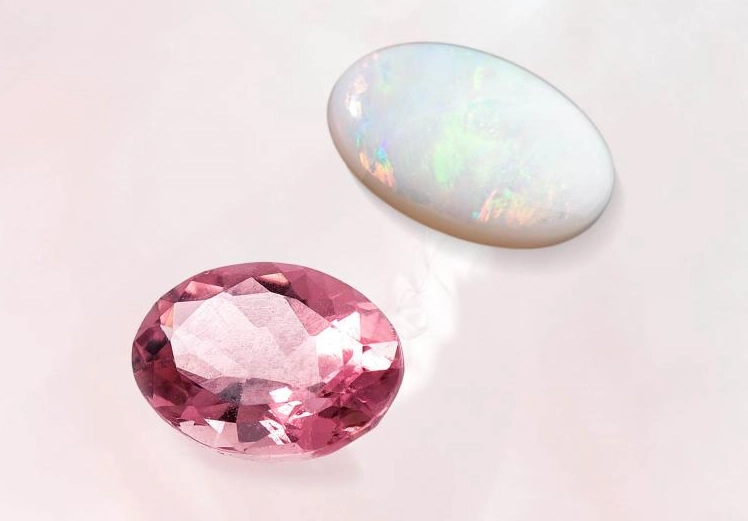
2. What are you visually drawn to? Do you love solid, saturated colors (a deep green tourmaline)? Or are you mesmerized by shifting flashes of light (a fiery black opal)? Go to a reputable jeweler and look at both in person. Photos don't do opal justice.
3. What's your budget? You can find beautiful tourmaline in most budgets. With opal, price is a direct reflection of type, color play, and body tone. A small, high-quality black opal will cost far more than a large, pretty white opal.
My personal take? After years in this field, I see people make one mistake more than any other with October stones: they buy a delicate opal for a ring they plan to wear every day, only to see it damaged within a few years. The heartbreak is real. Love opal? Get it in a pendant. Adore tourmaline? It can handle almost anything.
And remember, you don't have to choose. Many October babies build a collection featuring both. A durable, colorful tourmaline ring for everyday, and a stunning opal pendant for nights out.