Let's dive right in. If you're an October baby, you've probably been told your birthstone is the mesmerizing opal. But have you ever stopped to ask why? It's not a random assignment. The story of why opal is for October is a fascinating journey through ancient trade routes, royal intrigue, and a fundamental misunderstanding of geology that lasted for centuries. It's more than just a pretty gem; it's a piece of cultural history wrapped in a kaleidoscope of color.
I've been working with gemstones for over a decade, and the lore around opals is some of the richest—and most misunderstood—out there. Most articles just repeat the same surface-level facts. Today, we're going deeper. We'll look at the real historical origins, debunk the persistent "bad luck" myth (a pet peeve of mine), and give you practical, expert-level advice on choosing and caring for an opal that you won't find in a generic jewelry store guide.
What's Inside This Guide
The Ancient Origins: How Opal Became Linked to October
The modern birthstone list we use today is surprisingly young, officially standardized in 1912 by the American Gem Society and other jewelry trade organizations. But the roots go back much, much further.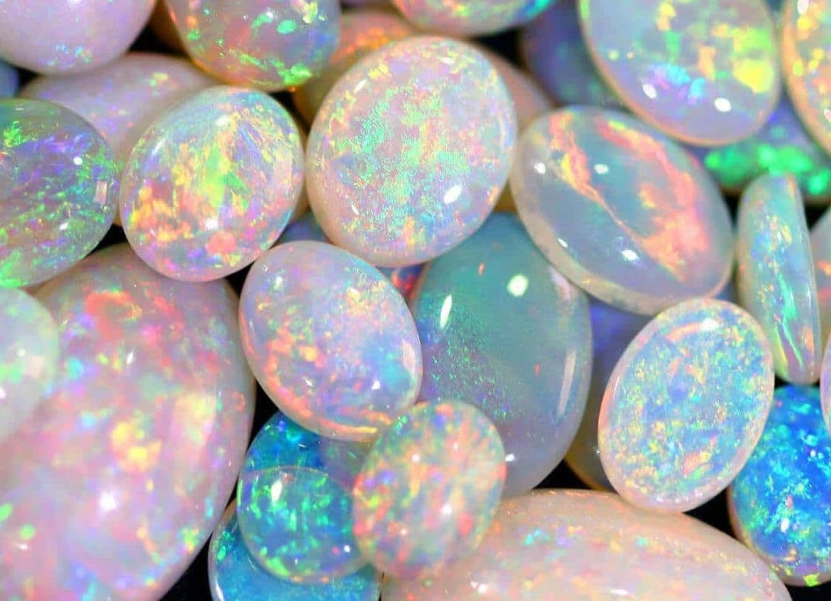
Many trace the concept of birthstones to the Breastplate of Aaron described in the Bible's Book of Exodus, which had twelve gems representing the tribes of Israel. Later, scholars in the 1st to 5th centuries began to associate these gems with the twelve signs of the zodiac and then the twelve months. Opal often found its place in these early lists, but its month wasn't always fixed.
Here's a pivotal moment most people miss: the modern October connection was heavily influenced by Roman scholar Pliny the Elder. In his first-century encyclopedia, Natural History, he described opal as containing the fiery colors of all other gems—a "play-of-color" we now know is caused by its unique internal silica sphere structure. This idea of opal being a microcosm of all gems made it a natural fit for October, a month of transition that captures the essence of both the fading warmth of summer and the crispness of autumn.
By the 18th and 19th centuries, gemstone lore was popular in Poland and across Europe, solidifying lists where opal was consistently paired with October. The 1912 standardization was less about invention and more about formalizing a centuries-old tradition that had already taken hold in the public imagination.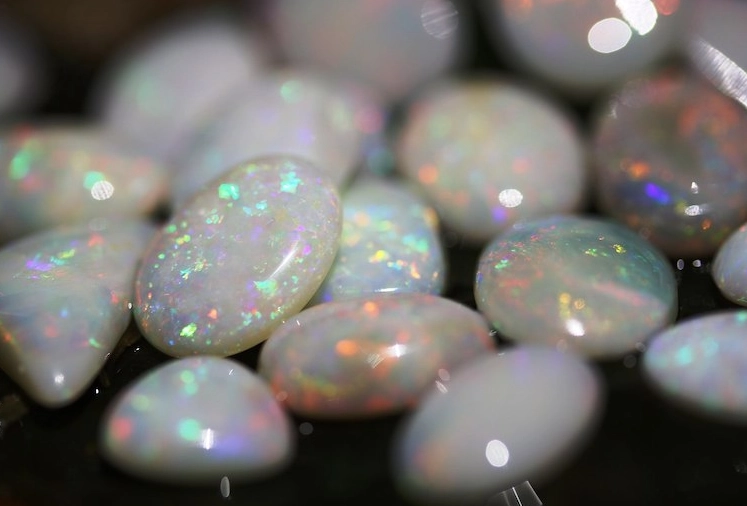
Three Key Reasons Why Opal Was Chosen for October
So beyond historical accident, what makes opal the perfect symbolic match for October? It boils down to three compelling connections.
1. The Color Connection: Autumn in a Gemstone
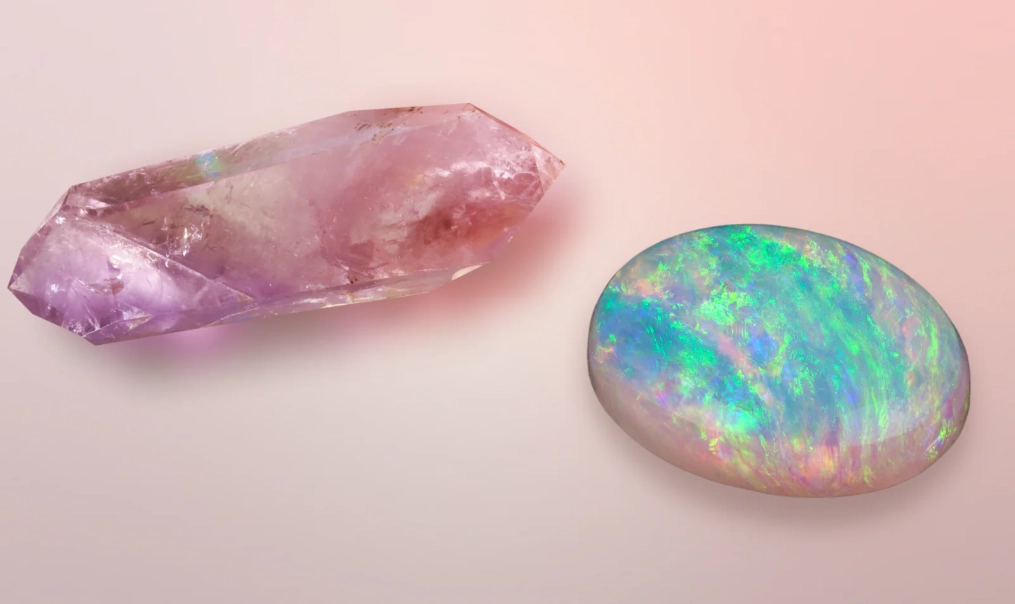
Look at an October landscape. You see the vibrant reds and yellows of falling leaves, the deep orange of pumpkins, the last flashes of green, and the white frost on morning grass. Now look at a high-quality opal. Its play-of-color—that magical flash of red, green, blue, and orange—mirrors this seasonal palette perfectly. No other gemstone encapsulates the visual feast of autumn in the same way. A sapphire is just blue. An emerald is just green. But an opal? It's a tiny, wearable piece of October sky and forest.
2. The Symbolic Connection: Hope, Purity, and Transformation
Throughout history, opal has been associated with hope, purity, and truth. In the Middle Ages, it was called the "eye stone" and believed to sharpen vision and foresight. October is a month of transformation in the natural world, a time of harvest and preparation. The opal's symbolism aligns with this idea of clarity and looking ahead. It represents the light and hope that persists as days grow shorter. It's a gem about inner vision, fitting for a introspective time of year.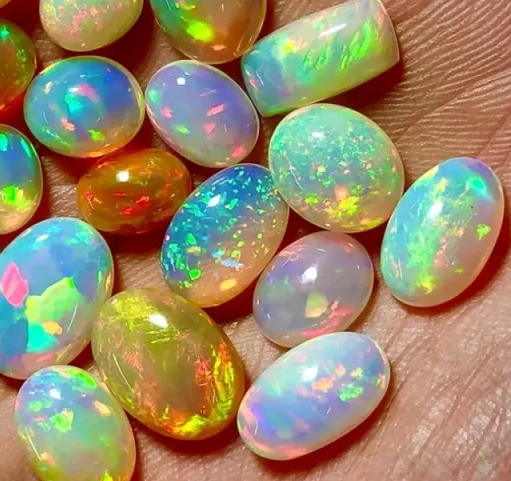
3. The Astronomical Connection (A Lost Piece of the Puzzle)
This is a more obscure link that many modern sources overlook. In some ancient and medieval traditions, opal was associated with the constellation Libra (spanning most of October) and was thought to bring balance—a key trait of Libra. While this astrological connection isn't the primary driver in the modern list, it's a fascinating layer of historical gemstone lore that adds depth to the "why."
Opal Types & Your Buying Guide: From Black Opal to Fire Opal
Not all opals are created equal. If you're thinking of buying an October birthstone, understanding the types is crucial. The biggest mistake I see? Buyers focusing solely on size (carat weight) without understanding the factors that truly drive value and beauty.
| Type of Opal | Key Characteristics | Primary Source | Price Range (Approx.) |
|---|---|---|---|
| Black Opal | Dark body tone (N1-N4) that makes play-of-color pop dramatically. The most valuable type. | Lightning Ridge, Australia | $500 - $10,000+ per carat |
| White or Light Opal | Light body tone (N5-N6). Play-of-color is softer, more pastel. Classic and more affordable. | Coober Pedy, Australia | $50 - $1,000 per carat |
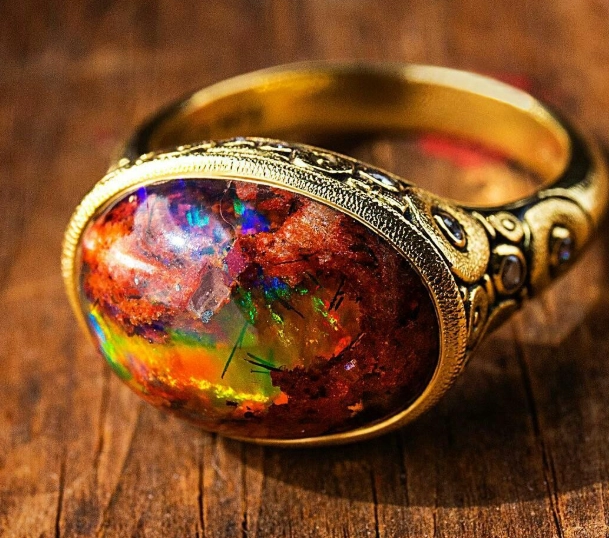
| Boulder Opal | Opal formed in ironstone matrix. Natural, rugged look with brilliant color flashes. | Queensland, Australia | $200 - $5,000 per carat |
| Fire Opal | Transparent to translucent with a warm body color (yellow, orange, red). May or may not have play-of-color. | Mexico | $30 - $500 per carat |
| Ethiopian Opal | Often hydrophane (absorbs water), can have stunning play-of-color. More recent major source. | Wollo Province, Ethiopia | $100 - $2,000 per carat |
When buying, here's my non-consensus advice: Prioritize the play-of-color pattern over sheer brightness. A stone with a broad, rolling flash of red and green is often more desirable and valuable than a very bright stone with only pinfire (tiny dots) of blue. Look for stone origin, body tone, and the type of pattern (harlequin, flag, ribbon).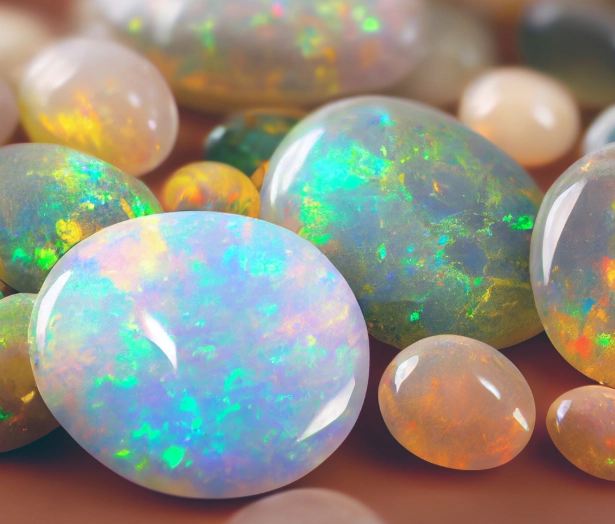
And about that "water test" you might have heard of?
It's risky.
Some Ethiopian opals become temporarily more transparent in water. It's a curiosity, not a quality test. For a real test, always ask for a lab report from a reputable gemological institute like the Gemological Institute of America (GIA) for high-value stones.
Opal Care, Durability, and Debunking the Biggest Myth
We have to talk about the elephant in the room: the "opal is bad luck" myth. This is pure 19th-century literary fiction, popularized by Sir Walter Scott's novel Anne of Geierstein, where an opal-bearing heroine meets a tragic end. The jewelry trade hated it because it hurt sales. The truth? Opal has been a talisman of good fortune and protection across countless cultures for millennia.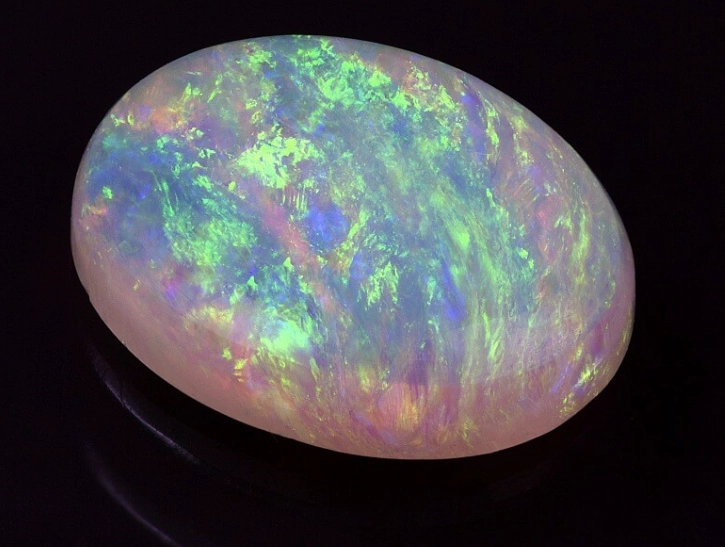
The real concern with opal isn't luck—it's durability. Opal has a Mohs hardness of 5.5-6.5, softer than quartz. It also contains water (typically 3-10%). This means it can be scratched, cracked if knocked hard, or damaged by extreme dryness or sudden temperature changes.
But here's the expert take: this doesn't mean you can't wear it daily. It means you need the right setting and habits.
- Choose protective settings: Bezel settings that surround the stone are far better than prong settings that leave it exposed.
- Last On, First Off: Put your opal jewelry on after applying makeup, perfume, and hairspray. Take it off before household chores, gardening, or swimming.
- Cleaning: Use only a soft, damp cloth. Never ultrasonic or steam cleaners.
- Storage: Keep it in a soft pouch. In very arid climates, some keep opals with a damp cotton ball in a sealed bag to prevent crazing (fine cracks from water loss), but for most people, this is overkill.
Your Opal Questions, Answered by a Gemologist
It depends on your lifestyle. For someone with a hands-on job or who is very active, a diamond or sapphire is a safer bet. However, I've seen opal rings last decades when set in a protective bezel and worn with mindfulness. Consider a fire opal (harder) or a boulder opal (supported by its ironstone host) for a more durable ring option. The key is managing expectations—it's a gem to be cherished, not abused.
This is specific to Ethiopian hydrophane opals. They can absorb water, becoming temporarily more transparent and sometimes even changing play-of-color. It's reversible as they dry. Australian opals are generally stable. Brief contact with water (washing hands) is fine for any opal. The danger is prolonged soaking or exposure to chemicals (soap, chlorine) which can seep into cracks or the stone itself, causing long-term damage. Dry it gently with a soft cloth afterward.
Solid Opal: The real deal, a single piece of natural opal. Highest value. Doublet: A thin slice of real opal glued onto a dark backing (like black onyx or glass) to enhance its color, like a sandwich. Triplet: A very thin opal slice with a dark backing and a clear quartz or glass dome on top for protection. Doublets and triplets are much more affordable and durable, making great entry pieces or for bold designs. Always ask your jeweler which you're buying—it should be clearly disclosed.
Ignore generic online checklists. Focus on this order of importance for play-of-color: 1. Color Range: Red is rarest and most valuable, then orange, green, blue. 2. Pattern: Large, distinct patches (harlequin, flag) are best, followed by broad flashes, with small pinfire being most common. 3. Brightness: How vivid and obvious the colors are against the body tone. A stone with a medium pattern of red and green will often be worth more than a very bright stone with only blue pinfire. Also, examine it under different lights—a good opal sings in soft, diffused light, not just under a jeweler's spotlight.
So, why is opal for October? It's a combination of historical tradition, a perfect visual metaphor for autumn, and deep symbolic meaning. It's a gem that demands a bit more knowledge and care than others, but in return, it offers a unique, ever-changing beauty that no other stone can match. For an October birthday, it's not just a gem—it's a story.