If you're searching for "which month's birthstone is blue topaz," the direct answer is December. Blue topaz shares the honor of being December's birthstone with turquoise and tanzanite, but its brilliant, icy blue hue makes it a standout favorite. But there's so much more to this gem than just a calendar date. The journey from a colorless stone to that perfect sky blue is a story of science and art, and understanding it changes how you buy and appreciate jewelry.
Your Quick Guide to Blue Topaz
The Official Month for Blue Topaz
Blue topaz is one of the three modern birthstones for December, as designated by the American Gem Trade Association and the Jewelers of America. This official list, updated in the 20th century, is what most jewelers in the US and many other countries follow. The other December stones are turquoise (an opaque, earthy blue-green) and tanzanite (a vibrant violet-blue).
Why does December have three? It reflects the desire for variety and choice. Turquoise has ancient roots, tanzanite is a modern discovery, and blue topaz sits in between—a classic gem made accessible through technology.
Here’s a quick look at how they compare for a December birthday gift:
| Gemstone | Primary Color | Durability (Mohs Scale) | Typical Clarity | Key Vibe |
|---|---|---|---|---|
| Blue Topaz | Sky, Swiss, or London Blue | 8 | Eye-clean (Flawless to the naked eye) | Brilliant, serene, modern |
| Turquoise | Blue-green, often with matrix | 5-6 | Opaque | Earthy, spiritual, vintage |
| Tanzanite | Violet-blue (pleochroic) | 6.5-7 | Typically included (visible flaws) | Exotic, rare, luxurious |
Blue topaz wins on durability and brilliance for everyday wear. A topaz ring will resist scratches far better than one with turquoise or tanzanite.
How Does Topaz Get Its Blue Color? (It's Not What You Think)
This is where things get interesting, and where a lot of misinformation floats around. Natural blue topaz is exceptionally rare. Like, museum-piece rare. The vast, vast majority of blue topaz you see in jewelry stores started life as colorless or pale yellow-brown topaz.
The blue color is created through controlled irradiation and heat treatment. This isn't a shady practice—it's a stable, permanent, and universally accepted enhancement in the gem world. The process mimics what nature might do over millions of years, just in a lab over a few months.
I once had a client return a stone, convinced the color was fading. After testing, it turned out she was using harsh ultrasonic cleaners, which can damage any gem's surface, making it look dull. The color was fine; the polish was shot. It taught me that how you care for a treated stone matters just as much as for a natural one.
The Three Primary Shades of Blue Topaz
Not all blue topaz is the same. The treatment intensity results in three main market names:
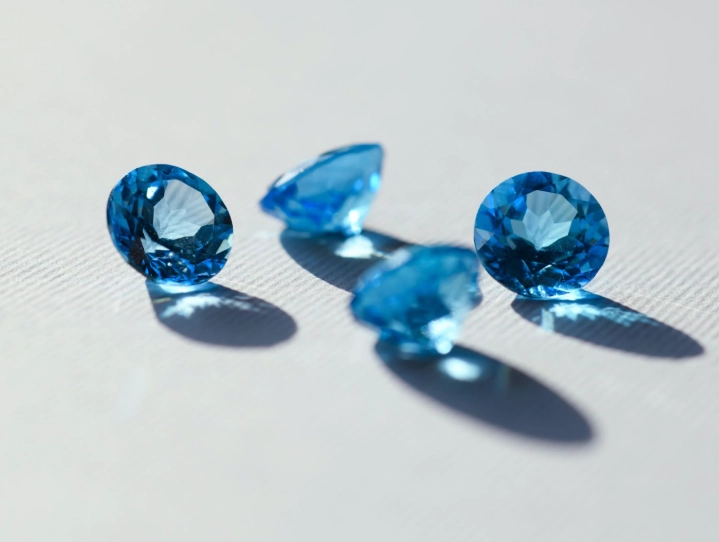
Sky Blue Topaz: The lightest and most delicate hue. Think of a pale summer sky. This is the closest to some rare natural blues and is often the least expensive of the three.
Swiss Blue Topaz: A vivid, medium electric blue. It's bold and saturated without being dark. This is probably the most popular shade—it has great color without the premium price of the deepest blue.
London Blue Topaz: A deep, steely grayish-blue. It can sometimes appear almost inky. This is the most intense color and often commands a higher price per carat due to the more extensive treatment process. Some people adore its sophistication; others find it a bit somber. I personally love it in men's jewelry, like cufflinks or signet rings.
The choice isn't about quality, but personal preference. A Sky Blue might suit a delicate pendant, while a London Blue makes a dramatic statement in a cocktail ring.
How to Choose a Quality Blue Topaz: A Practical Guide
Forget the "Four Cs" as they apply to diamonds. With blue topaz, you prioritize differently because clarity is almost a given, and color is manufactured to a standard.
What Really Matters When You Buy
1. Color Consistency and Appeal: Look for a stone with even color distribution. Hold it under different lights—store light, window light. Does the color stay attractive, or does it go flat or murky? Swiss Blue should be vibrant, not neon. London Blue should be deep, not black.
2. Cut and Sparkle: This is the maker or breaker. A well-cut topaz will explode with light. A poor cut looks like a piece of blue glass. Look for sharp, symmetrical facets and lots of internal fire. The cutter's goal is to maximize the return of light to your eye, not to save carat weight.
3. The Setting and Metal: Blue topaz pairs beautifully with both white and yellow metals. White gold or platinum enhances the cool blue tones. Rose gold creates a warm, contemporary contrast. Ensure the setting has protective settings (like bezels or v-prongs) if it's for a ring, as topaz can chip if hit hard on its edges.
4. Carat Weight for Your Budget: Because it's created from abundant colorless material, blue topaz is very affordable in larger sizes. You can get a stunning 5-carat center stone for the price of a tiny diamond. Don't think small. If you love bold jewelry, this is your chance.
Meanings, Uses, and Gift Ideas for the December Birthstone
Blue topaz is traditionally associated with calmness, communication, and clarity. It's said to soothe a busy mind and promote honest expression. Whether you believe in crystal healing or not, giving a gem with such a peaceful symbolism is a thoughtful gesture.
For a December birthday gift, consider these ideas:
The Everyday Stacker: A dainty Sky Blue topaz pendant or a pair of Swiss Blue stud earrings. They're versatile and can be worn daily with anything.
The Statement Piece: A cocktail ring featuring a large London Blue topaz in a modern geometric setting. It’s for the person who loves to make an impression.
The Modern Heirloom: A bracelet with alternating blue topaz and white topaz or diamond melee. It’s classic with a twist.
I advised a friend on a December anniversary gift. He chose a solitaire London Blue topaz pendant. His wife later told me she wears it more than her diamond jewelry because it feels unique and "hers." It wasn't the most expensive piece, but it was the most considered.
Your Blue Topaz Questions Answered
So, the month for blue topaz is clearly December. But now you know it's more than just a date on a chart. It's a story of human ingenuity transforming a common mineral into an accessible luxury. Whether you're a December baby, shopping for one, or just love the color blue, this gem offers brilliant value and timeless style. Look for that sparkle, choose a shade that speaks to you, and enjoy a piece of the sky you can wear.