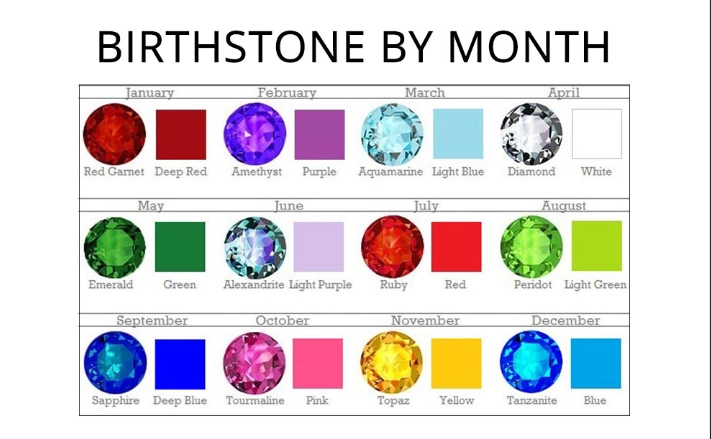
You typed that question into Google, didn't you? "Is topaz a November birthstone?" It sounds like a simple yes or no. But the real answer is a bit more interesting and, frankly, where most articles stop short. Yes, topaz is a traditional November birthstone. But here's the twist that often causes confusion: it shares the month with another gem, citrine. This isn't a case of one being right and the other wrong. The American Gem Trade Association (AGTA) and the Jewelers of America officially list both as modern November birthstones. So why two? And more importantly, if you're buying a November birthstone for yourself or a loved one, how do you choose between topaz and citrine? That's what we're going to unpack, moving beyond the basic fact to the practical details that actually matter when you're looking at a gemstone.
Your Quick Guide to November's Gems
Why November Has Two Birthstones: A Brief History
The idea of a single birthstone per month is a modern simplification. Historically, multiple stones were associated with astrological signs and calendar months. Topaz, particularly the golden-yellow variety, has ancient ties to November, symbolizing strength and intellect. Citrine, with its warm yellow hue, became a natural companion, especially in the 20th century as gemology standardized lists. The official dual designation in 1952 by the Jewelers of America was partly practical—it offered more choice in color and price point. Think of it less as a controversy and more as November getting a bonus gem.
Key Takeaway: Both are correct. Topaz is the traditional historical stone, while citrine is the affordable, sunny modern counterpart. Your choice depends on the color you love, your budget, and how you plan to wear the stone.
Topaz: Beyond the Blue Hype
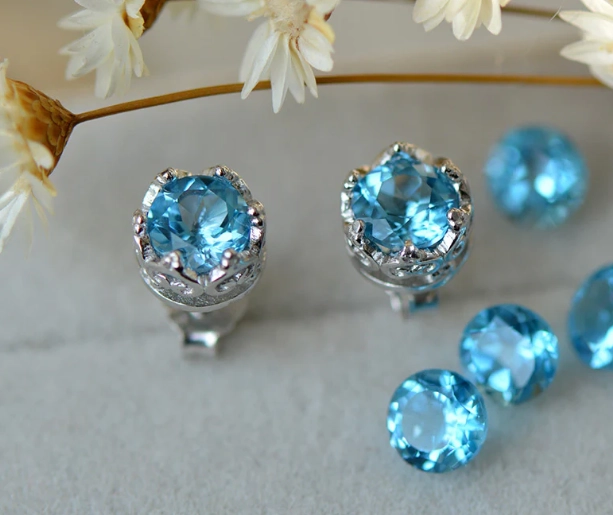
When most people hear "topaz," they picture a sky-blue stone. That's the first misconception to clear up. Natural topaz is most commonly colorless, pale yellow, or sherry brown. That radiant blue topaz you see everywhere? Almost always the result of treating colorless stones with irradiation and heat. It's stable and accepted in the trade, but it's good to know.
The Color Spectrum of Topaz
Topaz's real magic is in its rare natural colors.
- Imperial Topaz: The king. A magnificent mix of orange, pink, and red. Mined primarily in Ouro Preto, Brazil, this is the most valuable form, sometimes reaching thousands per carat for top quality. If you see a "pink topaz," it's often a heated version of brownish material to achieve that color.
- Sherry Topaz: Warm brownish-yellow to orangey-brown. It has a rich, cognac-like appeal.
- Colorless Topaz: Often used as a more durable and brilliant alternative to diamond in fashion jewelry. It can be treated to become blue.
- Blue Topaz: The market leader. Treatments create consistent Swiss Blue (light), Sky Blue (medium), and London Blue (steely grayish-blue) varieties. It's affordable, hard, and very popular.
Topaz is an 8 on the Mohs hardness scale, making it very durable for daily wear (diamond is a 10). However, it has perfect cleavage, meaning it can split if hit sharply along a certain direction. A jeweler needs to set it securely.
Citrine: November's Pocket of Sunshine
Citrine is quartz. That's its family. Its sunny yellow to orangey-brown color comes from traces of iron. Unlike topaz, the citrine you buy is almost always naturally colored. The bigger issue? Much of the "citrine" on the market is actually heat-treated amethyst (purple quartz) or smoky quartz. Heat turns them yellow. This is a permanent, stable treatment, but it means true, natural citrine of a fine orangey hue is rarer than you think.
What You're Actually Looking At
That bright, lemony-yellow stone? Probably heated amethyst. The deep, Madeira orange-brown? Often heated smoky quartz. Natural citrine tends to be a paler, more subtle yellow. This isn't a bad thing—the treated stones are beautiful and inexpensive—but transparency matters. A reputable seller should disclose if a stone is treated. Citrine is a 7 on the Mohs scale, perfectly fine for rings worn with a little care.
I once bought a "vintage citrine" ring only to realize under a loupe it was glass. The color was too uniform, the facets too soft. It was a lesson in asking the right questions upfront.
Topaz vs. Citrine: The Head-to-Head Comparison
Let's put them side by side. This table cuts through the noise.
| Feature | Topaz | Citrine |
|---|---|---|
| Primary Colors | Colorless, Blue (treated), Yellow/Brown, Imperial (pink-orange) | Pale Yellow to Orange-Brown (often heat-treated from amethyst) |
| Mohs Hardness | 8 | 7 |
| Durability Note | Hard but has perfect cleavage; avoid sharp blows. | Good durability; no cleavage, less prone to chipping than topaz. |
| Typical Clarity | Usually eye-clean (no visible inclusions). | Usually eye-clean. |
| Price Point (per carat) | Wide range: Blue (\$20-\$80), Imperial (\$500-\$2000+) | Very affordable: \$10-\$30 for treated material; natural can be higher. |
| Key Consideration | Color is often treated. Ask for disclosure. Imperial topaz is an investment. | "Natural" color is rare. Most is heat-treated amethyst, which is fine but should be known. |
Notice something? Topaz is harder, but citrine might be tougher for a knock-about ring due to the lack of cleavage. Price is where they truly diverge.
How to Choose Your November Birthstone: A Practical Framework
Stop thinking about which one is "official." Start with these questions.
First, what's your budget?
If it's under \$200 for a decent-sized stone, citrine or blue topaz are your playground. For that budget, you can get a much larger, more impressive citrine. If you're looking to spend more for a rare, investment-grade piece, natural untreated topaz in a fine imperial or sherry color is the path.
Second, what color speaks to you?
Do you want the cool, tranquil blues? That's (treated) topaz territory. Drawn to warm, sunny, autumnal yellows and oranges? Both can deliver, but citrine owns this palette in the affordable range. For that unique pinkish-orange, only imperial topaz fits the bill.
Third, what's the jewelry piece?
For an everyday ring you're not overly careful with, citrine's lack of cleavage might give a slight edge. For earrings or a pendant where impact risk is low, both are excellent. Topaz's higher hardness means it will resist scratches slightly better over decades of wear.
Real Talk on Care and Buying Tips
Cleaning is easy: warm soapy water, a soft brush, rinse, dry. Avoid ultrasonic cleaners for topaz due to its cleavage. Steam cleaning is usually safe for both but ask your jeweler.
When buying, the single most important question isn't "is this real?" It's "has this stone been treated, and if so, how?" A trustworthy seller will tell you upfront if a blue topaz was irradiated or if a citrine was heat-treated. It affects the value and your understanding of the gem. Look for sellers affiliated with organizations like the Gemological Institute of America (GIA) or AGTA, as they adhere to strict disclosure guidelines.
Price red flags: An "imperial topaz" selling for \$50 a carat is absolutely fake or grossly misrepresented. A huge, flawless, vivid yellow citrine for \$15 is probably glass. If a deal seems too good to be true with gems, it almost always is.
Your November Birthstone Questions, Answered
So, is topaz a November birthstone? Absolutely. But now you know that's just the starting point. November gives you a fantastic duo: the versatile, potentially majestic topaz and the warm, endlessly sunny citrine. Your choice isn't about right or wrong; it's about which gem's story, color, and character best fit the person who will wear it. Armed with the specifics—the treatments, the durability quirks, the real price points—you can shop or choose with confidence, far beyond a simple Google search.