If you ask most people what the rarest gemstone is, they'll say "diamond" without hesitation. That's what decades of brilliant marketing will do. But here's the uncomfortable truth the jewelry industry doesn't advertise: diamonds aren't particularly rare. Not even close. The real champions of rarity are gemstones you've probably never heard of, and one in particular stands out for its mind-boggling scarcity. So, what is 1000 times rarer than a diamond? The answer is a fiery red gem called red beryl, also known as bixbite or red emerald.
What You'll Discover in This Guide
The Rarity Reality Check: Diamonds Aren't That Rare
Let's clear this up first. Diamonds are marketed as rare, but their supply is tightly controlled by a handful of major corporations. New mines are discovered, and synthetic diamonds are now flooding the market, further diluting the "rare" claim. Geologically, diamond-bearing kimberlite pipes are found on multiple continents. Compare that to the next gem on our list.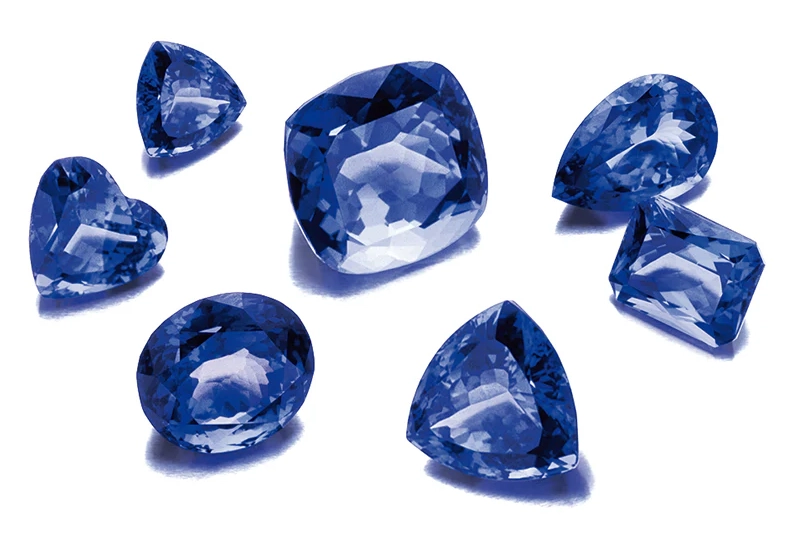
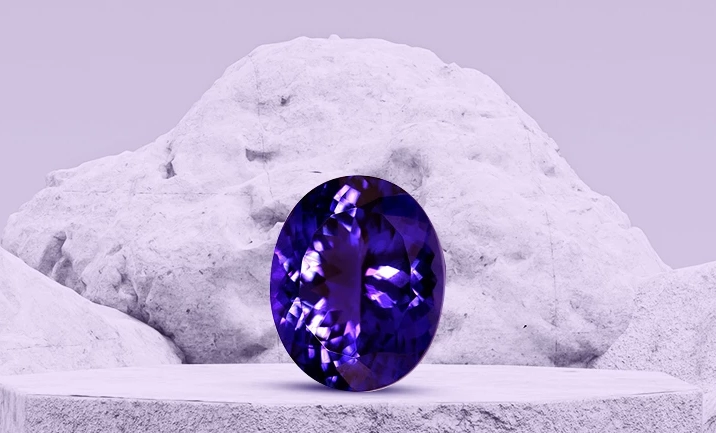
The concept of something being "1000 times rarer" isn't just marketing fluff. Gemologists and mineralogists like those at the Gemological Institute of America (GIA) use quantitative measures. They look at the number of known localities, the annual yield in carats, and the ratio of gem-quality material to rough. By these metrics, several gems make diamonds look common. Tanzanite is estimated to be about 1000 times rarer than diamond, found only in a single, shrinking deposit in Tanzania. But there's one that takes the crown for combined scarcity, beauty, and a story straight out of a prospector's dream.
Meet Red Beryl: The Gem That's Actually 1000 Times Rarer
Red beryl is a variety of the mineral beryl, the same family that gives us emerald (green) and aquamarine (blue). Its red color comes from trace amounts of manganese. But calling it a "red emerald" is a trade term—technically correct but used for allure.
What makes it astronomically rare? It comes from one place on Earth: the Wah Wah Mountains in Beaver County, Utah, USA. That's it. No other commercial deposit exists. The conditions needed to form it are freakishly specific: beryllium from volcanic magma, manganese from surrounding rocks, and just the right amount of oxygen, all cooked at a precise temperature. It's a geological lottery ticket that almost never gets drawn.
I've held a few specimens. The color is a vibrant, raspberry to purplish-red that can be stunning. But here's the kicker everyone misses: 99% of what comes out of the ground is not gem quality. It's opaque, fractured, or paler than a blush. Finding a clean, deeply colored crystal large enough to facet is a minor miracle. Annual production of facetable red beryl is measured in a few thousand carats, compared to tens of millions of carats for diamonds. When experts say it's 1000 times rarer, they're being conservative.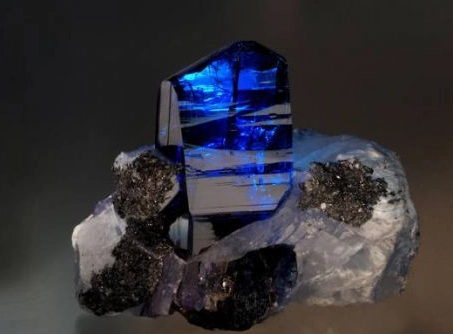
| Feature | Red Beryl (Bixbite) | Diamond |
|---|---|---|
| Primary Source | Wah Wah Mountains, Utah, USA (Single location) | Multiple countries (Russia, Botswana, Canada, etc.) |
| Annual Gem-Quality Yield | ~2,000 - 5,000 carats (estimated) | ~120 - 140 million carats |
| Crystal Habit | Hexagonal prisms, often small and included | Octahedral, cubic; can yield large rough |
| Key Identifying Feature | Red color from manganese, strong pleochroism (looks different from different angles) | Extreme hardness (10 on Mohs scale), high dispersion ("fire") |
| Typical Size in Jewelry | Almost always under 1 carat; 2+ carats is museum-grade | Widely available in all sizes |
| Price Per Carat (High Quality) | $8,000 - $20,000+ (for clean, well-colored stones) | Varies widely; $5,000 - $50,000+ for fine white stones |
The table makes it obvious. We're talking about a different universe of scarcity.
How to Identify and Value Authentic Red Beryl
So you think you've found one, or you're looking at a piece of jewelry. How do you know it's the real deal?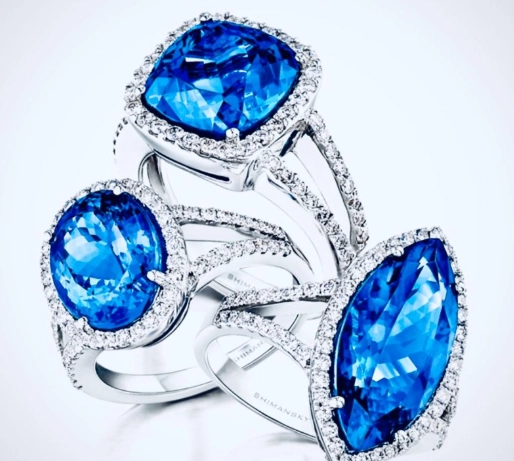
Visual Clues and Common Imposters
The color is a good start—a pure, intense red without strong brown or orange modifiers. It shows strong pleochroism: look through the stone from different angles, and you might see slight shifts from red to orangish-red. Under a magnifier, you'll almost always see inclusions. Perfect clarity is a huge red flag (pun intended). Common fakes or misrepresentations include:
Red Glass or Synthetic Spinel: Too clean, bubbles, wrong refractive properties.
Pezzottaite: Often has a more pinkish hue and different optical characteristics. It's also rare, but from Afghanistan.
Tourmaline or Garnet: Different crystal structures and inclusions. Garnet doesn't have pleochroism like red beryl.
The Non-Negotiable: Get a Lab Report
For any stone over a few hundred dollars, insist on a report from a major gemological laboratory. The GIA is the gold standard. The report will confirm the identity, note any treatments (red beryl is almost never treated, which is a plus), and describe the color and clarity. No report, no sale. It's that simple.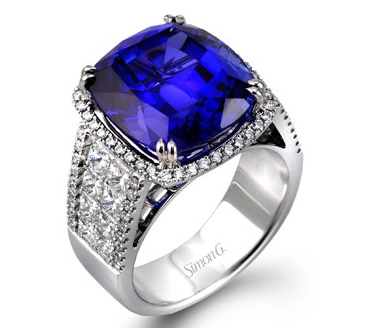
What Drives the Price Sky-High?
Value is a mix of the big four: Color, Clarity, Cut, and Carat Weight, with Carat Weight having an exponential effect.
Color: Vivid, saturated raspberry-red commands the highest premiums. Pale or orangy stones are worth significantly less.
Clarity: Eye-clean stones exist but are ultra-rare. Most have visible inclusions. The key is whether they detract from the beauty.
Cut: A good cutter will orient the stone to show the best color face-up, even if it means losing some carat weight from the rough. A poorly cut stone can look washed out.
Carat Weight: This is where it gets crazy. A 1-carat stone might be $10,000 per carat. A 2-carat stone of similar quality isn't $20,000 total—it could be $40,000 or more per carat because finding a clean piece of rough that large is so improbable.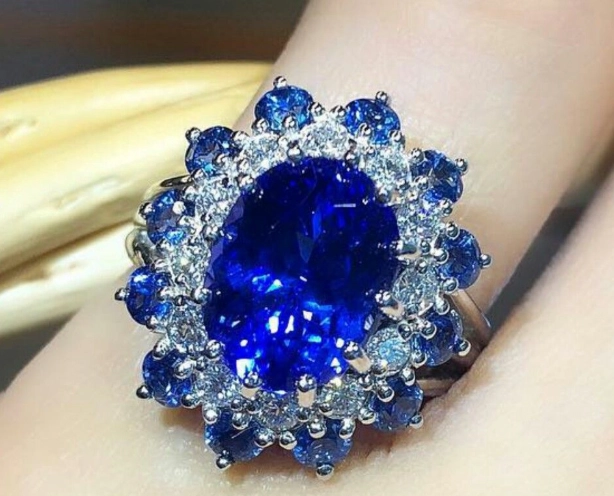
A Practical Guide to Buying Red Beryl
You're convinced. You want a piece of this geological history. Here’s how to navigate the market without getting burned.
1. Set Realistic Expectations and Budget: For a few thousand dollars, you might find a small (0.10-0.30 ct) melee stone for a pendant or accent. A decent centerpiece stone of 0.5-0.8 carats will likely start in the five figures. If a deal seems too good to be true, it is.
2. Find Specialized Sellers: Don't look at mall jewelers. Seek out dealers who specialize in rare collector gems. Established names in the US like Pala International or The Collector's Treasury often have connections. Attend major gem shows like the Tucson Gem & Mineral Show, where you might see specimens firsthand.
3. Focus on the Right Jewelry Settings: Due to its rarity and value, red beryl is best set in protective styles. A bezel or semi-bezel setting in a pendant or ring is safer than a prong setting that exposes the stone to knocks. Remember, while its hardness is decent (7.5-8 on the Mohs scale), it's not as tough as diamond or sapphire.
4. Consider it a Collectible, Not Just Jewelry: This is my personal take. You're buying a museum piece you can wear. Its value is tied to its irreplaceable nature. Market fluctuations for diamonds or mass-market gems don't apply in the same way. The pool of high-quality red beryl is so small that a single new collector entering the market can shift prices.
The market is tiny and illiquid. Selling it quickly for full value is hard. But as a long-term hold of breathtaking natural artistry, few things compare.