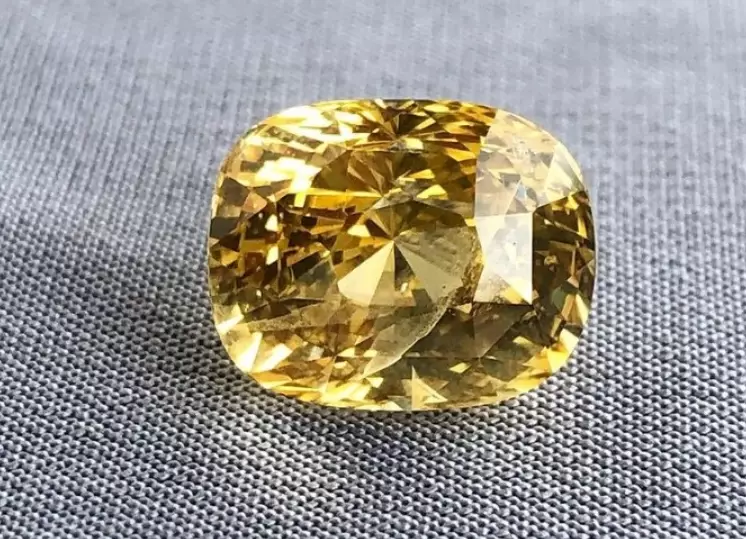
I almost threw away my first decent garnet specimen. It was a rough, dark red piece from an Arizona mine, and I was convinced it was just a boring, low-grade almandine. Ten years later, with a proper loupe and a bit more patience, I saw the subtle play of light and a crystal face I'd missed. That's the thing about garnet minerals—they're a whole family, not just a January birthstone, and most guides barely scratch the surface. If you're holding a red stone wondering what it is, or you want to know if that garnet ring is a good deal, you're in the right place. This isn't a textbook rehash. We're going to talk about how to actually figure out what you have, what it's worth, and how to not ruin it.
What's Inside This Guide
What is Garnet, Really? (It's Not Just Red)
Let's clear this up first. "Garnet" isn't one mineral. It's a group of closely related silicate minerals sharing a specific crystal structure. Think of it like the citrus family—you have oranges, lemons, limes. All citrus, but different flavors and colors. Garnets come in more colors than you'd guess: deep reds (almandine, pyrope), vibrant greens (tsavorite, demantoid), oranges (spessartine), and even rare color-changers.
The classic deep red garnet you picture is usually almandine or pyrope. But the real showstoppers are the green ones. Tsavorite, a green grossular garnet found mainly in East Africa, rivals emerald for intensity but often has fewer inclusions. Demantoid, a green andradite garnet, is famed for its "horsetail" inclusions and incredible fire (dispersion)—it can sparkle more than a diamond. I've seen collectors pay more for a fine demantoid than for a diamond of the same size.
Key Takeaway: If someone tells you "garnets are only red," they're working with outdated information. The green varieties (tsavorite, demantoid) are often the most valuable per carat in the gem trade today.
Where do they form? Garnets are metamorphic minerals. They typically crystallize under high heat and pressure deep within the Earth's crust, in rocks like schist and gneiss. You can also find them in some igneous rocks and, thanks to their hardness and durability, concentrated in alluvial deposits (riverbeds and beaches). Major sources include India, Sri Lanka, Madagascar, Tanzania, and the United States (like the Adirondack region).
How to Identify Garnet: A Practical, Step-by-Step Method
You found a reddish crystal or bought a "garnet" ring. How can you be sure? Forget complex lab tests for a moment. Here's a field-to-home identification workflow I use.
Visual Inspection: The First Clues
Start with your eyes and a good light. Look for the crystal habit. Garnets commonly form as dodecahedrons or trapezohedrons—think 12-sided or 24-sided shapes that look like complex dice. In rock shops, they're often broken fragments, but you might see smooth, curved faces.
Color is a hint, but a terrible standalone identifier. Almandine is often a deep, brownish red. Pyrope can be a pure, blood red. Rhodolite (a mix) is purplish-red. Spessartine is a vivid orange. Hold it against a white piece of paper. Does the color look consistent, or are there zones?
The Scratch & Streak Test (For Rough Specimens)
Hardness: Garnets range between 6.5 and 7.5 on the Mohs scale. Carry a steel knife (hardness ~5.5) or a piece of quartz (hardness 7). A real garnet should scratch the knife blade easily and should be able to scratch glass. If your specimen gets scratched by quartz, it might be on the softer end or be something else.
Streak: Rub the mineral on the back of an unglazed ceramic tile (a "streak plate"). Garnet's streak is colorless, regardless of the crystal's color. Hematite, which can look similar, gives a red-brown streak. This is a simple, classic test many beginners skip.
Advanced Home Clues: Heft and Sparkle
Pick it up. Most garnet species feel surprisingly heavy for their size (they have a high specific gravity). Compare it to a similar-sized piece of quartz; the garnet should feel noticeably denser.
For cut gems, look at the sparkle. Demantoid garnet has exceptional fire—flashes of colored light. Under a magnifying loupe (10x is essential), look for inclusions. Almandine often has needle-like inclusions. Demantoid's classic "horsetail" inclusions (radiating fibers of chrysotile) are a near-definitive ID marker. I once identified a demantoid purely by finding a tiny, feathery horsetail near the girdle.
Common Mistake: Don't confuse garnet with ruby or red spinel. Ruby is harder (9), often shows stronger fluorescence under UV light, and has different inclusions (silk). Spinel is singly refractive, while garnet is singly refractive for most types (a simple refractometer test can differentiate this). If you're serious, a $50 pocket refractometer is a game-changer.
| Garnet Type | Typical Color | Key Identifying Feature | Mohs Hardness |
|---|---|---|---|
| Almandine | Deep red, brownish red | Common, abundant; often has needle inclusions | 7 - 7.5 |
| Pyrope | Blood red, purplish red | Often cleaner, richer red; source can be indicator | 7 - 7.5 |
| Spessartine | Vivid orange, reddish-orange | High luster, "mandarin" orange is prized | 6.5 - 7.5 |
| Tsavorite | Vivid green | Green grossular; no chromium lines on Chelsea filter | 7 - 7.5 |
| Demantoid | Green, yellowish-green | Extreme fire/dspersion; "horsetail" inclusions | 6.5 - 7 |
| Rhodolite | Purplish-red, raspberry | Pyrope-almandine mix; popular in jewelry | 7 - 7.5 |
Understanding Garnet Value: Beyond Carat Weight
Price per carat for garnets is all over the map. A common almandine cabochon might be $10-$50 per carat. A fine tsavorite can easily hit $2000-$7000 per carat. Demantoid? Even higher. So what drives this?
- Species & Variety: This is the biggest factor. Green garnets (tsavorite, demantoid) command a massive premium. Fine orange spessartine ("mandarin garnet") is next. Then comes rhodolite, then the common reds.
- Color: For reds, a pure, vibrant red without brown overtones is best. For tsavorite, a saturated, emerald-like green. For demantoid, a strong green. Pale or muddy colors drop the value fast.
- Clarity: Eye-clean stones are preferred, but some inclusions are accepted or even valued (like demantoid's horsetails). Heavy inclusions that dull the stone or threaten durability lower value.
- Cut: A well-cut garnet that returns light brilliantly is worth more. Many commercial garnets are cut to save weight, not for beauty. I see too many dark, windowed stones. A skilled cut that maximizes color and sparkle adds significant value.
- Carat Weight: Larger, clean stones of the desirable varieties increase in price exponentially, not linearly. A 5-carat top-color tsavorite is vastly rarer than five 1-carat stones.
For mineral specimens, value hinges on crystal form, size, aesthetic appeal, and locality. A textbook-perfect dodecahedron from a famous locale (like an almandine from the Adirondacks) can be worth hundreds to thousands of dollars to a collector.
Garnet Care & Cleaning: What Most Jewelers Don't Tell You
Garnets are fairly durable, but they have vulnerabilities. Ultrasonic cleaners? Usually safe for most garnets, but never for demantoid or any garnet with significant fractures or liquid inclusions. The vibrations can shatter them. Steam cleaners are also risky due to thermal shock.
The safest method: warm water, a drop of mild dish soap, and a soft brush. Rinse thoroughly. Dry with a soft, lint-free cloth. Store garnet jewelry separately to prevent scratches from harder gems like diamonds or sapphires. Your garnet can scratch other things too, like softer glass or other jewelry.
Heat is an enemy. Sudden temperature changes can cause fractures. Remove your garnet ring before washing dishes with hot water or using an oven. I learned this the hard way after a client's beautiful rhodolite ring developed a hairline crack from repeated thermal stress.