You're holding a piece of turquoise, or thinking of buying one. It feels special. But a nagging thought creeps in: Is this real? Is it worth what I paid? Will it last? I've been there. I bought my first significant turquoise pendant fifteen years ago from a roadside vendor in the Southwest, convinced I'd found a treasure. It turned a dull green within a year. That experience, costly as it was, sent me down a path of learning that most gemstone guides gloss over. Turquoise isn't just a blue stone; it's a conversation between geology, culture, and commerce. This guide cuts through the mystique and gives you the practical, often-overlooked details you need to buy, identify, and cherish turquoise with confidence.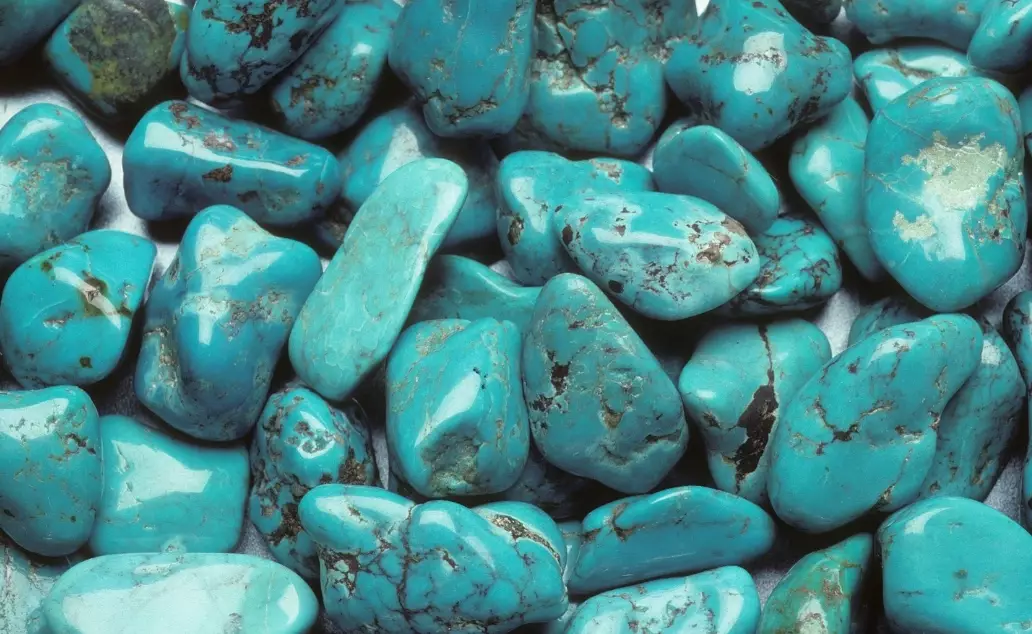
What's Inside This Guide?
Turquoise Stone Meaning and Origins
Forget the generic "stone of protection" description for a second. The real meaning of turquoise is rooted in its formation. It's a secondary mineral, meaning it's created by water slowly percolating through rock over millions of years, picking up copper (which gives it the blue), aluminum, and phosphorus. This happens in arid, copper-rich regions. That's why nearly all the world's turquoise comes from a handful of places: the American Southwest (Nevada, Arizona, New Mexico), Iran, Egypt's Sinai Peninsula, and China.
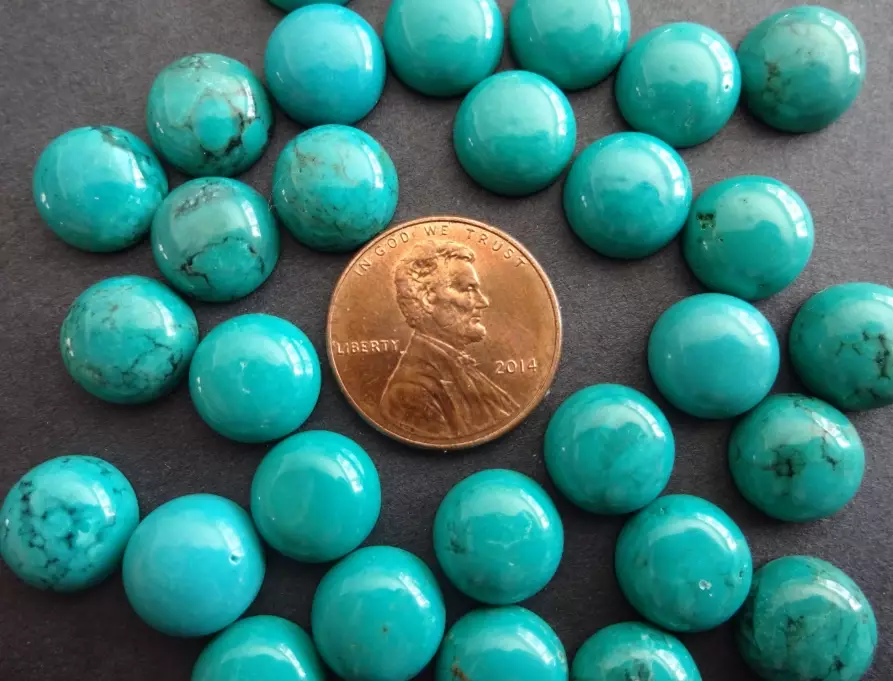
This slow, water-born creation is why ancient cultures from the Persians to the Navajo saw it as a piece of the sky or a fossilized tear. It wasn't just decoration; it was a direct link to the earth's processes. Modern appreciation often misses this depth, focusing solely on color. The most sought-after color is an even, robin's-egg blue, often called "Persian blue" even if it's from Nevada. But the matrix—the web of host rock that often runs through it—tells the stone's unique geological story. Some collectors prize a fine, spider-web matrix, while others prefer a clean, solid blue. Neither is inherently better; it's about the story you connect with.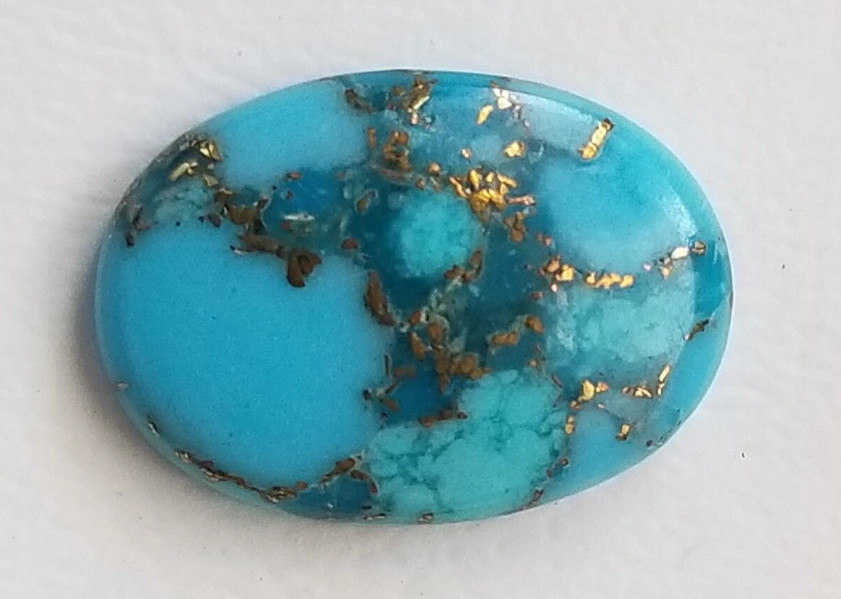
What Determines Turquoise Value?
Price tags on turquoise can range from $10 to $500 per carat. Why the wild difference? It's a mix of factors that dealers know but rarely explain clearly to buyers.
Color is king, but saturation is the queen. A pale, washed-out blue is common. A deep, saturated sky-blue or blue-green is not. The most valuable color is a strong, even blue without zones of green or yellow. Green hues occur when iron partially replaces the aluminum in the structure.
The Matrix Tells a Tale. Value here is subjective but follows patterns. A fine, delicate, web-like matrix (like in some Nevada Lander Blue) can increase value dramatically. A thick, blotchy, dominating matrix usually lowers it. The matrix color matters too—a contrasting brown or black is preferred over a muddy, indistinct color.
Hardness and Stability. This is the industry's dirty little secret. Much of the turquoise on the market is too soft (under 5 on the Mohs scale) to be used in jewelry without treatment. High-quality, naturally hard turquoise ("high-grade" or "gem-grade") is rare and commands a premium. Most stones are "stabilized"—impregnated with a plastic resin to harden them and enhance color. This isn't necessarily bad, but it must be disclosed. An untreated, hard stone is the collector's prize.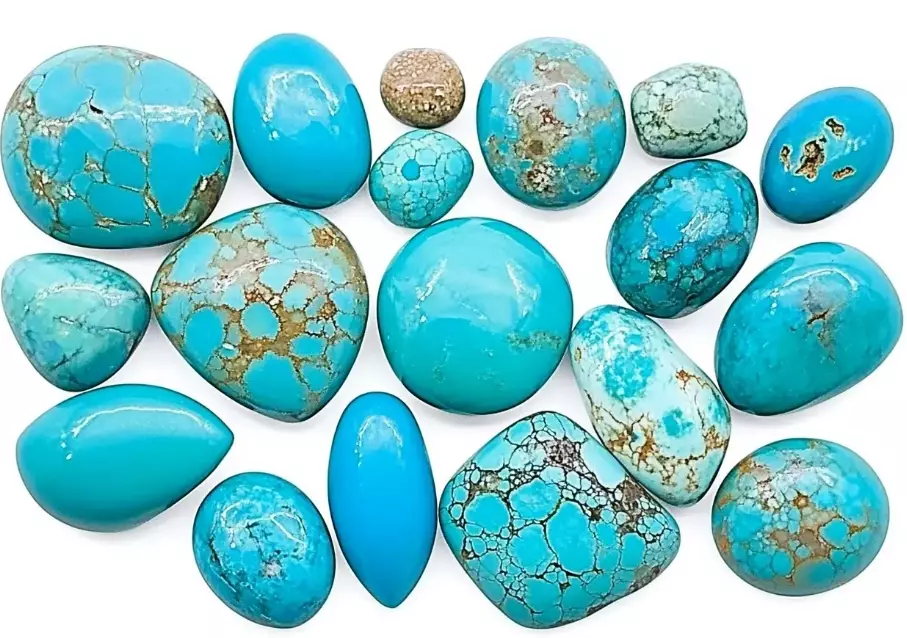
Origin Story. Certain mines have legendary status, influencing price:
| Mine/Location | Typical Color & Matrix | Why It's Notable |
|---|---|---|
| Sleeping Beauty (Arizona, USA) | Consistent, clean robin's-egg blue, often no matrix. | The classic American blue. Mine is now closed, making existing material more valued. |
| Lander Blue (Nevada, USA) | Dark blue with fine, black spider-web matrix. | Extremely rare and small-producing. Considered one of the most valuable turquoises. |
| Persian (Neyshabur, Iran) | Intense sky-blue, sometimes with fine brown matrix. | Historical benchmark for quality. The term "Persian blue" is used as a color standard globally. |
| Bisbee (Arizona, USA) | Deep blue to blue-green, often with striking pyrite matrix. | Known for its chocolate-brown matrix and sometimes metallic pyrite specks. Mine closed. |
| Chinese (Hubei, China) | Wide range, often a greener blue with dense matrix. | Accounts for most of the world's supply today. Quality varies immensely. |
Remember: A famous name doesn't automatically mean better than a beautiful stone from a no-name claim. Judge the stone, not just the story.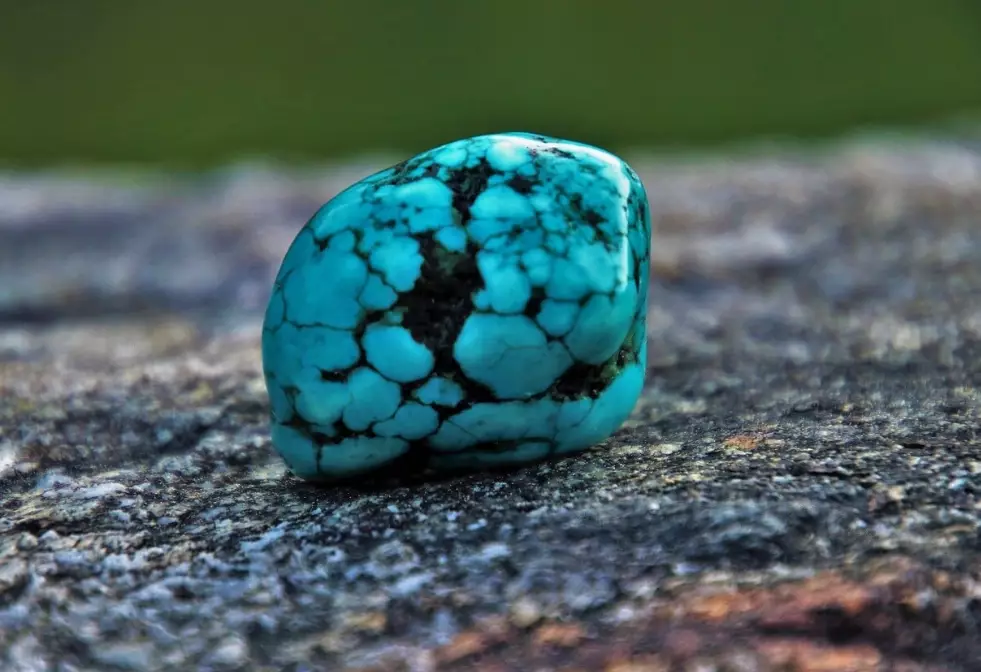
How to Identify Real Turquoise: A Practical Guide
You don't need a lab to spot the obvious fakes. Here’s a field guide based on handling thousands of stones.
The Feel and Temperature Test
Real turquoise is a poor conductor of heat. Hold it against your cheek or lip. It should feel cool and stay cool for a while. Plastic or glass imitations will warm up to your skin temperature much faster. Also, genuine stone has a certain heft or substantial feel. Plastic feels light and, well, plasticky.
The Visual Inspection: Look for the Giveaways
- Too Perfect? An absolutely uniform color with no variations, inclusions, or matrix is a huge red flag. Nature is rarely that perfect.
- Matrix Patterns: Examine the black or brown webbing. In real turquoise, the matrix is integrated; it looks like it's inside the stone. In many fakes (like the common "block" or "Vienna" imitation), the matrix is painted on the surface or sits on top in obvious, repeating patterns. Look at it under a 10x loupe—painted lines will look superficial and might have cracks.
- Color at the Edges and Holes: Dye often concentrates in cracks, drill holes, or around the edges. If the blue seems unnaturally intense in these recesses, be suspicious.
The (Careful) Hot Pin Test
This is controversial but useful for cheap imitations. Find a discreet spot (e.g., the back of a setting). Heat a pin until it's very hot and gently touch the spot. Real turquoise will do nothing. It might leave a tiny white burn mark from the heat, but no smell. Plastic or resin will melt, smell acrid (like burning plastic), and the pin may even sink in slightly. Warning: This can damage stabilized turquoise (you'll smell the plastic stabilizer) and is a last-resort test. Never do this on a finished piece's face.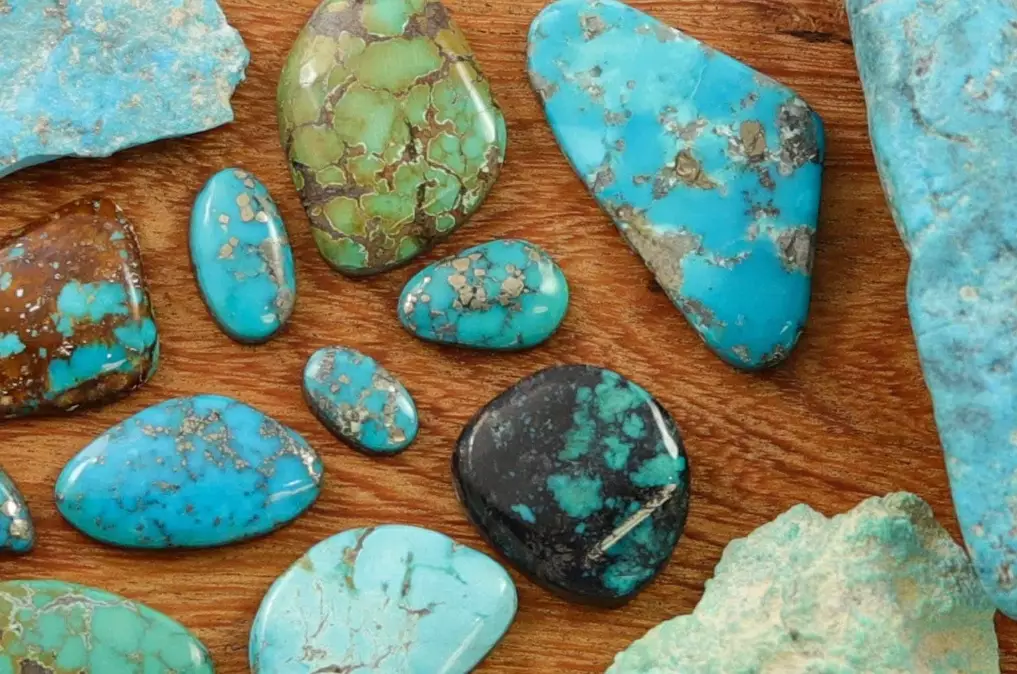
Understanding Treatments: Stabilized vs. Treated vs. Fake
This is the core of modern turquoise commerce.
- Natural/Untreated: The stone is cut, shaped, and polished. Nothing is added. It's hard (usually Mohs 5-6), takes a good polish, and is porous. This is top-tier.
- Stabilized: The most common treatment. Soft, chalky, but color-good turquoise is placed in a vacuum chamber to remove air, then soaked in a liquid plastic (like epoxy) or sodium silicate. This hardens it, makes it non-porous, and often deepens the color. It's now durable for jewelry. This is considered acceptable in the industry if disclosed, but it's not "natural" in the purist sense.
- Treated/Dyed: Howlite or magnesite, white stones with a natural gray matrix, are dyed blue to imitate turquoise. This is an outright imitation, not a treatment of real turquoise. It's very common and cheap.
Ask the seller directly: "Is this stone stabilized or treated?" A reputable seller will tell you.
How to Care for Your Turquoise Jewelry
Turquoise is more delicate than diamonds. Here’s how to keep it vibrant.
Avoid Chemicals. Full Stop. Perfume, hairspray, lotion, and cleaning products will alter its color and damage the surface. Always put your turquoise on last when getting ready.
Water is the Enemy. Don't shower, swim, or wash dishes with it. Water can seep into pores (especially in untreated or lightly stabilized stones), carrying in oils and soaps that cause permanent discoloration—often a dull greenish hue.
Sunlight Fades. Prolonged direct sunlight can bleach the beautiful blue color over time. Don't leave it on a sunny windowsill.
Storage is Key. Store it separately in a soft cloth pouch. Harder gems like diamonds or sapphires in the same box will scratch it.
Cleaning: Use only a soft, dry cloth. If you must, a barely damp cloth wiped gently and immediately dried. No ultrasonic cleaners, no steam, no commercial jewelry dips.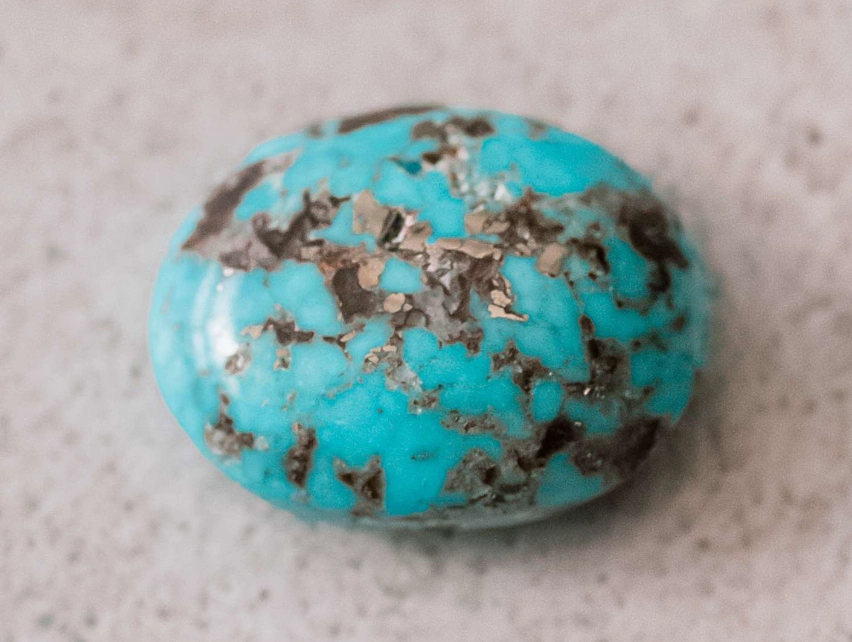
Turquoise Stone FAQs Answered
 Is "reconstituted" turquoise worth anything?