Let's cut to the chase. You're probably holding a beautiful piece of amber jewelry or considering buying one, and a nagging thought pops up: is this thing too soft? Will it get scratched to pieces in a month? The short answer is: amber is soft, but that doesn't mean it's fragile in the way you might think. Its durability is a nuanced story, not just a number on a scale. I've seen too many collectors panic over a tiny surface mark, while others ruin a priceless piece with harsh cleaning methods. Understanding amber hardness isn't about memorizing a rating; it's about learning how to live with and care for a unique organic gem. This guide will walk you through exactly that.
What You'll Learn in This Guide
What is Amber Hardness on the Mohs Scale?
Every discussion about gemstone hardness starts with the Mohs scale. It's a relative scale from 1 (talc, the softest) to 10 (diamond). Amber sits between 2 and 2.5. To give you a tangible sense: your fingernail is about 2.5 on the Mohs scale. That means a firm scratch with your nail can potentially leave a mark on amber.
This is where the first major misconception happens. People see "2-2.5" and think "unwearable." That's not true. It means amber requires a specific kind of respect. It's not like a diamond you can toss in a bag with your keys. But its softness is also why it feels warm to the touch and can be carved into incredibly detailed artifacts—properties a harder stone can't match.
How Does Amber Hardness Compare to Other Materials?
The best way to understand amber's place is to see it in context. This table isn't just academic; it's a practical tool for gauging risk in your daily life.
| Material / Gemstone | Mohs Hardness | Risk Level for Amber | Practical Implication |
|---|---|---|---|
| Fingernail | ~2.5 | Medium-High | Can scratch if pressed hard. Be mindful when putting on rings or bracelets. |
| Copper Coin (e.g., penny) | ~3 | High | Will definitely scratch amber. Never store amber loose with coins. |
| Gold (24k pure) | 2.5-3 | Medium-High | Soft gold settings can be scratched by amber, and vice versa. It's a two-way street. |
| Window Glass | 5.5 | Very High | Dropping amber onto a glass table can cause significant scratches or chips. |
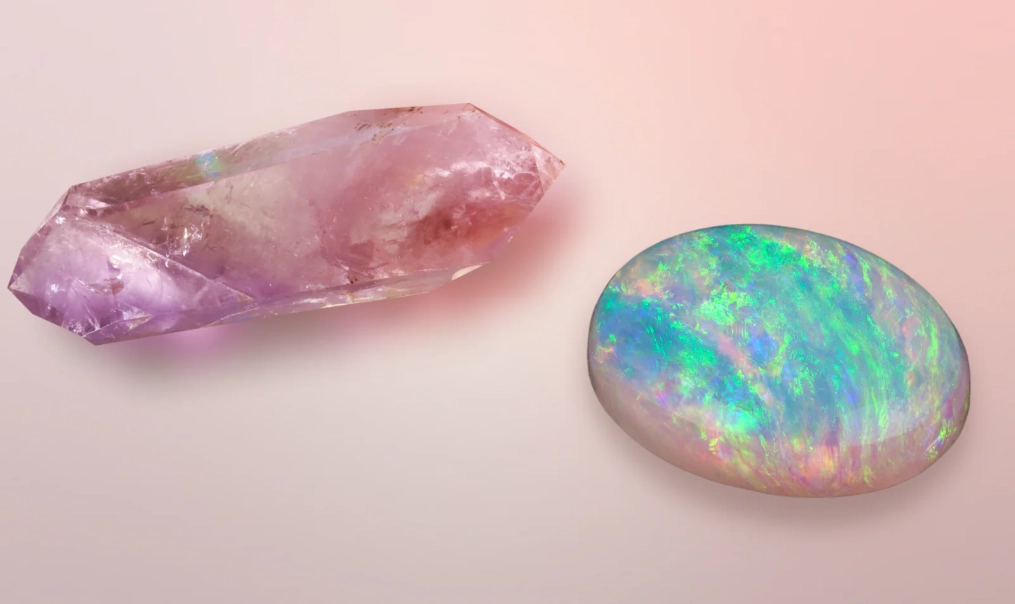
| Quartz (Amethyst, Citrine) | 7 | Extreme | Storing amber next to quartz jewelry in a box is a guaranteed way to damage it. |
| Topaz | 8 | Extreme | Any contact should be avoided. |
| Corundum (Ruby, Sapphire) | 9 | Extreme | Will easily gouge amber. |
| Diamond | 10 | Extreme | The ultimate abrasive. Keep them in separate compartments. |
See the pattern? Most common metals and virtually all other popular gemstones are harder than amber. This single fact dictates the number one rule of amber care: solitary storage. A soft pouch alone isn't enough if it's thrown in a jumble of other jewelry. The constant micro-abrasions will cloud its surface over time.
Beyond Hardness: What Really Affects Amber Durability?
Focusing solely on the Mohs number is a rookie mistake. After two decades working with organic gems, I've learned hardness is just the opening chapter. Here’s what most guides miss.
Toughness and Cleavage
Amber has no cleavage planes (natural zones of weakness where it splits cleanly, like diamond or topaz). This lack of cleavage, combined with its somewhat plastic nature, means it's more likely to develop a pressure mark or a small chip rather than crack in half. I once saw an amber pendant that was sat on. It had a deep, rounded dent, but it didn't fracture. A harder gemstone like an emerald might have shattered completely.
Heat Sensitivity: The Invisible Threat
This is the silent killer of amber pieces. Amber has a low melting point (around 200-380°C / 392-716°F). Prolonged exposure to temperatures as low as 150°C (302°F) can cause it to become soft and pliable. Leaving an amber ring on a windowsill in direct summer sun, or near a stove, can cause internal stress, create "sun spangles" (internal discolorations), or even cause it to deform. I knew a collector who left a carved amber figurine on a shelf above a radiator. Over a winter, it slowly slumped and lost its definition.
 Chemical Stability (or Lack Thereof)
Amber is an organic polymer. It's highly susceptible to chemicals. Perfume, hairspray, lotions, and even acidic sweat can create a dull, sticky film on the surface that attracts more dirt. Harsh cleaners (alcohol, acetone, ammonia, jewelry dips) are catastrophic. They will permanently cloud and craze the surface, turning it opaque and brittle. The damage is irreversible. The Gemological Institute of America (GIA) notes that amber's reaction to chemicals is a primary identification feature and a major care consideration.
Your Actionable Amber Care Checklist
Forget vague advice. Here’s a concrete, step-by-step protocol derived from the realities of its hardness and properties.
Storage (Non-Negotiable): Wrap the piece in a soft, untreated cloth (like flannel). Place it inside a dedicated jewelry box compartment with a fabric lining. If using a multi-compartment box, ensure the dividers are tall and sturdy so harder gems can't roll over and touch it. A sealed plastic bag with a zip lock is better than loose in a drawer.
Wearing: Put amber jewelry on last, after applying cosmetics, perfumes, and hair products. Take it off first when washing hands, showering, swimming (chlorine and saltwater are terrible), or doing household chores. For rings, be extra mindful of the underside which constantly bumps against desks and surfaces.
 Cleaning (The Right Way): Use lukewarm water (not hot) and a mild, scent-free dish soap. Gently lather with your fingertips—no brushes, not even a soft toothbrush, as it can create micro-scratches. Rinse thoroughly under running water. Pat completely dry with a soft, lint-free cloth immediately. Do not let it air dry, as water spots can form in its microscopic pores.
Polishing: You can occasionally add a gentle luster by buffing with a tiny drop of olive oil on a soft cloth, then wiping off all residue. This is for mature pieces that have dulled. Don't do this to a new, high-polish piece.
What about ultrasonic cleaners?
Never. The vibrations can shatter it. Steam cleaners? The heat will damage it. These are instant death for amber.
Frequently Asked Questions on Amber Hardness & Care
It depends on your lifestyle and the ring's setting. A simple bezel or cabochon ring can be worn daily with high consciousness—you must be the type who takes rings off for dishes, gym, and gardening. For an active lifestyle, it's not ideal. For daily wear, pendants and earrings are far safer choices as they experience less impact and abrasion.
Look for protective settings. A deep bezel that raises the amber stone above the metal's rim offers some protection from knocks. A "gypsy" or flush setting where the amber is sunk into the metal is even better for shielding the surface.
Minor surface scratches can often be polished out by a professional lapidary who specializes in organic gems. However, this process removes a tiny layer of material. For deeply carved or antique pieces, this can alter the details and reduce value. A deep gouge or chip is much harder to fix seamlessly.
My advice: view a light patina of fine scratches as a sign of loving wear, like the wear on a wooden antique. It adds character. Only consider repolishing for deep, distracting marks. Always consult a specialist, not a generic jeweler.
 How can I test if my amber is real based on its hardness properties?
Be very careful with home tests. The old "salt water float" test is safer than hardness tests. Never do the "scratch test" with a knife or needle—you'll damage real amber and modern copal (young resin) behaves similarly.
If you must, find a completely hidden spot, like the very edge of a setting's back. Gently try to scratch it with your fingernail. Real amber (2-2.5) should offer slight resistance but may mark. Hard plastic or glass imitations (hardness 3+) will not scratch. But honestly, this is risky. The best authentication combines multiple factors: warm touch, slight electrostatic property (rubbing it on wool may attract tiny paper bits), and natural inclusions, verified by a gemologist.
There's a subtle but real difference. Baltic amber (succinite) is generally older and more polymerized, often making it slightly harder and more resistant to solvents than younger Dominican amber, which can be softer and sometimes more brittle or fluorescent. Copal (immature resin) is much softer and melts easily.
In practical care terms, treat all amber with the same high level of caution. Don't assume one type is "tougher." The variance is minor compared to the gap between amber and, say, quartz.
So, is amber durable? It's not durable in the way a sapphire is. But with informed care that respects its unique organic nature—its softness, its heat sensitivity, its chemical vulnerability—amber jewelry can last for generations. Its warmth and beauty are worth the extra bit of mindfulness. Don't fear its hardness rating; understand it, and you'll enjoy your amber piece for a lifetime.