Let's be honest. The first time you see a piece of bloodstone, it's a bit unsettling. Dark green jasper splattered with vivid red spots that look like, well, blood. It's dramatic. It grabs attention. And because of that, it's been wrapped in layers of myth, legend, and modern crystal hype that often obscures what it actually is and what it can realistically do. I've been collecting and working with gemstones for over a decade, and bloodstone is one of those stones where newcomers make the most predictable mistakes—buying fakes, misunderstanding its care, or expecting magical overnight transformations.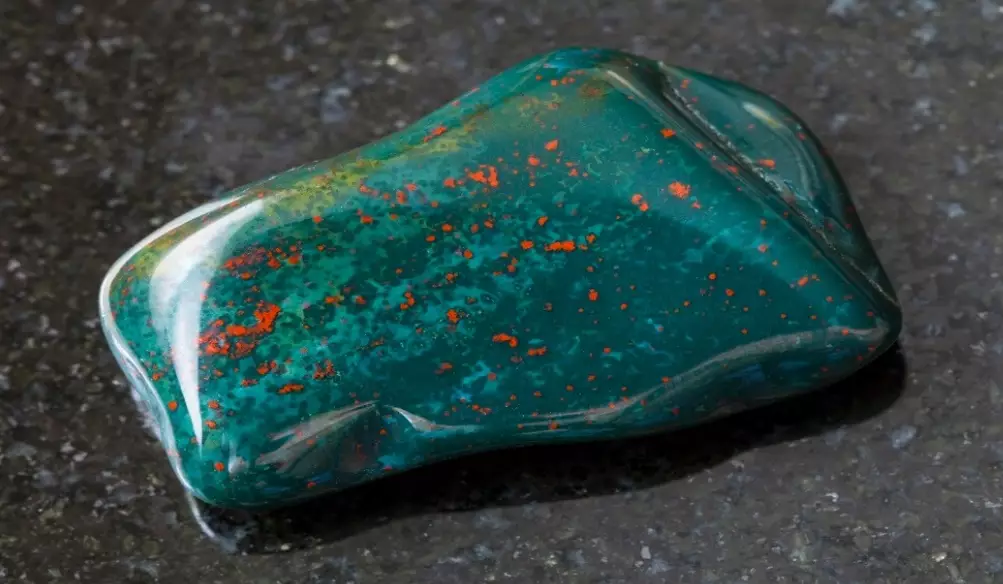
This guide cuts through the noise. We're going beyond the generic "stone of courage" descriptions. I'll show you what bloodstone really is from a geological and practical standpoint, how to tell a real one from a clever fake (a huge problem online), and the tangible ways people actually use it beyond the metaphysics. Whether you're a curious newbie, a jewelry maker, or a seasoned collector looking for deeper insight, you'll find actionable information here.
What's Inside This Guide
- What Exactly Is Bloodstone? Breaking Down the Basics
- Bloodstone Properties & Real-World Uses: Beyond the Hype
- How to Identify a Real Bloodstone: A Step-by-Step Guide
- Buying Bloodstone: What Determines Value and Price?
- Bloodstone Care and Cleaning: What Most Guides Get Wrong
- Your Bloodstone Questions, Answered (No Fluff)
What Exactly Is Bloodstone? Breaking Down the Basics
Forget the mystical names for a second. Geologically, bloodstone is a variety of chalcedony, which itself is a microcrystalline form of quartz. The base is a deep, opaque green—usually from chlorite or hornblende minerals. Those iconic red spots? That's iron oxide, specifically hematite. It's not blood; it's rust. The stone forms when silica-rich deposits cool, and iron oxides get included in the mix. The most prized specimens have a rich, forest-green background with bright, vivid red contrasts.
Historically, it's had some wild press. Ancient warriors believed it could stanch bleeding (hence the name "heliotrope," meaning "sun turner," linked to old bleeding remedies). Medieval Christians associated the red spots with the blood of Christ, carving scenes into it for religious pieces. This history is cool, but it's led to a common modern pitfall: assuming its value is primarily historical or symbolic. In reality, its value today is in its durability (a 6.5-7 on the Mohs scale, good for jewelry) and its unique, unmistakeable appearance.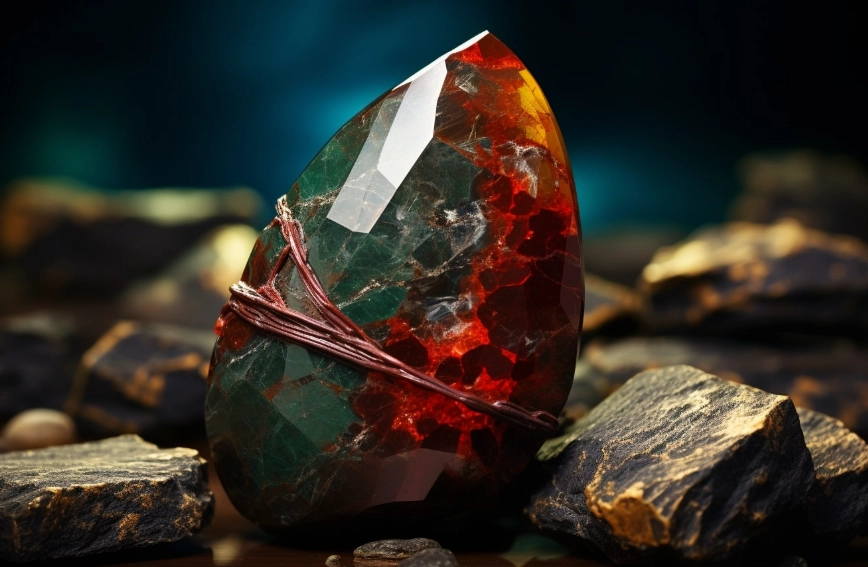
A Quick Identity Card
Scientific Name: Heliotrope (though "bloodstone" is universally used now).
Family: Chalcedony / Quartz.
Key Feature: Green jasper with red iron oxide inclusions.
Hardness: 6.5 - 7. Good for daily-wear rings and bracelets with proper setting.
Primary Sources: India, Brazil, Australia, and the United States (Wyoming).
Bloodstone Properties & Real-World Uses: Beyond the Hype
Here's where we separate folklore from function. Metaphysically, bloodstone is championed as the ultimate grounding and endurance stone. It's linked to the root chakra. People talk about courage, vitality, and cleansing. Fine. But what does that translate to in daily life? Based on my conversations with hundreds of users and my own experience, its utility isn't in vague energy fields, but in its role as a psychological anchor.
Think of it this way. You have a big presentation, a tough conversation, or you're feeling scattered and anxious. Holding a smooth bloodstone palm stone, feeling its cool, substantial weight, and focusing on the intricate red patterns can pull your mind away from a panic spiral. It's a tangible focus point. That's its most powerful "property"—it brings you into the present moment through touch and sight. I've seen clients use it more effectively for this than any clear quartz.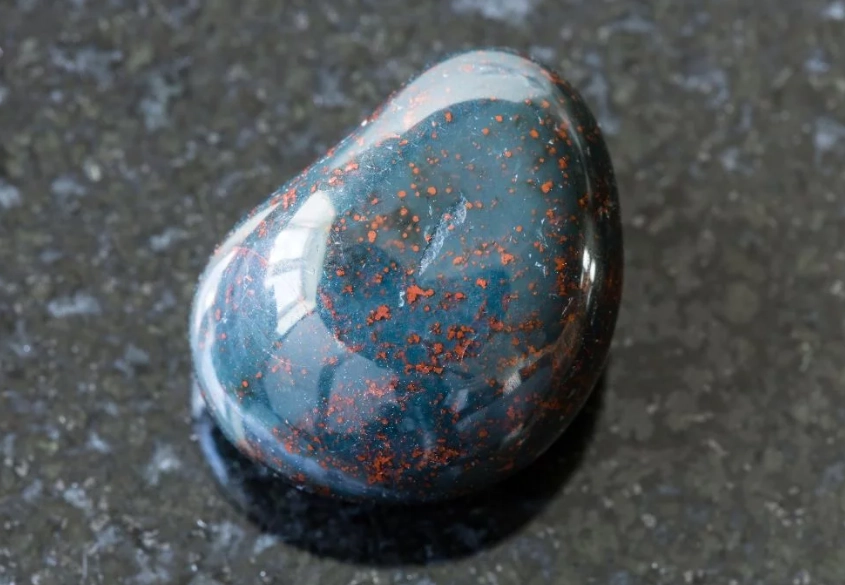
Practical Applications I've Seen Work
For Jewelry: It's stunning in men's rings and signets. Its dark color is professional, and the red flecks add character. Bezel settings protect the edges. I wear a bloodstone pinky ring when I need a confidence boost during client negotiations. It's not magic; it's a reminder of my own preparedness.
As a Meditation Aid: Place it in front of you. Instead of trying to empty your mind, just trace the red spots with your eyes. It gives your busy brain a simple, non-verbal task, making it easier to settle. This is far more effective for beginners than trying to "just breathe."
In Creative Work: Writers and artists I know keep a piece on their desk. When stuck, they fiddle with it. The tactile feedback seems to short-circuit creative block, maybe by engaging a different part of the brain. It's a tool for persistence.
How to Identify a Real Bloodstone: A Step-by-Step Guide
The online market is flooded with fakes. The most common are dyed howlite or magnesite (stained a uniform green with painted red spots) or outright glass or resin imitations. Here’s my field-tested method to avoid getting scammed.
Step 1: Examine the Color Pattern. This is the biggest tell. Real bloodstone's red spots are inclusions, not paint. They look like they're inside the stone. They have irregular shapes—splatters, streaks, specks. Fakes often have red spots that look too uniform, sit on the surface, or have a painted, blurry edge. The green should be deep and opaque, not bright or translucent.
Step 2: The Scratch & Temperature Test. Real bloodstone is hard. Try to scratch an inconspicuous spot with a steel knife (hardness ~5.5). It shouldn't leave a mark. A fake made of softer material will scratch. Also, real stone feels cool to the touch and warms slowly. Plastic or resin feels warm immediately.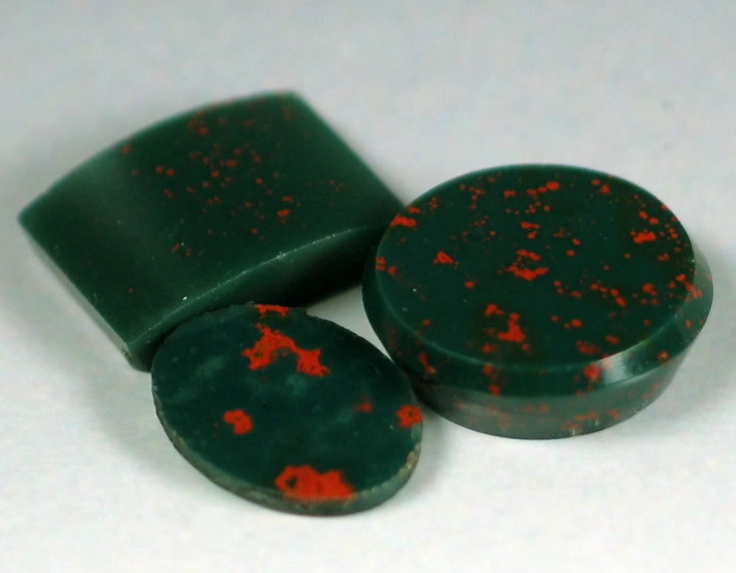
Step 3: Look for Natural Imperfections. Genuine stones have small pits, varying texture, or other mineral inclusions. An absolutely flawless, perfectly uniform piece is a major red flag. Nature is messy.
Step 4: The Magnification Check. Use a jeweler's loupe or your phone's macro camera. Real hematite inclusions have a crystalline or granular structure up close. Painted spots will look like a flat layer of dye, sometimes with brush marks or pooling.
| Feature | Real Bloodstone | Common Fake |
|---|---|---|
| Red Spots | Irregular, internal, sharp-edged splatters. | Uniform, surface-level, blurry "painted" dots. |
| Green Base | Deep, opaque forest/jungle green. | Often too bright, too uniform, or has a plastic sheen. |
| Texture | Cool to touch, can have minor pits/ridges. | May feel waxy, warm, or overly smooth. |
| Hardness | Cannot be scratched by steel. | Often scratches easily with metal. |
| Price (for a palm stone) | $15 - $50+ for good quality. | Often suspiciously cheap ($5-$10). |
Buying Bloodstone: What Determines Value and Price?
You don't need to break the bank. Value hinges on a few visual factors:
Color Contrast: High-contrast pieces with a vivid, dark green and bright, cherry-red spots command the highest prices. Muddy green with brownish-red spots is more common and affordable.
Spot Distribution: Even, interesting distribution is prized. A stone where all the red is clumped in one corner is less valuable than one with a dramatic, scattered pattern.
Cut and Polish: A well-cut cabochon (domed shape) with a high polish that enhances the stone's depth will cost more than a rough, unpolished chunk.
Size and Purpose: Tumbled stones for crystal grids are cheap ($2-$10). High-quality, large palm stones or display specimens run $25-$100. Fine jewelry pieces depend heavily on the metal (silver vs. gold) and craftsmanship.
My advice? Start with a small, genuine tumbled stone or a simple wire-wrapped pendant from a reputable seller (check reviews for mentions of authenticity). Get a feel for the real thing before investing in a large statement piece.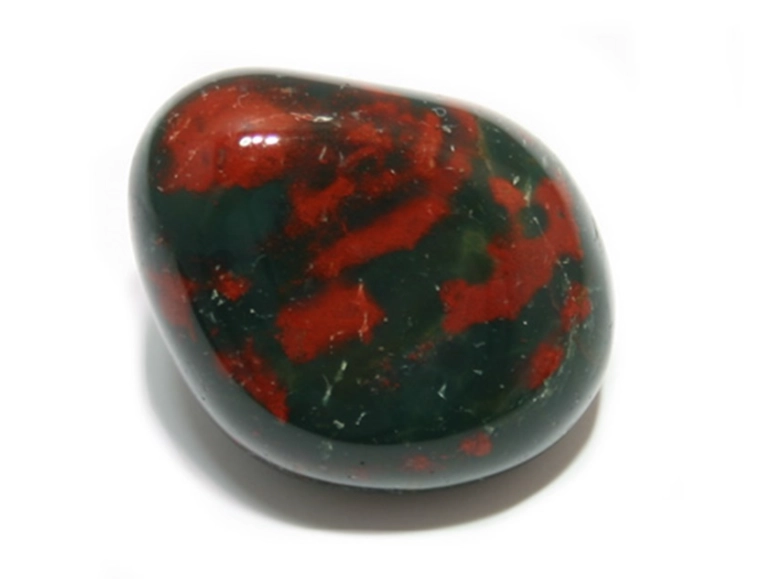
Bloodstone Care and Cleaning: What Most Guides Get Wrong
Most crystal sites will tell you to cleanse bloodstone with salt water or sunlight. Please don't. This is a great way to ruin it. Salt water can seep into tiny fractures and erode the stone or its polish over time. Prolonged, direct sunlight can fade the vibrant green color, leaving it looking washed out.
Here's the safe, effective routine I use for my own collection:
Cleaning: Use warm, soapy water (mild dish soap) and a soft toothbrush. Gently scrub to remove dirt and skin oils. Rinse thoroughly and pat dry with a soft cloth. That's it.
Energetic Cleansing (if you're into that): Use sound (a singing bowl or bell), smudge with dry sage (keep it brief, no soot residue), or place it on a bed of selenite or clear quartz overnight. Burying it in dry earth for 24 hours is also a classic, powerful method.
Storage: Wrap it in a soft cloth or keep it in a fabric-lined box. Don't toss it loosely in a bag with harder stones like diamonds or sapphires, which can scratch it.
Your Bloodstone Questions, Answered (No Fluff)
Can bloodstone actually help with anxiety or is that just placebo?
The mechanism is likely psychological, but that doesn't make it less real. Holding a smooth, cool stone forces you to engage your senses of touch and sight, which interrupts the internal anxiety narrative. It's a grounding technique. For many, the stone becomes a conditioned trigger for calm because they've practiced using it that way. So, it's a tool. A worry stone. Its effectiveness depends on how you use it, not an inherent "energy."
I bought a bloodstone online. How can I be 100% sure it's not fake?
Perform the scratch test in an inconspicuous area. Get a steel nail or knife. Press firmly and try to scratch it. If it leaves a clear, gouging mark, you likely have dyed howlite or magnesite. Real bloodstone will, at worst, leave a faint metallic streak from the knife that wipes off. Combine this with the visual check under magnification. If it fails, contact the seller for a refund—most reputable ones will comply if you provide your test evidence.
 What's the biggest mistake people make when using bloodstone for the first time?
Expecting it to work like a switch. They'll hold it for 30 seconds during a panic attack and get frustrated when they still feel anxious. It's not a pill. The benefit is cumulative and practice-based. Carry it in your pocket for a week. Touch it whenever you feel overwhelmed. Use it during a 5-minute breathing exercise every morning. Over time, your brain associates the stone with a calmer state. The mistake is treating it as a cure instead of a training aid.
Is bloodstone safe to get wet? Can I wear my bloodstone ring every day?
Yes, it's safe for brief contact with water (washing hands, rain). Its hardness makes it suitable for daily wear in protective settings. A bezel or halo setting is ideal for a ring. Avoid designs where the stone protrudes and can get knocked against hard surfaces. Remove it during heavy manual labor, gym workouts, or while using harsh chemicals. Daily wear is fine with a bit of common sense.
How does Indian bloodstone differ from Brazilian bloodstone?
Indian bloodstone, particularly from the Deccan Plateau, is often considered the classic standard. It tends to have a very deep, almost black-green base with bright, distinct red spots. Brazilian material can sometimes have a slightly lighter or more olive-green hue, and the red inclusions might be more diffuse or orange-toned. Both are "real." The difference is aesthetic, not qualitative. It comes down to which color contrast you personally prefer.
 Bloodstone's power isn't in ancient legends or vague energy claims. It's in its physicality—its weight, its striking, earthy beauty, and its role as a simple, tactile tool for focus and grounding. By understanding what it truly is, how to find a genuine piece, and how to practically incorporate it, you move past crystal folklore into a space of genuine, personal utility. Start with a small, real stone. Hold it. Look at it. See what it does for you, not what a website says it should do. That's where the real value is found.