Jump Straight to What Matters
Let's get straight to it. Agate isn't just another pretty stone. I've been collecting minerals for over a decade, and agate always surprises people with its depth. You've seen those banded, colorful pieces in shops or online, but what's the real story? Agate is a form of chalcedony, a microcrystalline quartz, and it forms in layered patterns in volcanic rocks. It's tough, takes a polish well, and comes in endless varieties. But here's the kicker: many beginners get fooled by dyed or fake agates. I'll walk you through how to spot the real deal.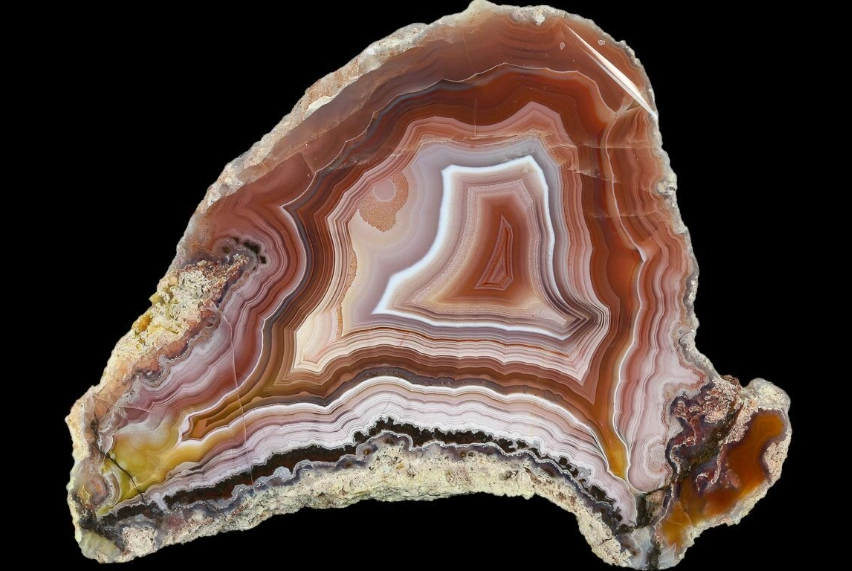
What Exactly is Agate Mineral?
Agate is a common mineral, but that doesn't make it simple. Geologically, it's a variety of chalcedony, which itself is a type of quartz. The key feature? Banding. Those stripes or layers form when silica-rich fluids seep into cavities in rocks, often volcanic ones like basalt, and deposit layers over time. Think of it like tree rings, but for stones.
Most agate forms in ancient lava flows. As the lava cools, gas bubbles create voids. Over millions of years, groundwater carrying dissolved silica enters these voids. The silica crystallizes slowly, layer by layer, resulting in those characteristic bands. The colors come from impurities—iron oxides might give reds and yellows, manganese can add pinks or blacks.
I remember my first agate hunt in Oregon. I found a rough piece with dull gray bands—nothing spectacular. But after cutting and polishing, it revealed vibrant blues and whites. That's the magic: agate often hides its beauty inside.
How to Identify Agate: A Step-by-Step Process
Identifying agate isn't rocket science, but it requires attention to detail. Many collectors rush and mislabel stones. Here's a method that works, based on my field experience.
Key Physical Properties to Look For
Start with the basics. Agate has a hardness of 6.5 to 7 on the Mohs scale, so it can scratch glass. The luster is waxy to vitreous, especially when polished. Look for banding—this is the hallmark. The bands can be straight, curved, or even concentric. Transparency ranges from translucent to semi-translucent; hold it up to light. You should see some light passing through, especially at the edges.
Weight can be a clue. Agate feels dense for its size because it's quartz-based. Compare it to a similar-sized piece of plastic or glass; agate will feel heavier.
Tools You Need for Accurate Identification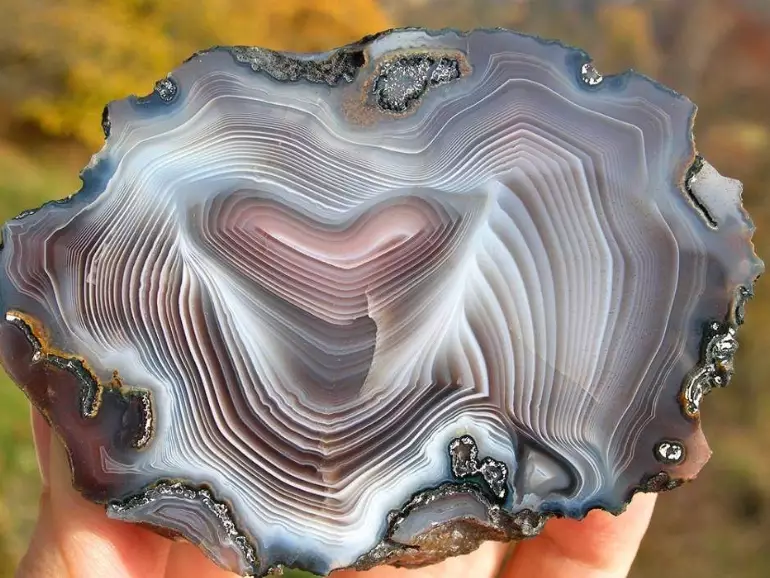
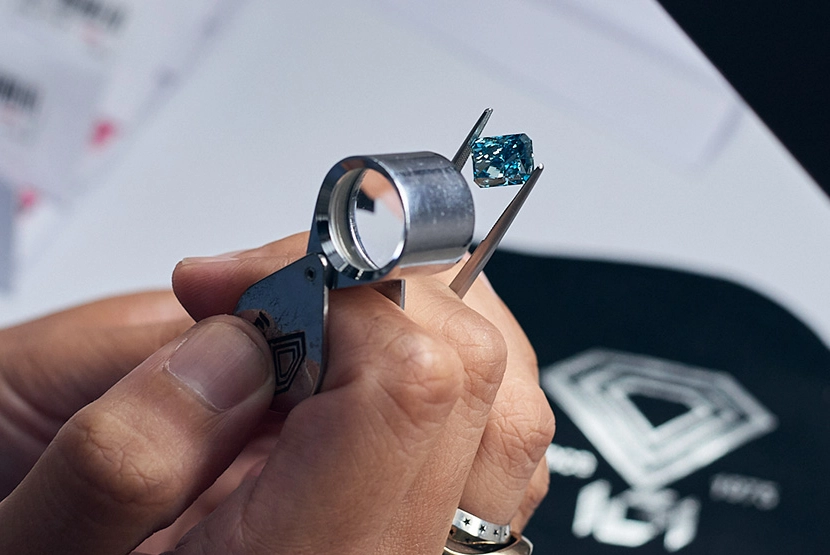
You don't need a lab. A simple kit helps: a loupe (10x magnification), a hardness pick or a steel nail (agate should resist scratching from steel), and a bright light. A drop of water can enhance transparency. For advanced checks, a UV light might show fluorescence in some agates, but that's optional.
Common mistake: people assume all banded stones are agate. Some sedimentary rocks like onyx marble have bands too, but they're softer (around 3 on Mohs scale). Test the hardness.
Let's say you're at a flea market. You see a striped stone. First, check for banding under the loupe. Then, try to scratch it discreetly with a key (hardness about 5.5). If it resists, it might be agate. But beware—dyed agates are everywhere. The bands in natural agate often have subtle color transitions, while dyed ones can look unnaturally bright or have dye concentrated in cracks.
Common Types of Agate and Where They're Found
Agate comes in dozens of types, each with unique patterns. Here's a table of the most sought-after ones, based on data from mineralogical surveys like those by the U.S. Geological Survey and the International Gem Society.
| Type of Agate | Key Characteristics | Typical Locations |
|---|---|---|
| Blue Lace Agate | Delicate light blue bands with white, lacy patterns. Often translucent. | Namibia, Brazil, United States (Oregon) |
| Fire Agate | Iridescent play-of-color, usually brown base with red, green, or gold flashes. Looks like fire. | Mexico, southwestern United States |
| Moss Agate | Not true banding; contains green dendritic inclusions that resemble moss or plants. Usually translucent. | India, United States (Montana), Brazil |
| Crazy Lace Agate | Complex, swirling bands in reds, yellows, and whites. Often called "happy" agate. | Mexico (Chihuahua region) |
| Botswana Agate | Fine, parallel bands in shades of gray, pink, and brown. Highly prized for its precision. | Botswana, Africa |
I have a soft spot for moss agate. It doesn't have bands, but those green inclusions—usually hornblende or chlorite—create stunning landscapes. People often mistake it for jade, but it's harder and more translucent.
Location matters. Agate from Brazil tends to be larger and more colorful, while Oregon agate is known for its fortification patterns (angular bands). If you're buying, ask about origin. Some sellers label any banded stone as "agate" from a famous locale to hike prices.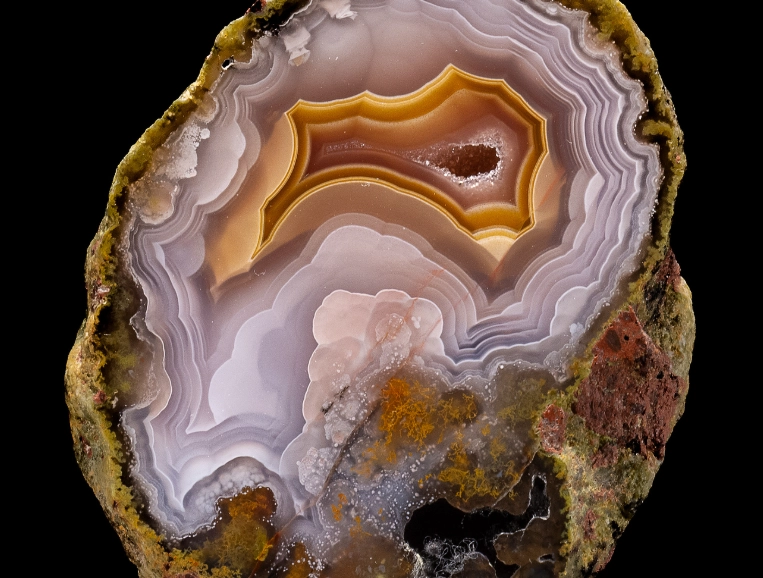
Practical Uses of Agate in Jewelry and Decor
Agate isn't just for collectors. Its durability and beauty make it versatile. In jewelry, it's commonly cut into cabochons for rings, pendants, and bracelets. The bands look elegant when polished. Tumbled agate pieces are popular in crystal healing circles, though I'm skeptical about metaphysical claims—focus on the aesthetics.
Beyond jewelry, agate slices are used as bookends, coasters, or even inlaid in furniture. I've seen agate used as knife handles because it's tough. In industry, agate's hardness makes it useful for mortars and pestles in labs, though synthetic materials are replacing it.
When using agate in jewelry, consider the cut. Agate with parallel bands looks best in oval cabochons, while crazy lace patterns suit freeform shapes. Polishing is key—a good polish brings out the luster. Avoid ultrasonic cleaners for agate jewelry; the vibrations can weaken natural fractures. Stick to mild soap and water.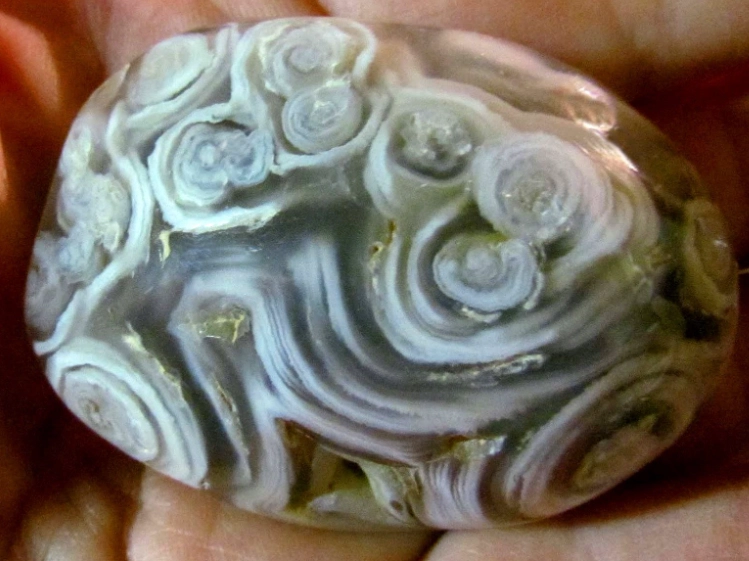
Buying Agate: How to Avoid Common Pitfalls
Buying agate can be tricky. The market is flooded with treated stones. Here's what I've learned from both buying and selling.
First, price. Natural, high-quality agate isn't cheap, but it's not exorbitant either. A small tumbled piece might cost $5-$20, while a large, polished slice with rare patterns can go for hundreds. If a deal seems too good, it probably is.
Watch out for dyeing. Many agates are enhanced with dyes to boost colors. Dyed agate often has saturated colors that look uniform under magnification, with dye pooling in cracks. Natural agate has more subtle, uneven hues. Ask the seller if it's treated. Reputable sellers will disclose this.
Another scam: selling plastic or glass imitations. These feel lighter and warmer to the touch. Do the hardness test. Also, check for air bubbles under a loupe—real agate won't have them.
Where to buy? Mineral shows are great because you can inspect stones in person. Online, stick to trusted sites like those affiliated with the International Gem Society or established lapidary shops. Read reviews. Avoid generic marketplaces where sellers might not know their stock.
I once bought a "rare blue agate" online that turned out to be dyed howlite. It was a letdown. Now, I always request a video under natural light before purchasing.
Your Agate Questions Answered
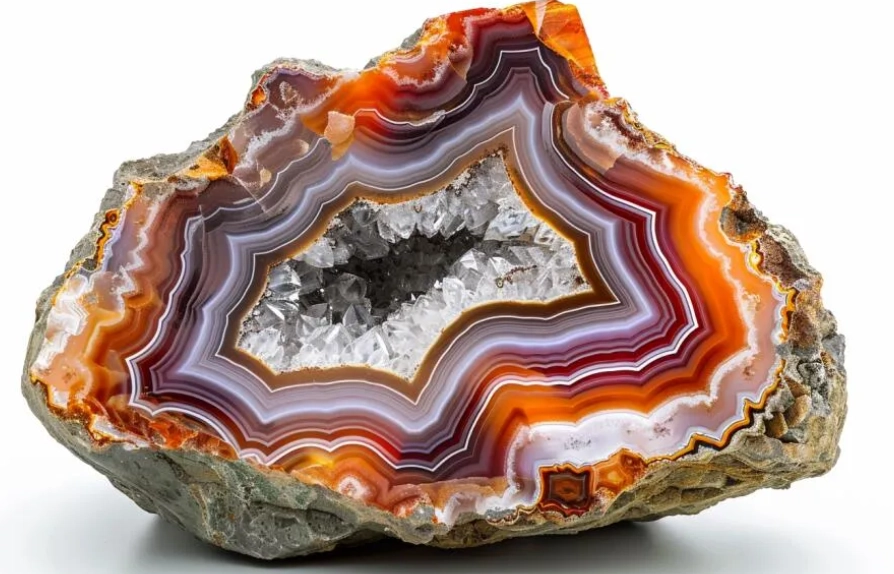 Agate mineral offers endless fascination. Whether you're a beginner or a seasoned collector, understanding its basics saves money and enhances appreciation. Dive in, get your hands dirty, and enjoy the hunt.