Explore the Guide
Let's get straight to it. If you're shopping for jewelry or just curious about modern gems, you've probably asked yourself: which gemstones are lab-grown these days? The answer is, frankly, almost all of them. The technology has leaped forward so much in the last decade that scientists can now recreate the conditions of the Earth's crust for a stunning variety of precious and semi-precious stones. It's not just about diamonds anymore (though they get all the headlines). We're talking about the vibrant blue of a sapphire, the deep green of an emerald, and the fiery red of a ruby – all born not in the ground, but in a controlled laboratory environment.
I remember the first time I held a lab-grown diamond next to a natural one. A jeweler friend laid them out on a black velvet cloth and challenged me to tell the difference. I couldn't. Not with my naked eye. That moment changed my whole perspective. It's not a "fake" versus "real" debate anymore. It's about origin. And understanding that origin is key to making a choice you feel good about.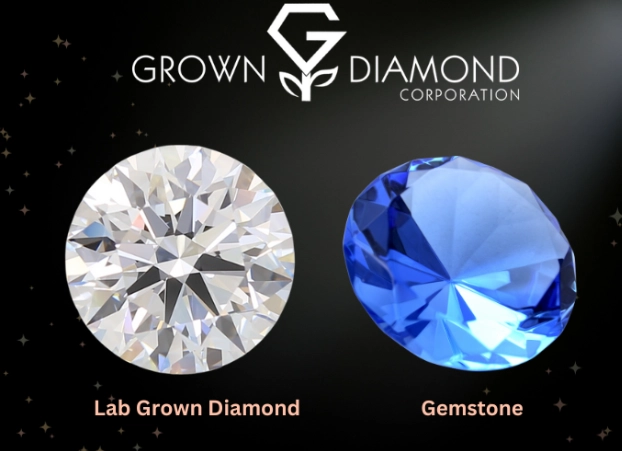
The Complete List: Which Gemstones Can You Find in a Lab?
Alright, let's dive into the meat of it. Here’s a breakdown of the gemstones you can commonly find created in laboratories today. I've organized them by category to make it easier to digest.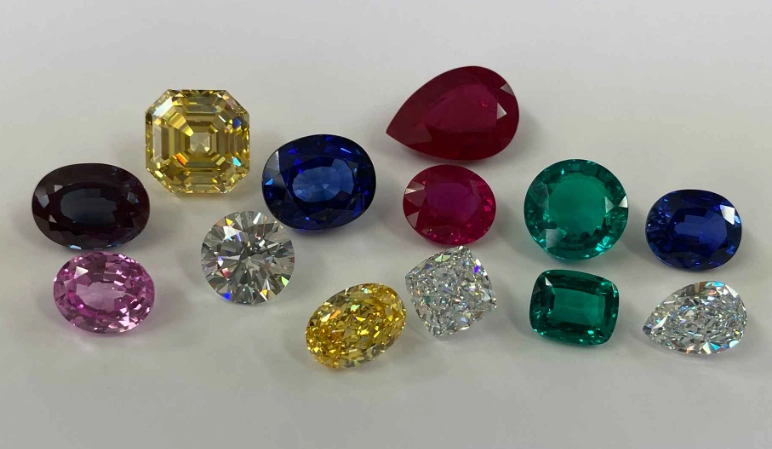
| Gemstone Category | Specific Lab-Grown Gems | Primary Lab Method(s) | Notes & Availability |
|---|---|---|---|
| Precious & Major Gems | Diamond, Ruby, Sapphire (all colors: blue, pink, yellow, padparadscha), Emerald | HPHT, CVD (Diamond); Flux, Hydrothermal (Emerald); Czochralski, Verneuil (Ruby/Sapphire) | These are the most commercially successful and widely available lab-grown gems. Quality is consistently high. |
| Quartz Varieties | Amethyst, Citrine, Prasiolite, Smoky Quartz, Rose Quartz | Hydrothermal | Extremely common and affordable. Often used in fashion jewelry. The process mimics nature very effectively. |
| Other Popular Singles | Alexandrite, Opal, Spinel, Tanzanite (simulant) | Flux, Hydrothermal, Gilson method (Opal) | Alexandrite (color-change) is a lab superstar. Lab opals can be stunningly realistic. "Lab tanzanite" is usually a simulant like synthetic forsterite. |
| Less Common but Available | Aquamarine, Topaz (blue), Garnet, Peridot | Hydrothermal, Flux | You can find them, but they are less frequently marketed than the top-tier gems. Often a pleasant surprise for custom jewelers. |
See? The list is extensive. When people ask "which gemstones are lab-grown," they often assume it's a short list. It's not. It's a vast and growing one. The barrier is rarely science anymore; it's market demand. If people will buy it, labs will find a way to grow it.
The quartz family deserves a special shout-out.
It's the unsung hero of the lab-grown world. Because the hydrothermal process is so good at growing quartz, you can get flawless, deeply colored amethyst or citrine for a fraction of what a high-quality natural piece might cost (though natural quartz is already affordable). This has completely flooded the market for bead necklaces and statement rings. Nothing wrong with that—it just means more color for everyone.
How Are These Stones Actually Made? A Peek Behind the Curtain
Understanding the "how" makes the "what" much clearer. There are two main families of processes, and the method used depends entirely on the gemstone's chemical composition and crystal structure.
The High-Pressure, High-Temperature (HPHT) Method: Think of this as a high-tech pressure cooker. It recreates the extreme heat and pressure that forms diamonds deep in the Earth. A tiny diamond "seed" crystal is placed in a chamber with pure carbon (like graphite) and subjected to over 1,500 degrees Celsius and pressure 50,000 times greater than atmospheric pressure. The carbon melts and crystallizes onto the seed, growing a diamond layer by layer. This method is also used for some synthetic moissanite and corundum (ruby/sapphire).
The Chemical Vapor Deposition (CVD) Method: This one feels more like sci-fi. A thin slice of diamond seed is placed in a vacuum chamber filled with a carbon-rich gas (like methane). The gas is ionized into plasma using microwaves or lasers, breaking down the molecular bonds. The pure carbon atoms then rain down and settle on the diamond seed, building up a crystal atom by atom. It's slower and allows for incredible control over purity. This is primarily for diamonds.
The Hydrothermal Method: This is the go-to for gems that form from watery solutions in nature, like emerald and quartz. It mimics a geode. A sealed autoclave (a strong steel cylinder) is filled with water, nutrient chemicals (like silica for quartz, or beryllium and chromium for emerald), and a seed plate. The autoclave is heated to create high-pressure steam, dissolving the nutrients. As the solution cools, the crystals grow on the seed. It's a slower, more delicate process, but it yields beautiful crystals with natural-looking inclusions sometimes.
The Flux Method: Imagine growing a crystal from a molten soup. A crucible containing a flux (a solid material that melts to become a solvent) and the necessary chemical ingredients is heated until everything dissolves. As the solution slowly cools over weeks or months, crystals form. This is a classic method for creating synthetic emeralds, rubies, and alexandrite. The resulting gems can be incredibly clean and large.
I find the hydrothermal process for emeralds particularly fascinating. Natural emeralds are famously included—their "jardin" or garden of internal flaws is part of their charm. Some lab-grown emeralds, especially older ones or those grown with specific techniques, can intentionally have inclusions added to mimic this look. It's a funny twist: labs spending extra effort to make something look less perfect, just to meet customer expectations of what an emerald "should" look like.
Why Choose Lab-Grown? The Good, The Practical, and The Honest Downsides
Let's talk motivation. Why are people increasingly seeking out which gemstones are lab-grown? It's not just about price, though that's a massive factor.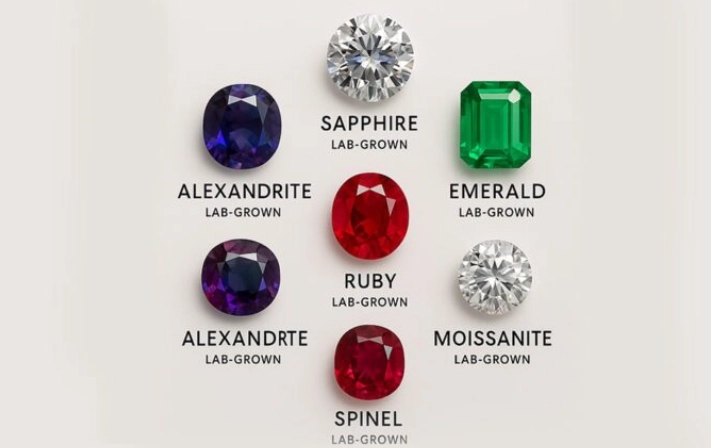
The Compelling Advantages
Cost, Cost, Cost. This is the biggest driver. A lab-grown gem typically costs 30% to 80% less than a comparable natural stone. For diamonds, the savings can be astronomical. This means you can get a significantly larger or higher-quality stone for the same budget. Or, you can get the stone you always wanted at a price point that doesn't induce heart palpitations.
Ethical and Environmental Peace of Mind. While the diamond industry has made strides with the Kimberley Process, the concern over conflict diamonds persists. Lab-grown gems offer a guaranteed conflict-free origin. On the environmental front, it's a mixed bag (mining has a huge footprint, but labs use immense energy), but the controlled environment generally avoids issues like habitat destruction, soil erosion, and water table pollution associated with large-scale mining.
Consistent Quality and Availability. Nature is unpredictable. Finding a flawless, deeply colored large natural sapphire is rare and commands a premium. Labs can produce these consistently. Want a 5-carat, vivid blue, eye-clean sapphire? No problem. This reliability is a game-changer for jewelers designing collections.
Innovation in Color. Labs can create colors that are exceptionally rare or even non-existent in nature. Think of a perfectly saturated "hot pink" sapphire or a diamond in a clear, vibrant blue or yellow that doesn't require treatment. They open up a playground for designers.
The Realities and Considerations
It's not all rainbows. Being honest about the trade-offs is important.
The Perception of Value. This is the elephant in the room. Natural gems have rarity and geological history on their side, which traditionally translates to retained or appreciating value. Lab-grown gems are manufacturing products. Their cost of production may decrease over time as technology improves, which could affect their resale value. If you're buying a gem as an heirloom investment, this matters. If you're buying it to wear and enjoy for a lifetime, it matters far less.
Energy Use. The "green" claim needs nuance. Growing crystals, especially via HPHT or CVD, requires a tremendous amount of energy. The sustainability of a lab-grown gem depends heavily on the energy source of the facility (e.g., renewable vs. coal). It's a different type of environmental impact than mining, not necessarily a universally lesser one.
The Sentiment Factor. For some, the story of a stone formed over millions of years is irreplaceable. The romance of the Earth's creation is part of the allure. A lab-grown gem, for all its perfection, lacks that ancient narrative. This is a purely emotional, but completely valid, consideration.
My personal take? The value argument is overblown for most buyers.
The vast majority of people never sell their engagement ring or their favorite pendant. They wear it until they pass it down. The "value" is in the joy it brings every day, not in a hypothetical future auction. But I completely respect the other viewpoint. If the history and rarity are what you're paying for, then a natural stone is your only option.
How to Know What You're Buying: Identification and Certification
This is crucial. With the naked eye, even a trained gemologist often can't tell. So how do you avoid being misled?
1. Reputable Sellers and Clear Disclosure. Any honest retailer will explicitly state if a gem is lab-grown or natural. The FTC requires this. Be wary of vague terms like "cultured" or "created" without clear context. Ask directly: "Is this gemstone natural or laboratory-grown?"
2. The Invoice is Key. The sales receipt or invoice must accurately describe the gem. It should say "laboratory-grown diamond," "synthetic sapphire," "created emerald," etc.
3. Get a Grading Report from a Major Lab. This is your best protection. For diamonds, insist on a report from the Gemological Institute of America (GIA) or the International Gemological Institute (IGI). For colored stones, labs like the American Gemological Laboratories (AGL) or Gübelin provide reports. These reports will state the origin conclusively.
- GIA Reports: For lab-grown diamonds, GIA reports are distinctly different in color and clearly say "Laboratory-Grown." You can see examples on their Gem Encyclopedia page, which is an incredible resource for understanding gemology basics.
- IGI Reports: IGI was an early adopter in grading lab-grown stones and provides detailed reports. Their website offers good educational content on the identification process.
4. Understanding Inscriptions. Most graded lab-grown diamonds have their report number laser-inscribed on the girdle (the thin edge). You often need a loupe to see it. This inscription is a direct link to the report confirming its origin.
The science of identification is deep. Gem labs use advanced spectroscopy to detect subtle traces of growth patterns, impurities, and strain within the crystal that are telltale signs of lab growth. For instance, some CVD diamonds may show a specific strain pattern under crossed polarizers, and many lab-grown colored stones have characteristic inclusions like flux remnants or seed plates that give them away under magnification. The GIA website publishes research on these identification techniques, which underscores how sophisticated the analysis has become.
Your Questions, Answered: The Lab-Grown Gemstone FAQ
Let's tackle some of the specific questions buzzing in your head. These are the things people really want to know after they find out which gemstones are lab-grown.
Making Your Choice: It's About What Matters to You
At the end of the day, the question of which gemstones are lab-grown leads to a more personal question: what do you value in a gem?
Make a list. Is it maximum size and brilliance on a budget? Is it a guaranteed ethical background? Is it the allure of a one-in-a-million natural creation with a geological passport? Is it a specific, unavailable color? Your priorities will point you in the right direction.
The wonderful thing about today's market is that you have a true choice. You are not limited by what a miner happened to find. You can have the classic beauty of a gem with a modern origin story. Or you can seek the ancient one. Both paths lead to beautiful jewelry.
Just go in with your eyes open. Ask the right questions. Demand proper certification. And choose the stone that makes you smile when you look at it—whether it spent millennia in the dark earth or a few weeks in a spotless lab chamber.
That's the real beauty of it all.