Quick Guide
- Start With Your Eyes: The First Line of Defense
- The Simple At-Home Tests (That Actually Work)
- When You Need Tools: Stepping Up Your Game
- The Tricky Part: Synthetics, Treatments, and Simulants
- When to Call a Professional Gemologist
- Common Questions (And Straight Answers)
- Putting It All Together: Your Action Plan
Let's be honest. You're looking at that ring, necklace, or pair of earrings—maybe it's a family heirloom, maybe it's something you just bought on a trip—and you have that nagging question. What is this stone? Is it a ruby or a garnet? A sapphire or blue topaz? Is it even real? It's a puzzle, and the jewelry store tag, if it ever existed, is long gone. You're not alone in wanting to know how to identify gemstones in jewelry. It feels like a secret code you need to crack.
I remember the first time I tried to figure out a stone in an old brooch I inherited. I held it under every lamp in the house, compared it to pictures online, and got more confused by the minute. Was that slight purplish tint a sign of an amethyst or just bad lighting? It was frustrating. The process of gemstone identification can seem daunting, reserved for experts in white lab coats. But here's the thing: you can learn a lot with your own eyes, a few simple tools, and some foundational knowledge. You won't become a certified gemologist overnight, but you'll gain the confidence to make educated guesses and know when it's time to call in a pro.
This guide is built to walk you through that entire process, from the basic observations you can do on your couch to understanding what the professionals do. We'll strip away the mystery and give you a practical, step-by-step framework. The goal isn't just to name a stone, but to understand the why behind the identification.
Start With Your Eyes: The First Line of Defense
Before you buy any equipment or try any tests, just look. Really look. Most mistakes in learning how to identify gemstones in jewelry happen because people skip this fundamental step and jump straight to complicated tests. Your eyes are powerful tools.
Pick up the piece in good, natural daylight if you can. Avoid the harsh yellow of incandescent bulbs or the weird blue cast of some LEDs. Daylight is the great equalizer. Rotate the stone slowly. What are you looking for?
Color and Its Secrets
Color is the most obvious feature, but it's also the most misleading. Many different gems share the same basic color. The key is in the nuances.
- Hue: This is the basic color—red, green, blue. But is it a purplish-red or an orangish-red? A bluish-green or a yellowish-green? That modifier is a huge clue.
- Tone: How light or dark is the color? Is it a pastel pink or a deep, vivid hot pink?
- Saturation: How strong or intense is the color? Is it a grayish, muddy blue or a vivid, electric blue?
For example, both ruby and red spinel can be a beautiful red. But a fine ruby often has a slight purplish or bluish secondary hue, while a spinel's red can be incredibly pure and vivid. It's a subtle difference, but train your eye to see it.
Clarity and Inclusions: The Stone's Fingerprint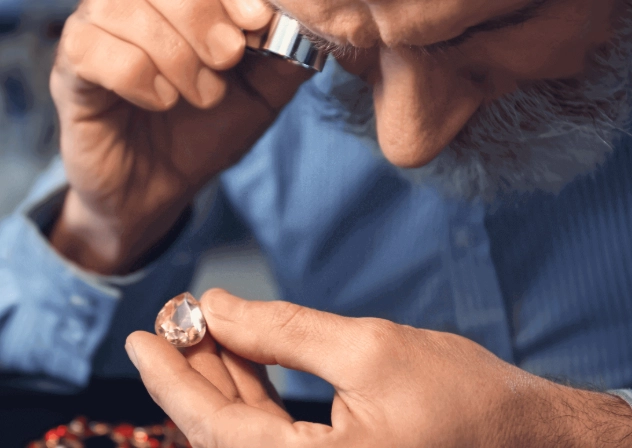
Inclusions—the tiny imperfections inside a gem—are not always bad. In fact, they are a gem's birth certificate. Natural stones form in environments that trap minerals, gases, or crystals inside them. These are clues to their origin.
A diamond might have tiny pinpoint crystals or feathers. An emerald is famously "jardined," meaning it has a garden-like appearance of inclusions (often fissures filled with gas or liquid). Many sapphires have fine, silk-like needles of rutile. If a stone is absolutely, perfectly clean under 10x magnification, it should raise a question: is it natural, or is it a synthetic (lab-created) stone or even glass? Synthetics can be inclusion-free, and glass is almost always clean.
Get a jeweler's loupe.
Seriously, this is the single best investment you can make. A standard 10x triplet loupe costs very little. It opens up a hidden world. Look for things like gas bubbles (a dead giveaway for glass), curved striae (lines that look like a phonograph record, common in synthetic corundum), or the distinctive "chevron" growth patterns in some ametrine. Learning to spot these is a core skill in gem identification.
The Simple At-Home Tests (That Actually Work)
You don't need a lab. There are a few safe, non-destructive tests you can do at home that will narrow down the possibilities dramatically. Let's talk about the big ones.
The Scratch Test & Hardness: Proceed with Caution
You've probably heard of the Mohs scale of hardness, from 1 (talc) to 10 (diamond). The idea is that a harder mineral can scratch a softer one. This is a useful property, but I have to be blunt: do not scratch the finished, polished surface of your jewelry. You will ruin it. The test is for rough or unmounted stones, or you can try to find an inconspicuous spot on the back of a setting, but it's risky.
Instead, use hardness as a confirming tool. If you suspect a stone is quartz (hardness 7), it should not be scratched by a steel knife blade (hardness ~5.5). If it scratches easily with the knife, it's not quartz—it could be calcite or fluorite. Common objects for reference: a fingernail is about 2.5, a copper penny is about 3.5, a steel knife is 5.5, and quartz (like a piece of amethyst or clear crystal) is 7.
Heft and Temperature: The Feel of the Stone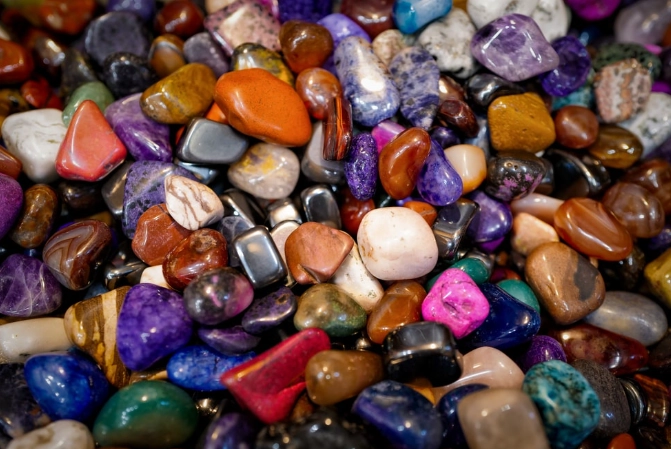
This is a subtle one, but with practice, it's telling. Density, or how heavy a stone feels for its size, varies. This property is called specific gravity.
- Heavy for its size: Zircon, garnet, diamond, corundum (ruby/sapphire). These feel surprisingly dense.
- Light for its size: Amber, glass, opal. They can feel a bit "cheap" or insubstantial.
Then there's thermal conductivity. Diamond is a fantastic conductor of heat. The classic "fog test" (breathe on the stone) is unreliable for diamonds now due to advanced simulants, but the thermal feel is part of what gemologists use. A diamond will disperse heat from your fingertip instantly, so it feels cool to the touch. Glass and cubic zirconia, which are poor conductors, will feel warmer initially. Don't rely on this alone, but add it to your mental checklist.
Check the Setting and Hallmarks
Often, the jewelry itself gives you hints. A piece set in 14k or 18k gold or platinum is more likely to hold a genuine, valuable gemstone than one set in base metal or silver-plated material. That's not a hard rule (beautiful gemstones are set in silver all the time), but it's a probability indicator.
Look for any stamps or hallmarks. "925" means sterling silver. "585" is 14k gold, "750" is 18k gold. "PT" or "Plat" indicates platinum. Also, inspect the quality of the setting. Are the prongs worn down? Is the stone loose? A very cheap, mass-produced setting might correlate with a less expensive stone, but again, it's just a clue, not proof.
When You Need Tools: Stepping Up Your Game
If you're getting serious about collecting or buying vintage jewelry, a couple of affordable tools can elevate your identification skills from guesswork to informed analysis.
The Chelsea Filter: An Old-School Gem
This is a simple colored filter that looks like a piece of dark red plastic. You view the gem through it under a strong white light. It's famously used for emeralds and rubies. Most emeralds will appear pink or red through the filter, while many green glass or green garnet (tsavorite) will remain green. Similarly, a ruby will often glow a bright red, while a red garnet or red spinel may look inert. It's not foolproof—some synthetic and treated stones can fool it—but it's a quick, fun test that can provide a strong hint.
The Refractometer: The Professional's Best Friend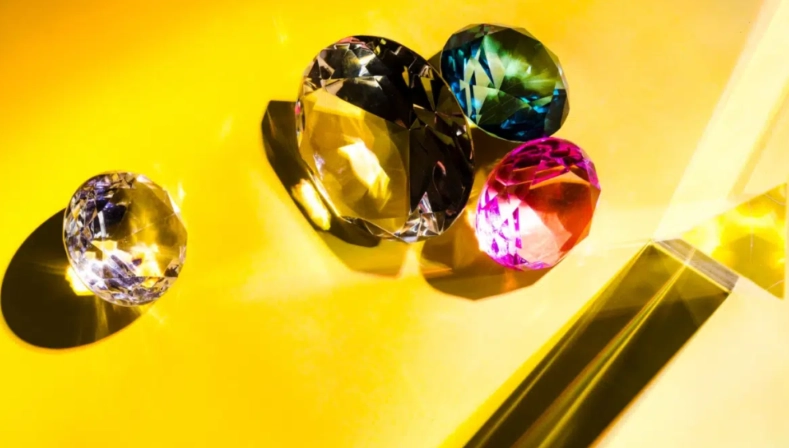
This is where we cross into more serious territory. A refractometer measures a gemstone's Refractive Index (RI)—basically, how much light bends as it enters the stone. Every gem species has a specific RI or a small range. It's one of the most diagnostic properties.
For example, quartz (amethyst, citrine) has an RI of about 1.54-1.55. Topaz is around 1.61-1.62. Corundum (ruby, sapphire) is 1.76-1.77. This single test can often separate look-alikes instantly. The downside? A decent refractometer costs money, and reading it takes practice. The shadow edge can be fuzzy, and doubly refractive stones show two lines, which you need to learn to interpret. It's a powerful tool, but it has a learning curve that can be frustrating at first.
Here’s a quick-reference table for some common gemstones and their key identifying properties:
| Gemstone | Typical Colors | Mohs Hardness | Refractive Index (RI) Range | Key Visual Clue |
|---|---|---|---|---|
| Quartz (Amethyst, Citrine) | Purple, Yellow, Smoky | 7 | 1.544 - 1.553 | Often has "tiger stripe" or fingerprint-like inclusions. |
| Topaz | Blue, Yellow, Pink, Colorless | 8 | 1.609 - 1.643 | Perfect basal cleavage (can split with a sharp blow). |
| Corundum (Ruby, Sapphire) | Red, Blue, Pink, Yellow, etc. | 9 | 1.762 - 1.770 | Strong dichroism (two colors in one stone), silky inclusions. |
| Beryl (Emerald, Aquamarine) | Green, Blue, Yellow | 7.5 - 8 | 1.577 - 1.583 | Emeralds have characteristic "jardin" inclusions. |
| Garnet (Almandine/Pyrope) | Deep Red, Purple-Red | 6.5 - 7.5 | 1.74 - 1.81 (approx.) | Often very included, can look slightly dark. |
| Cubic Zirconia (CZ) | Any color | 8 - 8.5 | ~2.15 - 2.18 | Heavier than diamond, often too "fiery," flawless. |
The Tricky Part: Synthetics, Treatments, and Simulants
This is where how to identify gemstones in jewelry gets complex. A stone can be "real" but not entirely natural in the way you think.
- Natural: Formed by geological processes in the earth.
- Synthetic (Lab-Created): Has the same chemical composition, crystal structure, and physical properties as the natural stone but was grown in a lab. It's "real" corundum or emerald, just not from the ground. These can be very hard to distinguish without advanced equipment.
- Treated: A natural stone that has been enhanced. Heating sapphires to improve color is universal and accepted. Filling emerald cracks with oil or resin is standard practice. Dyeing, irradiation, and lattice diffusion are other methods. Disclosure is key, but it's not always given.
- Simulant/Imitation: A completely different material made to look like the gem. Glass, plastic, cubic zirconia, synthetic spinel. These are "fakes" in the context of passing for another gem.
Identifying treatments and synthetics often requires microscopy to spot tell-tale flux residues, curved growth lines, or unusual color zoning. For the average person, the safest path is to assume any inexpensive, vividly colored, and flawless stone might be synthetic or heavily treated. If a deal seems too good to be true for a natural ruby, it almost certainly is.
When to Call a Professional Gemologist
You've done your homework. You've looked with a loupe, maybe even taken a refractometer reading. But you're still unsure, or the piece is valuable (sentimentally or monetarily). This is the time to stop guessing.
A professional gemologist with credentials from a major institute like the Gemological Institute of America (GIA) or the Gemmological Association of Great Britain (Gem-A) has access to tools you don't: advanced spectroscopes, polariscopes, UV lamps, and high-powered microscopes. More importantly, they have the training to interpret what they see.
They can provide a formal report that details the species, variety, carat weight, measurements, and—critically—any evidence of treatment or if it's synthetic. For a diamond, a GIA Diamond Grading Report is the global standard. For colored stones, a GIA Colored Stone Identification Report or similar from another reputable lab (AGL, GRS, SSEF) is what you want for high-value items.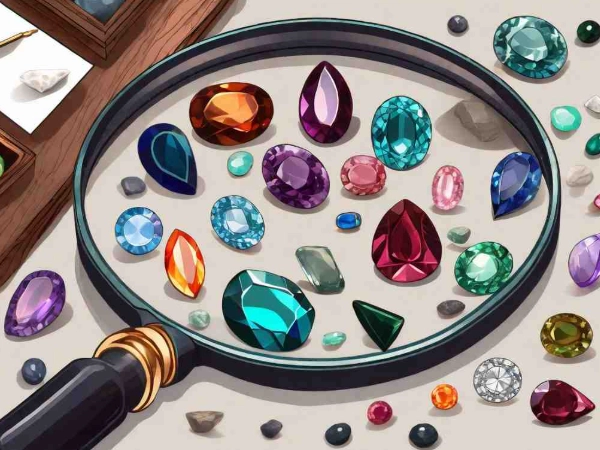
It's worth the fee.
For a piece you're about to spend thousands on, a $100-$300 report is cheap insurance. It turns "I think" into "I know." Reputable jewelers will not hesitate to let you get an independent appraisal. If they balk, walk away.
Common Questions (And Straight Answers)
How can I tell if my diamond is real?
Forget the fog test and the "newspaper" test. They're obsolete. At home, the best indicator for a diamond versus common simulants like CZ or glass is wear. Diamond is the hardest substance. After years of wear, the facets on a diamond will still have sharp, crisp edges. On a CZ or glass, the edges of the facets, especially around the girdle (the widest part), will be rounded and abraded from contact with softer materials. Under a loupe, a diamond may also have natural inclusions, while CZ is often flawless. But for certainty, see a professional.
What's the difference between ruby and red garnet?
Color, sparkle, and weight. Ruby is a stronger, more vivid red, often with a secondary purple or blue hue. Garnet (like almandine) is a deeper, darker, sometimes more purplish-red. Ruby has a higher refractive index and more brilliance (white light return). Garnet is singly refractive, so its sparkle is different—less "broken up" light. Ruby is also denser. If you had two stones the same size, the ruby would feel heavier. Under a loupe, garnets often have characteristic rounded inclusions that look like tiny crystals.
Is my blue stone a sapphire or blue topaz?
This is a classic. Topaz is much softer (8 vs. sapphire's 9) and less dense. The topaz will likely have more visible wear on facet edges if it's an older piece. The refractive index is very different (topaz ~1.61, sapphire ~1.76). Color can be a clue too—blue topaz is often a very even, light to medium sky blue (from irradiation treatment), while sapphire blues can range from pale to deep velvety blue and often show color zoning (darker and lighter patches). Topaz is also more likely to be completely clean, while sapphires usually have some inclusions.
How do I know if an emerald is real?
The inclusions are your friend. A real emerald almost always has visible inclusions to the naked eye or under a loupe—the "jardin." If it's a rich green and perfectly clean, it's probably synthetic (lab-created emerald) or green glass. The color of an emerald is a unique, cool, grassy green. Other green stones like tourmaline or peridot have warmer, yellower greens. Emeralds are also brittle and often oil-treated, so you might see fissures that look like cracks filled with a substance that has a different luster.
Putting It All Together: Your Action Plan
So you have a piece in front of you. Here’s a mental checklist for how to identify gemstones in jewelry systematically.
- Observe: In daylight, note the color nuances. Use your 10x loupe. Look for inclusions, wear, and quality of cut.
- Feel: Assess the heft. Does it feel appropriately heavy?
- Context: Examine the metal and setting. Are there hallmarks? Is the craftsmanship good?
- Simple Test: Can you safely do a thermal feel test or a Chelsea filter test?
- Tool Test (if available): Take a refractometer reading on a flat facet.
- Compare: Match your observations (color, RI, inclusions) against known data for suspected gems. Use the table above as a start.
- Decide: Are you confident? If yes, you have a probable ID. If no, or if the value is high...
- Consult: Take it to a certified gemologist for a definitive answer and report.
The journey of learning to identify gems is a lifelong one. Even experts get stumped sometimes. But each stone you examine teaches you something new. You start to see the patterns—the way light moves in a spinel versus a garnet, the particular green of a tsavorite, the sleepy transparency of a moonstone.
It turns a piece of jewelry from mere decoration into a story. A story of geology, of human craftsmanship, and now, of your own curiosity and detective work. That's the real reward. So grab that loupe and start looking. The secrets are right there, waiting in the light.