Quick Exploration
- Before You Start: The Mindset and Basic Toolkit
- The 7 Practical DIY Tests: From Simple to More Involved
- The Visual and Tactile Inspection
- The Scratch Test (Hardness Test)
- The Thermal Conductivity Test (The "Fog Test" and Breath)
- The Heft and Density (The Water Displacement Method)
- The Magnet Test
- The Refractivity and "Sparkle" Check
- The Chemical Resistance Test (Acetone Test)
- Putting It All Together: A Quick-Reference Table
- Common Questions You Might Be Asking
- Final Thoughts: Embrace the Curiosity
Let's be honest. You've got a piece of jewelry, maybe an heirloom ring or a stone you bought from a market, and a little voice in your head whispers, "Is this thing real?" Sending it to a lab like the Gemological Institute of America (GIA) is the gold standard, but it costs money and takes time. So you're here, looking for ways to figure it out yourself, with stuff you might have around the house. That's exactly what this guide is for.
I've been down this rabbit hole myself. A few years back, I inherited a bracelet with pale blue stones. My aunt swore they were aquamarine. They looked nice, but something felt off. That's what started my journey into learning how to check gemstones at home. I made mistakes, learned some tricks, and realized most guides online either oversimplify or make it sound like rocket science.
This isn't about becoming an overnight gemologist. It's about giving you a practical toolkit—a series of observations and simple tests—to gather clues about your stone's authenticity. Think of it as detective work. No single test is a 100% guarantee (I'll be brutally honest about that), but combining several can give you a very strong indication.
Before You Start: The Mindset and Basic Toolkit
Jumping straight into scratching or poking your gem is a bad idea. First, you need to look. Really look. Get yourself in a well-lit area, preferably with natural daylight. A bright LED desk lamp works too. The next tool is arguably the most useful one you can get for this hobby: a 10x loupe (a jeweler's magnifying glass). You can find decent ones online for under $20. A loupe is your window into the stone's soul—its inclusions, cut, and surface details.
Other items to gather might include: a strong magnet (neodymium is best), a piece of clear glass or an old ceramic tile (for the streak test, unglazed underside), a cotton swab and nail polish remover (acetone), a cup of water, and maybe a small kitchen scale if you want to get fancy. A flashlight from your phone is also handy.
Now, the most important step: try to identify what you think the gemstone is supposed to be. Is it a ruby? A diamond? An emerald? Knowing the suspected identity gives you a benchmark. You can look up its known properties (like hardness, typical inclusions) on a resource like the Gemdat database or the Mindat mineralogical database to know what you're comparing against.
The 7 Practical DIY Tests: From Simple to More Involved
Here’s where we get into the meat of it. How can I check my gemstone at home using these methods? I've ranked these in a rough order from least to most potentially damaging, and from most general to more specific.
The Visual and Tactile Inspection
This costs nothing and risks nothing. Hold the stone. Feel its temperature. Genuine gemstones, especially crystals, often feel cooler to the touch than room-temperature plastic or glass. It's a subtle clue, not proof. Now, look through your loupe. What are you searching for?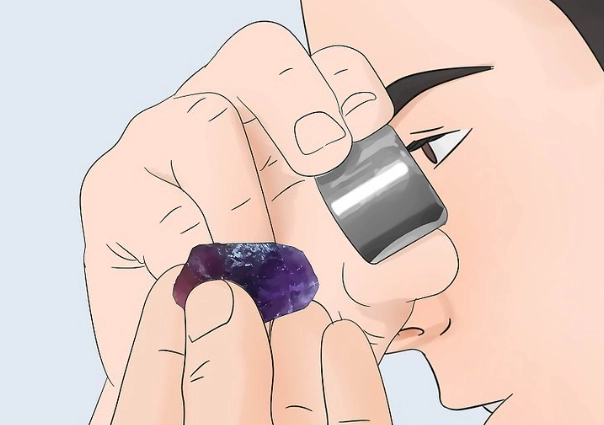
- Inclusions: Most natural stones have tiny fingerprints of nature inside them—minute crystals, feather-like fractures, clouds, or "jardin" (garden) in emeralds. Perfectly flawless clarity in a colored stone, especially if it's supposed to be an emerald or ruby, is a huge red flag. Glass and plastic are often too clean, or have spherical air bubbles (like in soda bubbles).
- Wear and Tear: Check facet edges (the sharp lines where the flat surfaces meet). On a genuine, hard gemstone like sapphire or diamond, these edges should be sharp and crisp, even in old jewelry. Softer materials like glass or costume jewelry will show rounded, abraded edges from daily wear.
- Color Distribution: Is the color perfectly even? Natural stones often have zones of lighter and darker color. Synthetic stones and glass can be uniformly colored, which looks suspiciously good.
I remember looking at my "aquamarine" bracelet with a loupe. The color was milky and uniform, and the facet edges were slightly soft. First clue.
The Scratch Test (Hardness Test)
This is the famous Mohs hardness test, but a home version. The principle is simple: a harder material can scratch a softer one. The Mohs scale from GIA rates minerals from 1 (talc) to 10 (diamond).
You need a set of reference points. Common ones:
- Fingernail (Hardness ~2.5)
- Copper penny (Hardness ~3)
- Glass (Hardness ~5.5)
- Steel knife blade or file (Hardness ~6.5)
- Quartz crystal (Hardness 7)
Try to gently scratch your stone's girdle with the glass. If the glass leaves a scratch on the stone, the stone is softer than 5.5. If the stone scratches the glass, it's harder. If you think it's a topaz (H=8), it should easily scratch quartz. This test is great for weeding out soft materials like calcite or howlite being sold as turquoise or lapis.
My bracelet stones? They scratched easily with a steel file. Aquamarine (beryl) has a hardness of 7.5-8 and should not be scratched by steel. Major red flag number two.
The Thermal Conductivity Test (The "Fog Test" and Breath)
Diamonds are exceptional heat conductors. This is the science behind many professional diamond testers. You can do a crude version at home. Clean the stone thoroughly. Breathe on it to fog it up, like you would fog a mirror. A real diamond disperses heat so rapidly that the fog will disappear almost instantly (in under a second). Glass, cubic zirconia (CZ), and moissanite will retain the fog for several seconds.
This test is pretty much only useful for suspected diamonds. For other stones, it's not a reliable indicator.
The Heft and Density (The Water Displacement Method)
Different gems have different densities. A cubic zirconia, for example, is much denser (heavier for its size) than a diamond. You can get a sense of this just by hefting a loose stone in your hand if you have a known real one to compare. For a more precise approach, you can do a water displacement test to calculate specific gravity, but it's finicky with small stones.
A simpler trick: for a loose stone, gently drop it into a glass of water. Many plastic imitations will float or sink very slowly. Most genuine gemstones will sink promptly due to their higher density. Not a definitive test, but another data point.
The Magnet Test
This is a niche but useful test for certain gems. Some gemstones contain iron or other magnetic elements. The most common one you might encounter is hematite, which is strongly magnetic. Some black onyx or black glass is sold as hematite. A strong neodymium magnet will pick up or be strongly attracted to real hematite. Some garnets (like almandine) can show weak magnetism. If you have a suspected gem that shouldn't be magnetic at all (like emerald or sapphire) and it is, that's a problem.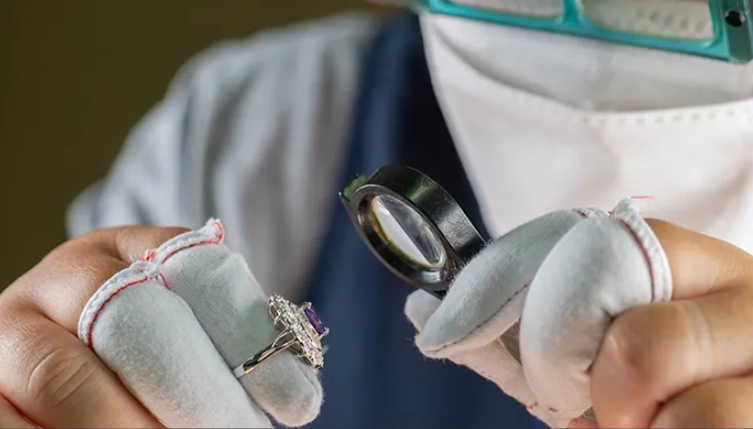
The Refractivity and "Sparkle" Check
This takes a bit of practice. Different gems bend light (refract) at different angles. Diamonds have a high refractive index (RI) and exceptional dispersion (fire), which is why they break light into flashes of rainbow colors. Glass and CZ have lower dispersion, so their sparkle is more just white and gray flashes, with less colorful fire.
Look at the stone under a good light. Tilt it slowly. See a lot of small, colorful flashes inside? That's a good sign for diamond or possibly moissanite (which has even more fire, sometimes too much). A more subdued, silvery sparkle suggests something else. Reading about a stone's known RI and dispersion can help you know what to expect.
The Chemical Resistance Test (Acetone Test)
This is primarily for detecting surface treatments or composites. Some "gems" are actually dyed stone or glued-together composites (like a thin slice of real gem on top of glass, called a doublet). Moisten a cotton swab with pure acetone (nail polish remover—check it's 100% acetone). Rub it firmly on an inconspicuous part of the stone for 10-15 seconds.
Look at the swab. Is there color coming off? If color transfers, the stone is almost certainly dyed. Acetone can also dissolve glue used in composites, potentially causing layers to separate, so be very gentle. Genuine, untreated gemstones should not react to acetone.
This test confirmed my suspicion about the bracelet. The swab came back with a faint blue tint. The stones were likely dyed quartz or glass.
Putting It All Together: A Quick-Reference Table
Here’s a cheat sheet to summarize when and how to use these tests. Remember, context is everything. Knowing what the stone is supposed to be is half the battle.
| Test Name | Best For Spotting | Key Tool Needed | Risk Level | Quick Tip |
|---|---|---|---|---|
| Visual/Loupe Inspection | Glass (bubbles), plastic, obvious synthetics, wear patterns. | 10x Loupe, good light. | None | Your first and most important step. Look for nature's imperfections. |
| Scratch (Hardness) Test | Softer imitations (e.g., howlite for turquoise, glass for quartz). | Glass plate, steel file, quartz point. | High (can damage stone) | Test on the girdle only. Know the expected hardness of your suspected gem. |
| Thermal (Fog) Test | Quick check for diamond vs. glass/CZ. Useless for most colored stones. | Your breath. | None | Fog disappears in <1 sec for diamond. Doesn't distinguish from moissanite. |
| Heft/Density Check | Very light plastics, getting a general feel. | Your hand, glass of water. | Low (if loose stone) | Plastic often feels "light" and warm. Genuine stone feels cool and substantial. |
| Magnet Test | Identifying hematite, checking for unexpected magnetism. | Strong neodymium magnet. | None | A surprise strong attraction is a major clue for certain IDs. |
| Sparkle & Refractivity | Judging diamond-like qualities, comparing to known RI charts. | Good light, your eyes. | None | Practice by comparing a known CZ with a known diamond if you can. |
| Acetone Test | Dyed stones, composite doubles/triplets with glue. | 100% Acetone, cotton swab. | Medium (can damage treatments/glue) | Color on the swab = dye. Cloudiness or layer lifting = composite. |
Common Questions You Might Be Asking
Let's tackle some of the specific questions that pop up when you're deep in the "how can I check my gemstone at home" search.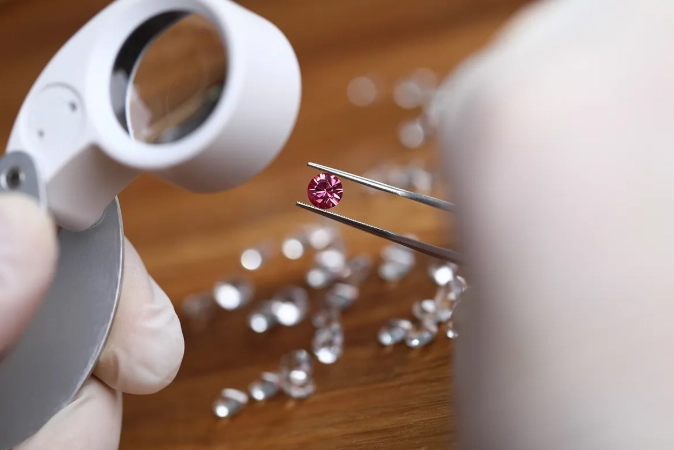
Can I use a UV light (black light) to check my gemstone?
You can, and it's fun! Many gems fluoresce under long-wave or short-wave UV light. For example, some rubies glow a strong red, some diamonds fluoresce blue, and some synthetic spinel might glow a chalky green. However, the reaction is highly variable. Some natural stones fluoresce, some don't. Some synthetics fluoresce, some don't. It's a great clue, but not a standalone test. A complete lack of fluorescence doesn't mean it's fake. The GIA's guide to fluorescence explains this variability well.
What's the deal with lab-created (synthetic) stones? Are they "fake"?
This is the big one, and it trips up a lot of people. Lab-created gemstones are not "fake" in the traditional sense. They are chemically, physically, and optically identical to their natural counterparts. A lab-created ruby is real corundum, just like a mined ruby. The vast majority of home tests will fail to distinguish them because they are the same material. The only ways to tell are through microscopic examination of growth patterns (like curved striae in synthetics) or advanced lab analysis. This is why disclosure from the seller is so important. If a home test suggests it's real corundum, it could be natural or synthetic.
My stone passed several tests. Is it definitely real?
Probably, but not absolutely. You've likely eliminated the obvious fakes (glass, plastic, soft minerals). However, you could still be looking at a high-quality synthetic or a treated natural stone (like a fracture-filled ruby or a dyed jadeite). The home tests we've discussed are excellent for spotting simulants (different materials pretending to be the gem) but poor at identifying synthetics or sophisticated treatments.
When should I stop DIY-ing and see a professional?
Good question. Here's my rule of thumb:
- If the stone is valuable (sentimentally or monetarily).
- If you plan to insure it.
- If your home tests give confusing or contradictory results.
- If you suspect it might be a high-value gem like a large ruby, sapphire, or emerald.
- If you need a formal document for resale or estate planning.
A professional appraisal from a graduate gemologist (GG) or a lab report from GIA or AGL gives you a definitive answer, identifies treatments, and provides documentation. It's the only way to be truly certain. Think of your home checks as the investigation that tells you, "This might be worth getting appraised," or "This is probably costume jewelry."
Final Thoughts: Embrace the Curiosity
Learning how to check your gemstone at home is less about becoming a pro and more about developing a critical eye. It's about satisfying that curiosity, protecting yourself from blatant scams, and deepening your appreciation for the real thing. The process teaches you to observe details you'd normally gloss over.
Start with the loupe. Always start with the loupe. Get familiar with how real gems look under magnification—their tiny flaws, their unique character. Compare them to a piece of cut glass from a thrift store vase. The differences will start to jump out at you.
And remember, the question "how can I check my gemstone at home?" is the beginning of a journey, not the end. It opens a door to mineralogy, optics, and earth science. Whether your stone turns out to be a priceless heirloom or a beautiful piece of costume jewelry, the knowledge you gain is the real treasure. It turns a passive possession into an object of active understanding. And honestly, that's pretty cool.
Now go grab that loupe and take a closer look. You might be surprised at what you see.