Your Mining Roadmap
So you've seen those shiny rocks in museums or jewelry stores and thought, "I want to find one of those." Good. That's the only prerequisite you need for gemstone mining for beginners. This isn't about becoming a geologist overnight. It's about spending a day outside, getting your hands dirty, and maybe—just maybe—uncovering something beautiful that's been hiding in the ground for millions of years. I remember my first time. I drove two hours, paid twenty bucks for a bucket of dirt, and spent three hours sifting through mud. My find? A few tiny, cloudy quartz points. Nothing valuable. But I was hooked. The thrill is real, and it's surprisingly accessible.
This guide is for the absolute newcomer. We'll skip the overly complex jargon and focus on the practical stuff: what to bring, where to go, how to not look like a complete fool, and what to do with whatever you dig up. Consider this your friendly, slightly muddy, field manual.
What You Actually Need to Start (The Tool Kit)
Let's be clear: you don't need a $500 metal detector or a professional sluice box for your first try. Over-investing upfront is a classic beginner mistake. Start simple, see if you like the vibe, then upgrade. The core gear for gemstone mining for beginners fits into a medium-sized backpack.
Then there's the personal stuff. Sturdy boots with ankle support are non-negotiable. You'll be on uneven ground. I learned this the hard way with a twisted ankle on a slippery creek bank. Sunscreen, a hat, and more water than you think you'll need. A simple first-aid kit with band-aids and antiseptic wipes is smart. A notebook and pen to jot down the location of your find? That's for later, when you're bitten by the bug.
One item most lists forget: a small spray bottle filled with water. A spritz on a rock can reveal its color and pattern instantly, saving you from carrying around a hundred boring gray stones. It's a game-changer.
The "Pay-to-Dig" Starter Pack
If the thought of wandering public land unsure of where to dig is daunting, start at a commercial "fee-to-dig" mine. These are fantastic for gemstone mining for beginners. You pay a fee, they give you a bucket of ore from a productive vein, and you get to sift through it at their washing stations. All the tools are usually provided. It's like training wheels. You get the experience of finding real gems (often planted, but sometimes genuine mine runoff) without the initial exploration anxiety. Places like these are all over popular gem-hunting regions.
Where on Earth Do You Even Look?
This is the big question. You can't just dig a hole in your backyard and expect sapphires (unless you live in a very specific part of Montana, I guess). Geology is the map. Different gems form under specific conditions and are found in particular types of rock.
For absolute beginners, I recommend two approaches:
1. The Targeted Trip: Pick a gem you'd love to find and go where it's known to exist. Want amethyst? Certain areas in North Carolina and Arizona are famous for it. Herkimer diamonds (which are stunning double-terminated quartz crystals)? Herkimer County, New York, is your spot. This requires research but has a clear goal.
2. The Local Adventure: Find out what's commonly found in your own region. You might be surprised. Every state in the U.S. has documented mineral occurrences. The absolute best, most authoritative starting point for this is the U.S. Geological Survey (USGS) website. Their mineral resources data and state geologic maps are invaluable. It's dry reading, but it's the truth on the ground. Another fantastic resource is the Rock & Gem magazine website, which has field guides and location lists submitted by hobbyists.
Public lands like National Forests and Bureau of Land Management (BLM) areas often allow recreational rockhounding for personal use. But—and this is a huge but—you must check the specific regulations for that exact area. Rules change. Some places forbid any digging, some only allow surface collecting. Always check with the local ranger district or BLM office. Their websites usually have the info.
The Hunt: What Are You Actually Doing Out There?
Okay, you're at a known location, gear ready, permissions sorted. Now what? Gemstone mining for beginners is less about dramatic digging and more about patient observation.
Start by walking slowly. Look at the ground, especially in areas where water has washed away the topsoil—creek beds, ravines, the base of slopes. Water is nature's great sorter. Heavier minerals and gems often concentrate in these areas. Look for differences in color or shape. A strangely smooth, rounded stone among angular ones might be worth a closer look.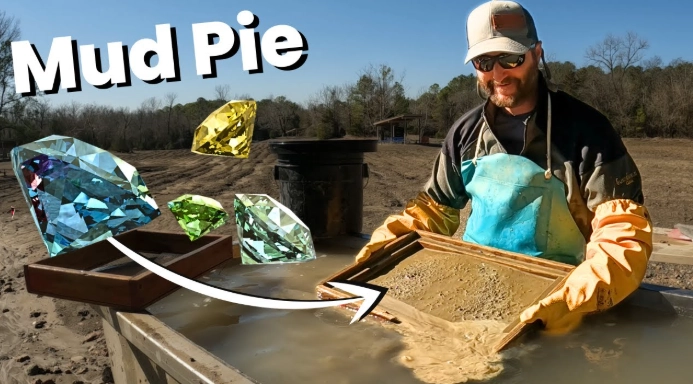
When you find an interesting area, use your trowel to scrape away the loose overburden. Use your sieve. Put some material in the coarsest screen and shake it over a bucket or the ground. Wash it with water from your bottle or a nearby stream. The finer material will wash away, leaving potential treasures behind. This process, called panning, is fundamental.
What are you looking for? Color is a clue, but not always. A deep red could be garnet. A flash of green could be epidote or aventurine. But many valuable gems look like dull pebbles in their rough, weathered form. This is where crystal shape (habit) comes in. Look for geometric forms: hexagons (quartz), cubes (pyrite, fluorite), or octahedrons (diamond, spinel).
Here’s a quick-reference table for some common beginner-friendly finds and their key characteristics:
| Gem/Mineral | Typical Colors (Raw) | What to Look For | Common Beginner Locations (U.S.) |
|---|---|---|---|
| Quartz (Clear, Smoky, Amethyst) | Clear, white, gray, purple, yellow | Six-sided prisms, points, glassy luster. Very common. | Arkansas, North Carolina, New York, California |
| Garnet | Deep red, brownish-red | Small, rounded crystals (dodecahedrons), often in schist rock. | New York, Idaho, North Carolina |
| Agate/Jasper | Banded, red, yellow, brown, many patterns | Waxy luster, conchoidal fracture (breaks like glass), hardness. | Great Lakes beaches, Oregon, Arizona, Montana |
| Fluorite | Purple, green, blue, yellow | Cubic crystals, often in clusters, can be fluorescent. | Illinois, Kentucky, New Mexico |
| Pyrite (Fool's Gold) | Brassy yellow | Perfect cubic crystals or "suns," metallic luster. | Everywhere, but good specimens in Colorado, Illinois |
See? You're not just looking for "pretty rocks." You're looking for specific signatures. It takes practice. Your first few trips, you'll bring home a lot of "maybe" rocks. That's perfectly normal. It's all part of the learning curve in gemstone mining for beginners.
Okay, I Found Some Rocks. Now What? (Identification & Care)
You've got a bag of potential treasures. The kitchen table becomes your lab. First, give them a gentle wash with water and an old toothbrush. No soap yet—it can leave a film.
Identification starts with simple tests anyone can do at home. The most useful is the scratch test for hardness, using the Mohs scale. Can your unknown mineral scratch a penny (hardness ~3)? Can a steel nail (hardness ~5.5) scratch it? Can it scratch glass (hardness ~5.5-6)? This narrows things down dramatically. For example, quartz (H=7) scratches glass easily. Calcite (H=3) does not.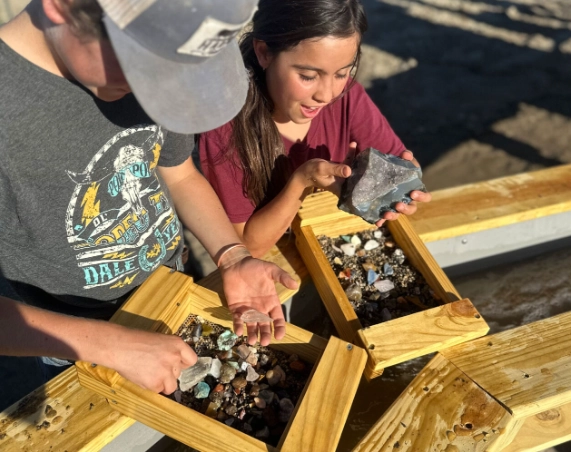
Other clues: Streak. Rub the mineral on the back of an unglazed porcelain tile (a piece of a broken coffee mug works). The color of the powder left behind is the streak, and it's often different from the stone's surface color. Hematite, which looks black or silver, leaves a reddish-brown streak. Pyrite leaves a greenish-black streak. Luster: Is it metallic (like pyrite), glassy (like quartz), waxy (like agate), or dull? Cleavage: Does it break along flat, predictable planes (like mica or calcite) or unpredictably (like quartz)?
For visual help, I constantly cross-reference with the Mindat.org website. It's the largest mineral database in the world, run by the non-profit Hudson Institute of Mineralogy. You can search by location, color, hardness—everything. It's an incredible, trustworthy resource. Your local library might also have field guides by authors like John Sinkankas or the Audubon Society.
Safety and Ethics: Don't Be That Person
This hobby is safe, but it's not without risks. We covered good boots and water. Let's add: always tell someone where you're going and when you expect to be back. Cell service is often nonexistent in good hunting grounds. A basic buddy system is ideal, especially in remote areas.
Watch for wildlife. Know what poison ivy/oak looks like. Be aware of the weather—a dry creek bed can become a torrent quickly. And for heaven's sake, be careful with tools. A swinging rock hammer can do serious damage.
Ethics are just as important. The rockhound's creed is simple: Take only what you need, fill your holes, pack out all trash (including others'), and respect the land. If you dig a test pit, fill it back in. It prevents erosion and keeps landowners happy. Leave the place looking better than you found it. This ensures these spots remain open for future generations of beginners in gemstone mining.
The Big Questions Beginners Actually Ask
Let's tackle some of the things you're probably wondering but might not see in other guides.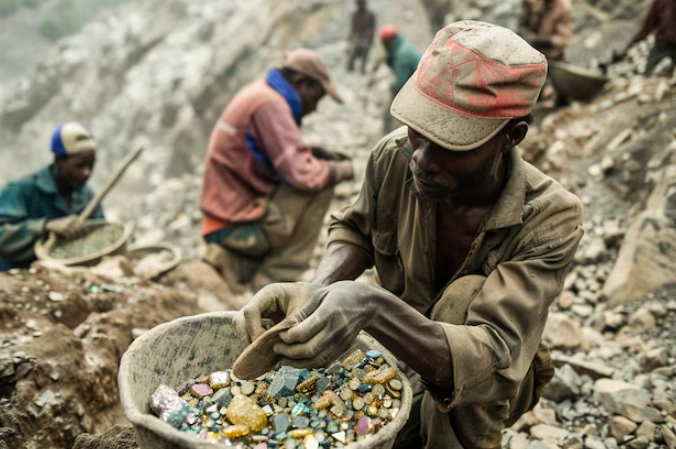
Is this expensive?
It can be, but it doesn't have to be. Your first trip can cost less than $50 in gear and fuel. The pay-to-dig mines might be $20-$50 per bucket. The real cost is time and travel. The expensive part comes later if you get into faceting, high-end equipment, or travel to exotic locations. Start cheap.
Will I get rich?
Almost certainly not. Let's be brutally honest. The odds of you finding a gem-quality stone worth more than a few hundred dollars on your first—or even hundredth—outing are astronomically low. Professional miners work known deposits with industrial equipment. You're a hobbyist. The value is in the experience, the learning, and the personal satisfaction of finding something natural and cool. Any financial reward is a fantastic bonus. If profit is your main goal, this is the wrong hobby.
What's the best time of year to go?
Spring and fall are generally ideal. Summer can be brutally hot, and winter... well, frozen ground is a very effective deterrent to digging. However, some of the best hunting is after heavy rains in the spring, when fresh material has been washed into streams.
Can I take my kids?
Absolutely! Gemstone mining for beginners is a fantastic family activity. Kids love the treasure hunt aspect. Just adjust expectations—choose an easy, safe location like a fee-to-dig mine or a known public collecting site with easy access. Keep the trip short, bring snacks, and celebrate every little find, even if it's just a pretty pebble. The goal is fun, not a museum-quality specimen.
How do I store or display my finds?
Egg cartons are a classic starter solution for small crystals. For larger pieces, simple plastic storage boxes with dividers work. As your collection grows, consider Riker specimen display cases or building your own display shelves. Labeling your finds with the location and date is a habit you'll thank yourself for later.
Taking the Next Step
Once you've caught the bug, what's next? I highly recommend finding your local gem and mineral club or society. A quick search for "[Your City/State] gem and mineral society" will likely yield results. Joining a club is the single best thing I did. You meet experienced people who love to share knowledge, you get access to club-organized field trips to prime locations (with permission secured!), and you can learn skills like lapidary (cutting and polishing stones) or silver-smithing. The American Federation of Mineralogical Societies (AFMS) is the umbrella organization for many of these clubs and a great resource to find one near you.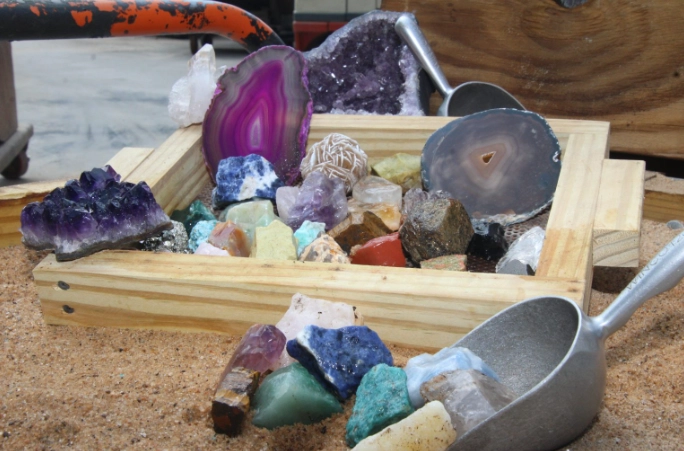
So, what are you waiting for? Check those USGS maps, pack a bag with the basics, and go get muddy. Your first adventure in gemstone mining awaits. Just remember to fill in your holes.