Quick Guide
- Why Asking "Is Gemstone Mining Ethical?" Even Matters
- The Dark Side: Common Problems in Gemstone Mining
- The Brighter Side: What Does Ethical Gemstone Mining Look Like?
- A Stone-by-Stone Breakdown: The Ethical Landscape for Different Gems
- How to Actually Find an Ethical Gemstone: A Practical Guide
- Common Questions (And Straight Answers)
- Final Thoughts: It's About Conscious Choice
You see a beautiful ring in a shop window. A deep blue sapphire, a fiery ruby, a clear diamond that catches the light. It's stunning. But lately, a nagging question pops into your head. Where did this stone really come from? Who dug it out of the ground, and under what conditions? Is gemstone mining ethical, or is my desire for something beautiful causing harm somewhere else in the world?
That question, "Is gemstone mining ethical?", is one of the most important ones you can ask as a modern consumer. It's not simple. There's no easy yes or no. The answer is a messy, complicated mix of geology, economics, politics, and human stories. For a long time, the jewelry industry operated in shadows. The origin of a gem was a mystery, a secret held somewhere between the miner and the retailer. But those days are ending. People want to know. And you should.
Let's be clear from the start: the gemstone mining industry has a history of serious problems. Environmental degradation, child labor, dangerous working conditions, and fueling conflicts are not just stories—they are documented realities in many mining regions. But the story isn't all dark. There are also pockets of progress, new standards, and a growing movement of people trying to do things differently. This guide won't give you a simple pass/fail. Instead, it will give you the lens to see through the sparkle and ask the right questions.
Why Asking "Is Gemstone Mining Ethical?" Even Matters
Think about it. We ask about the origin of our food (organic, local, free-range). We care about the materials in our clothes (recycled, sustainable). But a gemstone, often one of the most expensive items we'll ever buy, gets a pass? That disconnect is fading fast.
An ethical gemstone considers the full journey from earth to jewelry box. It looks at three big pillars:
- The Environmental Pillar: How does the mining affect the land, water, and wildlife? Is the land rehabilitated afterward, or left as a scarred pit?
- The Social Pillar: Are the miners paid fairly? Do they work in safe conditions? Are communities supported, or exploited? Is child labor involved?
- The Governance Pillar: Is the supply chain transparent? Does the money from the stones fund armed conflict or corrupt governments? Can you trace the stone back to its source?
When any one of these pillars is weak, the entire structure of "ethical gemstone mining" collapses. A mine might pay well but poison a river. Another might have minimal environmental impact but use forced labor. The quest for ethics requires looking at all three, together.
I remember talking to a small-scale jeweler years ago. He was passionate about his designs but vague about his stones. "Oh, they're from a reputable dealer," he'd say. That phrase, "reputable dealer," became a red flag for me. It's often a placeholder for "I don't really know." It was that conversation that sent me down this rabbit hole of sourcing.
The Dark Side: Common Problems in Gemstone Mining
To understand the push for ethics, you have to understand what's gone wrong. Ignoring this history is like trying to fix a leak without finding the pipe. Let's break down the major issues, and I'll be blunt—some of this is hard to read.
Environmental Damage That Lasts Generations
Mining, by its nature, is disruptive. But irresponsible mining is catastrophic.
- Habitat Destruction: Large-scale open-pit mining clears forests, diverts rivers, and destroys ecosystems. In places like Madagascar, sapphire rushes have led to protected forests being illegally cleared overnight.
- Water Pollution: This is a huge one. The process of separating gems from rock (often using water and chemicals like cyanide for gold in diamond mining) creates toxic slurry called tailings. If these aren't managed in sealed ponds, they seep into groundwater and rivers, poisoning water supplies for communities and agriculture downstream. I've seen photos of rivers running milky-white or bright orange from mine runoff. It's not a hypothetical risk; it's a daily reality for some.
- Landscape Scars: Abandoned pits fill with stagnant water, becoming breeding grounds for disease. Erosion from denuded land silts up rivers. The land becomes unusable for farming long after the miners have left.
The environmental cost is often invisible to the end consumer. That sparkling, clean gem in a velvet box gives no hint of the muddy, polluted landscape it left behind. The industry has been brilliant at divorcing the final product from its production reality.
Human Cost: The Faces Behind the Facets
This is where the question of "Is gemstone mining ethical?" hits hardest. We're talking about people.
Artisanal and Small-Scale Mining (ASM): This isn't giant corporate machinery. ASM accounts for a significant percentage of global gemstone production. It's individuals and families, often with rudimentary tools, digging by hand. The conditions are frequently appalling: unstable tunnels that collapse, no protective gear, constant exposure to dust and silica leading to lung disease. The pay is usually a pittance, based on what they find that day. It's a desperate lottery.
Child Labor: In poverty-stricken regions, children work alongside their families. They miss school to sort gravel or carry water. It's a complex issue tied to survival, but it perpetuates the cycle of poverty and lack of education. No child should be in a mine.
The Conflict Gem Legacy: The term "blood diamonds" entered our vocabulary for a reason. While the Kimberley Process (Kimberley Process) was created to stop diamonds from funding rebel movements, its critics argue it has major loopholes and fails to address human rights abuses by governments. The problem isn't just diamonds. Colored gemstones like rubies from Myanmar or certain African regions have also been linked to funding conflict and military regimes.
The Brighter Side: What Does Ethical Gemstone Mining Look Like?
Okay, enough of the grim stuff. It's not all hopeless. There are models out there proving that gemstones can be sourced responsibly. It's harder, more expensive, and requires relentless diligence, but it's being done.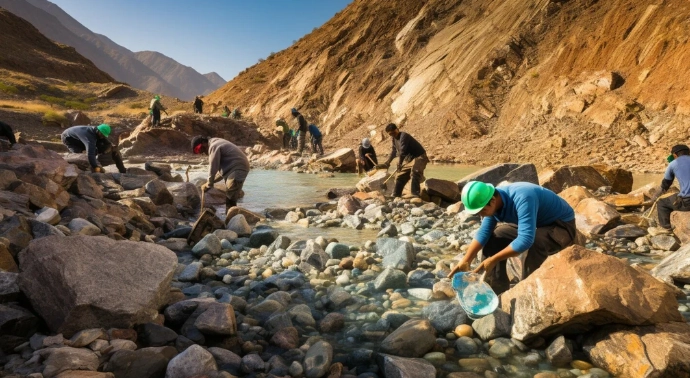
Truly ethical mining operations, often smaller and mission-driven, focus on these principles:
- Community Partnership: The mine works with the local community, not just in it. This means fair-wage employment, investing in local infrastructure (schools, clinics), and often giving the community a stake in the mine's success.
- Environmental Stewardship: This means planning for the mine's entire lifecycle from day one. Using less water, properly treating waste, and having a detailed, funded plan for land rehabilitation (called reclamation) to return the land to a healthy state after mining is complete.
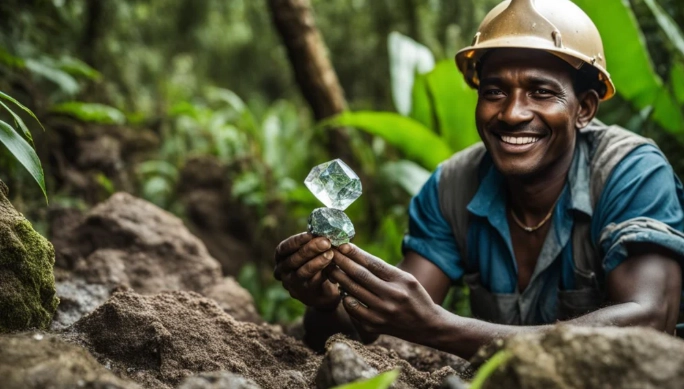
- Radical Transparency: This is the key. It means knowing and disclosing the mine of origin for every single stone. No murky middlemen. Some cutting-edge mines use blockchain technology to create a digital passport for each rough gem, tracking its journey from the mine to the jeweler's bench.
- Safe, Dignified Work: Providing safety equipment, training, stable contracts, and fair pay that lifts workers out of subsistence living.
Organizations like the Responsible Jewellery Council (RJC) and the Fairmined Foundation have created certification systems that audit mines against these kinds of standards. While not perfect, they provide a verified benchmark beyond a company's own marketing claims.
A Stone-by-Stone Breakdown: The Ethical Landscape for Different Gems
The challenges vary wildly depending on the gem. Asking "Is gemstone mining ethical?" requires looking at each type of stone individually. Here’s a quick, honest rundown.
| Gemstone | Common Ethical Concerns | Signs of Progress & What to Look For |
|---|---|---|
| Diamonds | Historical legacy of "blood diamonds," environmental impact of large-scale mining (water, energy), human rights in some major producing countries. | Canadian diamonds (tracked from mine). Brands using blockchain tracing (e.g., De Beers' Tracr). RJC Certification. Lab-grown diamonds as a conflict-free alternative (though with their own energy footprint). |
| Sapphires & Rubies | Widespread artisanal mining with poor conditions (esp. in Madagascar, Sri Lanka). Heat treatment is common and undisclosed. Ruby mining linked to human rights abuses in Myanmar. | Traceable parcels from specific ethical mines (e.g., some Montana sapphire mines). Fair-trade initiatives for small-scale miners. Ask about origin and any treatments. Ceylon (Sri Lankan) sapphires often have better traceability. |
| Emeralds | Often mined in politically unstable regions (Colombia, Zambia). History of cartel violence and environmental damage from chemicals. | Mines in Zambia making efforts on sustainability. Some Colombian mines with better transparency. Expect clarity enhancement with oils/resins—a reputable seller will disclose this. |
| Aquamarine, Tourmaline, etc. | Mined in small, remote pockets. Transparency is the biggest issue—the "I don't know" origin story is rampant. | Your best bet is a jeweller who works directly with specific mines or small mining cooperatives they have visited and vetted. Provenance is everything here. |
See the pattern? The core issue across the board is almost always lack of transparency.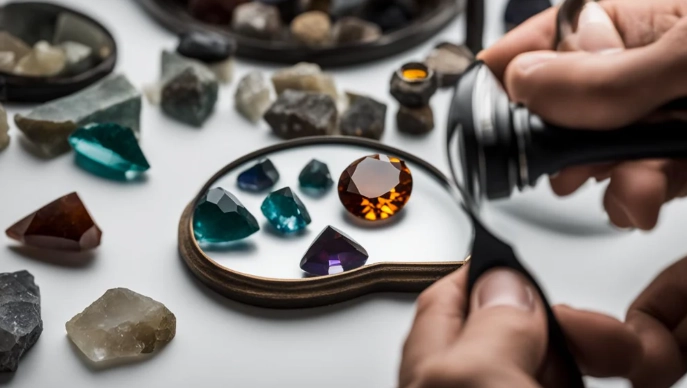
How to Actually Find an Ethical Gemstone: A Practical Guide
So you're convinced it matters. You want to make a better choice. But how do you navigate a market full of greenwashing and vague promises? Here’s a no-nonsense action plan.
Your Responsible Buying Checklist
- Ask the Origin Question, and Demand an Answer: Don't accept "It's from a reputable supplier." Ask for the country of origin. Then ask for the mine or region. A truly ethical seller will know or be able to find out. If they get defensive or vague, walk away.
- Look for Third-Party Certifications: They're not flawless, but they're a start. Look for RJC certification for the brand or retailer. For gold, look for Fairmined or Fairtrade labels. For diamonds, ask about the Kimberley Process certificate, but know its limitations.
- Consider the Alternatives:
- Vintage/Antique Jewellery: The most eco-friendly choice. The mining impact is historical, and you're giving a beautiful piece a new life. No new extraction needed.
- Lab-Grown Stones: Identical in chemical composition to mined stones. They eliminate mining's human and environmental costs but require significant energy to produce. Ask about the grower's energy source (renewable is best).
- Traceable, Regenerative Mining: Support the pioneers. Seek out brands that name their mines and share stories about their social and environmental programs.
- Support Small, Transparent Brands: Often, the best stories come from independent jewellers and designers who are obsessed with provenance. They build direct relationships with cutters and miners. They're more expensive, but you're paying for the story and the ethics, not just the stone.
The single most powerful thing you can do is ask questions. Every time a consumer asks "Is this ethical?" or "Where is this from?" it sends a signal up the supply chain. It tells the industry that opacity is no longer acceptable. Your curiosity has power.
Common Questions (And Straight Answers)
Final Thoughts: It's About Conscious Choice
So, is gemstone mining ethical? The unsatisfying but honest answer is: sometimes, in some places, under specific conditions. The industry as a whole has a long, long way to go. But the path forward is lit by transparency.
For you, the buyer, it's not about achieving purity. It's about moving from a passive consumer to an active participant. It's about understanding that a gemstone is not just a pretty object; it's a piece of the earth with a human story attached.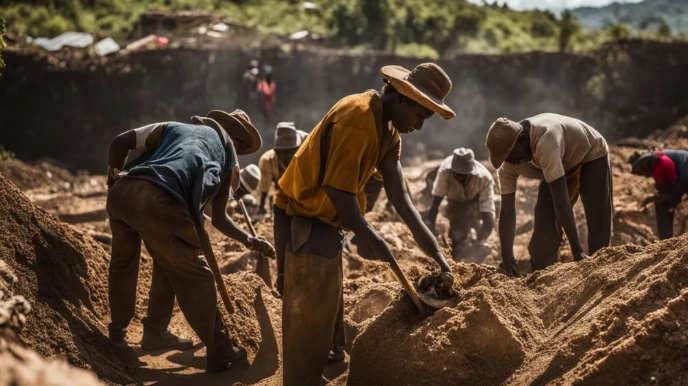
I won't lie—after researching this for years, I buy a lot less jewelry than I used to. But what I do buy, I cherish infinitely more. I know the story of my Montana sapphire, bought directly from a miner at a gem show who showed me photos of his reclaimed land. That connection, that knowledge, makes it more valuable to me than any anonymous stone in a luxury boutique.
The future of beautiful jewelry doesn't have to be built on hidden ugliness. By demanding to know the story behind the sparkle, we can all push the industry toward a future where the answer to "Is gemstone mining ethical?" can be a more confident and frequent "Yes."
Start asking. Your questions will shape the market more than you think.