Quick Guide Overview
- First Things First: Your Mindset and Budget
- Gemology 101: The Bare Minimum You Need to Know
- Your Starter Toolkit: What to Buy (and What to Skip)
- Where to Actually Buy Your First Gems
- Top 5 Beginner-Friendly Gemstones to Start Your Collection
- The Art of Research and Documentation
- Navigating Common Pitfalls and Scams
- Leveling Up: From Beginner to Informed Collector
- Answering Your Burning Questions (FAQ)
- The Real First Step
So you've seen a beautiful amethyst geode or a sparkling sapphire and thought, "I want to start collecting these." That's exactly how it begins for most of us. The world of gemstones pulls you in with its color and mystery. But then the practical questions hit. How should a beginner start collecting gems? Where do you even begin without wasting money or getting overwhelmed?
Let's be honest. The internet is full of confusing jargon and intimidating prices. I remember my own start. I bought a few "bargain" parcels online that turned out to be polished glass and low-quality quartz. It was frustrating. I wish I'd had a clear, no-nonsense guide that cut through the hype.
That's what this is. Forget the complex mineralogy lectures for now. We're going to talk about the real, actionable steps to build a collection you're proud of, without needing a geology degree or a trust fund.
First Things First: Your Mindset and Budget
Before you spend a single dollar, stop. The biggest mistake new collectors make is diving in without a plan. You need to answer two core questions for yourself.
What's Your "Why"?
Are you in it for the beauty? Do you love the science and geology? Maybe you're intrigued by the history and lore of stones? Or is it a potential long-term investment? Your goal shapes everything. Aesthetic collectors might prioritize color and display. Science-minded folks might want raw, unpolished specimens to study crystal forms. Knowing your "why" helps you say no to things that don't fit, saving you money and clutter.
My "why" was color. I was drawn to deep blues and rich greens. That focus kept me from buying every shiny thing I saw.
The Budget Talk (The Most Important Part)
Budget? This might be the most critical question when considering how a beginner should start collecting gems. You don't need a lot. Seriously.
Set a monthly or yearly "gem fund." It could be $20, $50, or $200. The amount doesn't matter as much as the discipline. This fund is for education and acquisition. The goal of your first year isn't to own a museum piece. It's to train your eye.
I allocated $50 a month. Sometimes I saved for three months to buy one nicer specimen. Other times, I bought five small, rough stones to compare. That $50 rule saved me from so many impulsive late-night eBay bids.
Gemology 101: The Bare Minimum You Need to Know
You don't need to memorize the Mohs scale right away. But a few key concepts will keep you from getting fooled.
Natural vs. Treated vs. Synthetic vs. Imitation
This is the grand hierarchy of truth in gems.
- Natural: Formed by the Earth, mined, cut/polished. Can be incredibly expensive (like a natural Burmese ruby) or very affordable (like many quartz varieties).
- Treated: A natural gem that's been altered to improve color or clarity. Heating sapphires or irradiating topaz is common. Treated isn't "fake," but it affects value. Always ask if a stone has been treated.
- Synthetic (Lab-Created): Has the same chemical and physical properties as the natural version but made in a lab. Synthetic sapphires, rubies, and emeralds are common. They are real gems, just not from the ground. Great for learning and enjoying beauty on a budget.
- Imitation: Fake stuff. Glass, plastic, colored cubic zirconia. This is what you want to avoid when you don't intend to buy it.
As a beginner, there's no shame in starting with treated or even synthetic stones. They let you handle and study the look of a material for a fraction of the cost. My first "ruby" was a lab-created one. Holding it taught me more than any picture.
The "Four Cs" – Adapted for Collectors
Jewelers use Cut, Color, Clarity, Carat. Collectors think a bit differently.
- Color & Pattern: This is often king for collectors. Is the color vivid? Is there an interesting pattern, like banding in agate or a star in a star sapphire?
- Crystal Form: Is it a well-formed crystal? A complete, undamaged crystal is often more desirable to a collector than a fragmented one, even if the fragment is bigger.
- Clarity & Inclusions: In jewelry, inclusions are bad. In collecting, they can be fascinating. A rutile needle inclusion in quartz (rutilated quartz) adds value and beauty.
- Size/Weight: Bigger isn't always better. A small, perfect specimen is often more prized than a large, damaged, or ugly one.
Your Starter Toolkit: What to Buy (and What to Skip)
You can spend thousands on tools. Don't. Start with these essentials.
The Non-Negotiables:
- A Good Loupe (10x triplet lens): This is your best friend. A $20-$30 loupe from a reputable supplier lets you see inclusions, cuts, and details. It's the #1 tool for verification. Don't cheap out here.
- Light Source: A simple, bright LED flashlight. Daylight is best for color, but a flashlight helps you peer into a stone.
- Storage: Don't toss gems in a jar where they scratch each other. Get a compartment box with padded dividers, like a plastic craft box or a dedicated gem case. Label everything.
Hold Off For Now:
- Expensive refractometers, spectroscopes, or microscopes. Learn to use your eyes and loupe first.
- Fancy display cabinets. Get your collection right before you show it off.
I used an old fishing tackle box for my first year. It worked perfectly.
Where to Actually Buy Your First Gems
This is where most beginners feel lost. The marketplace is huge. Here’s a breakdown of the main avenues, with my personal take on each.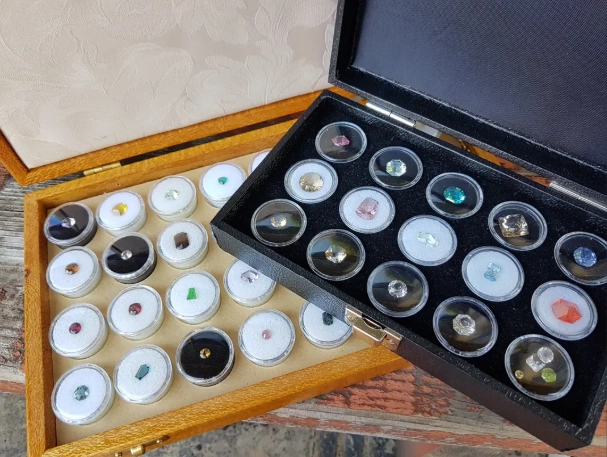
| Source | Best For | Pros | Cons & Risks | Beginner Advice |
|---|---|---|---|---|
| Local Rock & Gem Shows | Hands-on learning, meeting dealers, seeing variety. | You can touch and compare. Dealers are often knowledgeable. No shipping costs. | Can be overwhelming. Pressure to buy. Quality varies by booth. | Your best first step. Go with your budget in cash. Look, ask questions, but don't buy the first thing you see. |
| Reputable Online Dealers | Specific searches, comparing prices, wider selection. | Convenience. Access to global inventory. Often detailed descriptions. | Can't inspect in person. Risk of poor photoshop. Shipping fragile items. | Stick to dealers with strong return policies. Read reviews on collector forums, not just their site. |
| eBay / Etsy | Finding deals, unusual pieces, direct from small miners/cutters. | Potential for great prices. Unique finds. | High risk of misrepresentation. "Natural" often means treated. Many imitations. | Advanced beginner territory. Use only with extreme caution. Know exactly what you're looking at. Ask detailed questions. |
| Museum Shops or University Sales | Ethically sourced, educational specimens. | High trust factor. Often come with good data. Supports institutions. | Limited selection. Can be pricey. | A great place for one or two "anchor" pieces you can totally trust. |
My first successful purchase was at a tiny local show. I spent an hour talking to a dealer about how he identified different quartzes. I bought a small, labeled piece of citrine and smoky quartz from him for $15. That conversation was worth more than the stones.
For reputable online information and standards, organizations like the Gemological Institute of America (GIA) and the International Gem Society (IGS) provide vast educational resources. Their websites are libraries for the curious collector.
Top 5 Beginner-Friendly Gemstones to Start Your Collection
Start with stones that are affordable, readily available in good quality, and teach you something. Here’s my personal recommended starter list.
- Quartz Family (Amethyst, Citrine, Smoky Quartz): The ultimate beginner gem. Inexpensive, comes in every size and form (crystals, clusters, tumbled, carved). You can learn about color zones, inclusions, and crystal habits without panic. A nice amethyst cluster was my second purchase.
- Agate (and Chalcedony): The masterclass in patterns. Banded agate, moss agate, dendritic agate—each slice is a natural painting. It's tough, cheap, and teaches you to appreciate internal landscapes over just sparkle.
- Fluorite: Often called "the most colorful mineral in the world." It comes in stunning cubes with beautiful purple, green, blue, and yellow hues. It's soft (scratches easily), so it teaches you about hardness and careful handling.
- Labradorite: The stone of magic. Its schiller effect (labradorescence) flashes peacock blue, green, and gold. It teaches you about optical phenomena. A small cabochon with a strong flash can be very affordable and endlessly fascinating.
- Garnet (Almandine): A "real" gemstone that's actually accessible. Deep red, often found in well-formed crystals (dodecahedrons). It connects you to the world of classical gemology without the classical price tag.
Notice I didn't list diamond, ruby, emerald, or sapphire. That's intentional. You'll get there. Learn to walk with these five first.
The Art of Research and Documentation
A collection without data is just a pile of pretty rocks. When you get a new stone, create a record.
I use a simple spreadsheet, but a notebook works. For each specimen, note:
- Date Acquired & Price: Track your journey and spending.
- What it is: Be specific. Not just "quartz," but "Smoky Quartz crystal cluster."
- Dimensions/Weight: Basic measurements.
- Source: Where/who you bought it from.
- Treatments: If known (e.g., "heated," "irradiated").
- Locality: If known (e.g., "Brazil," "Madagascar"). Locality can majorly affect value and interest.
- Personal Notes: Why you bought it. What you like about it. Any flaws.
This habit turns buying into collecting. It forces you to learn. That "how should a beginner start collecting gems" question is really about building this habit of mindful acquisition.
Navigating Common Pitfalls and Scams
Let's talk about the ugly side so you can avoid it.
"Too Good to Be True" Prices: A 5-carat "natural ruby" for $50 is glass or synthetic. Know the rough market value of what you're buying. A quick check on reputable dealer sites gives you a baseline.
Vague Descriptions: If an online listing says "genuine gemstone" but doesn't specify natural or lab-created, assume it's lab-created or treated. If it says "like a ruby" or "ruby simulant," it's imitation.
Misleading Photography: Saturated colors, wet stones (hides flaws), and photoshopped images are rampant. Ask for a video in natural light if you're unsure.
The "Mystery Lot": Buying a bag of uncut or unlabeled stones as a surprise. This is almost always a waste of money for a beginner. You get the leftovers no one else wanted.
I fell for a mystery lot once.
It was advertised as "rough gemstone mix." What arrived was crushed gravel, dyed howlite, and broken glass. A $25 lesson in skepticism.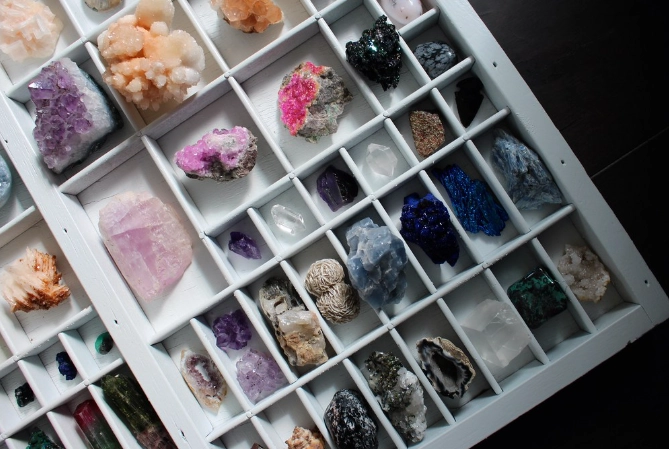
Leveling Up: From Beginner to Informed Collector
After you've got a dozen specimens and feel comfortable with the basics, how do you grow?
Deep Dive into One Area
Maybe you develop a passion for a specific locality (like Pakistani peridot). Or a specific gem family (the beryl family: emerald, aquamarine, morganite). Or a phenomenon (asterism, chatoyancy, color-change). Specializing makes your collection unique and your knowledge deep.
Join a Community
Look for local mineralogical clubs or societies. The American Federation of Mineralogical Societies (AFMS) has a directory of clubs. Online forums like those on Mindat.org or Reddit's r/rockhounds are invaluable for getting IDs and advice. Learning from others is faster than learning alone.
Consider Basic Lapidary
Learning to tumble rocks or even basic cabochon cutting unlocks a new dimension. You can buy rough material and create your own finished pieces. It gives you a deep appreciation for the craft.
Answering Your Burning Questions (FAQ)
Is gem collecting a good investment?
For 99% of beginners, no. Treat it as a hobby. The high-end investment market is for experts with deep pockets and gemological credentials. Your $100 stones are unlikely to appreciate significantly. The value is in the joy and knowledge, not financial return.
How can I tell if a gem is real?
This is the core skill. Start with your loupe. Look for natural inclusions (tiny crystals, feathers, fingerprints) which are common in naturals. Synthetic stones often have tell-tale signs like curved growth lines or gas bubbles. Glass will have bubbles too, but they are often round and might have swirls. Weight can be a clue—glass feels lighter than most gems of the same size. When in doubt, assume it's a lower-value material until proven otherwise. For a definitive answer, you'd need a professional appraisal from a graduate gemologist (GG).
What's the difference between a mineral and a gemstone?
All gemstones are minerals (or organic materials like amber). But not all minerals are gemstones. A "gemstone" is a mineral that has been cut, polished, and valued for its beauty and durability. A rough, unattractive piece of corundum is a mineral. A faceted, sparkling ruby (which is red corundum) is a gemstone.
Should I buy cut stones or rough crystals?
Both! They teach different things. Rough crystals show you the natural form geology created. Cut stones show you human artistry and how it unlocks light and color. A small collection should have both. I prefer rough for learning, but a well-cut gem is a breathtaking thing.
How do I store and display my collection safely?
Away from direct sunlight (fades amethyst, topaz), heat, and humidity. In a closed cabinet or box to keep dust off. Keep harder stones (like quartz) separate from softer ones (like fluorite, calcite) to prevent scratching. For display, use stands or riker mounts. But remember, storage for preservation often comes before display for show.
The Real First Step
So, after all this, how should a beginner start collecting gems? The answer isn't "buy this specific stone."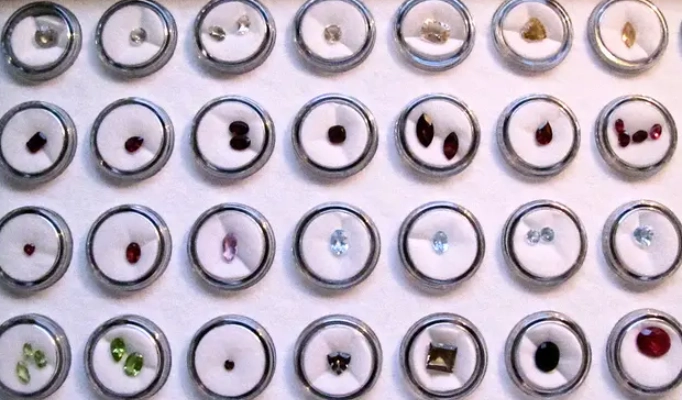
It's this: Go to a local rock show or visit a museum with a gem hall. Just look. Don't buy anything the first time. Touch the specimens (if allowed). Read the labels. See what colors and shapes pull your eye. Talk to a dealer and tell them you're just starting out. Most are passionate and love to share knowledge.
Then, go home. Think about what excited you. Set your budget. And then, maybe, buy that one small piece of amethyst or agate that made you stop and stare.
That's how it starts. Not with a grand plan, but with a moment of wonder followed by a single, thoughtful step. Your collection will grow from there, one story, one lesson, one beautiful stone at a time.
The path to becoming a knowledgeable collector is long and endlessly interesting. There will be mistakes and discoveries in equal measure. Embrace them both. Now you have the map. The first step is yours to take.