Quick Navigation
You're shopping for a November birthday gift, or maybe your own birthday is in November, and you hit this puzzling question. Why does November have two stones? It's not like other months where you get one clear option (looking at you, June with your pearl and alexandrite, okay, maybe it's not that simple either). But November stands out with its sunny citrine and its classic topaz. Two completely different gems, both claiming the title. It's enough to make your head spin a bit when you're trying to pick a piece of jewelry.
I remember helping a friend choose a November birthstone necklace. She was utterly confused. "Do I pick the yellow one or the... also often yellow one?" she asked. That's the thing, right? At first glance, they can look similar, but they're worlds apart in composition, history, and vibe. This duality isn't a modern marketing gimmick—though, let's be honest, jewelers aren't complaining about having more options to sell. The story of why November has two stones is a tangled mix of ancient beliefs, geological mix-ups, and a dash of 20th-century commercial decision-making. It's actually a pretty fascinating slice of how we assign meaning to beautiful rocks pulled from the earth.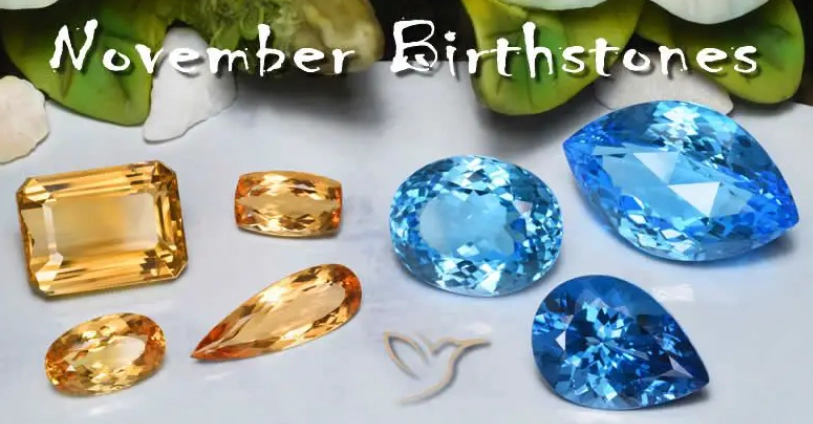
Let's get this out of the way first: The two official modern birthstones for November are citrine and topaz. This isn't folklore or a regional alternative. Major gemological authorities like the American Gem Trade Association (AGTA) and the Jewelers of America officially list both. So if anyone tells you it's one or the other, they're only giving you half the story.
The Historical Mess That Led to Two Stones
To really understand why November has two stones, you have to go back. Way back. For centuries, the line between citrine and topaz was blurrier than a foggy morning. The name "topaz" was used in ancient times to refer to any yellowish gemstone. Pliny the Elder, the Roman naturalist, wrote about "topaz" from an island in the Red Sea, which historians now believe was most likely peridot. See? Confusion from the start.
In the Middle Ages, all yellow gems tended to get lumped together. Traders and jewelers didn't have the scientific tools we have today. They went by color and basic hardness. So, a golden-yellow quartz crystal (what we call citrine) and a golden-yellow aluminum silicate fluorite mineral (what we call topaz) were often sold under the same name. This historical naming chaos is the primary seed for our modern duality.
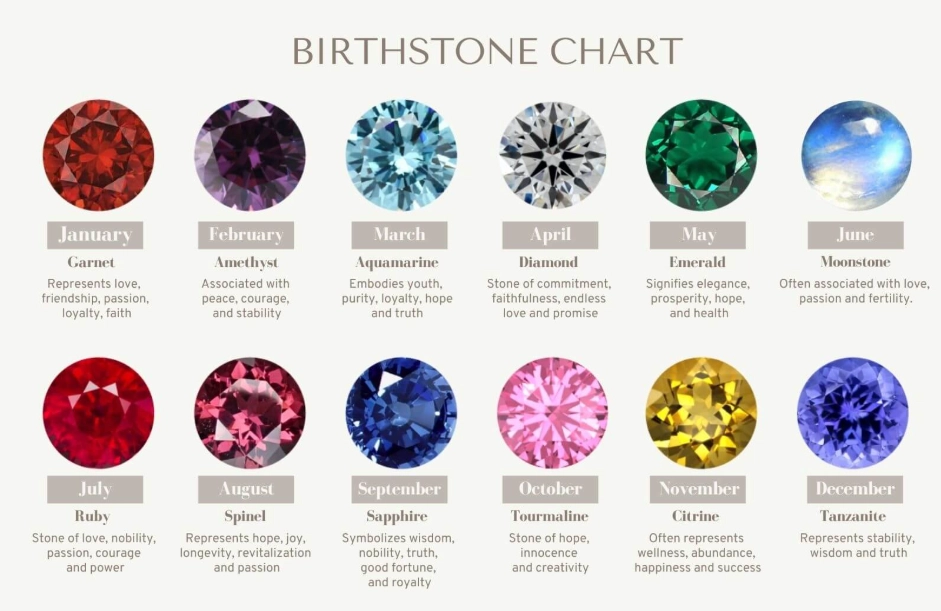
Fast forward to 1912. The National Association of Jewelers in the USA sat down and tried to standardize a modern birthstone list. They wanted something clear for the growing commercial market. For November, they listed topaz. It was the more historically recognized "precious" stone of the two. But here's the catch: the most prized color for topaz at the time was the sherry-yellow, orangey-pink, or rich golden "imperial" hues. The common, pale yellow topaz wasn't as exciting.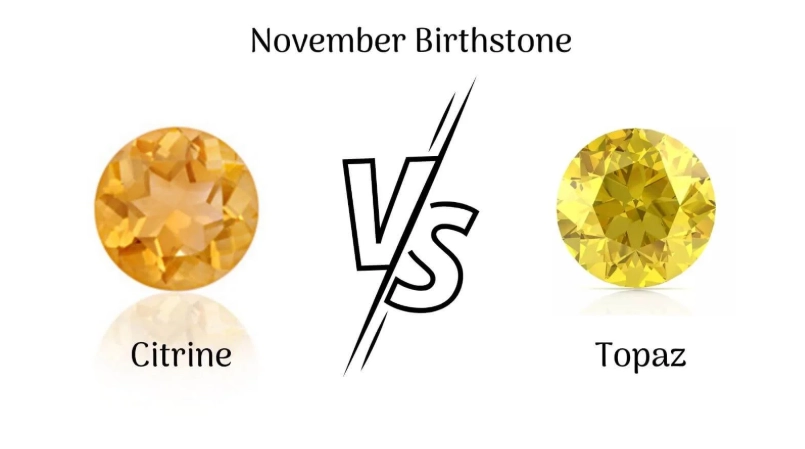
Citrine, being a variety of quartz, was (and is) more abundant and affordable than true topaz. For the average person buying a birthstone gift, the sunny yellow citrine was the "November stone." This created a disconnect between the official list and the reality on the jewelry store shelves. The market was essentially answering "why does November have two stones?" by selling both, regardless of what any list said.
The Modern Compromise: A List for Everyone
The pressure mounted. By the 1950s, it was obvious the 1912 list was too rigid. So, in 1952, the Jewelry Industry Council of America updated the list. And what did they do for November? They added citrine as an alternative. It was a pragmatic move. They acknowledged the widespread use and love for citrine, finally giving it official status alongside its historically more prestigious lookalike.
This wasn't just about November. Other months got alternates too. But November's case is special because the two stones were so historically intertwined. The update wasn't creating a new pair; it was finally recognizing an old, muddled pair for what they always were: two distinct gems that shared a name and a month.
So, if you're asking why does November have two stones, the shortest answer is: history made a mistake, commerce followed the mistake, and modern gemology finally corrected the record by honoring both. It’s a fix for centuries of mixed identity.
Citrine vs. Topaz: It's More Than Just Color
Okay, so we have two stones. But they're not the same. Not even close. Picking between them isn't just about shade of yellow. It's about understanding their soul, their quirks, and what you really want from a gem.
Let's break them down side-by-side. This table should clear up the basics.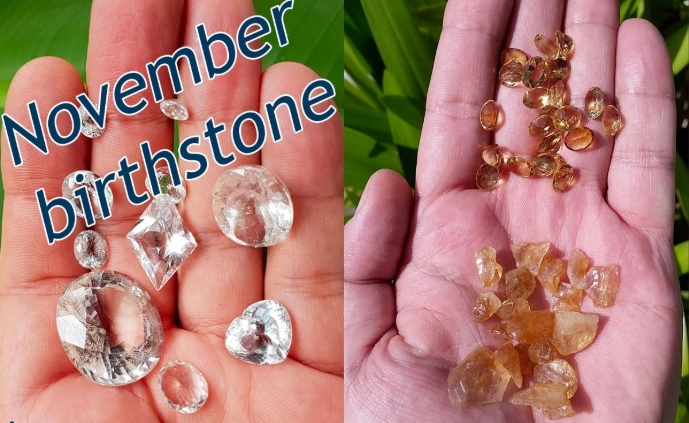
| Feature | Citrine (The Sunny Quartz) | Topaz (The Noble Gem) |
|---|---|---|
| Chemical Composition | Silicon Dioxide (Quartz Family) | Aluminum Silicate Fluoride |
| Hardness (Mohs Scale) | 7 - Durable for daily wear | 8 - Very durable, harder than citrine |
| Typical Color Range | Pale yellow to deep amber, orangey-brown. Rarely natural vivid orange. | Colorless, pale blue, yellow, orange, pink, red (imperial), brown. Vast range. |
| Source of Color | Iron impurities. Most commercial citrine is heat-treated amethyst. | Trace elements or atomic structure defects. Often treated (irradiated & heated) for blue. |
| Clarity | Often eye-clean. Can have visible inclusions. | Usually very high clarity, often flawless. |
| Price Point (General) | Very affordable. A true budget-friendly gem. | Widely variable. Imperial topaz is very expensive; blue & white are moderate. |
| Key Trait | The "accessible sunshine." Warm, welcoming, earthy. | The "chameleon." Brilliant, diverse, with a touch of luxury. |
Looking at that, you start to see the real differences. Citrine is like that reliable, warm friend. It's quartz, one of the most common minerals on Earth. That doesn't make it cheap in feeling, though. A fine, deep Madeira citrine has a rich, honey-like glow that's absolutely stunning. The problem? A huge amount of citrine on the market is actually heat-treated amethyst. Natural citrine is rarer and tends to be a paler, more subtle yellow. I have a small natural citrine that's a soft butter color—it's lovely, but it doesn't scream from across the room like the treated stuff does.
Topaz, on the other hand, has an identity crisis of its own, but in a different way. Its natural state is often colorless or pale. The stunning blues, vibrant pinks, and rich oranges you see are usually the result of treatment. And that's perfectly accepted in the industry. The most valuable topaz is the natural, untreated Imperial Topaz with its sunset hues of orange, pink, and red. That stuff is seriously rare and pricey. The blue topaz you see everywhere (London Blue, Swiss Blue) is colorless topaz that's been irradiated and heated to get that perfect sky or deep ocean color. It's stable, safe, and beautiful—but it's not what comes out of the ground.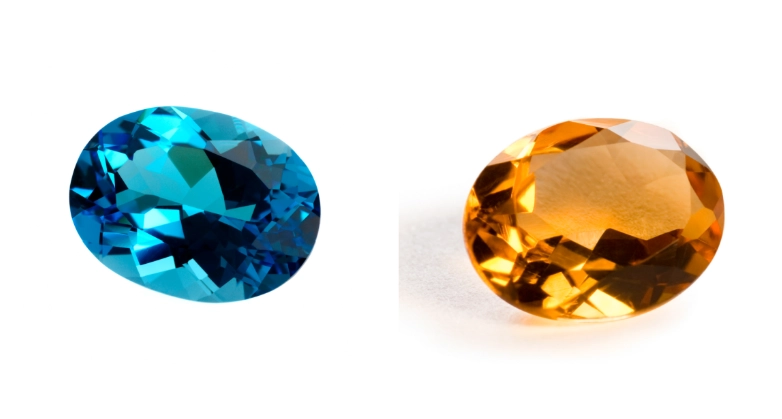
So, Which One is "Better"?
That's the wrong question. The better question is: which one is better for you?
Choose Citrine if: You love warm, autumnal colors. You're on a budget but don't want to compromise on size or appearance. You want a stone with a reputation for positivity, warmth, and abundance (it's nicknamed "the merchant's stone"). You plan to wear it daily and don't want to worry excessively.
Citrine is tough, cheerful, and unpretentious.
Choose Topaz if: You want brilliance and sparkle (topaz has a higher refractive index). You're drawn to cool blues or rare pinks and oranges. You value hardness (that 8 on the Mohs scale matters for long-term wear in rings). You're okay with treatments as long as the result is stunning. You want a stone that feels a bit more traditional and "precious" in the historical sense.
Topaz is versatile, brilliant, and has a pedigree.
Honestly, after learning all this, the question of why does November have two stones starts to feel like a gift. You get two distinct personalities to choose from.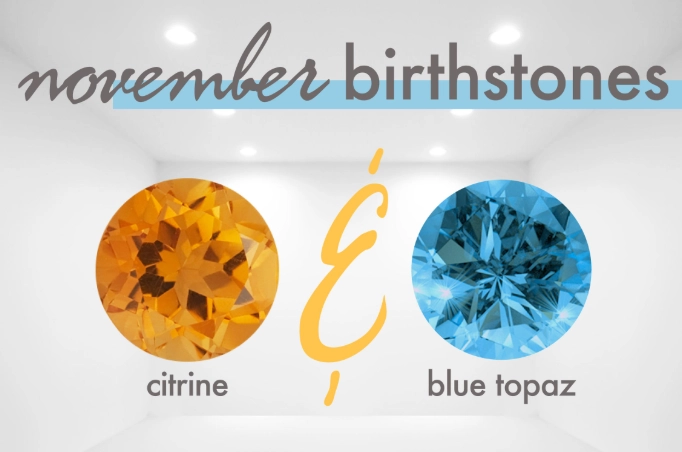
How to Choose Yours and Not Get Ripped Off
Knowing why November has two stones is one thing. Choosing one wisely is another. Here's a no-nonsense guide from someone who's made a few mistakes along the way.
First, decide on your priority. Is it color, budget, or size? If you MUST have a specific honey-gold color, citrine is your likely path. If you dream of a cool, steely blue, it's blue topaz. If budget is tight but you want a big, clear, sparkly stone for a ring, citrine wins. If you have more to spend and want a stone with a bit more rarity and sparkle, look at topaz.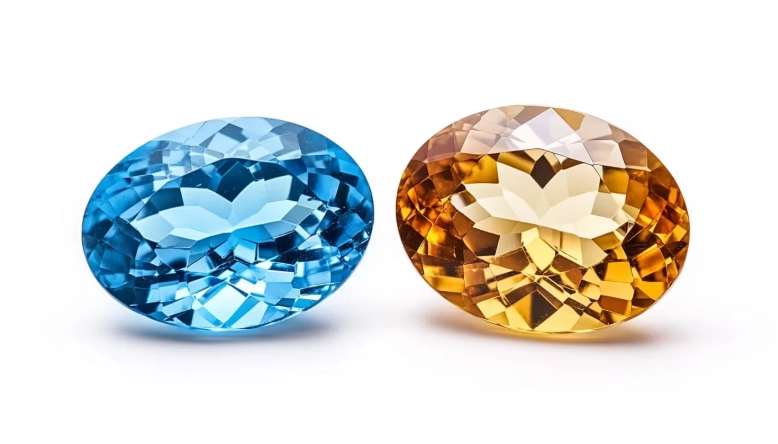
Second, ask the right questions. Don't be shy.
- For Citrine: Ask, "Is this natural or heat-treated?" There's no right answer, but you should know. Treated citrine is standard and fine, but natural has its own appeal. Also ask about the origin if they know—some Brazilian citrine is famous for its rich color.
- For Topaz: Ask, "What treatment has this stone received?" For blue topaz, expect irradiation and heating. It's safe and permanent. For imperial topaz, ask if the color is natural. The answer dramatically affects the price.
Third, look at the stone in different lights. A good citrine shouldn't look muddy or brownish-grey in dim light. It should keep its warmth. A topaz should be examined for any obvious internal flaws or cloudiness, though they're usually very clean.
Fourth, consider the setting. Both stones work in yellow, white, or rose gold. Silver can make citrine look a bit cooler and works beautifully with blue topaz. For a ring, a bezel or halo setting offers more protection for the edges of the stone.
Ultimately, the beauty of understanding why November has two stones is that it empowers you. You're not stuck with one option. You have a choice between two beautiful, storied gems. You can pick the one that speaks to your personal style, your budget, and the story you want your jewelry to tell.
Beyond the Birthstone: Other Stones for November Babies
Here's a fun twist. While we're focused on why does November have two stones, some traditions and alternative lists throw a few more into the mix. It's like the universe can't decide how to bless November babies.
Some ancient or alternative lists occasionally mention:
- Pearl: Yes, really. In some very old traditions, pearl was linked to November. It makes a kind of poetic sense with the cooling weather and the moon's influence.
- Lapis Lazuli: The deep blue stone with gold flecks appears in a few obscure calendars. A stunning contrast to the yellows and oranges.
And then there's the whole world of zodiac stones. For Scorpios (Oct 23 - Nov 21), you might see beryl, aquamarine, or even opal. For Sagittarians (Nov 22 - Dec 21), ruby, turquoise, or topaz (there it is again!) are sometimes cited.
My point is, if citrine and topaz don't light your fire, you have historical permission to look elsewhere. The modern list is a guide, not a prison sentence. The most important thing is that you connect with the stone you wear.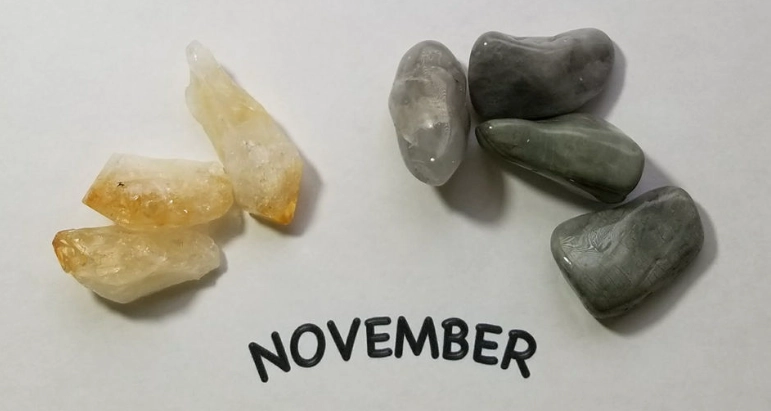
The Final Word on a Double-Gem Month
So, why does November have two stones? We've traveled from ancient mislabeling to medieval confusion, through a 1912 standardization that missed the mark, to a 1952 correction that embraced reality. It's a story of human error, commercial adaptation, and finally, acceptance.
For you, the person buying or wearing the stone, this history is a bonus. It means you have options. You can embrace the warm, abundant, sunny energy of citrine—a stone that feels like the last golden rays of autumn. Or you can choose the brilliant, diverse, and historically noble topaz, a gem that can be as cool as a November sky or as warm as a hearth fire.
You can't make a wrong choice.
In fact, the next time someone asks you, "Why does November have two stones?" you can tell them. You can tell them about mistaken identities, about jewelers trying to make a list, and about how sometimes, the best answer to a confusing history is to celebrate both outcomes. And then, maybe, show them your ring or pendant and let them see for themselves why two stones are better than one.