#How should South Korea alleviate its economic anxiety?#
Macroeconomics
In recent years, South Korea's economic growth has gradually slowed down. Before the COVID-19 pandemic, the economic growth rate of South Korea was maintained at around 3%. Under the impact of the pandemic, South Korea's economy shrank by 0.7% in 2020, rebounded to 4.3% in 2021, but fell again to 2.6% in 2022. In 2023, South Korea's economic growth showed a pattern of being lower in the first half and higher in the second half, with a year-on-year economic growth of 0.9% in the first and second quarters, 1.4% in the third quarter, and 2.2% in the fourth quarter. According to the preliminary accounting data released by the South Korean government, the economic growth of South Korea in 2023 was 1.4%. The Economic Outlook Report released by the Korea Development Institute in February 2024 pointed out that in 2024, the slowdown of consumption and investment in South Korea will suppress domestic demand, but exports are expected to recover, with the economic growth forecast for 2024 at 2.2%. In January 2024, the International Monetary Fund and the United Nations' expectations for South Korea's economic growth in 2024 were 2.3% and 2.4%, respectively.
The unemployment rate in South Korea has risen. In August 2023, the unemployment rate in South Korea once fell to 2%, and then kept rising, breaking through 3% in December 2023. It reached 3.7% in January 2024 and dropped to 3.2% in February 2024. In February 2024, the number of unemployed people in South Korea was 915,000, an increase of 25,000 compared to the same period in 2023. Among them, the number of unemployed youth (aged 15 to 29) reached 264,000, the highest since July 2023. The number of employed people in South Korea in February was 28.043 million, an increase of 329,000 compared to the same period last year, among which the number of employed youth was 3.792 million, the lowest since March 2021.
Fiscal and Monetary Policy
South Korea adopts a prudent fiscal policy, ensuring the sustainability of finance while stimulating economic growth. In December 2023, the South Korean National Assembly passed the fiscal budget bill for 2024, with a total expenditure of 656.6 trillion won, which is about 30 billion won less than the budget draft submitted by the South Korean government in September 2023. Compared with 2023, the budget scale for South Korea in 2024 only increased by 17.9 trillion won. It is expected that the fiscal deficit of South Korea in 2024 will be 91.6 trillion won, accounting for 3.9% of GDP. The South Korean government emphasizes the implementation of strict fiscal rules, planning to reduce the proportion of the fiscal deficit to GDP to below 3% from 2025.
In January 2024, the South Korean government stated that it would allocate 65% of the annual budget in the first half of the year, with a total amount expected to be about 426.8 trillion won, to further stimulate domestic demand and improve people's livelihoods. To stimulate corporate investment, the South Korean government plans to extend the temporary investment tax credit policy for one year and further increase the tax credit share for increased corporate R&D investment. The South Korean government is also taking various measures to reduce the burden on businesses, including extending the tax payment deadline for the construction and manufacturing industries, which are more affected by the economy, and for the catering and accommodation industries, which have a larger proportion of small and medium-sized enterprises (SMEs). Subsidies and preferential loans are provided for small businesses to help the development of SMEs.
To control the price level, the South Korean government stated that this year it will invest 10.8 trillion won in price management and response, an increase of 1.8 trillion won from last year, mainly for price subsidies on agricultural, livestock, aquatic products, and energy, striving to control the CPI around 2% in the first half of this year.The Bank of Korea has adopted a contractionary monetary policy. Starting from August 2021, the Bank of Korea initiated an aggressive interest rate hike cycle. Amidst the continuous rise in inflation, the Bank of Korea successively increased the benchmark interest rate. By January 2023, the Bank of Korea raised the benchmark interest rate to 3.5%, marking the 10th interest rate hike in this cycle, with a cumulative increase of 300 basis points. Influenced by factors such as weak economic recovery and inflation, the Bank of Korea has maintained the interest rate level unchanged since then. In December 2023, the Bank of Korea released its monetary policy guidance for 2024, indicating that it will maintain a contractionary monetary policy until it is confident that inflation has reached the 2% target. In March 2024, amidst the coexistence of multiple complex factors, the Bank of Korea stated that it will maintain the current monetary policy and keep the benchmark interest rate at 3.5% unchanged. The Bank of Korea stated in its quarterly policy report that although it is expected that inflation will slow down towards the 2% target later this year, the outlook remains highly uncertain. Given that the rebound in international commodity prices may exacerbate inflation, it is premature to assert that inflation will stabilize near the 2% target. This implies that the Bank of Korea may continue to maintain monetary contraction for some time in the future.
Foreign Economy
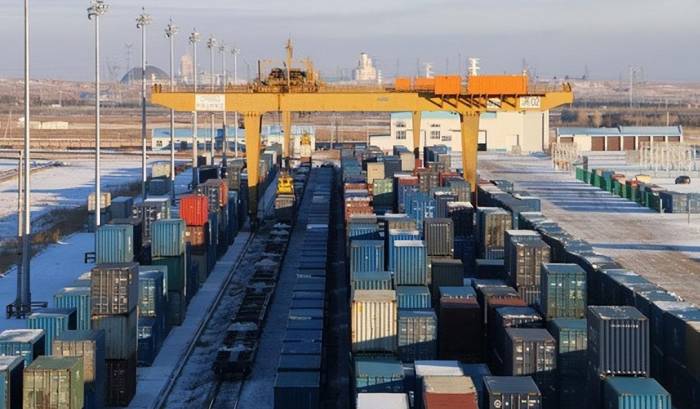
In 2023, South Korea's import and export trade experienced a significant decline. The South Korean government pointed out that affected by factors such as high global interest rates and economic slowdown, South Korea's export volume in 2023 was $632.69 billion, a decrease of 7.4% compared to 2022, marking a negative growth after three years. Looking at the monthly data, South Korea's exports began to show a year-on-year negative growth since October 2022, and it was not until October 2023 that South Korea's exports started to show positive growth. In 2023, South Korea's import volume shrank even more significantly, with an import volume of $642.67 billion, a decrease of 12.1% compared to 2022, one important reason being the substantial decline in imports of energy products such as crude oil, natural gas, and coal. In 2023, South Korea's trade deficit was approximately $10 billion, with deficits for two consecutive years, and due to the more significant shrinkage in imports, the deficit in 2023 was significantly smaller than that in 2022. Entering 2024, South Korea's trade situation has improved. The year-on-year export growth rates for January and February were 18% and 4.8%, respectively, with a notable increase in the export of information and communication technology products. The export of these products grew by 25.1% in January and reached 29.1% in February. However, imports continued to show negative growth, with a year-on-year increase of -13.1% in February, marking 12 consecutive months of negative growth.
South Korea attracted a record high of foreign direct investment in 2023. According to official South Korean statistics, based on the declared amount, foreign direct investment inflow into South Korea in 2023 reached $32.7 billion, an increase of 7.5% compared to 2022, and based on the actual inflow amount, the funds inflow into South Korea in 2023 was $18.8 billion, an increase of 3.4% compared to 2022. The South Korean government plans to attract $35 billion in foreign direct investment in 2024. To this end, the South Korean government will take measures to further increase the attractiveness to foreign capital and promote the repatriation of enterprises to South Korea by providing subsidy caps. However, affected by the uncertainty of the global economy, South Korea's outward direct investment has seen a significant decline. Data shows that in 2023, the total amount of South Korean enterprises' overseas direct investment decreased by 22.2% to $63.38 billion, marking the first annual decline since 2020.
Debt Risk
South Korea's external debt risk is generally controllable. According to data released by the Bank of Korea, as of the end of December 2023, South Korea's total external debt was $663.6 billion, a decrease of $1.6 billion compared to the same period in 2022. Of this, short-term external debt was $136.2 billion, a decrease of $3.03 billion compared to the same period in 2022, with short-term external debt accounting for 32.4% of foreign exchange reserves. In February 2024, South Korea's international reserves were $415.7 billion, a decrease of $53.47 billion from the peak in October 2021.
In recent years, the continuous rise in South Korean household debt has become a significant risk to the South Korean economy. According to statistics from the International Finance Corporation, in 2023, South Korean household debt as a percentage of GDP was 100.1%, which, although slightly lower than in 2022, still ranks among the top in the world's major economies. According to the Bank for International Settlements, in the second quarter of 2023, the debt service ratio of South Korean households reached 14.2%, rising for 14 consecutive quarters and exceeding the majority of economies. High debt will reduce consumption and cause a continuous decline in economic growth potential, while also increasing the risk to the financial system. High household debt also affects South Korea's monetary policy. The Bank of Korea stated that easing monetary policy too early may stimulate the growth of household debt, which has become one of the factors influencing the Bank of Korea's monetary policy decisions. In the "2024 Economic Policy Direction" report released by the South Korean government, the government stated that it will strengthen the management of household debt, control the annual growth rate of household debt within the nominal economic growth rate, and strive to keep the household debt as a percentage of GDP below 100% by 2027.
In addition, the South Korean stock market, which serves as a "barometer" of economic conditions, has seen a slow increase. After the COVID-19 pandemic and up to mid-2021, the South Korean stock market experienced a bull market, but then it turned downward. At the end of 2023, the South Korean Composite Index was at 2,655.28 points, nearly 20% lower than its peak in 2021. In January 2024, the index once fell to 2,435.9 points before gradually recovering to around 2,600 points. Due to concerns about increased market volatility and illegal short-selling activities, the South Korean Financial Services Commission announced in November 2023 that it would completely ban short-selling of domestic stocks in the stock market before June 2024. The South Korean government has also actively introduced various policies to boost the stock market. In February 2024, the South Korean government launched the "Corporate Value Enhancement Plan," attempting to improve the governance and value management of listed companies to enhance the attractiveness of the South Korean stock market. The South Korean government also announced that it would increase the convenience for foreign investors to exchange won when trading stocks and bonds. According to statistics, in February of this year, foreign capital net increased its holdings of South Korean domestic stocks and bonds by $8.1 billion, with the net increase in stock holdings setting a single-month record high after 10 years and 6 months, showing that the attractiveness of the South Korean stock market to foreign capital is on the rise.
Furthermore, South Korea's tourism industry, an important sector, is recovering rapidly. With the gradual decline in the impact of the COVID-19 pandemic, the number of foreign tourists visiting South Korea has surged. According to statistics, in the first 11 months of 2023, the number of foreigners visiting South Korea reached 9.995 million, a 275.9% increase compared to the same period in 2022, recovering to 62% of the level in 2019. In 2023, the number of foreign tourists to South Korea exceeded 10 million. Since it has not yet returned to pre-pandemic levels, this means that there is still considerable room for development in South Korea's tourism industry. At the same time, the South Korean government will introduce various measures in 2024 to promote the development of the tourism industry, such as providing more convenience for international tourists in transportation, payment systems, and duty-free shopping.