Let's cut straight to the point. If you're asking "Is zircon a real diamond?", the direct answer is no. Not even close. They are two completely different minerals with different chemical formulas, physical properties, and values. But the confusion is incredibly common, and for a few good reasons. Sometimes it's an innocent mistake by a new buyer. Other times, it's a deliberate tactic used in misleading marketing. I've seen people pay diamond prices for a beautiful piece of zircon, and the disappointment is real. This guide isn't just about definitions; it's your toolkit to never fall for that confusion again.
What You'll Learn Inside
The One Word Causing All the Confusion: "Cubic"
This is the biggest source of the mix-up, and most articles gloss over it. When people hear "zircon," they often think of the cheap, sparkly synthetic stone used in costume jewelry. That's cubic zirconia (CZ), which is zirconium dioxide (ZrO₂).
Natural zircon is zirconium silicate (ZrSiO₄). It's a genuine, ancient gemstone formed in the earth, often billions of years old. It's not synthetic. It's not "fake." It's a real and often undervalued natural gem.
The problem? The names sound similar. Sellers might lazily (or deceptively) drop the "cubic" and call CZ "zircon," which then gets conflated with the natural stone. So the public ends up with a muddled idea that all "zircon" is a cheap diamond simulant. That does a huge disservice to the natural gem.
Zircon vs. Diamond: A Scientific Side-by-Side Breakdown
Forget the marketing. Here’s what actually matters under the surface. This table lays out the cold, hard facts.
| Property | Diamond | Natural Zircon | Cubic Zirconia (CZ) |
|---|---|---|---|
| Chemical Composition | Pure Carbon (C) | Zirconium Silicate (ZrSiO₄) | Zirconium Dioxide (ZrO₂) |
| Hardness (Mohs Scale) | 10 – The hardest | 6.5 – 7.5 (Good, but can scratch) | 8 – 8.5 (Harder than zircon) |
| Density (Heaviness) | 3.52 g/cm³ | 4.6 – 4.7 g/cm³ (Much heavier) | 5.6 – 6.0 g/cm³ (Heaviest of the three) |
| Dispersion ("Fire") | 0.044 (High) | 0.038 – 0.039 (Very high, can exceed diamond!) | 0.058 – 0.066 (Extremely high, can look "fiery") |
| Refractive Index (Brilliance) | 2.42 (Very high) | 1.92 – 1.98 (High) | 2.15 – 2.18 (High) |
| Origin | Natural (mined) or Lab-Grown | Natural (mined) | Exclusively Lab-Created |
Look at the density. This is a dead giveaway that few consumers know about. Pick up a one-carat diamond and a one-carat zircon. The zircon will feel noticeably heavier in your hand. If a stone feels too heavy for its size, it's a major red flag that it's not a diamond.
How to Tell Zircon and Diamond Apart Instantly: A Practical Guide
You don't need a lab. With a keen eye and a couple of simple tricks, you can spot the differences.
The "Read-Through" Test (The Newspaper Test)
This is the easiest home test for a loose stone. Place the stone table-down (the flat top) on a line of text, like in a newspaper or a book. Look straight down through the pavilion (the pointed bottom).
Diamond: Due to its exceptional light refraction (Total Internal Reflection), you will not be able to read the text through it. The letters will be a blurry, distorted mess or completely blacked out.
Zircon/CZ: You will likely be able to see the text, though it might be slightly doubled or blurry. Zircon's optical properties don't trap light the same way, so light passes through more directly.
Inspecting the Facet Edges
Diamond's extreme hardness means its facet edges (where two polished surfaces meet) are razor-sharp and crisp, even under magnification. They almost look like they could cut you.
Zircon, being softer, has facet edges that are more prone to wear. In an older or frequently worn piece, you might see these edges look slightly rounded or abraded. CZ can also show rounded edges over time.
Observing the "Fire" and Brilliance
This is subtle but telling. Diamond displays a balanced mix of white sparkle (brilliance) and colored flashes (fire).
High-quality zircon can show incredible fire—sometimes even more colorful flashes than a diamond. But here's the expert nuance: In some zircon, especially blue varieties, the fire can have an almost electric or pastel quality, different from diamond's sharper spectral colors. CZ, on the other hand, often throws so much rainbow fire it can look garish or "too perfect" to a trained eye.
The Tricky Reality in the Jewelry Market
Here's where things get messy, based on two decades of seeing pieces cross my desk.
You might find vintage or antique jewelry described as containing "zircon." In many cases, especially in pieces from the early 20th century, this is honestly referring to the natural gemstone. It was a popular diamond alternative before CZ was invented (CZ hit the market in the 1970s). These pieces have charm and historical value.
The modern problem is with new jewelry sold online or in non-specialist stores. I've seen listings with titles like "1ct Zircon Solitaire Ring" with images of a flawless white stone. At a $99 price point, that's CZ. The seller is banking on the ambiguity. They might even list "zircon" in the product details but bury "cubic zirconia" in the description or materials list. Always, always read the fine print in the materials section. Legitimate sellers of natural zircon will proudly specify "Natural Zircon" and often mention the color (e.g., blue zircon, champagne zircon).
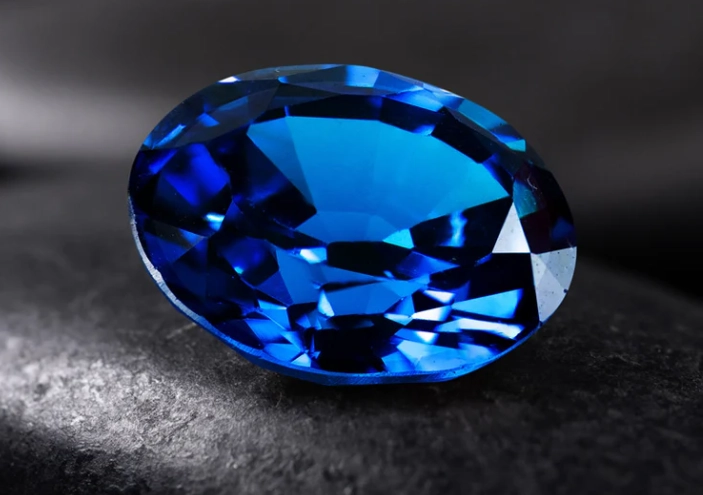
A real case from my practice: A client inherited a ring she thought was diamond. It was stunningly brilliant. The receipt from the 1950s said "zircon." She was heartbroken, thinking it was "fake." After examination, it turned out to be a spectacular, untreated blue zircon of exceptional quality—a far rarer and more interesting gem than a small, average diamond. Its value was in its uniqueness, not in mimicking something else.
Why Zircon is a Gem in Its Own Right (Stop Comparing It!)
The constant comparison to diamond sells zircon short. It's like comparing a sapphire to an emerald—they're different things.
Natural zircon boasts colors diamond can only dream of. The most sought-after is blue zircon, which has a vivid, electric sky-blue hue (often heat-treated to achieve this color). There's also beautiful honey-yellow, cinnamon-brown, orange, and rare green varieties. Its high brilliance and fire make it a truly dazzling stone.
It has a rich history. Some of the oldest minerals on Earth are zircons (used for radiometric dating). In the Victorian era, white zircon was a common diamond substitute in mourning jewelry.
The main downside is its durability. At 6.5-7.5 on the Mohs scale, it's suitable for earrings, pendants, and brooches. For a ring, especially one for daily wear, you need a protective setting (like a bezel) and the understanding that it might acquire minor scratches over the years. That's not a flaw; it's just the character of the stone. A diamond is a tool; a zircon is a treasure to be cared for.
Your Questions, Answered by a Gemologist
I bought a "zircon" ring cheap online. Did I get scammed?
Why won't a jewelry store salesperson clearly tell me it's not a diamond?
Can a standard diamond tester identify zircon?
Is natural zircon valuable?
What's the best setting for a zircon ring to protect it?