You typed that question into Google, didn't you? "Is zircon a valuable stone?" Maybe you inherited a piece, saw one in a shop, or are just curious about this often-misunderstood gem. The short answer is a resounding yes, zircon can be highly valuable, but with massive caveats. Its value isn't a simple yes or no—it's a sliding scale from a few dollars to thousands, dictated by factors most people never consider. I've been collecting and studying gemstones for over a decade, and zircon's story is one of the most fascinating and frustrating in the trade. Let's cut through the confusion.
What You'll Discover in This Guide
What is Zircon? Clearing Up the Biggest Confusion First
This is where everything goes wrong. Most people hear "zircon" and think of the cheap, sparkly cubic zirconia (CZ) used in costume jewelry. They are completely different. Cubic zirconia is a lab-made diamond simulant. Natural zircon is a genuine, ancient mineral (ZrSiO₄), one of the oldest on Earth. It forms in a stunning array of colors and has a brilliance and fire—that rainbow sparkle—that rivals diamond itself.
Zircon's bad reputation is a classic case of mistaken identity. Jewelers in the mid-20th century often used the name "zircon" loosely for CZ, tarnishing the natural stone's image. It's an injustice. High-quality natural zircon is a collector's gem.
The 4 Factors That Actually Determine Zircon's Value
Forget generic gemstone advice. Zircon plays by its own rules. Here’s what really moves the needle on price, in order of importance.
1. Color: The Primary Driver of Price
Color is king with zircon. The most common zircon is a warm, honey brown. It's attractive but not rare. Value skyrockets with rarity.
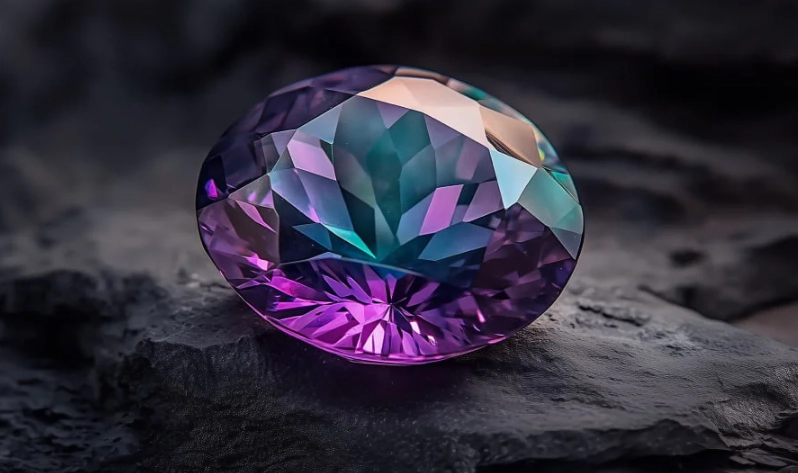
- Blue Zircon: The undisputed champion. This vibrant, sky-to-teal blue is almost always heat-treated from brown rough. Top-grade, intense blue stones command the highest prices. A faint, grayish blue is worth much less.
- Vivid Red & Green: Extremely rare in nature. These are collector's items and can be exceptionally valuable.
- Colorless ("Matura Diamond"): Once popular as a diamond alternative, its value depends on flawless clarity and excellent cut. It has a softer brilliance than diamond but more fire.
- Golden Yellow, Orange, Cognac: Desirable, especially with rich saturation. They offer warmth and brilliance at a more accessible price point than blue.
2. Treatment & Disclosure: The Honesty Tax
Here's a nuance most guides miss. Nearly all blue zircon on the market is heat-treated. This is a stable, permanent, and accepted practice—like heating sapphires. The problem isn't the treatment itself; it's the disclosure.
A treated blue zircon is valuable. An untreated natural blue zircon is astronomically more valuable and rare. Any reputable seller (like major labs such as the Gemological Institute of America (GIA)) will disclose heat treatment. If a seller isn't upfront about it, walk away. The stone's value is tied to this honesty.
3. Clarity and Cut: The Make-or-Break Details
Zircon is brittle. It has a property called "cleavage," meaning it can split along certain planes if knocked. This makes cutting it a high-risk skill.
A well-cut zircon explodes with light. A poor cut looks dead and glassy. Look for stones with crisp facet junctions and symmetry. Eye-clean clarity (no visible inclusions to the naked eye) is expected for top-tier gems. Heavy inclusions or chips, especially near the girdle, drastically reduce value and durability.
4. Carat Weight: The Exponential Jump
Fine quality zircon in sizes above 5 carats becomes significantly rarer. A 10-carat top-color blue zircon is a major investment piece. Below 1-2 carats, prices are much more moderate, making zircon an excellent choice for affordable yet stunning jewelry.
Real-World Zircon Price Ranges: What You Can Expect to Pay
Let's get specific. These are approximate retail price ranges per carat for well-cut, eye-clean stones. Remember, these are guides—auction prices for exceptional pieces can be higher.
| Color | Quality / Intensity | Price Per Carat (Approx.) | Notes |
|---|---|---|---|
| Blue Zircon | Top, Vivid Blue | $300 - $600+ | Heat-treated is standard. Untreated is museum-grade. |
| Blue Zircon | Medium, Commercial Blue | $100 - $250 | Most common in jewelry stores. |
| Colorless Zircon | High Quality | $150 - $400 | Depends on diamond-like whiteness & cut. |
| Golden Yellow / Cognac | Rich Color | $75 - $200 | Great value for the brilliance. |
| Green / Red Zircon | Natural, Vivid | $500 - $2,000+ | Extremely rare. Price is highly variable. |
| Brown Zircon | Standard | $20 - $75 | Often used as a starting point for treatment. |
Hypothetical Scenario: You're comparing two rings online. Ring A has a 2-carat "blue zircon" for $150 total. Ring B has a 1.5-carat "Ceylon blue zircon" for $450. Ring A is almost certainly a lower-quality, possibly included stone with a weak color. Ring B is pricing itself as a better color and cut. The price per carat tells the story.
How to Buy Zircon: A Practical, Step-by-Step Guide
You're ready to buy. How do you not get ripped off?
1. Vet the Seller's Language. Do they say "natural zircon" or just "zircon"? Do they explicitly mention if it's heat-treated? Reputable sellers volunteer this. If the description is vague, be wary.
2. See it in Motion. Static photos lie. Ask for a video under different lights—daylight, indoor, on a hand. You need to see the fire and the true color.
3. Ask About the Cut. A simple question: "Was this cut specifically for zircon, or is it a standard commercial cut?" Cutters who specialize in zircon understand its brittleness and optimize angles for brilliance and durability.
4. Consider the Setting. Because zircon is brittle, a protective setting is wise. A bezel or halo setting guards the vulnerable girdle. Prong settings are okay, but ensure the prongs are sturdy and the stone isn't sitting too high. Zircon is not an ideal stone for a rugged, everyday man's ring meant for hard knocks.
5. Get a Report for High-Value Stones. For any significant purchase (say, over $500), consider an independent report from GIA or another major lab. It confirms identity, checks for treatments, and documents quality. It's your receipt and insurance.
Your Top Zircon Questions Answered (Beyond the Basics)
Does blue zircon fade in sunlight?
Is zircon too soft for an engagement ring?
How can I tell if my old jewelry has real zircon or CZ?
- Weight: CZ is much heavier (denser) than zircon. Compare a suspect stone to a known CZ of similar size; the CZ will feel noticeably heavier.
- Edges: With a loupe, look at facet edges. CZ, being softer, often shows more rounded, worn edges over time. Zircon's edges stay sharper but are more prone to chipping.
- The Fog Test: Breathe on it. Zircon, a poorer thermal conductor, will stay fogged longer than diamond or moissanite, but this doesn't distinguish it from CZ well. For a definitive answer, a jeweler with a thermal conductivity tester can tell in seconds.
What's the best value for money in zircon right now?
So, is zircon a valuable stone? Absolutely. Its value lies in its unique brilliance, its stunning color range, and its position as a genuine, natural gem that offers luxury on a budget. It demands a knowledgeable buyer—one who appreciates its fire, respects its fragility, and understands the importance of color and treatment disclosure. Don't let its confused past with CZ fool you. A fine zircon is a treasure, a piece of the Earth's history that sparkles with a fire all its own.