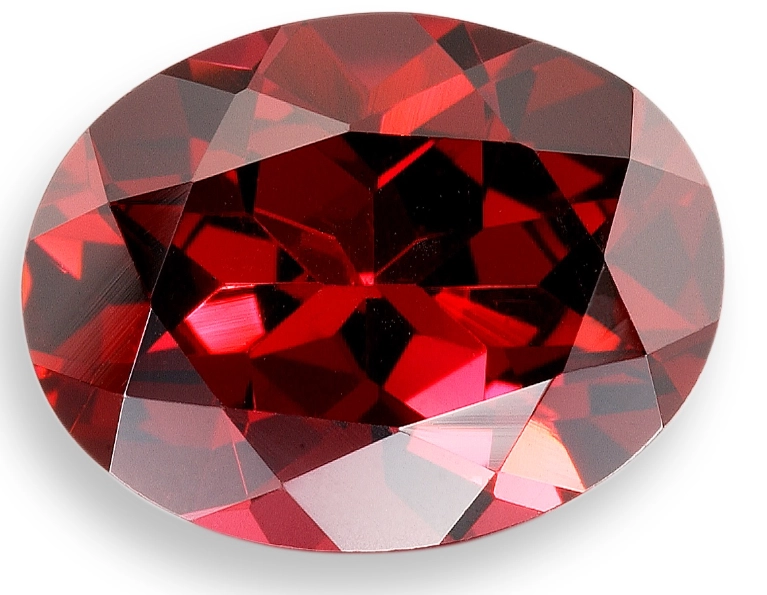
If you've ever found yourself squinting at a sparkling stone, wondering if it's a zircon or cubic zirconia, you're not alone. The names sound similar, and both can be brilliantly sparkly. But here's the kicker: they're as different as a diamond and a piece of glass. One is a breathtaking natural gem with a history older than the dinosaurs. The other is a modern marvel of science, born in a lab. Mixing them up could mean the difference between buying a piece of Earth's history and a piece of cleverly crafted costume jewelry.
I've been in the gem trade for over a decade, and I still see seasoned sellers get this wrong. Let's clear the confusion once and for all.
What You'll Discover in This Guide
The Core Difference: Natural vs. Synthetic
This is the most important point, so I'm putting it right up front.
Zircon (chemical name: zirconium silicate, ZrSiO₄) is a natural mineral. It forms in the earth's crust over millions of years. You can dig it out of the ground. It's been used in jewelry for centuries, long before anyone knew how to make a synthetic alternative.
Zirconia, specifically Cubic Zirconia (CZ, chemical name: zirconium dioxide, ZrO₂), is a synthetic, man-made crystal. It was first created for industrial use in the 1930s and wasn't perfected for jewelry until the 1970s. You won't find it in nature in the form you see in rings.
Think of it like this: Zircon is to amber what Cubic Zirconia is to plastic. One is a natural product of time and geology; the other is a brilliant human invention designed to mimic something else.
What Is Zircon? The Earth's Forgotten Gemstone
Zircon doesn't get the credit it deserves. It's one of the oldest minerals on Earth, with some crystals dating back over 4 billion years. Geologists love it for radiometric dating. Gem lovers should love it for its fire and brilliance.
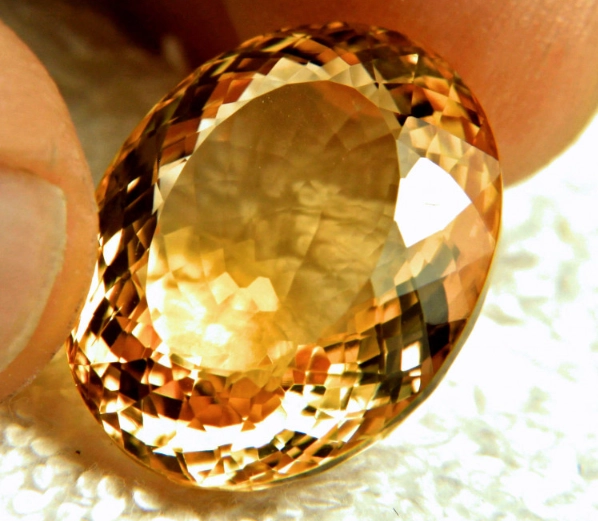
Natural zircon comes in a rainbow of colors: clear (like a diamond alternative), blue (the most popular), golden yellow, orange, red, and green. The blue and golden colors are usually the result of heat treatment, a common and accepted practice that stabilizes the color.
Here's a nuance most blogs miss: Zircon can be brittle. It has a property called cleavage, meaning it can split along certain planes if hit hard. This doesn't mean it's fragile for daily wear—many are worn for lifetimes—but you shouldn't use it for a hammer. A good jeweler will set it in a protective setting (like a bezel or a setting with protective prongs) to shield its edges.
Another thing: High-quality zircon has a refractive index and dispersion (that's the "fire," the rainbow flashes) that can rival a diamond's. That's why in the Victorian era, it was a popular diamond simulant. It's not a "fake" diamond; it's a beautiful gem in its own right that happens to be sparkly.
Where Does Zircon Come From?
The main sources today are Cambodia, Sri Lanka, Myanmar, and Australia. Much of the blue zircon on the market is heat-treated brown zircon from Cambodia. It's a stable, permanent treatment.
What Is Zirconia (Cubic Zirconia)? The Lab-Made Superstar
Cubic Zirconia is the product of pure engineering. Scientists melt zirconium oxide powder with stabilizers (like yttrium or calcium oxide) at incredibly high temperatures—around 2,750°C (5,000°F). Then, they carefully control the cooling process to form large, flawless, colorless crystals.
The goal was never to imitate zircon. It was to create the ultimate diamond simulant. And they succeeded brilliantly. When CZ first hit the market, it caused a sensation because nothing had ever come so close to the look of a diamond for a fraction of the price.
Its advantages are clear: it's cheap, extremely hard-wearing (though not as hard as diamond), and can be made completely flawless and colorless every single time. You can also dope the recipe with different metal oxides to create any color under the sun—pink, blue, yellow, black. These colors are vibrant and uniform, unlike the subtle variations in natural stones.
The downside? That perfection is a dead giveaway to a trained eye. It's too perfect. Natural diamonds and gems have tiny inclusions and variations. A flawless, colorless, large stone that costs $50 is almost certainly CZ.
Zircon vs Cubic Zirconia: Side-by-Side Breakdown
Let's put them head-to-head. This table cuts through the noise.
| Feature | Zircon (Natural) | Cubic Zirconia (Synthetic) |
|---|---|---|
| Origin | Mined from the earth. A natural mineral. | Created in a laboratory. A synthetic crystal. |
| Chemical Composition | Zirconium Silicate (ZrSiO₄) | Zirconium Dioxide (ZrO₂) |
| Hardness (Mohs Scale) | 6.5 - 7.5 (Good for jewelry, but can be brittle) | 8 - 8.5 (Very good for daily wear, more durable than zircon) |
| Density/Heft | High (4.6-4.7). Feels noticeably heavy for its size. | Very High (~5.6-6.0). Even heavier than zircon. A key identifier. |
| Refractive Index (Brilliance) | High (1.92-1.98). Exceptional sparkle and fire. | High (2.15-2.18). Even higher brilliance, can look "too fiery." |
| Color | Occurs in natural hues: blue, yellow, orange, brown, colorless. Often heat-treated. | Almost always colorless (imitating diamond) or in vibrant, uniform synthetic colors. |
| Clarity | Usually eye-clean but may have natural inclusions. | Flawless. No natural inclusions. |
| Price (for a 1ct stone) | $50 - $500+ (Colorless/blue command higher prices) | $5 - $30 (Extremely affordable) |
| Long-Term Value | Holds some value as a natural gemstone. Can appreciate. | No resale value. It's a fashion item. |
| Best For | Unique, natural gemstone jewelry with character and history. | Affordable, durable, and super-sparkly fashion jewelry or temporary engagement rings. |
Notice the weight? That's a huge tell. Pick up a CZ and a zircon of the same size, and the CZ will feel like a lead weight in comparison. It's the first test I do.
How to Choose: Which One Is Right for You?
This isn't about which is "better." It's about which is better for you.
Choose Natural Zircon if:
- You value natural origin and geological history.
- You want a unique gem with its own identity, not just a diamond look-alike.
- You appreciate subtlety and the slight imperfections that make a stone real.
- You're buying an heirloom piece where the story of the stone matters.
- Your budget is modest but you still want a genuine, sparkly gemstone. (A good blue zircon is stunning).
Choose Cubic Zirconia if:
- Your primary goal is maximum sparkle for minimum cost.
- You need a durable stone for daily wear that you don't have to worry about (e.g., travel ring, gym ring).
- You want the "diamond look" right now but can't or don't want to invest in a diamond, moissanite, or white sapphire.
- You love changing your jewelry often and don't want to commit to the cost of multiple natural gem pieces.
- You're buying for a costume or a specific outfit where color match is key (CZ colors are perfectly consistent).
I've seen people make the mistake of paying a "natural gemstone" price for a large, flawless "white zircon" that turned out to be CZ. Know what you're buying.
Your Questions, Answered by a Gemologist
The bottom line? Love both for what they are. Zircon is a spectacular, underrated gift from the earth. Cubic Zirconia is a triumph of human ingenuity that makes glamour accessible. Just know which one you're getting, and pay the appropriate price. Your jewelry box—and your wallet—will thank you.
For further reading on natural gemstones, resources from the Gemological Institute of America (GIA) are unparalleled. For the science behind synthetic crystals, the work documented by institutions like the U.S. Geological Survey on mineral synthesis provides great context.