Garnet color isn't just a simple red. It's a spectrum that tells stories of geology, history, and personal taste. If you've ever held a garnet and wondered why some look like ripe pomegranate seeds while others gleam with greenish hues, you're in the right place. I've spent over a decade working with gemstones, and garnet's color complexity still surprises me. Let's cut through the noise and get straight to what matters.
What You'll Discover in This Guide
What Garnet Color Really Means (It's Not Just Red)
Most people think garnet is synonymous with dark red. That's like saying all wine is red—it misses the nuance. Garnet refers to a group of silicate minerals with similar crystal structures but varying chemical compositions. The color comes from trace elements like iron, manganese, or chromium. For instance, iron gives red hues, while vanadium can push it toward green.
I remember a client once brought in a "garnet" ring that looked suspiciously bright. Under a loupe, we saw dye residues. Natural garnet color has depth, not flatness. The Gemological Institute of America (GIA) notes that garnet's color range is one of the broadest among gemstones, which many beginners overlook.
Key takeaway: Garnet color is a fingerprint of its chemical makeup. If a stone is marketed as "garnet" but only comes in one shade, be skeptical—it might be treated or even fake.
The Full Spectrum of Garnet Colors: From Red to Green
Let's break down the main types. Garnet isn't a single mineral; it's a family. Each member has its color personality.
Pyrope Garnet: The Classic Fiery Red
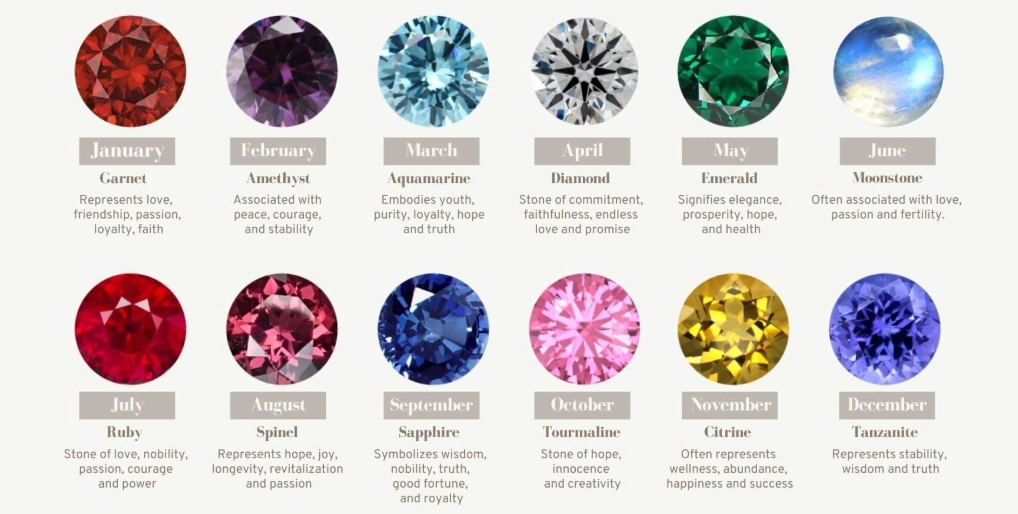
Pyrope comes from Greek for "fiery-eyed." Its color ranges from deep blood-red to purplish-red. Often found in volcanic rocks, it's what many envision for January birthstones. But here's a twist: some pyrope garnets from Arizona have a reddish-brown tint that turns vibrant under incandescent light. I've seen collectors pay premiums for that effect.
Almandine Garnet: The Deep Burgundy
Almandine is darker, more burgundy or brownish-red. It's common and affordable, but don't dismiss it. In antique jewelry, almandine was prized for its somber elegance. However, its dark color can mask inclusions, so always check clarity under bright light.
Spessartine Garnet: The Vibrant Orange
Spessartine, or "mandarin garnet," shines in orange to reddish-orange. Discoveries in Namibia in the 1990s boosted its popularity. The color intensity directly links to manganese content. A vivid orange spessartine can rival a fine sapphire in price, but beware of stones with too much brown—they lose sparkle.
Grossular Garnet: Beyond Red—Green and Yellow
This is where garnet color gets wild. Grossular includes hessonite (cinnamon to honey-yellow) and tsavorite (vivid green). Tsavorite, found mainly in East Africa, gets its green from vanadium or chromium. It's rarer than emerald and often more durable. I once sourced a tsavorite for a custom piece; the client was shocked it was a garnet, not an emerald.
Andradite and Uvarovite: The Rare Greens
Andradite includes demantoid (green with diamond-like dispersion) and melanite (black). Demantoid is a collector's dream, with a horsetail inclusion pattern that authenticates it. Uvarovite is emerald-green but usually found in small crystals, rarely facetable. These greens are scarce, so if a dealer offers large lots, question the origin.
Here's a quick table to visualize the diversity:
| Garnet Type | Primary Color Range | Key Element | Typical Sources | Price Impact (High Color Quality) |
|---|---|---|---|---|
| Pyrope | Deep red to purplish-red | Iron, Magnesium | Africa, USA, Australia | Moderate to High |
| Almandine | Burgundy, brownish-red | Iron, Aluminum | India, Brazil, Sri Lanka | Low to Moderate |
| Spessartine | Orange to reddish-orange | Manganese | Namibia, Nigeria, Mozambique | High to Very High |
| Tsavorite (Grossular) | Vivid green | Vanadium/Chromium | Kenya, Tanzania | Very High |
| Demantoid (Andradite) | Green with high dispersion | Iron, Chromium | Russia, Namibia, Iran | Extremely High |
| Rhodolite (Mix) | Purplish-red to rose | Iron, Magnesium | Africa, India | Moderate to High |
Note: "Price Impact" assumes fine color with good clarity and cut; lower-quality stones are cheaper across types.
How Color Drives Garnet Value and Identification
Color is the top factor in garnet valuation, but it's not just about hue. Saturation, tone, and consistency matter more than many realize.
Saturation refers to color intensity. A garnet with weak saturation looks washed out. Tone is lightness or darkness. Ideal tone is medium to medium-dark—too light, and it appears pale; too dark, and it loses life. Consistency means even color distribution. I've rejected stones with patchy zones that only show color under specific angles.
Identification starts with color observation. Use daylight-equivalent light. Hold the stone against a white background. Red garnets like almandine often show absorption bands in a spectroscope, while green garnets like tsavorite might display chromium lines. The GIA offers tools for this, but for hobbyists, a simple loupe and color chart help.
One subtle error: assuming all red garnets are the same. Pyrope and almandine can look similar, but pyrope has higher refractive index, giving more brilliance. A quick test? Check the specific gravity—pyrope is denser, but that requires lab equipment. In practice, trust reputable dealers who provide certification.
Pro tip: When buying online, ask for videos under different light sources. Still photos can misrepresent garnet color, especially for darker stones that might hide flaws.
Using Garnet Color in Jewelry: Design Tips and Pitfalls
Garnet's color versatility makes it a designer's friend, but it also introduces challenges.
For red garnets, pair with yellow gold to enhance warmth. White gold or platinum can cool down the hue, which works for purplish rhodolite. I designed a ring with rhodolite garnet set in rose gold—the combo created a romantic glow that clients loved. For green garnets like tsavorite, white metals highlight the vividness, avoiding color clash.
Durability varies. Almandine and pyrope are hard (7-7.5 on Mohs scale), suitable for rings. Demantoid is softer (6.5-7), better for pendants or earrings. I've seen a demantoid ring get scratched because the wearer ignored this.
Avoid placing garnet in ultrasonic cleaners if it has fractures or treatments. Some garnets are heat-treated to improve color, but this can weaken them. Always ask about treatments. The International Gem Society reports that some orange garnets are diffusion-treated to boost hue—disclosure is ethical but not always given.
Consider the setting. Bezel settings protect edges but can darken the color. Prong settings allow more light but risk chipping. For a tsavorite necklace I worked on, we used a halo of diamonds to amplify the green without overshadowing it.
Common Mistakes When Judging Garnet Color
After years in the trade, I've seen repeat blunders. Here are the top ones.
Mistake 1: Ignoring light conditions. Garnet color shifts under different lights. A stone that looks rich in store lighting might appear dull in sunlight. Always inspect in multiple environments. I recall a buyer who purchased a "vivid" garnet under LED lights, only to find it brownish at home. Lesson: bring a portable daylight lamp or check near a window.
Mistake 2: Overemphasizing hue without considering saturation. A garnet can be the "right" red but lack intensity. Saturation drives beauty more than exact shade. Compare stones side-by-side to gauge saturation.
Mistake 3: Assuming color uniformity equals quality. Some garnets, like hessonite, have characteristic inclusions (treacly appearance) that affect transparency but add character. Uniform color is good, but natural variations aren't always bad. It depends on the type.
Mistake 4: Not asking about enhancements. Color enhancement is common. Heat treatment is generally accepted, but dyeing or coating should be disclosed. If a dealer hesitates to discuss treatments, walk away. I've tested stones with acetone to reveal dyes—a simple test many forget.
Mistake 5: Focusing solely on color and neglecting cut. A poor cut can kill garnet color. Look for symmetry and proportions that maximize brilliance. For deep-colored garnets like almandine, a shallow cut can lighten the tone, while a deep cut may darken it excessively.
Your Garnet Color Questions Answered
Garnet color is a journey, not a destination. Whether you're buying a January birthstone or a collector's piece, focus on what speaks to you. The science behind the hues adds depth, but the emotional connection—that spark when light hits the stone—is what truly matters. Next time you see a garnet, look closer. You might discover a color story waiting to be told.